Öja Church: A Medieval Gothic Church in Sweden


Site at a Glance
- Rating
- 4.4
- Popularity
- Low
- Country
- Sweden
- Primary era
- Medieval
- External website
- Open
- Eras represented
- Medieval, Modern
- Civilizations
- Swedish
- Site type
- Religious
- Remains
- Church
On this page12 sections
History
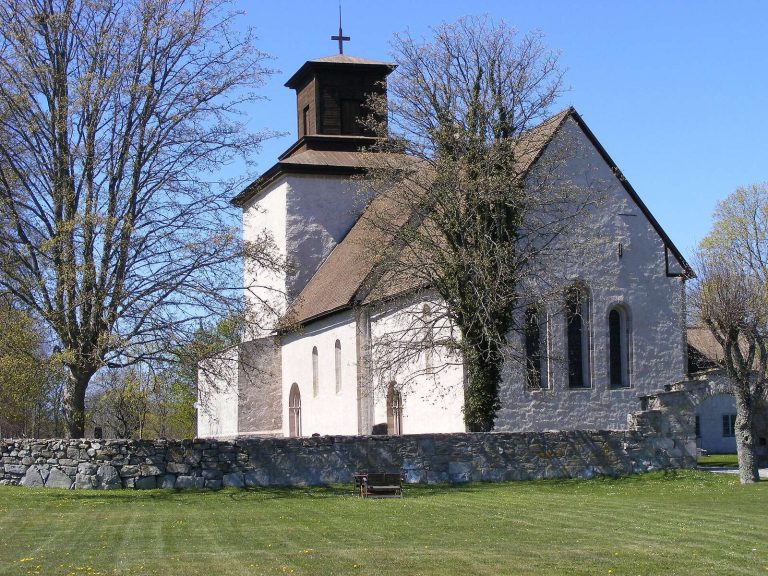
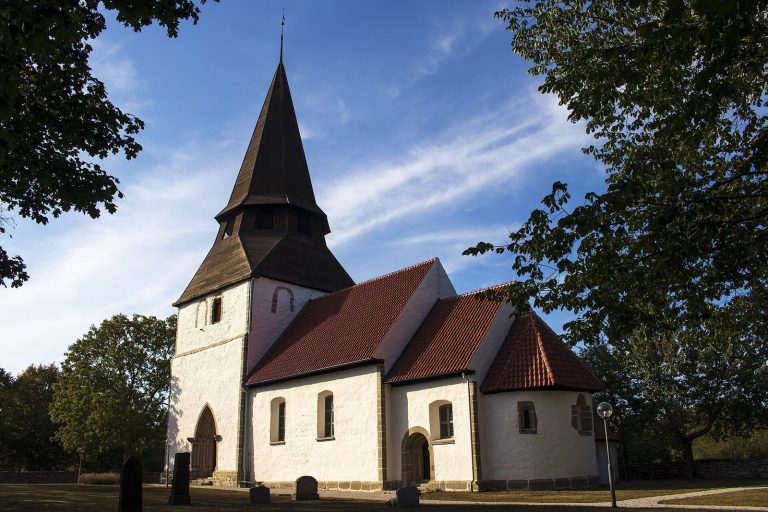
Öja Church is a medieval church in Sweden, in Öja in southern Gotland. The present largely Gothic building developed from the 13th century onward and belongs to the Church of Sweden, Sweden’s Lutheran national church, within the Diocese of Visby, the regional church district covering Gotland.
An ancient cultural landscape
The church stands in an area with long-established cultural traditions. Öja was probably inhabited during the Iron Age, approximately 500 BCE to 500 CE. Its name derives from the Swedish word for “island,” indicating that the settlement existed before post-glacial rebound, the gradual uplift of land after the Ice Age glaciers melted, altered the relationship between formerly separate land areas and Gotland.
The surrounding fields still present in 1987 were cultivated according to a land-use system that probably developed during the Iron Age and may have originated as early as the Bronze Age. This agricultural continuity forms part of the wider historical setting in which the medieval church was established.
From Romanesque origins to a Gothic church
The first church on the site was built in the 12th century in the Romanesque style. Only a few sculpted fragments of that building survive, incorporated into the present church. A new construction phase began in the 13th century, producing the core of the building that stands today.
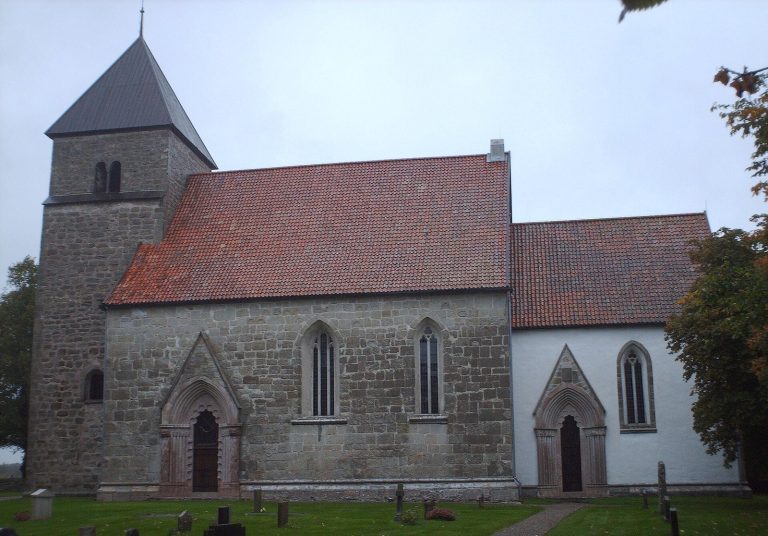
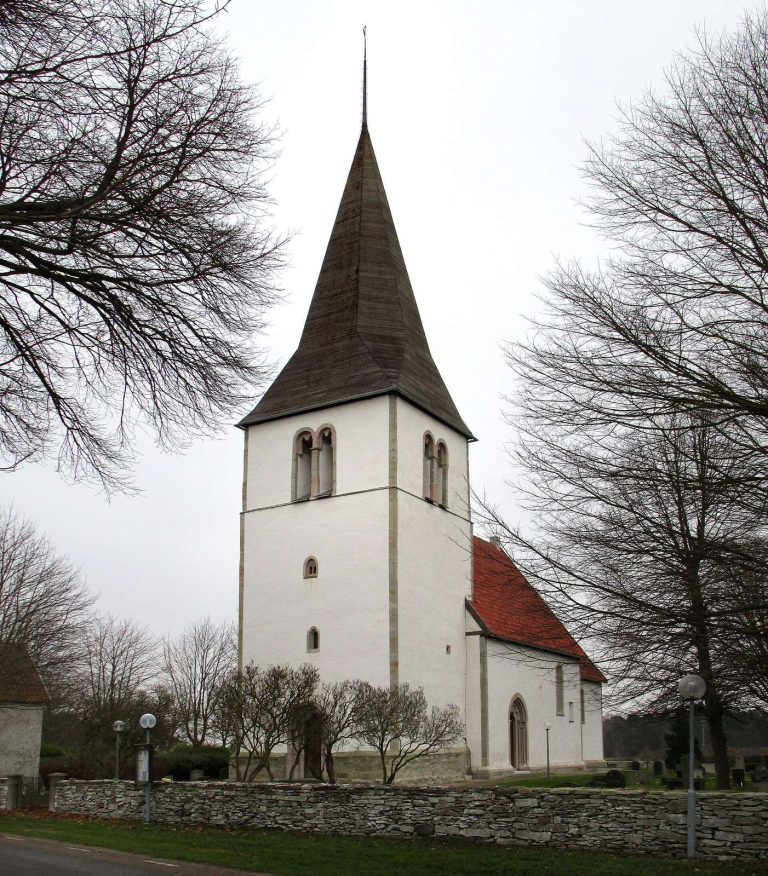
The choir and its internal apse, a rounded sanctuary end, were built during the first half of the 13th century. The nave followed toward the end of the century, and a tower was added in the 14th century. This sequence suggests that the original plan may not have included a separate tower. A tower may instead have been intended above the western end of the nave.
The later tower is attributed to the workshop conventionally called Egypticus. Egypticus is the modern name given to an unidentified medieval stonemason or workshop associated with several churches on Gotland. Öja Church has remained largely unchanged since the Middle Ages, with the vestry, built in the 19th century, forming the principal later addition.
Later furnishings and continued use
The church continued to receive furnishings after the medieval period. Johan Holst made the Renaissance pulpit in Visby in 1628, while Peter Crane made the limestone altar in Burgsvik in 1643. The altar is surmounted by the symbol of Christian IV, king of Denmark and Norway from 1588 to 1648. A sandstone baptismal font from the 17th century also remains in the church.
Remains
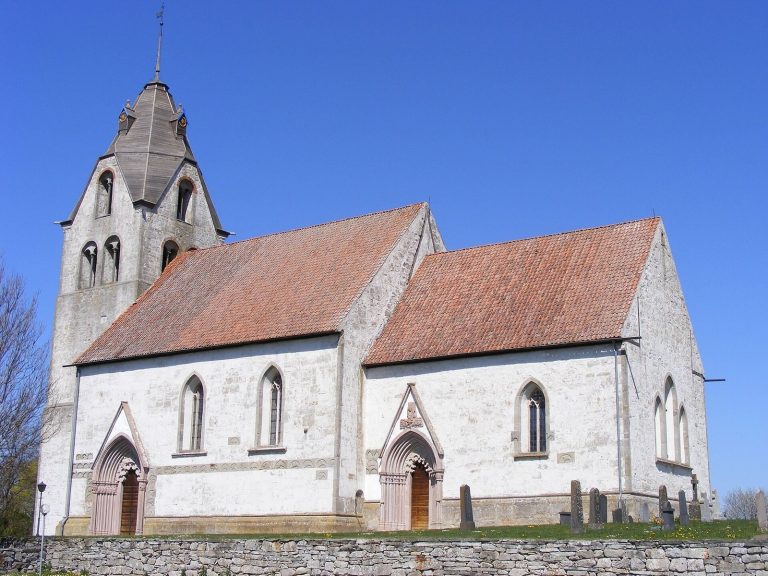
Öja Church is composed of a medieval choir with an internal apse, a later nave, and a 14th-century tower. The building is largely Gothic, with a dark interior, sturdy columns and pillars, carved limestone features, painted vaults, wall murals, and richly decorated portals. Its medieval fabric remains especially well preserved, while later furnishings document the church’s continued use after the Middle Ages.
Stone exterior
The medieval tower
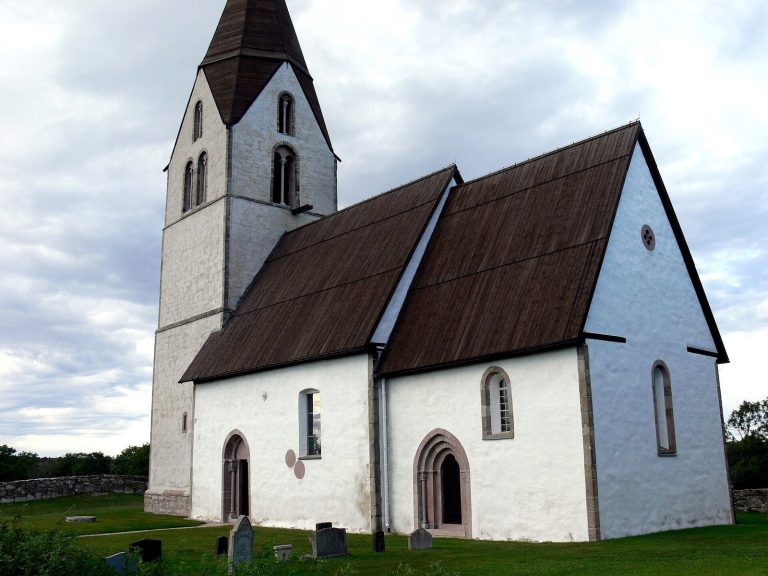
The 14th-century tower is unusually well preserved. Its original gargoyles and gable decorations remain in place, preserving details of the tower’s medieval construction and design. The tower belongs to the building phase associated with the Egypticus workshop.
Carved portals
Three Gothic portals with carved decoration open into the church. The northern portal is the most richly ornamented. Its sculptures include Jesus, Mary, John the Evangelist, and a reclining saint interpreted as Saint Eligius, a seventh-century Christian bishop regarded as the patron saint of metalworkers and craftsmen.
Painted and carved interior
Murals and vault paintings
The walls contain 15th-century murals showing the Passion of Christ, the events surrounding Christ’s suffering and crucifixion, together with scenes from his childhood. The paintings are attributed to the artist conventionally known as the Master of the Passion of Christ, an art-historical name for an unidentified painter recognized through works featuring Passion scenes.
The 13th-century vaults carry ornamental paintings. Several unusual murals in the choir are probably by an artist from Denmark or mainland Sweden. Their subjects include the archangel Michael fighting a dragon, the Flight of the Holy Family into Egypt, and Saint Barbara.
The rood cross
A large, elaborate triumphal cross, or rood, hangs in the chancel arch. A rood is a monumental crucifix traditionally placed at the boundary between the nave and the chancel. This example dates from the late 13th century and was made by an anonymous wood-carver who may have trained in France. The same artist may also have produced a similar cross in Fröjel Church and is sometimes called the Öja Master.
The cross is one of Gotland’s best-known medieval works of art and has been described as the island’s most admired wooden sculpture. Its circular frame shows Adam and Eve taking the forbidden fruit and being expelled from Paradise in the lower section, while praying angels occupy the upper section. Each arm bears a symbol of one of the four Evangelists. Copies of sculptures of Mary and Saint John stand on the rood beam outside the cross; the originals are preserved in the Museum of Gotland in Visby.
Post-medieval furnishings
The limestone altar was made by Peter Crane in Burgsvik in 1643 and carries the symbol of Christian IV. The Renaissance pulpit, made by Johan Holst in Visby in 1628, and the 17th-century sandstone baptismal font complete the principal later furnishings described within the medieval interior.