Frauenkirche in Amberg: A Gothic Church and Former Court Chapel
Site at a Glance
- Rating
- 4.7
- Popularity
- Very Low
- Country
- Germany
- Primary era
- Medieval
- External website
- Open
- Eras represented
- Medieval, Modern
- Civilizations
- Holy Roman Empire
- Site type
- Religious
- Remains
- Church
On this page8 sections
History
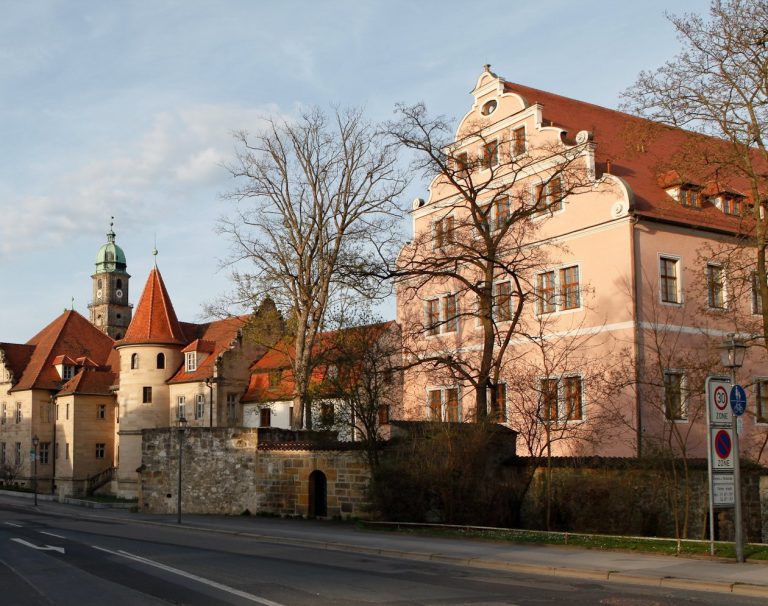
The Frauenkirche is a Gothic church in Amberg, Germany, built around 1400 on the site of a demolished medieval synagogue. It was dedicated to Mary and is first documented in 1401. Its construction followed the expulsion of Amberg’s Jewish population between 1390 and 1391. The church’s early history was connected to both civic initiative and royal support: an Amberg citizen established a benefice, a church endowment providing income for a cleric or religious purpose, while King Rupert promoted the building work.
From municipal church to court chapel
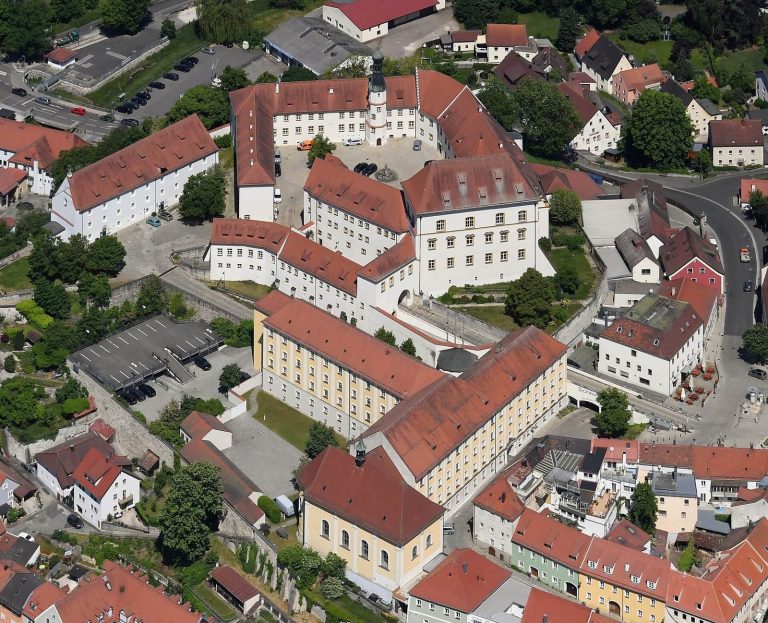
The Frauenkirche was initially a municipal church. Its position near the Electoral Chancery, an administrative office of a prince-elector, and the palace gave it a new role during the sixteenth century. It was then used for courtly purposes and became a court chapel. A small cemetery surrounded the church until it was removed to make way for the Electoral Chancery.
Confessional change and later use
During the re-Catholicization of the Upper Palatinate from 1629, a seventeenth-century restoration of Catholic religious institutions and practice, the former court chapel was assigned to the Congregation of Mary under the Cross in 1630. This Catholic religious association dedicated to Marian devotion maintained the church and supplied new furnishings during the seventeenth and eighteenth centuries.
Amberg’s Hungarian residents used the Frauenkirche for religious celebrations during the twentieth century, continuing into the 1950s. The church belongs to the parish of St. Martin. In the present day, building damage has left it in poor structural condition, and it is closed and unused. Deconsecration and adaptive reuse have been discussed.
Remains
Gothic hall structure
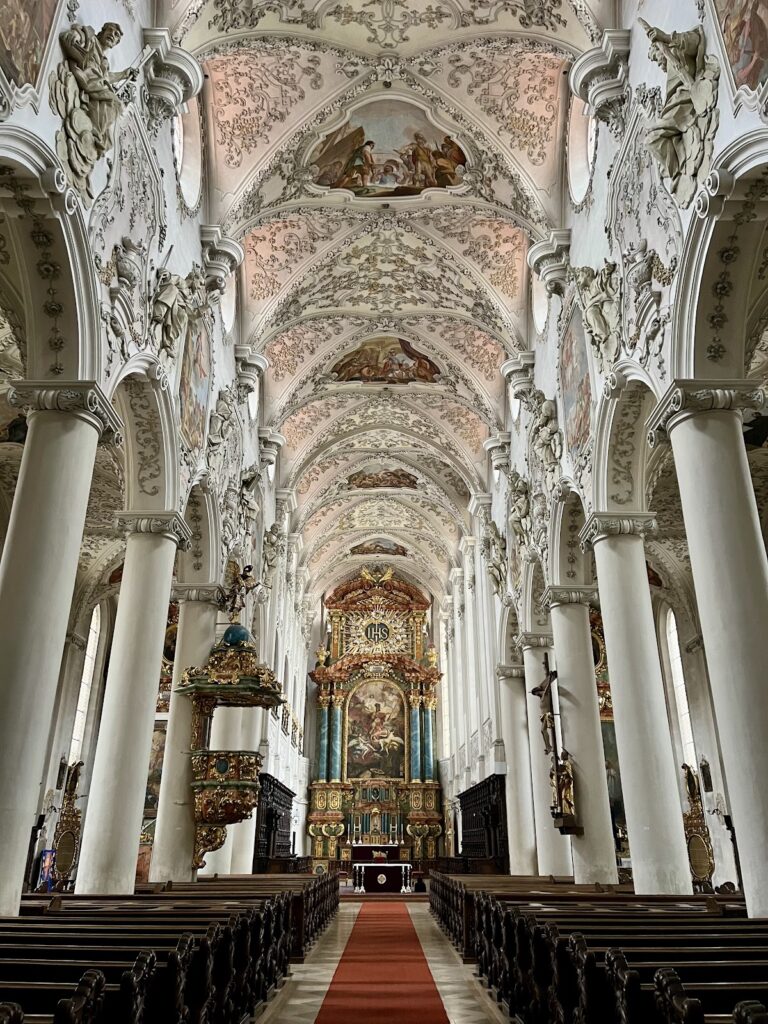
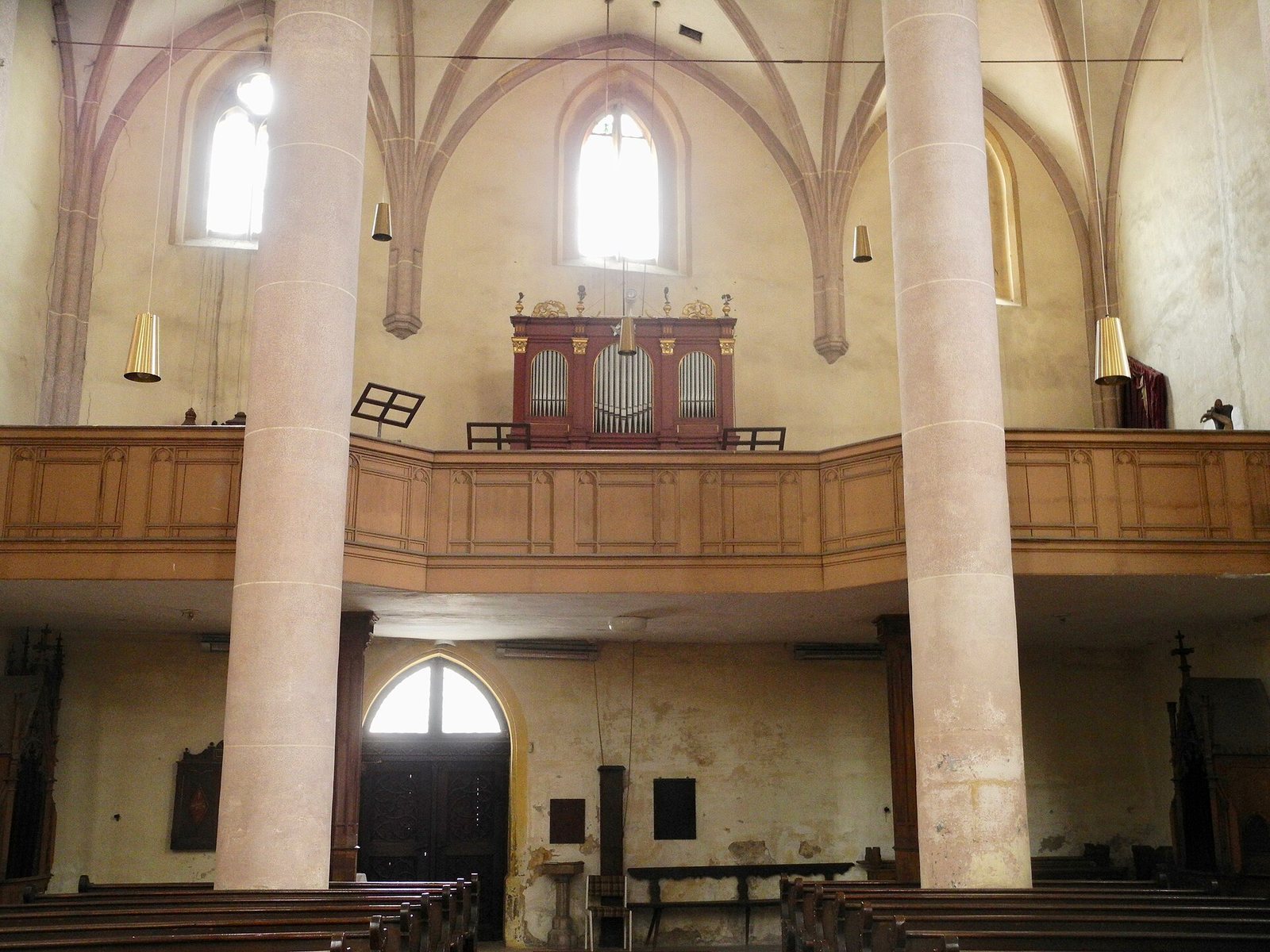
The Frauenkirche is a three-aisled Gothic hall church beneath one shared roof. In a hall church, the nave and aisles are approximately equal in height, creating a unified interior rather than a strongly raised central nave. The arrangement is relatively unusual for a small building. Its three-bay plan produces a particularly strong hall effect and gives the interior excellent acoustics.
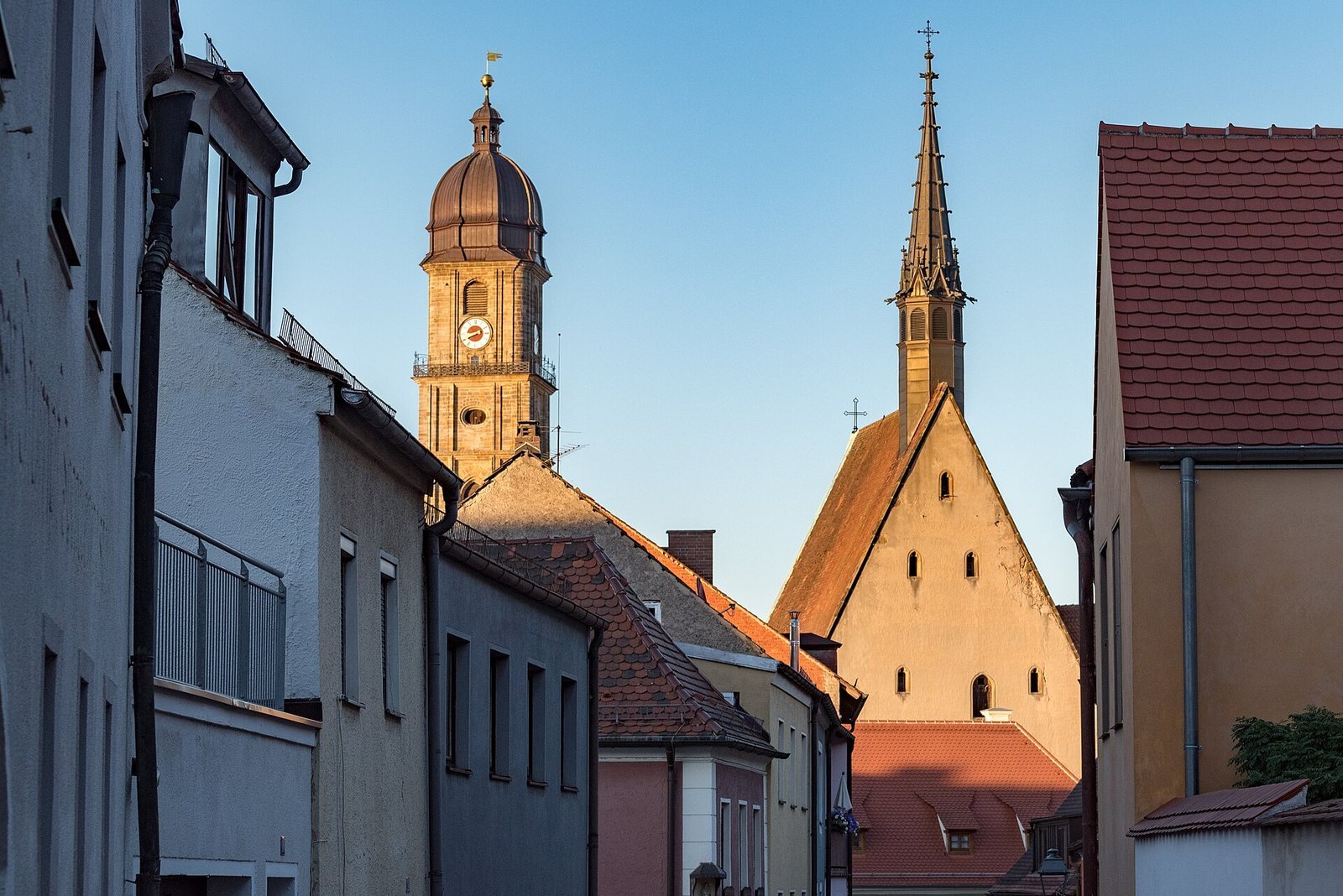
The west wall is noticeably oblique because the building had to accommodate the surviving old city wall from Amberg’s first ring of fortifications. A roof turret, a small tower-like structure rising from a roof, serves as the church’s bell structure. A storm destroyed the earlier turret in 1877, after which the present sharply pointed turret was added.
Furnishings and musical instruments
Altars and interior furnishings
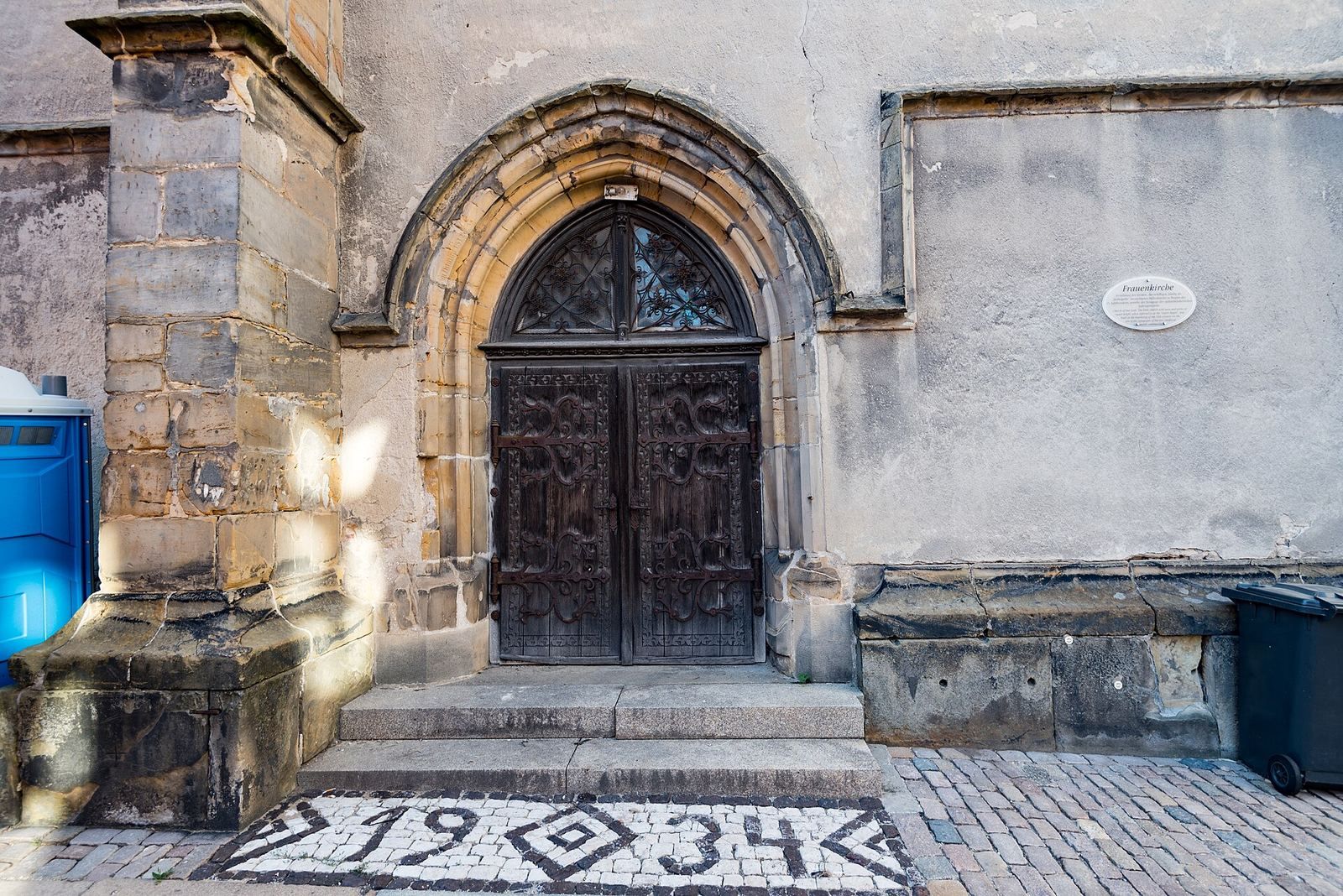
The original furnishings were destroyed during the Calvinist period, when the city followed a Reformed Protestant tradition associated with John Calvin. A Gothic Annunciation group at the southern side portal remains an indication of the quality of the original Gothic furnishings. The Congregation of Mary under the Cross later provided valuable Baroque and Rococo furnishings. From 1864, the Frauenkirche became the first church in Amberg to be remodeled in the Neo-Gothic style. The eighteenth-century pew cheeks remained from the earlier furnishings.
Organs
The church had a positive organ, a compact pipe organ generally more portable than a large church instrument, by the sixteenth century. “Maister Paulsen” tuned it several times in 1531. In 1734, the Amberg organ builder Johann Baptist Funtsch supplied a new instrument. This was replaced in 1858 by an organ from the workshop of the local builder Friedrich Specht, with six stops on one manual and pedal.
A Steinmeyer organ, opus 493, later followed the Specht instrument. Steinmeyer built it in 1893 for the Elisabeth Convent in Neuburg an der Donau. It had five stops on one manual and pedal, mechanical cone chests, and a Neo-Gothic case. The organ was transferred to Amberg in 1927 and was no longer playable as of 2025.