Church of the Holy Saviour: An Ottoman-Era Orthodox Church in Nesebar
Site at a Glance
- Rating
- 4.6
- Popularity
- Very Low
- Country
- Bulgaria
- Primary era
- Early Modern
- External website
- Open
- Eras represented
- Early Modern
- Civilizations
- Bulgarian, Ottoman
- Site type
- Religious
- Remains
- Church
On this page10 sections
History
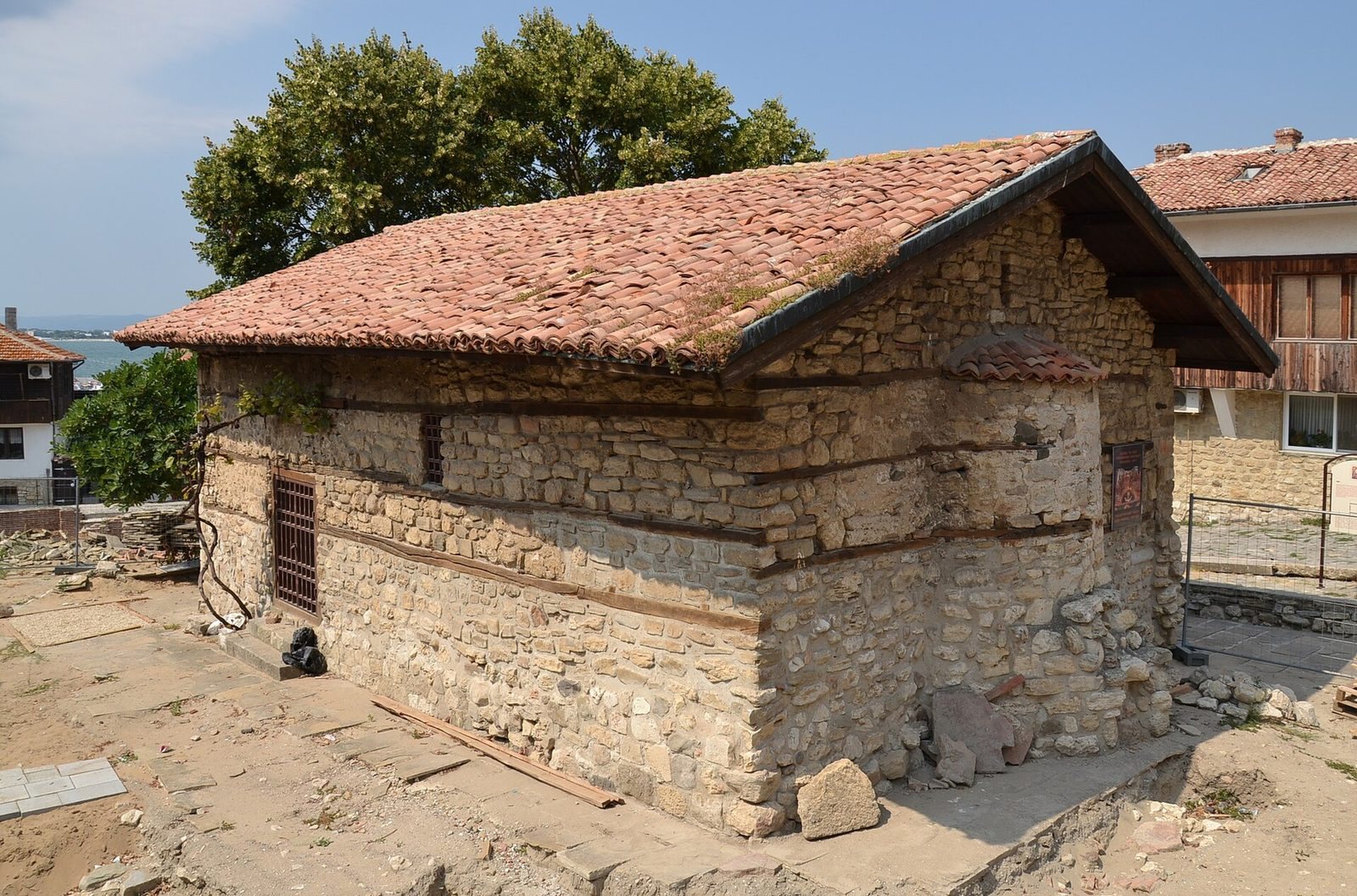
The Church of the Holy Saviour, also called the Church of the Ascension of the Lord, is a former Orthodox church in Nesebar, Bulgaria. Built in 1609 in the Byzantine architectural tradition, it is associated with the Bulgarian Orthodox Church, the Sliven Diocese, and the Burgas deanery. It is described as the only surviving church in Nesebar built during the Ottoman period.
Construction under Ottoman rule
The church was built during the tenure of Metropolitan Cyprian, a senior bishop responsible for a major ecclesiastical district. A wealthy citizen of Nesebar provided the funds, and a donor inscription above the southern entrance commemorates the construction. Ottoman regulations restricted the appearance and height of Orthodox churches, shaping the modest form of the building.
Later history and present status
The church later became associated with the memory of Mataisa Kantakuzina Paleologina, a Byzantine princess of the Kantakouzenos and Palaiologos dynastic families. She was buried in the Church of Saint Sophia in 1441, and her tombstone was subsequently transferred to the Church of the Holy Saviour by the archbishop of Nesebar. The stone was later kept in the Nesebar Archaeological Museum.
The Church of the Holy Saviour is no longer active as a place of worship and functions as a museum. It is protected as a cultural monument and forms part of the Architectural-Historical Reserve of Nesebar.
Remains
Church building and paintings
Structure and exterior
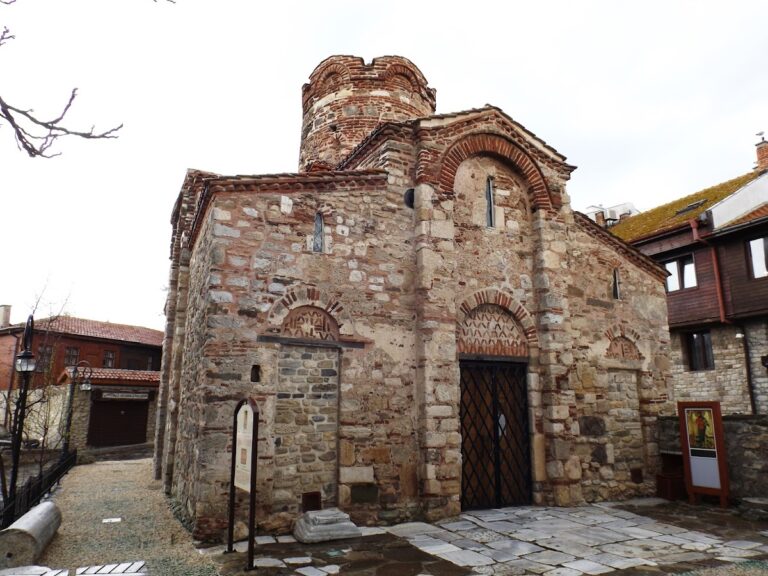
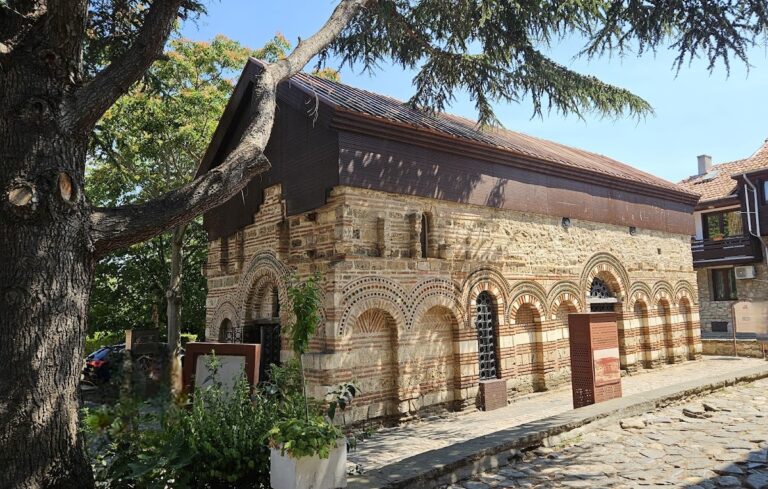
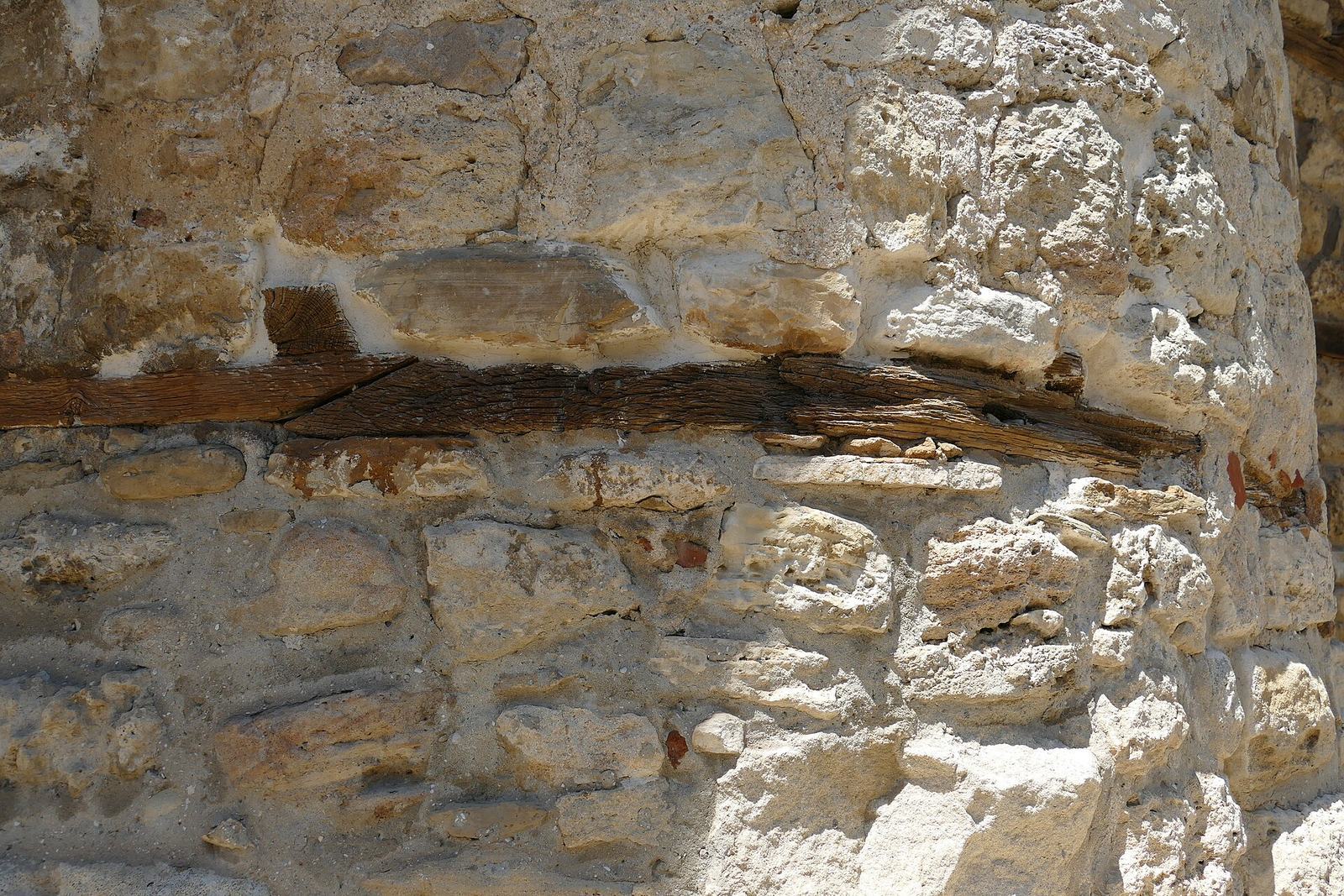
The church is a single-nave, single-apse building measuring 11.7 metres in length and 5.7 metres in width. A narrow, elongated narthex, or entrance vestibule, formerly extended along the entire northern side, bringing the overall width to 9.8 metres. The structure was built with stone and mud and stands in a depression in the terrain. Its eastern facade was partly embedded in the ground.
Restrictions imposed under Ottoman rule limited the building’s height and contributed to its small windows. The church has neither a dome nor a bell tower. A wooden gabled roof with projecting eaves covers the structure, and the roof has no interior cladding or additional framing. The exterior is notably austere, with little substantial decoration.
Interior frescoes
The interior is covered almost entirely with frescoes, most of them dating from the beginning of the seventeenth century and attributed to an unknown artist. The paintings include apostles, full-length saints, and scenes from the lives of Jesus and Mary. Among the depicted events are the baptism of Jesus, his Resurrection, and his entry into Jerusalem.
Gospel scenes occupy the upper parts of the southern and northern walls above rows of standing saints. In the apse, the Virgin Mary appears as Platytera, a traditional Orthodox image of Mary with the Christ Child. These paintings are regarded as important examples of Nesebar’s seventeenth-century fresco tradition and of Bulgarian mural painting from the sixteenth and seventeenth centuries.
The frescoes have been restored, but their condition is uneven. Many paintings on the southern and northern walls are severely damaged or almost completely destroyed. No frescoes survive on the western wall, and it remains uncertain whether that wall was ever decorated.
Associated archaeological features
Tombstone of Mataisa Kantakuzina Paleologina
The tombstone associated with Mataisa Kantakuzina Paleologina was concealed beneath the church floor before being transferred to the Nesebar Archaeological Museum. Its connection with a Byzantine princess preserves a link between the church and the Byzantine history of Nesebar.
Bath remains
Beside the church are ruins of Roman baths dating from the fifth or sixth century. An eighteenth-century Turkish bath with a small dome also stands alongside the building, adding later archaeological remains to the historic surroundings of the church.