Marmiroi Church: A Byzantine Greek Orthodox Monument near Orikum
Site at a Glance
- Rating
- 4.6
- Popularity
- Very Low
- Country
- Albania
- Primary era
- Medieval
- Eras represented
- Medieval
- Civilizations
- Byzantine
- Site type
- Religious
- Remains
- Church
On this page8 sections
History
Marmiroi Church is a Christian Greek Orthodox monument near Orikum in Albania, probably built during the Byzantine period in the twelfth or thirteenth century. An eleventh-century date has also been proposed, while ceramic fragments from the ninth or tenth century suggest that an earlier construction phase may have existed. The church stands within the historical landscape of southwestern Albania, close to the ancient city of Oricum and the Pashaliman Lagoon.
Byzantine origins and religious setting
The church was first mentioned in a written source in 1307. Its original dedication is uncertain. Carl Patsch identified Saint George as its patron, while later researchers, including Guntram Koch and Robert Elsie, connected the building with devotion to the Virgin Mary. One leading interpretation identifies the former dedication as Mary of the Life-Giving Spring, an Orthodox title associated with a miraculous spring and healing.
Marmiroi is generally thought to have belonged to a small monastery. This interpretation follows long-term investigations by Albania’s Institute of Cultural Monuments and Pirro Thomo’s view that churches with a cross-domed plan commonly occurred in monastic settings. The surrounding remains, which appear to include monastic lodgings, provide further support for this understanding of the site.
Orikum and the later Christian landscape
Marmiroi formed part of the historical landscape around Orikum, where Christianity was represented by several churches and monasteries. The nearby Dukat area preserves church-related place names and a church-related quarter, while the secluded and naturally protected coastal terrain encouraged the establishment of religious communities. Some formal elements of Marmiroi’s design are thought to have influenced the later monastery church at Zvërnec, also dated to the twelfth century.
Oricum, the ancient settlement nearby, began as a Greek colonial city active from the sixth century BC. It later became associated with the Roman civil wars and was described as the first city captured by Caesar. In the medieval period, the settlement was known as Jericho and served as a small port. Following its Ottoman conquest in the fifteenth century, it became Pashaliman, a major Ottoman naval base in the western part of the empire.
The church and other Christian sites in the surrounding area were probably abandoned when much of the region was Islamized during the final centuries of Ottoman rule. By the time Carl Patsch, an Austrian archaeologist who studied the ancient Balkans, visited Marmiroi in 1902 or 1904, the clergy had already left and the building was substantially ruined.
Restoration and protection
Restoration and official conservation took place in the late 1960s and early 1970s. Aleksandër Meksi, an Albanian architect and architectural historian, directed work that reconstructed the church according to its original form and features. Marmiroi is a protected Albanian cultural monument under reference VL059, with protected status dating from 1973.
Remains
Setting and church plan
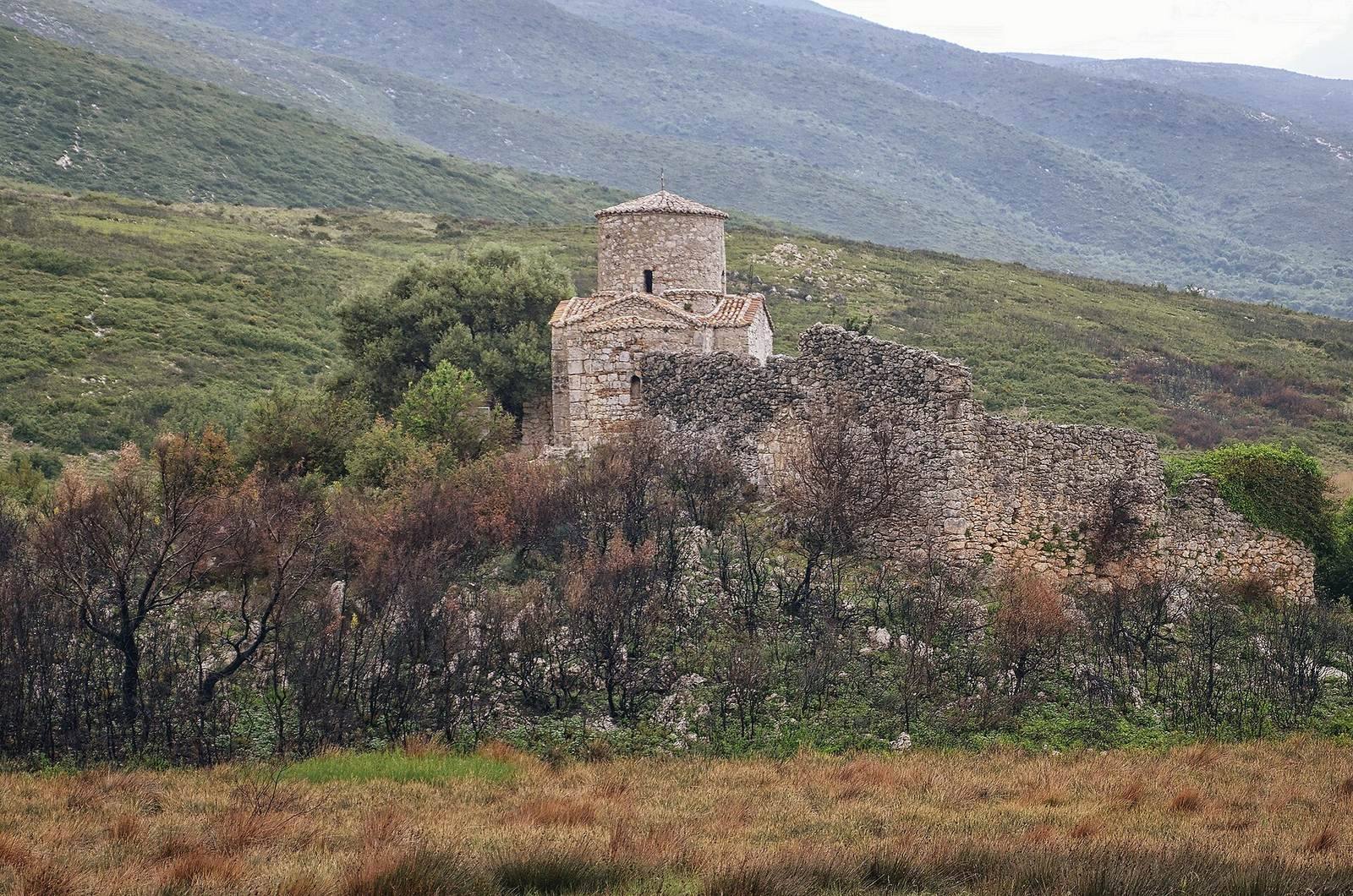
Marmiroi stands on a small hill surrounded by a marshy wet meadow, where the Dukat Plain meets the foothills of Rrëza e Kanalit. It lies on the southern side of Pashaliman Lagoon, about 3 kilometres southwest of Orikum in a straight line, within the wider Bay of Vlora landscape.
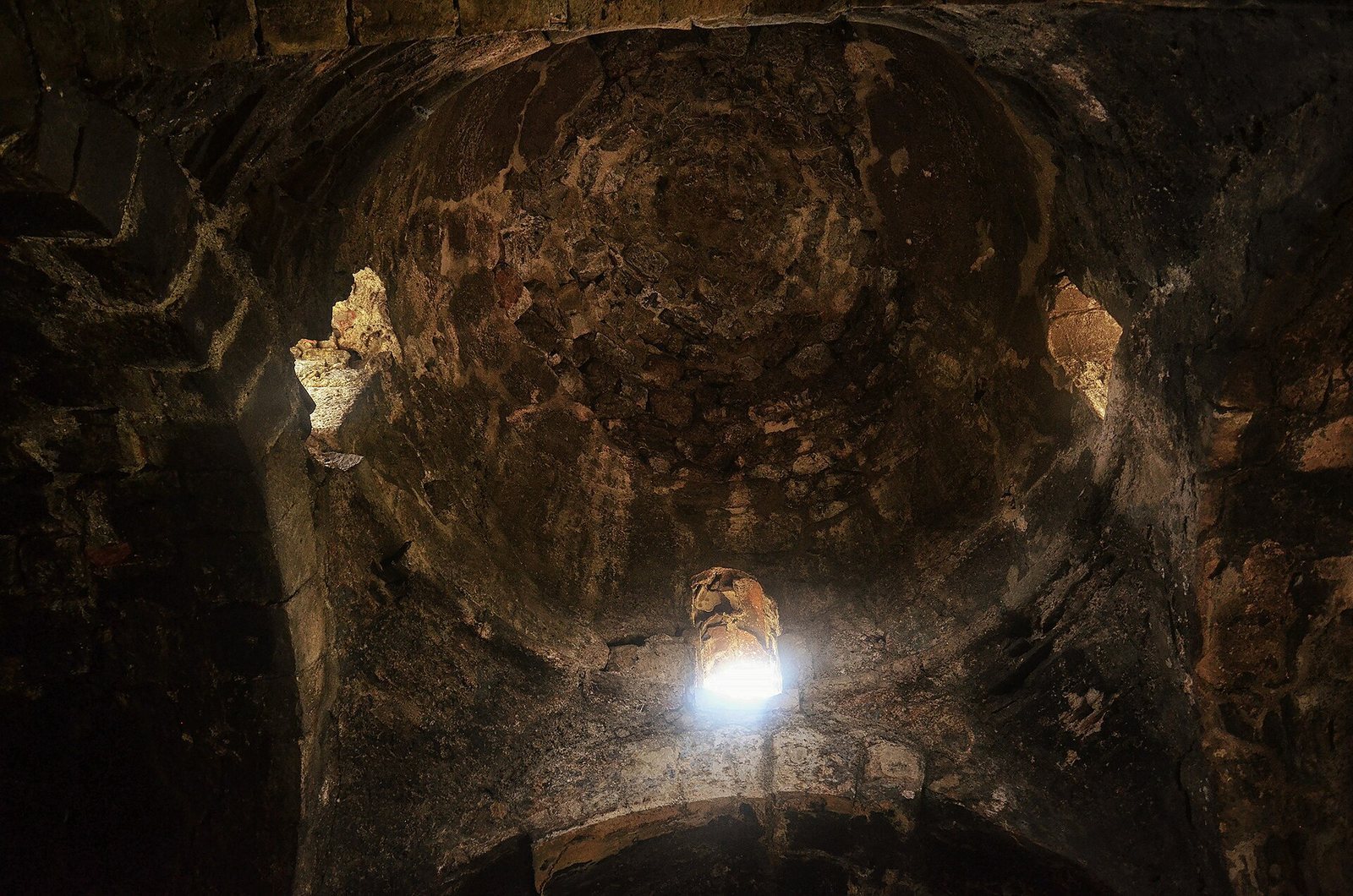
The church has a free-cross plan with a central dome raised on a conspicuously high cylindrical drum. It is also described as having a Latin-cross layout. The vaulted arms meet beneath the dome, while columns or piers with closing stones support the centrally placed drum. The eastern arm terminates in a semicircular apse, the rounded eastern end of the church, which is lit by a single small window. Entrances or doorways occupy the north, south, and west arms.
Construction and surviving exterior
The building was constructed mainly from unworked stones gathered from the bed of a nearby stream. Dressed stone around the doorways and facades came from the ruins of ancient Oricum. Mortar containing fragments of bricks and roof tiles binds the masonry, creating a combined stone, brick, and tile construction technique.
A former narthex, or entrance hall before the main church interior, stood before the western doorway. It is now largely destroyed, although its walls survive in ruined form. A raised, fortress-like wall extends along the northern side of the church for approximately 60 metres.
Interior and monastic remains
The interior is considerably deteriorated. Most of the frescoes have been lost, although their surviving style evokes Byzantine painting of the eleventh and twelfth centuries. A fragment remains in the southern arm of the church.
Walls around the church preserve elements associated with former monastic lodging buildings. Surviving features include a chimney, a window, and several niches. Together with the ruined narthex walls, these remains contribute to the interpretation of Marmiroi as a church within a small monastic complex.
The name Marmiroi may derive from the Albanian word for marble and may refer to the pale, marble-like appearance of the building stones. Its origin remains uncertain, and the church no longer preserves its former dedication.