St Gredifael’s Church: A Medieval Tudor-Linked Parish Church in Wales
Site at a Glance
- Rating
- 4.3
- Popularity
- Very Low
- Country
- United Kingdom
- Primary era
- Medieval
- External website
- Open
- Eras represented
- Medieval, Early Modern
- Civilizations
- English, Kingdom of Gwynedd
- Site type
- Religious
- Remains
- Church
On this page7 sections
History
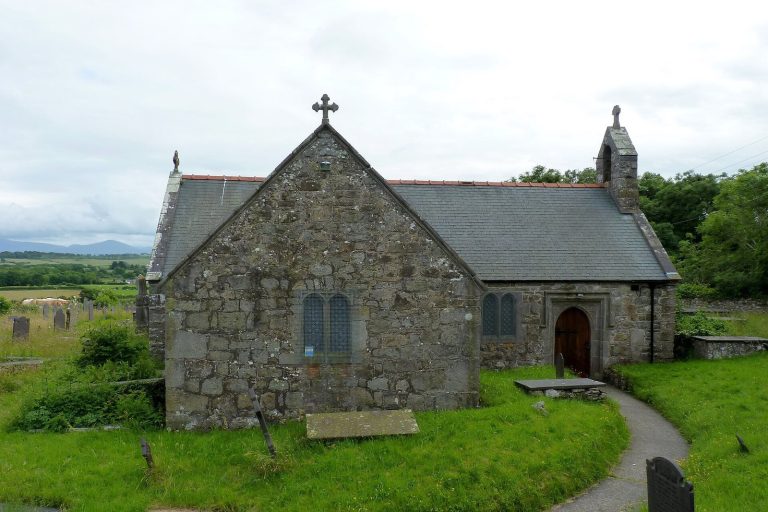
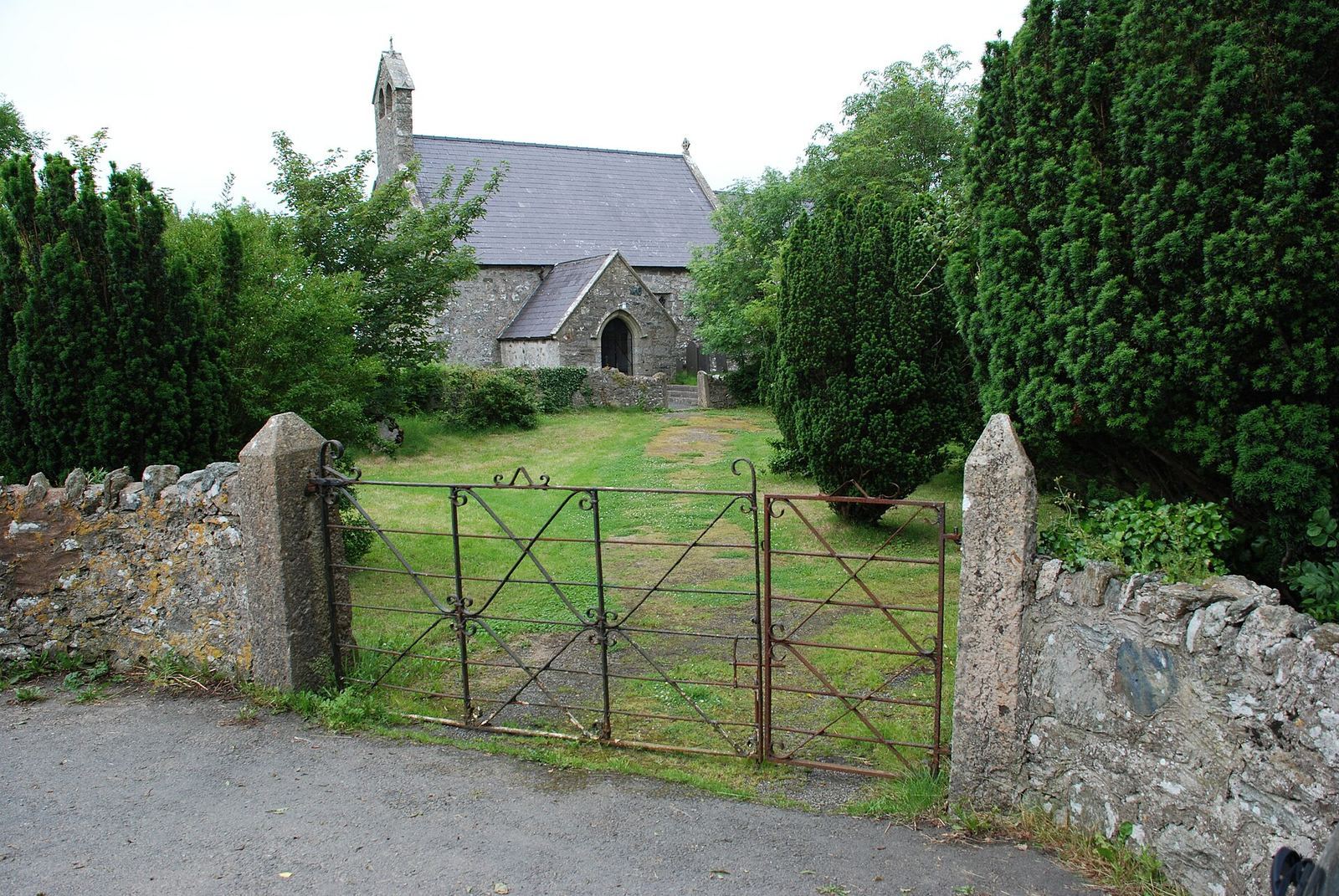
St Gredifael’s Church is a former Church in Wales parish church in Penmynydd, United Kingdom, founded by the Welsh Christian saint St Gredifael in the sixth century. A more substantial stone church was built in the twelfth century, while the present medieval building took shape through reconstruction in the fourteenth century.
Medieval development
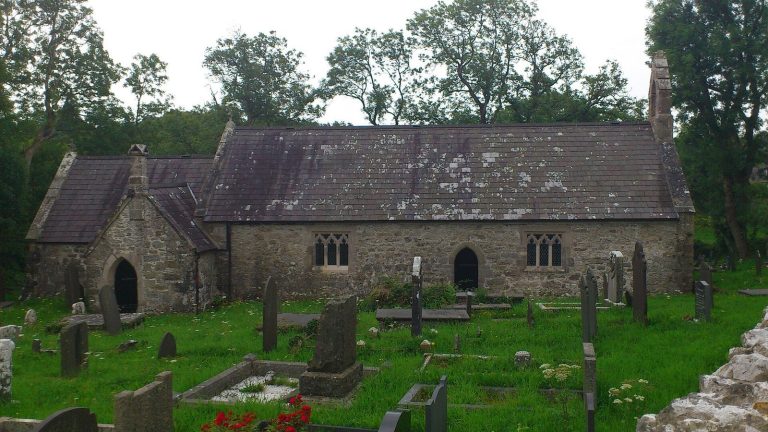
The fourteenth-century rebuilding created the nave and chancel in stone incorporating Norman carved material. The church was enlarged in the early fifteenth century with a north chapel and a porch on the south side. The chapel later became known as the Tudor chapel, reflecting the church’s close connection with the Tudor family of Penmynydd.
The Tudor connection and later history
Penmynydd is associated with the establishment of the House of Tudor, the English royal dynasty founded through a Welsh Tudor family. The church contains the tomb of Goronwy Fychan ap Tudur, a member of the Tudors of Penmynydd and great-uncle of Henry VII, the dynasty’s first monarch.
Restoration took place in 1848 and again in 1969, when the upper sections of the walls were repaired. Necessary repairs were supported by a Welsh Assembly grant in 2010 after concerns that the church might close. It later ceased to function as a parish church. St Gredifael’s Church was given Grade II* listed status in 1968 for its lightly restored medieval fabric, its fine late-fourteenth-century alabaster effigy tomb, and its local and national historical importance through its Tudor associations.
Remains
Medieval stone building
The surviving church is a medieval stone building formed around a nave and chancel constructed during the fourteenth-century reconstruction. Norman carved stone was incorporated into their fabric. The early-fifteenth-century expansion added the north chapel, later called the Tudor chapel, and a south porch, giving the building the principal arrangement that survives today.
Tudor chapel and alabaster tomb
The north chapel contains the late-fourteenth-century alabaster effigy tomb of Goronwy Fychan ap Tudur and his wife, Myfanwy Fychan. An alabaster effigy tomb combines a tomb chest with sculpted representations of the deceased, made from the fine-grained mineral gypsum. The monument was moved from Llanfaes Friary to the church by Henry VIII after the Dissolution of the Monasteries, the sixteenth-century process through which his government dissolved England’s monasteries. Pilgrims later removed pieces of the alabaster because they believed it possessed healing properties. Goronwy’s effigy has lost its hands, while Myfanwy’s has lost her fingers.
Windows and interior decoration
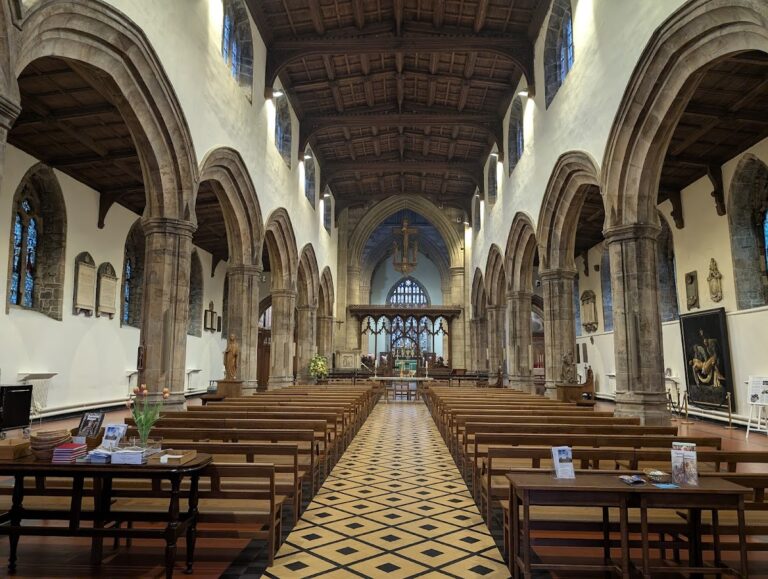
Stained-glass windows incorporate Tudor roses and a portcullis associated with the House of Beaufort. One window carries the Welsh motto, UNDEB FEL RHOSYN YW AR LAN AFONYDD AC FEL TY DUR AR BEN Y MYNYDDD, translated as “Unity is like a rose on a river bank and like a house of steel on top of a mountain.” Fleur-de-lis at the ends of the pews refer to Catherine of Valois, the French princess and queen of England who married Owen Tudor, and to the Tudor claim to the French throne.