Capela do Corpo Santo: A Fishermen’s Chapel in Funchal, Portugal
Site at a Glance
- Rating
- 4.4
- Popularity
- Very Low
- Country
- Portugal
- Primary era
- Medieval
- External website
- Open
- Eras represented
- Medieval, Early Modern
- Civilizations
- Portuguese
- Site type
- Religious
- Remains
- Chapel
On this page9 sections
History
Capela do Corpo Santo, officially called Capela Espírito Santo, is a Catholic chapel in Funchal, Portugal, dating from the late fifteenth century. Built at the eastern edge of the town by the fishermen’s confraternity, it served both religious and charitable purposes in the community.
Foundation and Community Role
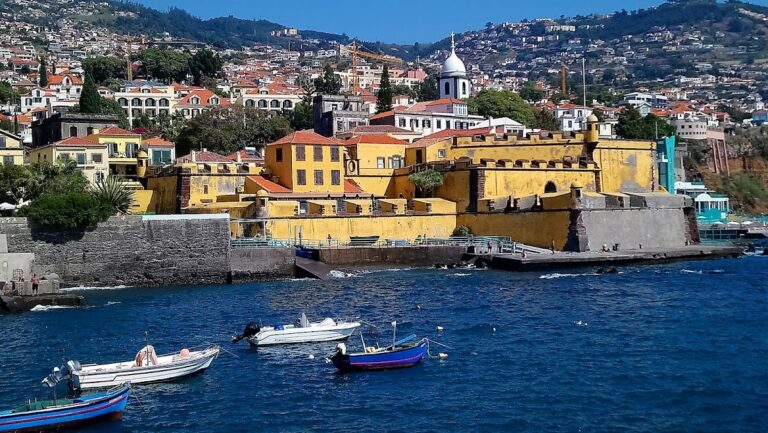
The confraternity dedicated the chapel to Saint Pedro Gonçalves Telmo, also known as Saint Peter González, a Catholic saint traditionally associated with sailors and fishermen. The chapel also functioned as an infirmary. Its charitable work extended to fishermen’s families, including assistance for widows of men lost at sea, humanitarian aid, and loans to members. It belongs to the parish of Santa Maria Maior and stands on Largo do Corpo Santo in Funchal’s historic old quarter, east of Fortaleza de São Tiago and west of the modern city centre.
Sixteenth-Century Alterations
Major changes began in the sixteenth century, when the altar was remodelled and narrow window openings were added. The first documented remodelling took place in 1594, although the chapel’s basic structure remained intact through later alterations and renovations. Its interior appearance was shaped substantially by work carried out during the sixteenth and seventeenth centuries.
Furnishings and Confraternity Practice
The chapel’s furnishings were expanded repeatedly from the sixteenth through the nineteenth centuries. The fishermen’s confraternity revised its vows in 1691 and 1745. A painting of a saint was transferred to the Chapel of São Sebastião in 1803, while the pulpit was installed in 1800 and a processional cross was made in 1881.
Modern Protection and Conservation
Maintenance, alteration, and improvement works took place repeatedly between 1954 and 1960. Individual objects were restored in 1987 and 1988, in 1995, and in 2016. On 21 December 1974, the chapel received legal protection as an Imóvel de Interesse Público, a Portuguese designation for property recognized as being of public cultural interest.
Remains
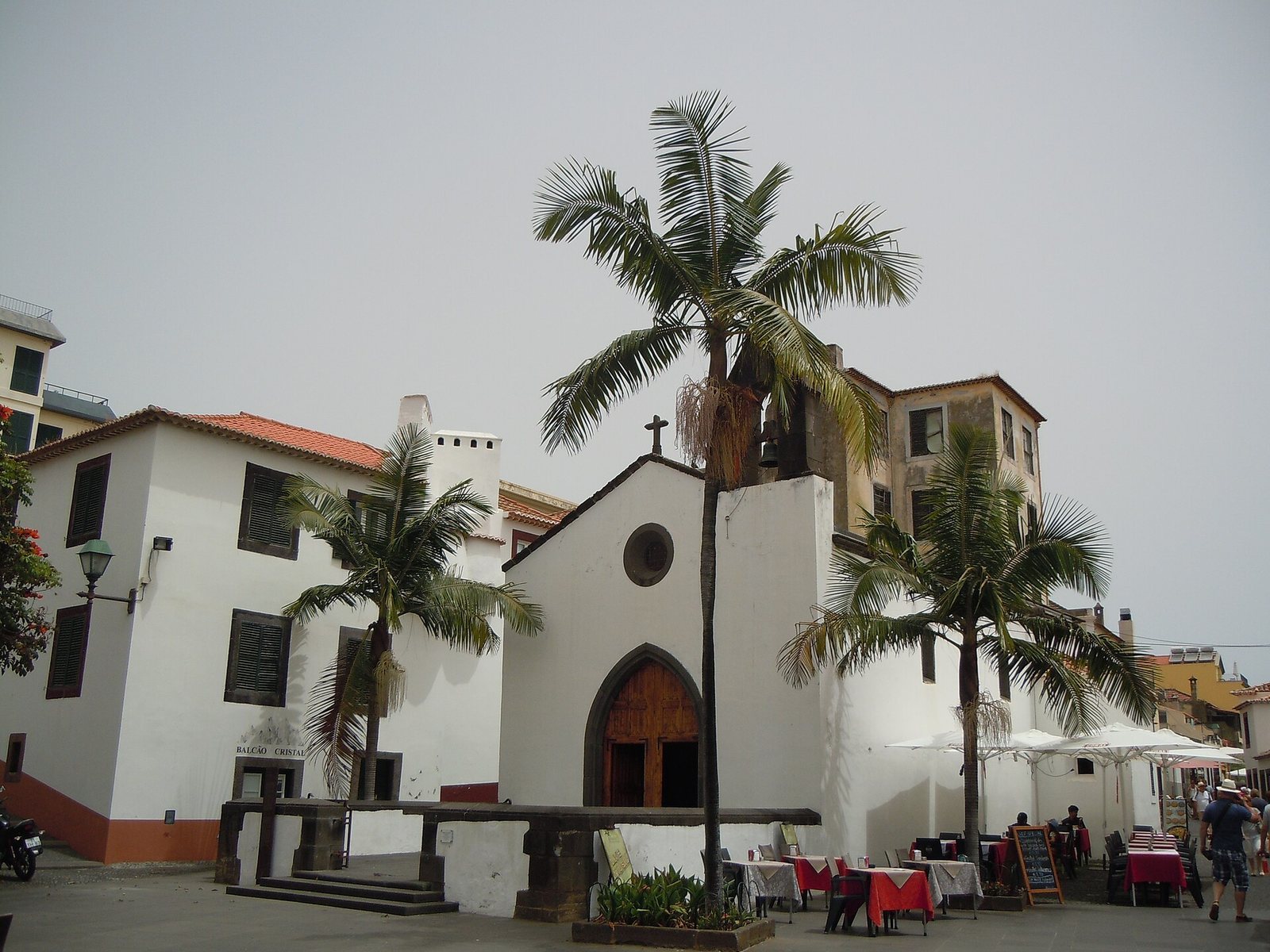
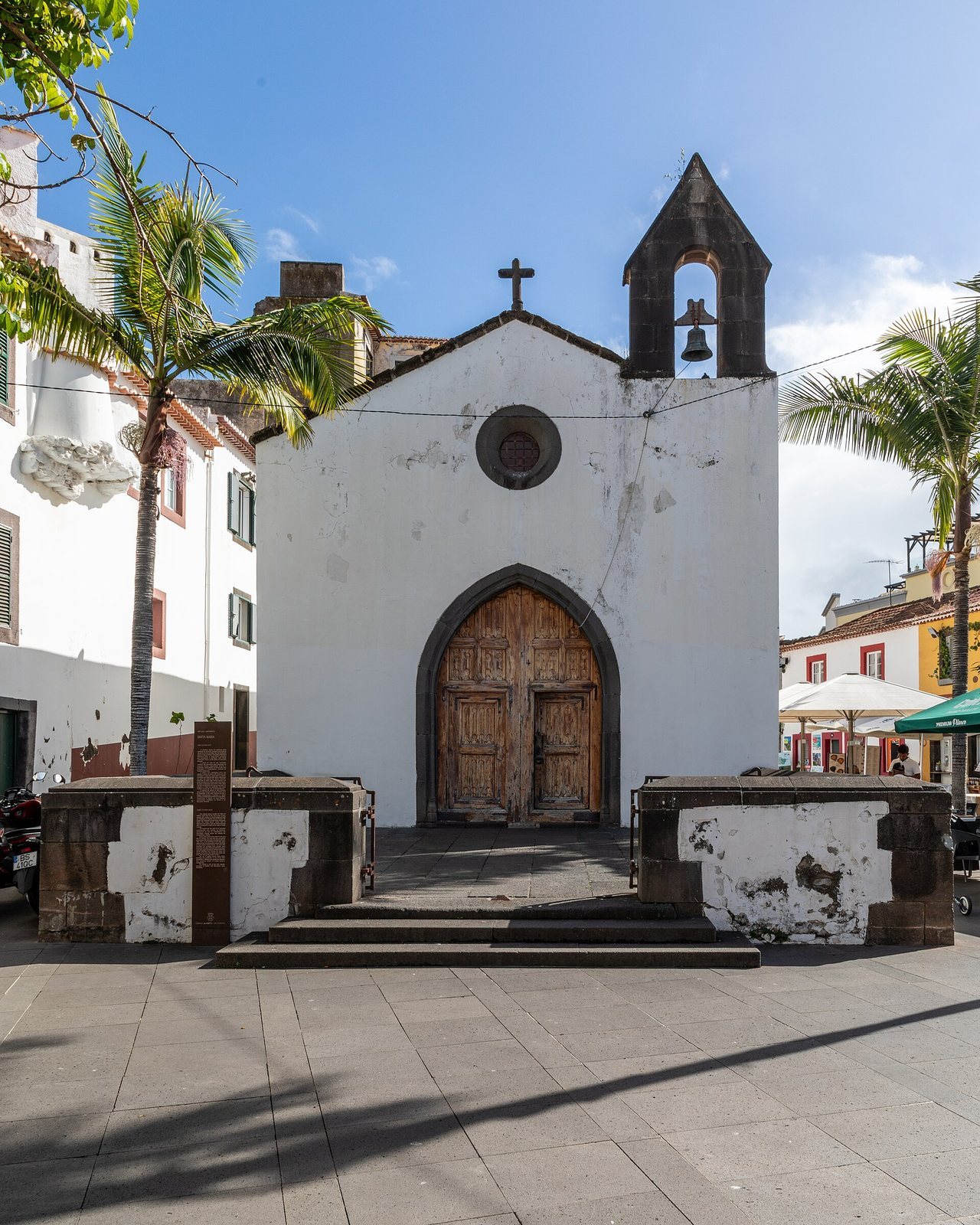
Capela do Corpo Santo is a rectangular hall building with a small sacristy attached to the south side of the chancel, the part of a church surrounding the main altar. The entrance façade faces west, while the south side faces the sea. Its surviving fabric combines a late-fifteenth-century Gothic portal with later Manueline and Mannerist elements, as well as furnishings and artworks dating from the sixteenth to the eighteenth centuries.
Exterior and Original Fabric
The original late-fifteenth-century fabric is represented by the Gothic pointed-arch portal and its wooden door leaves. The carvings on the doors depict parchment sheets dated to around 1500. Above the façade, a gable is crowned by a small oculus and a cross in the Manueline style, a Portuguese late-Gothic style associated with elaborate architectural and ornamental details. A small bell tower rises above the seaward side of the gable.
Chancel and Painted Decoration
The interior is a relatively plain hall whose present appearance reflects the sixteenth- and seventeenth-century renovations. The Mannerist chancel has a trapezoidal wooden ceiling, and its walls carry paintings of episodes from the life of Saint Pedro Gonçalves Telmo, angels playing musical instruments, and saints. Some wall paintings are naïve in style, while large paintings of musical angels form part of the ceiling decoration.
One chancel painting shows a ship carrying both the Portuguese coat of arms and the Habsburg standard, placing it around 1616 during the Iberian Union, the period from 1580 to 1640 when Portugal and Spain were ruled by the same Habsburg monarchs. Other chancel paintings, including the musician angels and scenes from the patron saint’s life, bear inscriptions dated 1615 and 1616.
Altarpieces and Sacred Furnishings
The main altarpiece painting dates from the first half of the sixteenth century and depicts Saint Pedro Gonçalves Telmo blessing a caravel. The image is probably the oldest depiction of a ship on Madeira. Side altars carved somewhat later than the main altarpiece frame wooden paintings attributed to the workshop of Fernão Gomes, a royal painter whose workshop is associated with these works.
The furnishings also include silver candlesticks made around 1600 for the altars of Saint Lawrence and the Holy Body by the workshop of Tristão Ribeiro. A Gothic chalice made in 1580 is associated with the chapel and is now held in the Museum of Sacred Art. Together, the paintings, sculptures, carvings, and silverwork form a notable collection spanning the sixteenth to the eighteenth centuries.