Gorioč Monastery: A Serbian Orthodox Monastery in Kosovo
Site at a Glance
- Rating
- 4.9
- Popularity
- Very Low
- Country
- Kosovo
- Primary era
- Medieval
- Eras represented
- Medieval, Early Modern
- Civilizations
- Serbian
- Site type
- Religious
- Remains
- Monastery
On this page6 sections
History
Gorioč Monastery is a Serbian Orthodox monastery in Kosovo, northwest of Istok, whose origins are placed variously in the thirteenth or fourteenth century. It is traditionally attributed to Stefan Dečanski, a medieval Serbian king of the Nemanjić dynasty, who is said to have dedicated the monastery to Saint Nicholas after the healing of his injured or “burned” eyes. This tradition is also associated with the monastery’s name.
Medieval foundation and later rebuilding
Gorioč functions as a dependent branch monastery of Visoki Dečani, within the Raška–Prizren Eparchy, an Eastern Orthodox ecclesiastical district. Its original Church of Saint Nicholas was rebuilt on its foundations during the sixteenth century, again in the eighteenth century, and once more at the beginning of the twentieth century. These successive interventions shaped the present church while preserving its connection with the earlier foundation.
War, renovation, and continuing use
An Albanian detachment attacked the monastery in 1912. During the Second World War, Albanian Nazi forces used the church as a prison where Serbian prisoners were held and tortured, and the monastery was looted.
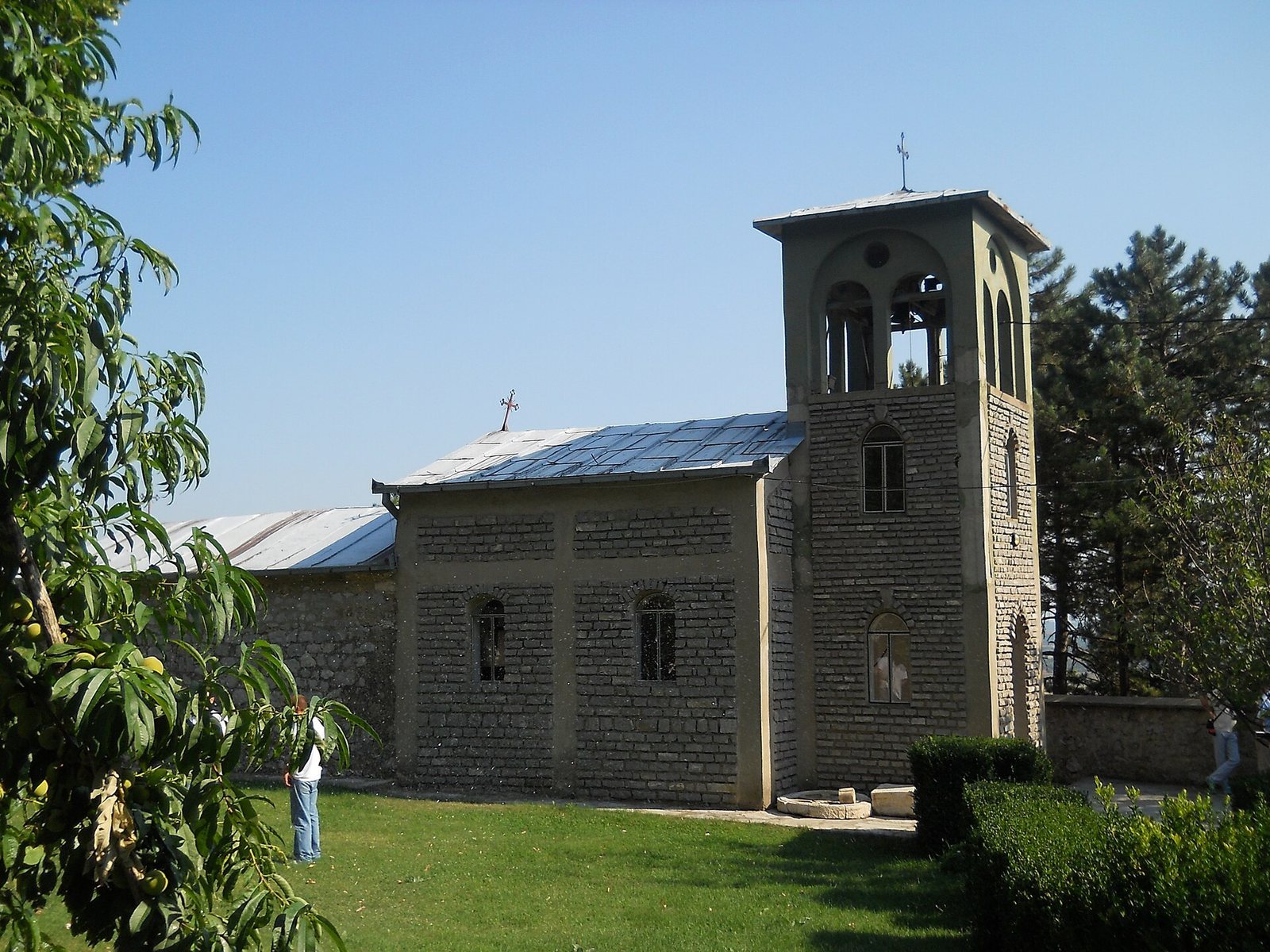
After the withdrawal of Serbian security forces in 1999, Spanish KFOR, the NATO-led Kosovo Force, protected the monastery. Since December 2010, the Kosovo Police has guarded it. Archimandrite Sava Krivokuća later undertook a renovation that added a narthex, an entrance vestibule adjoining the church, with a bell tower. He also built a new monastic residence, a cattle stable with two or three rooms above it, and a paved path linking the church and residence. The courtyard was levelled and covered with grass. Gorioč remains an active women’s monastery and is listed as a cultural monument of exceptional importance of the Republic of Serbia.
Remains
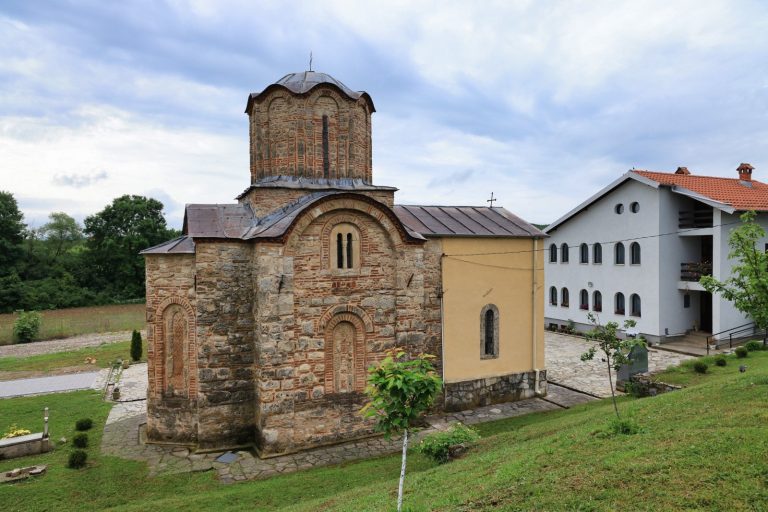
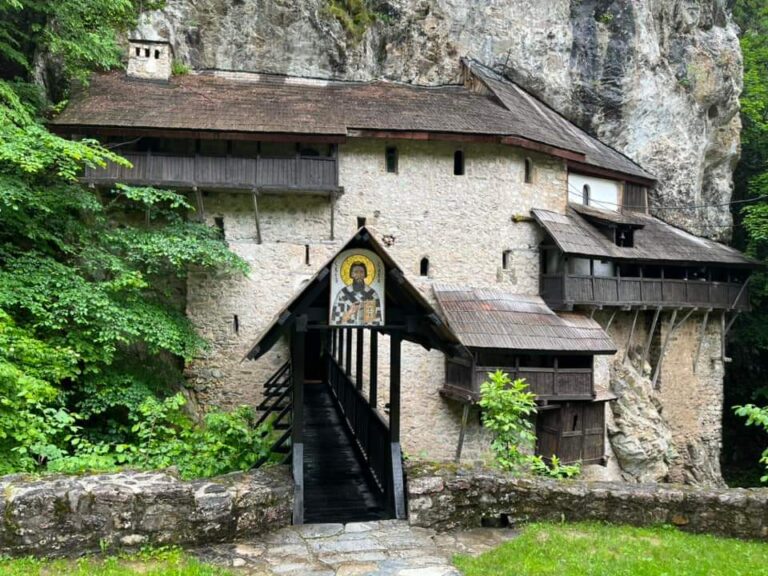
The monastery stands on Bela Stena and consists of the Church of Saint Nicholas, monastic quarters, a bell tower, a residential building, a fountain, small economic structures, and a fishpond. The complex also includes dormitories for nuns and guests, a cattle stable with rooms above it, a paved connection between the church and residence, and a levelled, grassed courtyard.
Church of Saint Nicholas
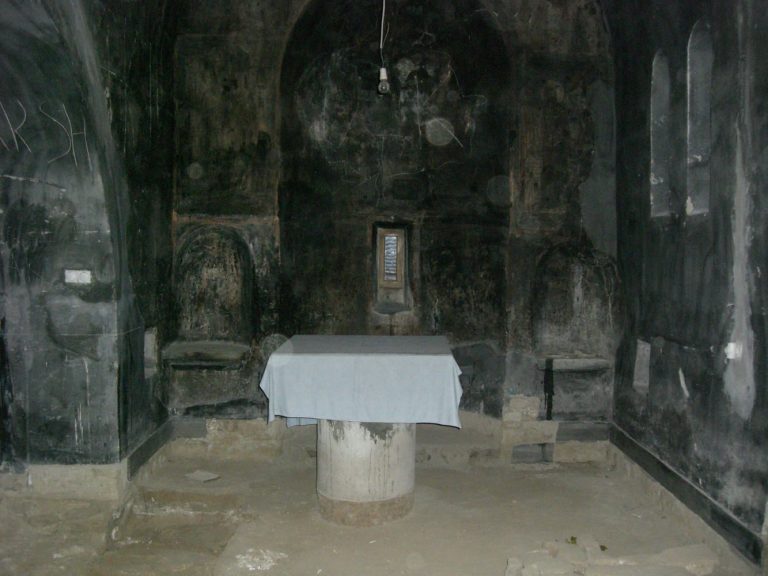
The church is a simple, single-nave building. The fourteenth-century structure did not survive in its original form, and the present church incorporates reconstruction on its foundations from the sixteenth and eighteenth centuries and the beginning of the twentieth century. The later additions include the narthex and bell tower associated with Archimandrite Sava Krivokuća’s renovation.
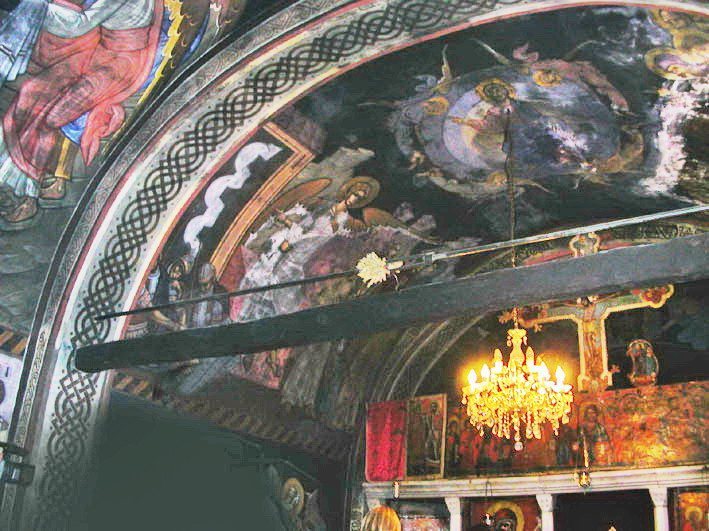
Inside are eleven icons painted during the sixteenth, seventeenth, and eighteenth centuries, together with frescoes from the seventeenth and eighteenth centuries. The monastery formerly possessed a library with valuable manuscripts and books dating from the fourteenth and fifteenth centuries. In 1856, Aleksandr Hilferding, a Russian traveller, scholar, consul, and historian, removed some of these books to Russia. Individual volumes are now preserved in Saint Petersburg.
Monastic buildings and grounds
The surviving monastic facilities include the quarters, residential building, bell tower, fountain, dormitories, and economic buildings. The cattle stable has two or three rooms above it, while a paved path connects the church to the residence. The courtyard was levelled and grassed during the renovation, and the wider complex also contains a fishpond.