St. George’s Church Großkmehlen: A Late Gothic and Baroque Parish Church in Germany
Site at a Glance
- Rating
- 4.6
- Popularity
- Very Low
- Country
- Germany
- Primary era
- Medieval
- External website
- Open
- Eras represented
- Medieval, Early Modern
- Civilizations
- Electorate of Saxony, Holy Roman Empire
- Site type
- Religious
- Remains
- Church
On this page12 sections
History
St. George’s Church Großkmehlen is a church in Germany, first documented in 1205 and shaped by late Gothic and Baroque building phases. Dedicated to Saint George, the Christian martyr traditionally associated with the defeat of a dragon, it developed into the present form through several periods of construction and alteration.
Late Gothic Origins and Early Modern Alterations
The chancel, the area around the main altar, the nave, or principal hall for the congregation, and the lower part of the west tower belong to the late Gothic phase. The nave was built during the second half of the fifteenth century. The church also received an important work of art from this period, a carved altar made in Antwerp and believed to have been commissioned by the von Lüttichau family before 1495.
Around 1618, the building was altered and the tower received a new upper structure. A decorated portal was added at the same time. The polygonal sandstone pulpit dates from 1620, placing one of the church’s major interior furnishings within this period of early modern change.
Baroque Expansion
From 1716 to 1718, the church was remodeled in the Baroque period. Two additions expanded the nave and created the present cruciform plan. The work followed an expert assessment by George Bähr, the German Baroque architect known especially for the Frauenkirche in Dresden and the Loschwitz Church. A baptismal font donated by von Brause dates from 1718.
The same remodeling period brought the church an organ by Gottfried Silbermann. Built in 1717 and 1718 for Johanna Eleonore von Brause, it was Silbermann’s eighth instrument. Christian Petzold carried out its acceptance inspection in November 1718. Silbermann was a leading eighteenth-century German organ builder, and his instruments are noted for their Baroque design and sound.
Damage, Restoration, and Heritage Status
A lightning strike in 1944 caused considerable damage to the organ. After its pipework had been removed, part of it was reinstalled during the same year. Other stops were replaced in 1954 by Jehmlich Orgelbau Dresden. From 1995 to 1996, the Rühle organ workshop restored the instrument, reconstructing eight lost stops on the model of Silbermann’s organ in the Georgenkirche at Rötha.
St. George’s Church is a listed architectural monument in the municipality of Großkmehlen. This status recognizes the building’s successive medieval, early modern, and Baroque phases as part of its historical character.
Remains
Plan and Exterior
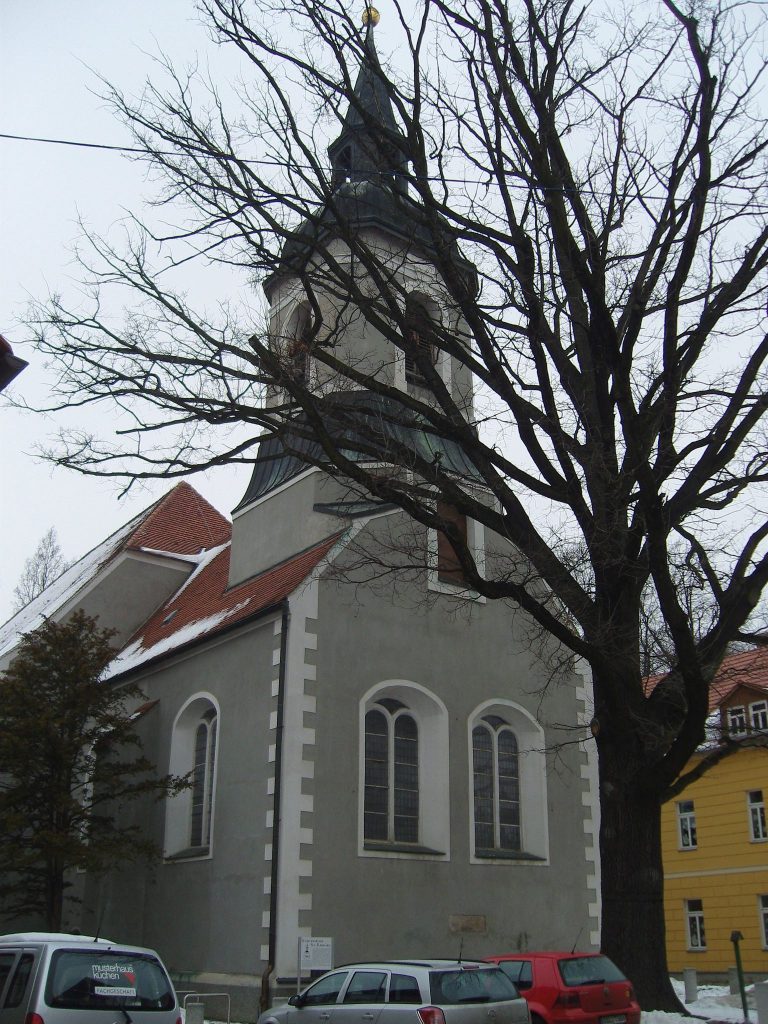
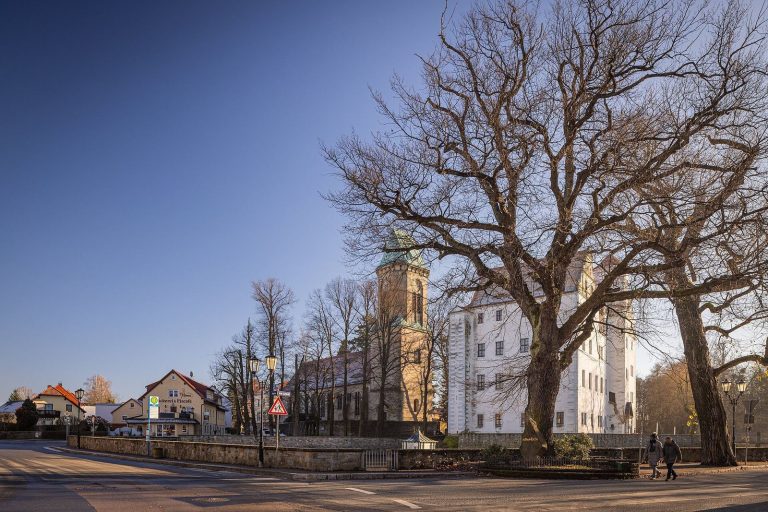
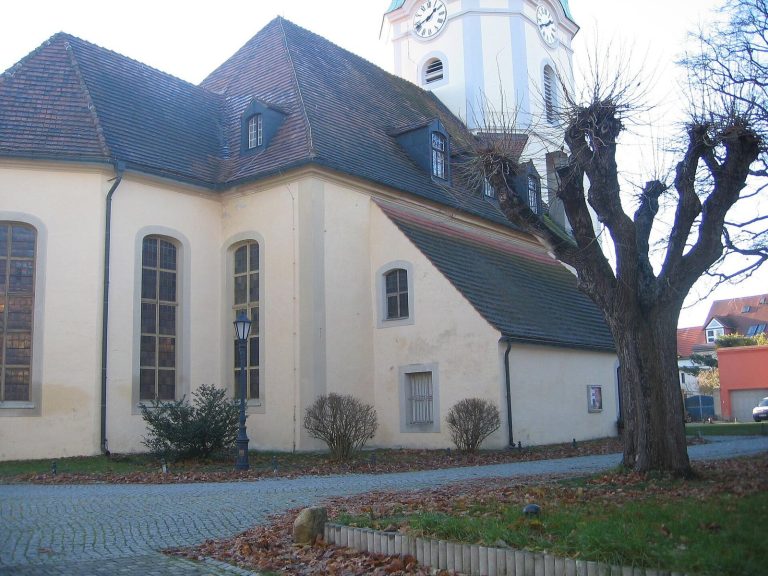
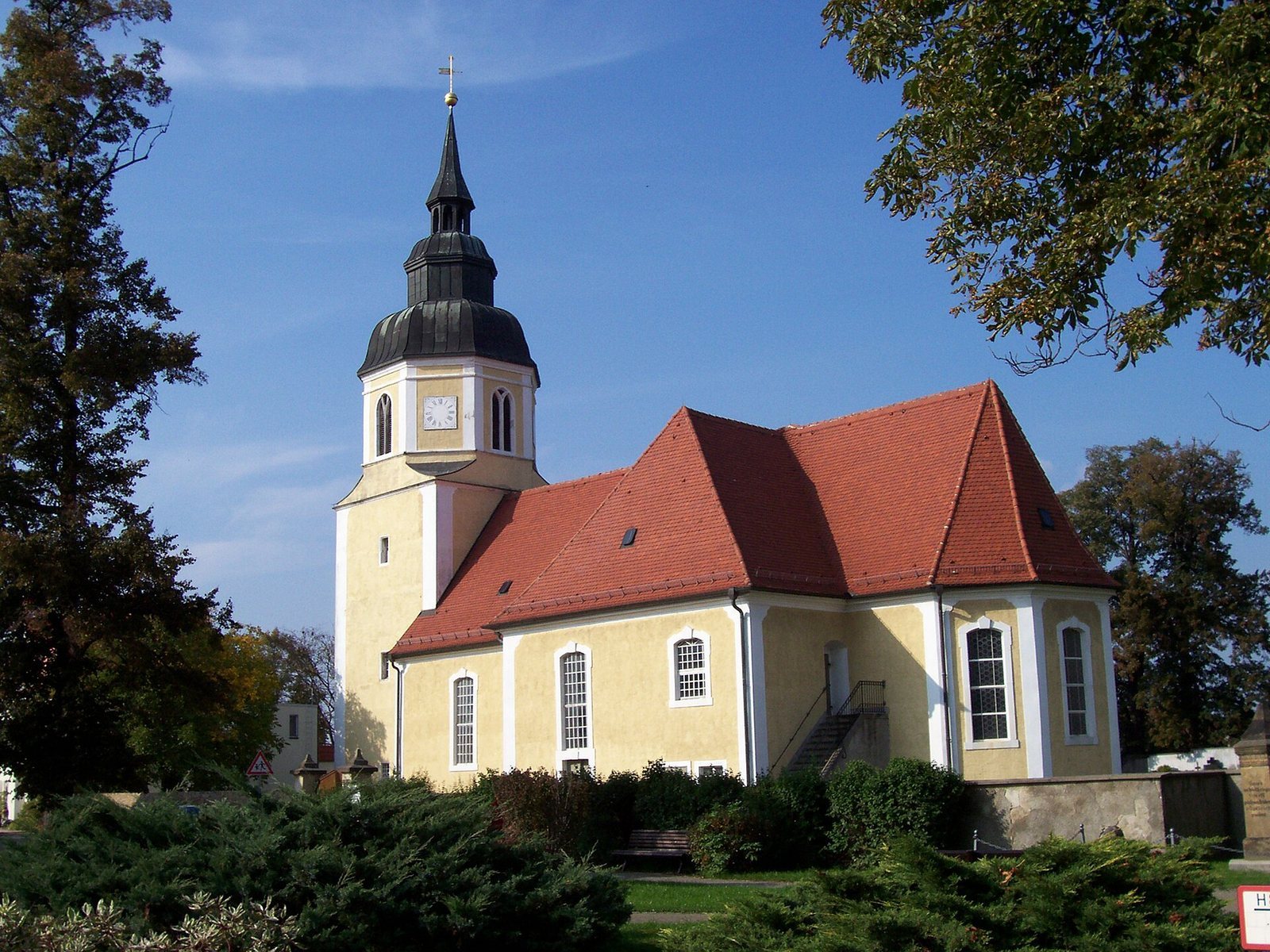
The church has a cruciform plan formed by the late Gothic core and the two Baroque additions to the nave. A west tower is attached to the nave, with its lower section belonging to the late Gothic building and its upper structure dating from the alteration around 1618. The building stands within an enclosed churchyard, while the decorated portal added around 1618 provides a distinct feature of the exterior.
Interior Structure and Furnishings
Ceiling, Gallery, and Seating
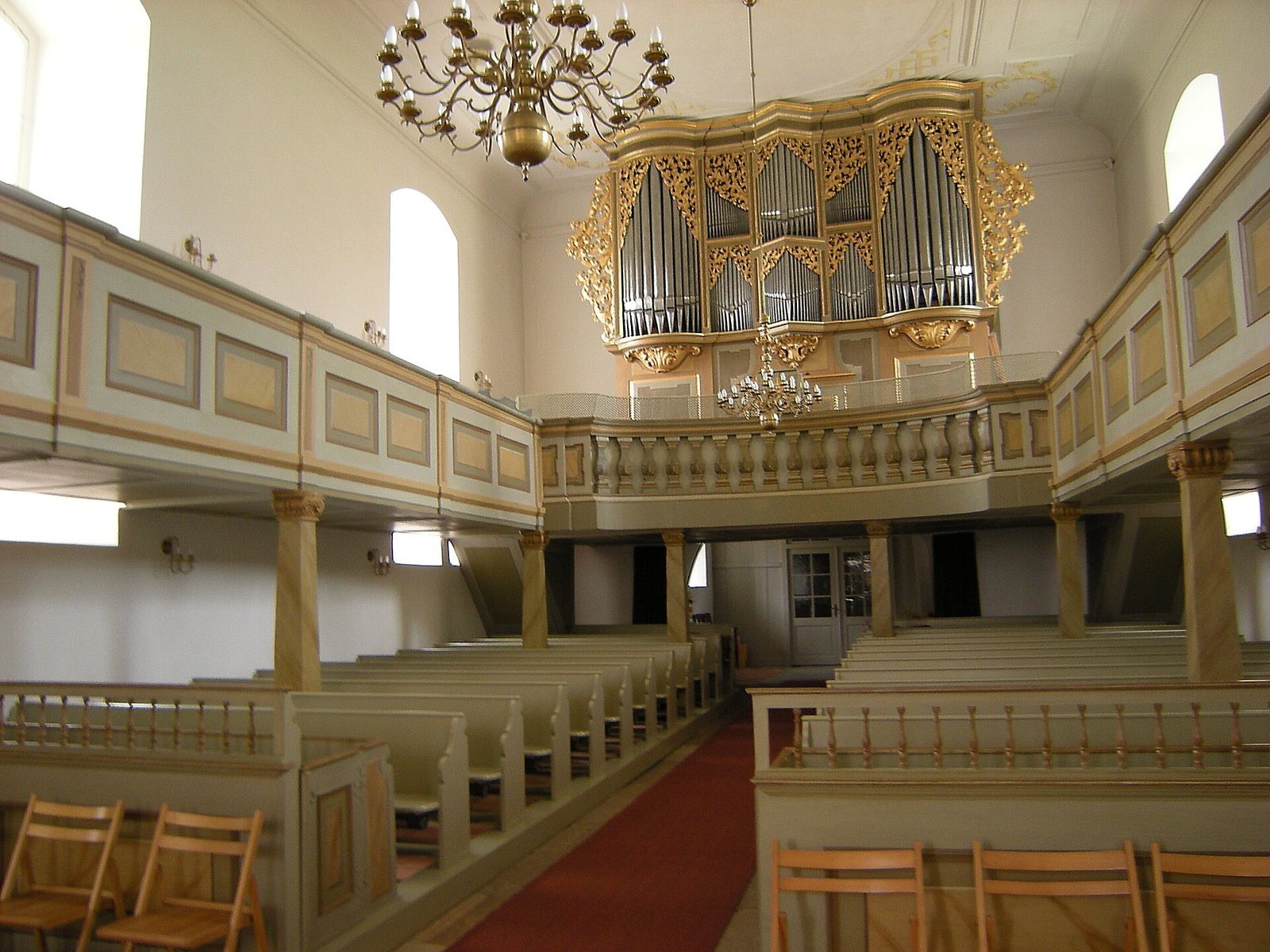
A flat stucco ceiling with geometric ornament covers the interior. A gallery extends around three sides of the church, supported by square posts that taper upward and end in Ionic capitals. The long sides are arranged with coffered panels. At the west end, the gallery has balusters and accommodates the organ. Parish and patronage seating from the early eighteenth century remains in the church, while the pews are arranged with a central aisle.
Tabernacle and Baptismal Font
The oldest furnishing is a late Gothic tabernacle from the first half of the fifteenth century. A tabernacle is a structure used to house the consecrated host. This example is now kept in the sacristy. The baptismal font, donated by von Brause, dates from 1718 and belongs to the church’s Baroque remodeling period.
Pulpit
The polygonal pulpit is made of sandstone and dates from 1620. Its central panel shows the Crucified Christ, flanked by sculptures of the four Evangelists, Matthew, Mark, Luke, and John, with their traditional symbols. A winged angel supports the pulpit and holds a cushion on its head beneath the pulpit basket. The wooden sounding board above it is decorated with flowers, ornaments, and crowning figures. On the rear wall, the Hebrew divine name JHWH appears above a round arch set between two Ionic pilasters.
Silbermann Organ
The organ built by Gottfried Silbermann in 1717 and 1718 has two manuals, which are keyboard divisions played by the hands, a pedal operated by the feet, and 22 stops controlling its different ranks of pipes. It contains 1,239 pipes, including 36 silent pipes in the facade. These silent pipes are decorative and do not produce sound. Much of the pipework was renewed during the twentieth century, followed by the restoration and reconstruction of lost stops between 1995 and 1996.
Carved Altar
The late Gothic carved altar came from a workshop in Antwerp and is associated with a commission by the von Lüttichau family before 1495. Its two shrines, one dedicated to Saint George and the other to the Cross, are set within a Renaissance frame dating from around 1620. The Saint George shrine forms the lower section and has two attached wings showing scenes from the saint’s legend. Parts of the altar were restored with financial assistance from BASF Schwarzheide.