Church of All Saints, Dechtice: A Medieval Rotunda in Slovakia
Site at a Glance
- Rating
- 4.8
- Popularity
- Very Low
- Country
- Slovakia
- Primary era
- Medieval
- External website
- Open
- Eras represented
- Medieval, Early Modern
- Civilizations
- Habsburg, Hungarian
- Site type
- Religious
- Remains
- Church
On this page8 sections
History
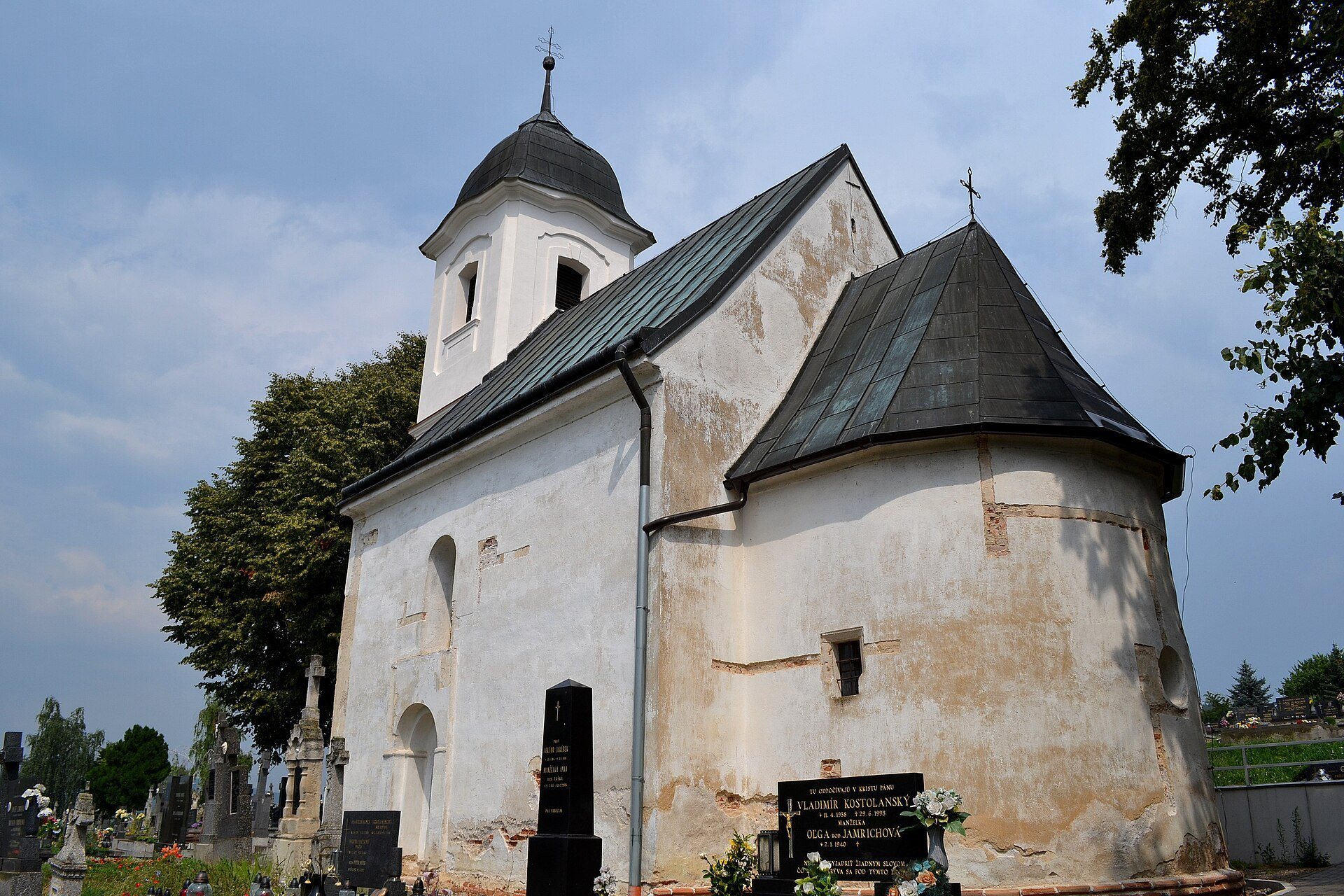
The Church of All Saints in Dechtice, Slovakia, is a Roman Catholic medieval rotunda built in 1172 and regarded as the oldest building in the town. It belongs to the Archdiocese of Trnava and serves the Dechtice parish within the Smolenice deanery. Its circular medieval plan, eastern apse, and later western tower reflect successive phases in the building’s history.
Medieval Origins
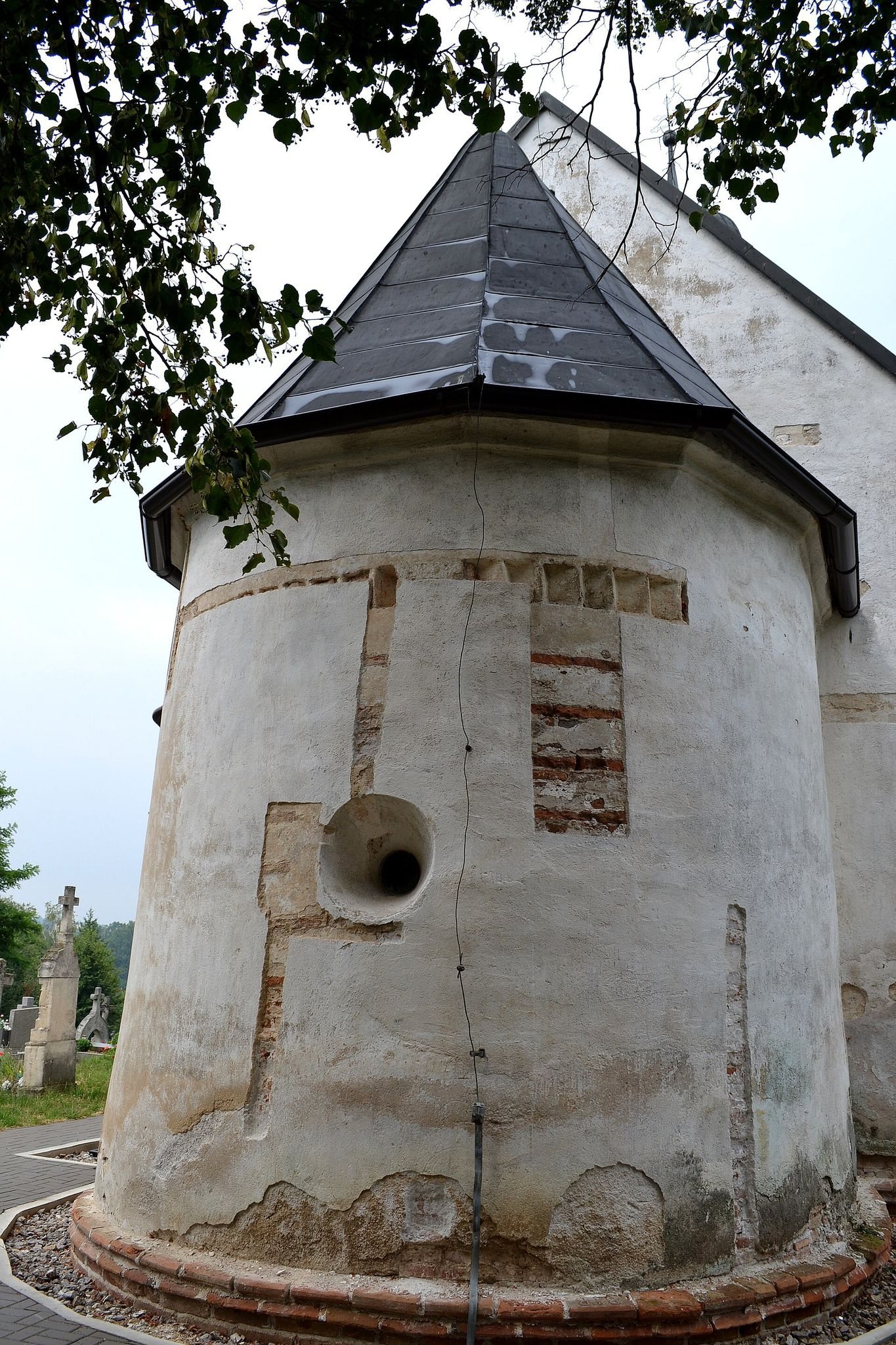
The date 1172 is preserved in records from a canonical visitation, an official ecclesiastical inspection, held in 1782. The original church had a single nave on a slightly flattened circular plan and ended in a semicircular apse to the east. Its interior was covered by a dome, creating the cylindrical space and hemispherical vault associated with rotunda architecture.
Minor alterations followed during the Late Gothic period. A reconstruction in 1932 revealed medieval wall paintings in the nave and apse. Václav Mencl published the paintings professionally in 1937, and in 1938 Vladimír Wagner identified an influence from northern Italian book painting.
Baroque Transformation and Wartime Damage
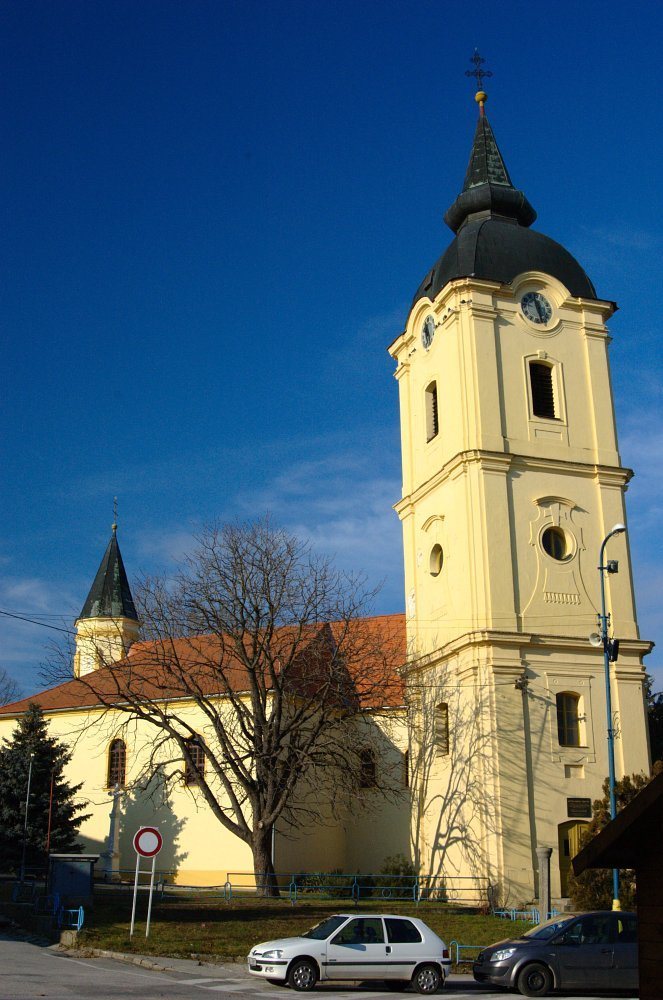
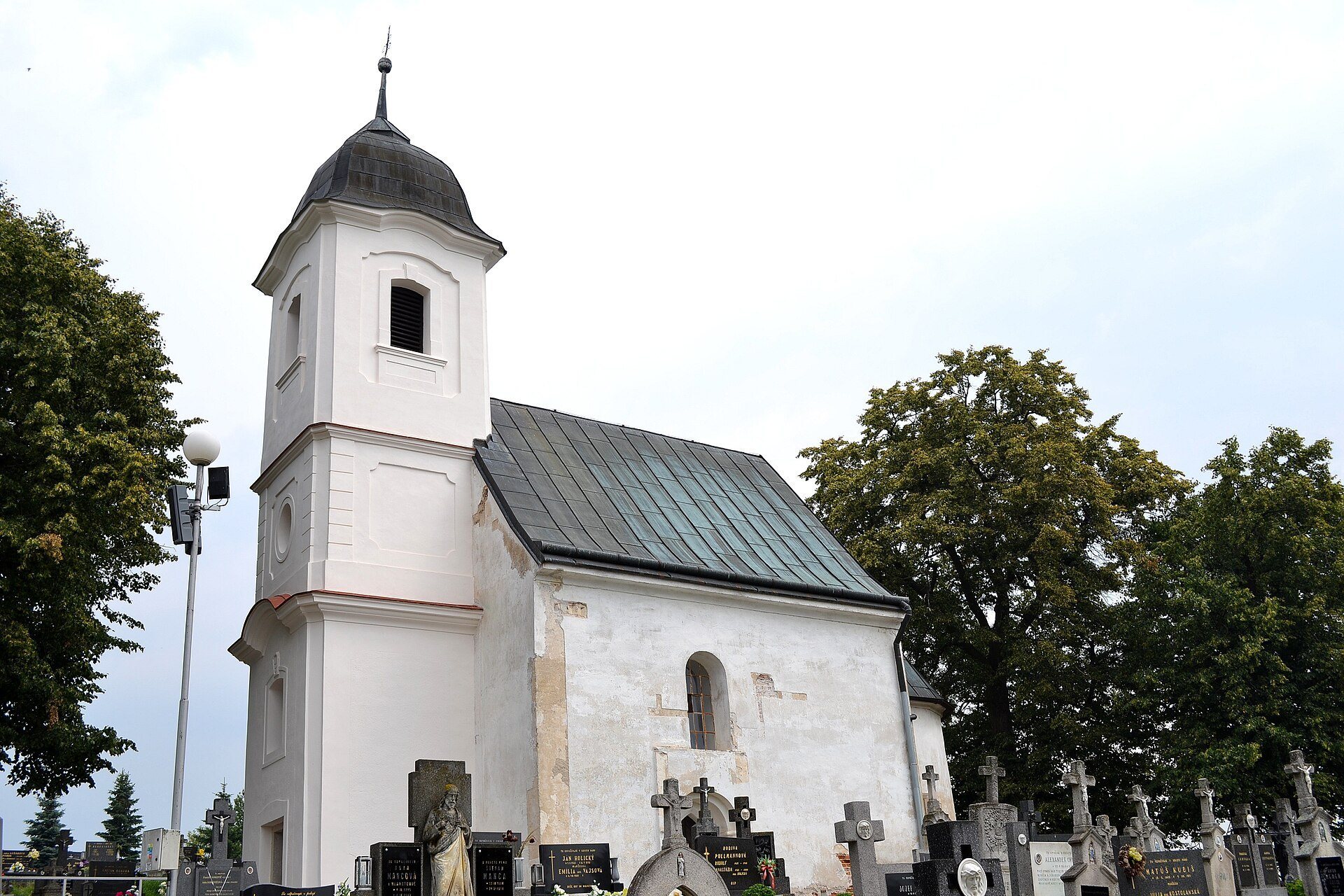
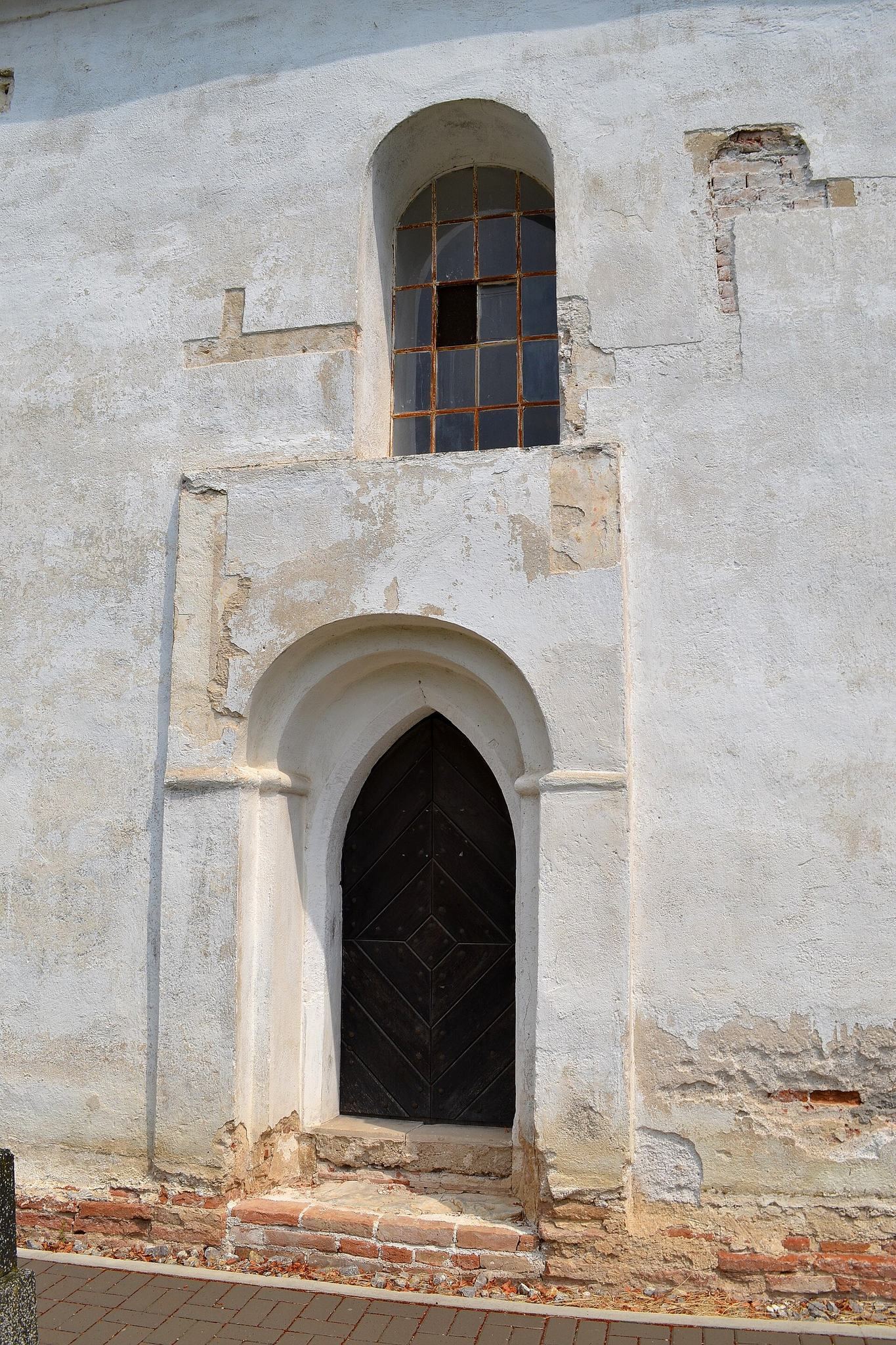
The church acquired much of its present external appearance during major changes in the first half of the eighteenth century. In 1741, a low Baroque tower was attached to the western facade. A portal was opened beneath it, replacing the original entrance on the south side, which then ceased to serve as the church entrance.
Russian troops seriously damaged the building during the liberation of Dechtice in 1945, in the final phase of the Second World War. Part of the tower was blown away. Andrej Kuc restored and conserved the wall paintings in 1961, and the church received another renovation in 2016.
Heritage Protection
The church was entered under catalogue number 793 on 17 September 1963 on the list of Slovak National Cultural Monuments, a designation providing legal protection for important heritage sites. It was declared a national cultural monument in 1991. Its wall paintings also belong to the national cultural-monument ensemble Medieval Wall Paintings, which includes approximately thirty other sacred buildings in Slovakia.
Remains
Setting and Rotunda Structure
The church stands within a cemetery that remains in use, on a gentle slope at the northern edge of Dechtice. Its plan follows the traditional Christian west-east orientation. The single-nave building has a circular plan and an eastern semicircular apse, while the western end carries an attached two-storey tower containing the belfry. Pronounced horizontal cornices divide the tower floors, whose windows vary in shape.
Inside, the circular arrangement forms a cylindrical space covered by a hemispherical vault. This centrally planned design distinguishes the building as a rotunda, even though the exterior, with its nave-like body and tower, resembles a more conventional church. The structure is associated with stone construction, while the bricks used in it reportedly came from Italy.
Medieval Wall Paintings
The wall paintings occupy the south wall of the nave and the apse. Specialists date them from the first half of the thirteenth century to the last quarter of the fourteenth century. Their Christological imagery presents episodes from the life, suffering, and death of Jesus Christ, including the Nativity, Baptism, Flagellation, Carrying of the Cross, and Crucifixion. A Tree of Life composition supplements these scenes, while a painting on the southern wall of the apse depicts the apostle Thomas.
Altar and Interior Furnishings
The apse contains an early Baroque main altar with an altarpiece showing a gathering of saints. Sculptures of God the Father and Jesus accompany the altarpiece. Other furnishings include small sculptures of the Pietà, Saint Stephen, and Saint Ladislaus.