Dolná Krupá Manor house: A Baroque and Classical Aristocratic Residence in Slovakia


Site at a Glance
- Rating
- 4.4
- Popularity
- Low
- Country
- Slovakia
- Primary era
- Early Modern
- External website
- Open
- Eras represented
- Early Modern
- Civilizations
- Habsburg, Hungarian
- Site type
- Domestic
- Remains
- Manor House
On this page13 sections
History
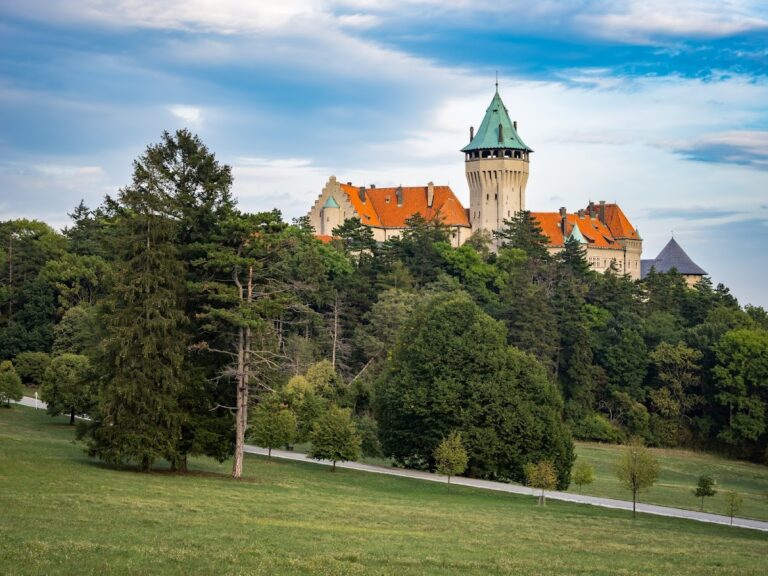
Dolná Krupá Manor house is a Baroque and later Classical aristocratic residence in Slovakia, erected between 1749 and 1756 on the site of an older castle. It was the principal residence of the Hungarian Brunsvik family, whose estate later passed to the Choteks, and it became known for its musical patronage and association with Ludwig van Beethoven.
The Brunsvik estate
The Brunsvik family originated in Stettin, Germany. Tobias Brunsvik, who lived approximately from 1590 to 1670, settled in Freistadt an der Waag and became the earliest recorded member of the family in the Kingdom of Hungary. Around 1710, his grandson Michael II Brunsvik married Margarethe Theresia Vitalis von Vitalisfalva and received the Unterkrupa estate as her dowry.
Anton I Brunsvik inherited Unterkrupa and commissioned a new manor house between 1749 and 1756, replacing the earlier castle. The building was designed by Johann Baptist Martinelli, an imperial court architect. Anton I served in the Hungarian Court Chancellery in Vienna, a central Habsburg institution administering the Kingdom of Hungary. Empress Maria Theresa ennobled him as a count in 1775 and allowed him to use the designation de Korompa, the Hungarian form of Unterkrupa. The elevation to the comital rank, meaning the title of count, is alternatively attributed to Emperor Joseph II.
After Anton I died, his property was divided by lot among his sons in 1783. Anton II received Mártonvásár, while Joseph inherited Unterkrupa. Joseph ordered a major remodelling between 1792 and 1796 under Johann Joseph Thalherr, architect of the Hungarian Court Chamber. Around 1813, he commissioned Anton Pius Riegel to carry out further alterations, giving the manor house a more fully Classical character.
Music and the Chotek succession
The Brunsviks supported the arts, especially music. Their private theatre hosted performances in which members of the family also participated. Through the family connection with Anton II Brunsvik, Beethoven visited Unterkrupa in 1800, 1801, and 1806. He taught piano there to Giulietta Guicciardi, the Italian-born pianist to whom he dedicated the Moonlight Sonata. Beethoven is also said to have composed part of the work at Unterkrupa.
Joseph Brunsvik’s daughter Henriette married Hermann Chotek von Chotkov and Vognin on 22 January 1813. The marriage transferred the Unterkrupa estate to the Chotek family. The new owners promoted agriculture and cattle breeding, while the estate continued to develop as a cultivated aristocratic landscape.
The rosarium and the political transformation
At the end of the nineteenth century, Marie Henriette Countess Chotek, a granddaughter of Hermann Chotek and Henriette Brunsvik, began creating a private rosarium, a garden devoted to cultivating and displaying roses, in the park. Her work earned her the nickname “Rose Countess.” After obtaining much of Rudolf Geschwind’s rose collection, she helped preserve 28 of his nineteenth-century rose varieties. A 1929 catalogue listed 8,000 roses bred by her at Unterkrupa, and the rose breeder Peter Lambert dedicated the rose “Marie Henriette Gräfin Chotek” to her in 1920.
Financial difficulties in 1934 began the decline of the rosarium, which was last mentioned in a 1938 rose yearbook. The collapse of the Austro-Hungarian Monarchy brought a political break for the estate. The former Unter-Korompa, previously within the Kingdom of Hungary, became Dolná Krupá in the Czechoslovak state established in 1918.
Czechoslovak land reform partially expropriated the Chotek property in 1923. In 1925, the family was required to transfer 518 hectares and four farmsteads to the state. The resulting legal dispute ended with a settlement on 12 June 1933. The estate therefore entered the later twentieth century already reduced in landholding and affected by political change.
War, confiscation, and new uses
After the Second World War, the arrival of the Red Army was followed by extensive destruction. Much of the park was devastated, the manor house was looted, its furnishings were stolen, and Marie Henriette Chotek was expelled. A sympathetic farming family sheltered her, but she died impoverished and isolated at Dolná Krupá in 1946. She was buried in the Chotek mausoleum there.
After her childless death, the estate passed to her niece Marie, married Pallavicini, who was identified in an administrative order of 17 October 1946 as Marie Countess Schönborn, married Pallavicini. The order classified her as a “traitor and enemy of the people” and directed the confiscation of the entire property. Between 1947 and 1949, nearly all of the estate’s secondary and agricultural buildings were destroyed.
In the 1950s, communist authorities in Czechoslovakia converted the manor house into a psychiatric clinic. It was later used as a home for composers. After the political changes of 1989 and 1990, the neglected estate came under the care of the Slovak National Museum, Slovakia’s principal national institution for preserving and interpreting cultural and natural heritage. The manor house became a music museum with historic instruments and a memorial to composers who lived in Slovakia, including Ernst von Dohnányi, Alexander Albrecht, and Franz Schmidt. A small Beethoven memorial museum was established in the gardener’s house in 1992, focusing on Beethoven’s connections with historic Hungary and present-day Slovakia.
Remains
The surviving estate is only a fragment of the former complex. Its principal elements are the manor house, parts of the designed park, the gardener’s house, and individual landscape features. The surviving park covers about 17 hectares, compared with the 247 hectares of the historic English landscape park. Much of the remaining land was transferred to socialist collective agriculture after the Second World War.
The manor house and associated buildings
Manor house
The manor house began as a Baroque building erected between 1749 and 1756 on the site of an older castle. Thalherr’s remodelling between 1792 and 1796 combined the existing Baroque design with emerging Classical elements, while Riegel’s work around 1813 gave the building its modern Classical character. The house now contains historic musical instruments and serves as a memorial museum for composers associated with Slovakia.
Gardener’s house
The former gardener’s house is part of the surviving estate buildings. Since 1992 it has contained a small Beethoven memorial museum, presenting the composer’s connections with historic Hungary and present-day Slovakia.
The English landscape park
Park and water system
An English landscape park was laid out between 1813 and 1819 under the German garden and landscape architect Christian Heinrich Nebbien. This type of designed landscape used irregular planting, lawns, water features, viewpoints, and picturesque structures to imitate an idealized natural setting rather than a rigid geometric plan. The park covered 247 hectares and was completed in 1822, as shown by surviving garden plans.
Its artificial water system included three ponds. The Great Pond contained an artificial island called Louise Island, while the smaller Turtle Pond and Trout Pond formed additional elements of the designed landscape. Louise Island commemorated Luise, the couple’s daughter, who died young.
Obelisk and sculpture
An artificial grotto and numerous sculptures once formed part of the park. Among the surviving architectural and sculptural elements is an obelisk topped by Mother with Child, a sculpture by the Hungarian sculptor István Ferenczy. Joseph Brunsvik’s widow, Josepha Maria Anna Majthényi von Kesselökeö, commissioned the obelisk and sculpture as a memorial to her deceased husband and as an expression of reverence toward the Creator.
Giant sequoia
A giant sequoia, Sequoiadendron giganteum, survives from the Brunsvik period in the former park. It is approximately 45 metres high and four metres in diameter. The tree is protected because it is among the largest of its kind.
Nearby sites