St Bartholomew’s Church: The Parish Church of Orford
Site at a Glance
- Rating
- 4.5
- Popularity
- Very Low
- Country
- United Kingdom
- Primary era
- Medieval
- External website
- Open
- Eras represented
- Medieval
- Civilizations
- English
- Site type
- Religious
- Remains
- Church
On this page13 sections
History
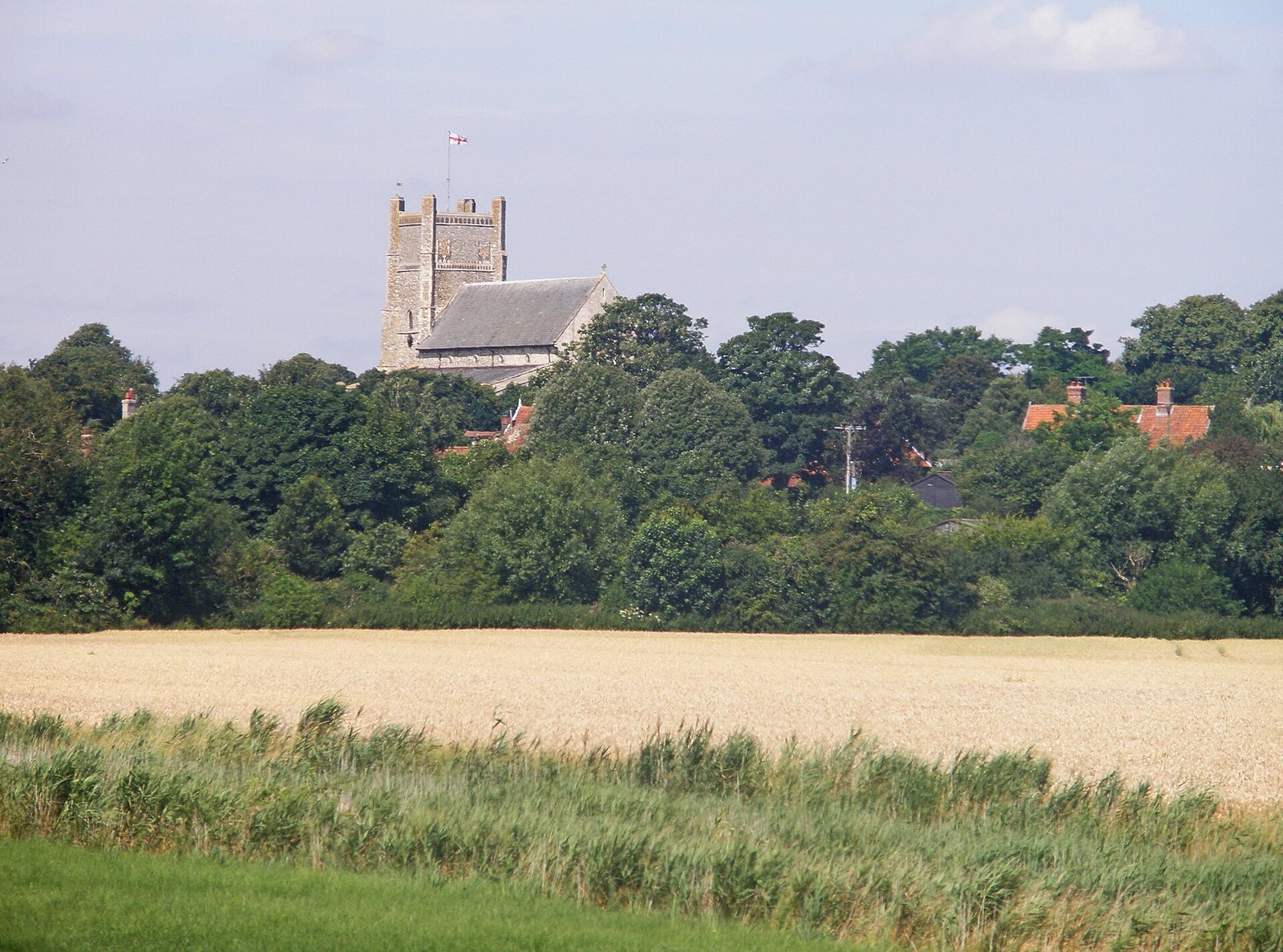
St Bartholomew’s Church is an active Church of England parish church in Orford, United Kingdom, principally dating from the fourteenth century and incorporating earlier medieval fabric. It belongs to the Diocese of St Edmundsbury and Ipswich and has undergone major reconstruction and repair during the nineteenth and twentieth centuries.
Medieval foundation and decline
The church’s original chancel was begun around 1166, at approximately the same time as Orford Castle, the medieval castle in Suffolk. Like the castle, the chancel was planned on a grand scale. By the eighteenth century, however, it had become completely ruined, and later rebuilding concentrated on the nave and tower. The chancel was abandoned, leaving its surviving eastern remains standing in the churchyard.
Restoration and reconstruction
George Edmund Street prepared a scheme for comprehensive restoration in the early 1880s, but the plan was not implemented. J. T. Micklethwaite reconstructed the nave and aisles between 1894 and 1900. H. M. Cautley repaired the chancel in 1930, while Bruce George restored the tower in 1971 and 1972 after its upper storey collapsed in 1830.
The 1830 collapse also destroyed the church’s organ. A temporary instrument eventually replaced it and remained in use into the early twenty-first century. In 2017, the English organ builder Peter Collins offered a redundant organ from the Turner Sims Concert Hall, a concert venue at the University of Southampton. Although the Diocesan Advisory Committee opposed the proposal, formal ecclesiastical permission, known as a faculty, was issued in 2018. Cousans installed the organ in the church in 2019.
Music and heritage
St Bartholomew’s Church hosted the first performances of four works by Benjamin Britten, a major twentieth-century English composer known especially for vocal, choral, and operatic music. The works were Noye’s Fludde, Curlew River, The Burning Fiery Furnace, and The Prodigal Son.
The church has been listed at Grade I since 16 March 1966. Grade I is the highest category of listing for buildings of exceptional architectural or historic interest in England.
Remains
St Bartholomew’s surviving fabric brings together a ruined twelfth-century chancel, a Decorated nave and aisles, and a tower. The Decorated style is a phase of English Gothic architecture associated particularly with the later thirteenth and fourteenth centuries, distinguished by elaborate tracery and ornament. The nave and aisles reflect their reconstruction between 1894 and 1900, while the tower incorporates the results of its restoration in 1971 and 1972.
Medieval and Gothic fabric
Ruined chancel
The twelfth-century chancel survives externally as two rows of ruined columns extending eastward from the church into the churchyard. It represents the grand early phase of the building begun around 1166 and remains physically distinct from the later church spaces.
Nave, aisles, and tower
The nave is the main central space for the congregation, while the aisles are parallel spaces alongside it. These parts were reconstructed in the Decorated Gothic manner between 1894 and 1900. The tower, whose upper storey collapsed in 1830, was restored in 1971 and 1972.
Fifteenth-century font
The fifteenth-century font has a base surrounded by four lions and four wild men, giving this surviving furnishing a distinctive sculptural form.
Paintings and memorials
Painting above the main altar
Above the main altar hangs Bernardino Luini’s painting of the Holy Family with St John the Baptist and a donor. St John the Baptist is the biblical prophet who, in Christian tradition, baptized Jesus. The work was originally a processional banner commemorating an event at Milan Cathedral in 1525. Luini was an Italian Renaissance painter.
Painting in St Nicholas Chapel
Above the altar in St Nicholas Chapel is a painting of the Nativity with the Angel Appearing to the Shepherds by Raffaellino del Colle, another Italian painter of the Renaissance period.
Memorials and organ
The church contains numerous memorials and monuments, including a memorial to Benjamin Britten formed by a green slate slab set into the nave floor. The organ installed in 2019 was transferred from the Turner Sims Concert Hall and placed in the church by Cousans.