St Mary’s Church, Mildenhall: A Fourteenth-Century Parish Church
Site at a Glance
- Rating
- 4.6
- Popularity
- Very Low
- Country
- United Kingdom
- Primary era
- Medieval
- External website
- Open
- Eras represented
- Medieval, Early Modern, Modern
- Civilizations
- British, English
- Site type
- Religious
- Remains
- Church
On this page12 sections
History
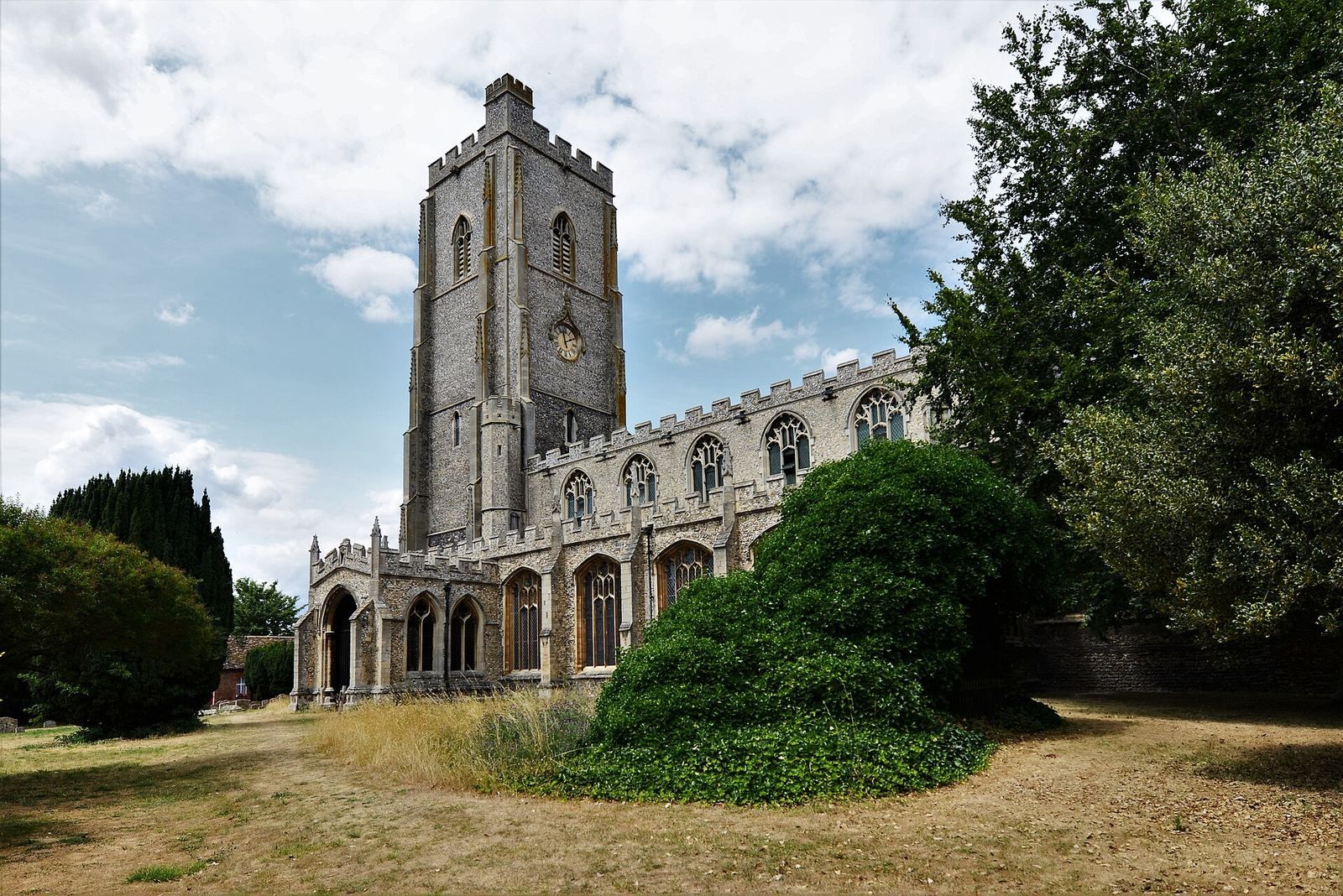
St Mary’s Church is a predominantly fourteenth-century Church of England parish church in Mildenhall, Suffolk, dedicated to St Mary. It belongs to the Diocese of St Edmundsbury and Ipswich, within the Suffolk Archdeaconry and Sudbury Deanery, and remains a Grade I listed building, the highest category of statutory protection for historic buildings in England.
Medieval parish church
The main fabric of the church dates from the fourteenth century. Its development produced a substantial parish building with a south aisle, chancel, chancel arch, vestry, and tower. As a parish church, it served a defined local ecclesiastical district within the Church of England, the established Anglican church in England.
Later parish history
Mildenhall parish now forms part of the Mildenhall Team Ministry, a cooperative arrangement in which several parishes share ordained ministry. The team includes Barton Mills, Beck Row with Kenny Hill, Eriswell, Freckenham, Herringswell, Icklingham, Red Lodge, Tuddenham with Cavenham, Cavenham, West Row, and Worlington.
The church’s architectural and historic interest has also shaped its modern interpretation. It is listed at Grade I, and Simon Jenkins gave it four stars in England’s Thousand Best Churches.
Bells and music
The church’s bell ring developed through several modern phases. Mears & Stainbank cast the largest eight bells at the Whitechapel Bell Foundry between 1887 and 1913. Bells four through nine were rehung in 1914 in a steel-and-cast-iron frame made by Mears & Stainbank. Two trebles, or high-pitched bells, were added in 1946 by Gillett & Johnston to celebrate the end of the Second World War and the return of peace. The bells are associated with the Suffolk Guild of Ringers.
Remains
St Mary’s surviving building is arranged around a predominantly fourteenth-century core that includes the south aisle, chancel, chancel arch, vestry, and tower. The interior preserves a group of memorial monuments, a ten-bell ring in a steel-and-cast-iron frame, and a two-manual pipe organ made in the nineteenth century.
Medieval fabric and memorials
South aisle monuments
The south aisle contains a cenotaph commemorating Sir Henry Barton, who was Lord Mayor of London in 1416 and 1428. A cenotaph is a memorial erected for a person whose remains are not necessarily buried beneath it. The aisle also holds an alabaster tomb chest with effigies of Sir Henry North and his family. Sir Henry North died in 1620. A wall tablet to Henry Bunbury, who died in 1722, is also located in this part of the church.
Chancel memorials
The chancel contains a wall tablet commemorating Sir Henry Warner, who died in 1617, together with Edward Warner and Mary Warner, who died in 1601. Another tablet, to the Reverend John Hunt, commemorates his death in 1736. At the chancel arch, which separates the chancel from the nave, stands a wall tablet to Sir Henry North, who died in 1671.
Other commemorative features
Further memorials include wall tablets to Roger North, who died in 1651, and Thomasina North, who died in 1661. A floor slab in the vestry commemorates the diarist William Coe, who died in 1729. Wall tablets are commemorative plaques fixed to a wall, while the vestry is a room used by clergy and for storing church furnishings.
Bells and organ
Ten-bell ring
The tower houses a ring of ten bells designed to be rung together. Its steel-and-cast-iron frame was made by Mears & Stainbank. The largest eight bells date from 1887 to 1913, while the two additional trebles were cast by Gillett & Johnston in 1946. Their post-war addition gives the present bell ring a commemorative connection with the end of the Second World War.
Pipe organ
The church also contains a two-manual pipe organ made by Father Henry Willis in 1865. A two-manual organ has two keyboards for the hands, connected to pipes that produce its sound. Willis was an English organ builder whose work forms part of the church’s surviving musical furnishings.