Church of St Mary, Woolpit: A Medieval Parish Church and Pilgrimage Shrine
Site at a Glance
- Rating
- 4.7
- Popularity
- Very Low
- Country
- United Kingdom
- Primary era
- Medieval
- Eras represented
- Medieval
- Civilizations
- English
- Site type
- Religious
- Remains
- Church
On this page11 sections
History
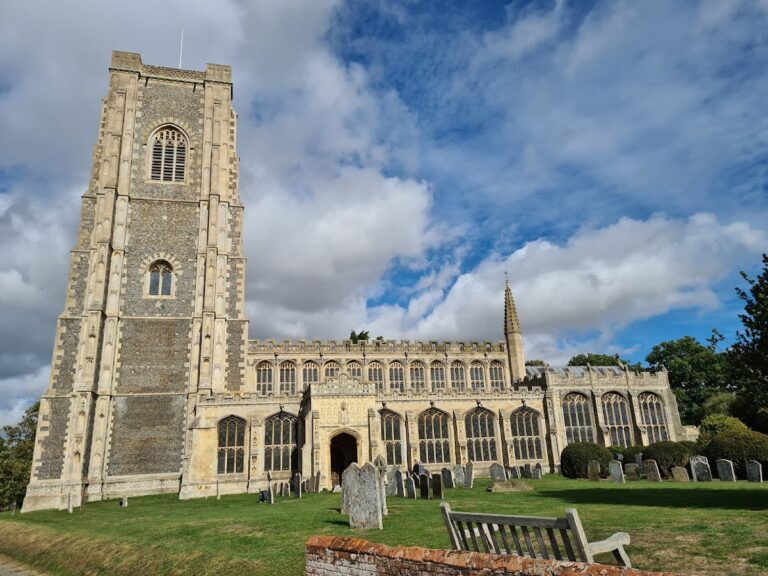
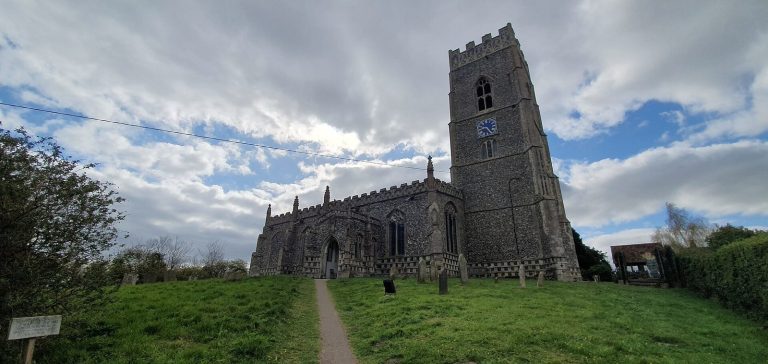
Church of St Mary, Woolpit is a Church of England parish church in the United Kingdom, belonging to the Diocese of St Edmundsbury and Ipswich. Much of the building dates from the fifteenth century and is predominantly Perpendicular Gothic, the later medieval English style known for strong vertical lines, large windows, elaborate tracery, and richly developed roofs. The south aisle and chancel retain work from the fourteenth century, while the church’s later history is closely connected with the pilgrimage shrine of Our Lady of Woolpit.
Medieval church and shrine
The church developed as a medieval parish foundation, with substantial rebuilding and enlargement taking place during the fifteenth century. Its large porch was constructed between 1430 and 1455, and the building acquired an elaborately decorated exterior clerestory. During this period, a richly adorned image of the Virgin Mary was venerated as Our Lady of Woolpit.
Pilgrimage to the shrine may have begun as early as about 1211, although its existence is clearly indicated by a mid-fifteenth-century will that referred to the making of a new tabernacle for Blessed Mary. The pilgrimage became especially popular during the fifteenth and early sixteenth centuries. Henry VI, the Lancastrian king of England, visited in 1448 and 1449. John, Lord Howard, later Duke of Norfolk, made a substantial offering in 1481, and Elizabeth of York gave 20 pence in 1502.
Reformation and later changes
The shrine ended during the religious changes of the Tudor period. In 1538, Henry VIII ordered the removal of images associated with pilgrimage and offerings, and the statue of Our Lady of Woolpit was removed or destroyed. The shrine chapel was demolished in 1551 under a warrant issued by the Court of Augmentations, the Tudor institution that administered property confiscated from dissolved religious houses and other ecclesiastical foundations.
The spring north-east of the church was first recorded under the name Our Lady’s Well in a document dating from 1573 to 1576, which referred to a manorial court meeting held in 1557 or 1558. The name suggests an earlier dedication to the Virgin Mary, and medieval pilgrimage to the spring has been proposed, but such a pilgrimage remains unsubstantiated. A nineteenth-century tradition associated the water with healing. In the 1970s, analysis found that it had a high sulphate content, a quality that may have provided some benefit in treating eye infections.
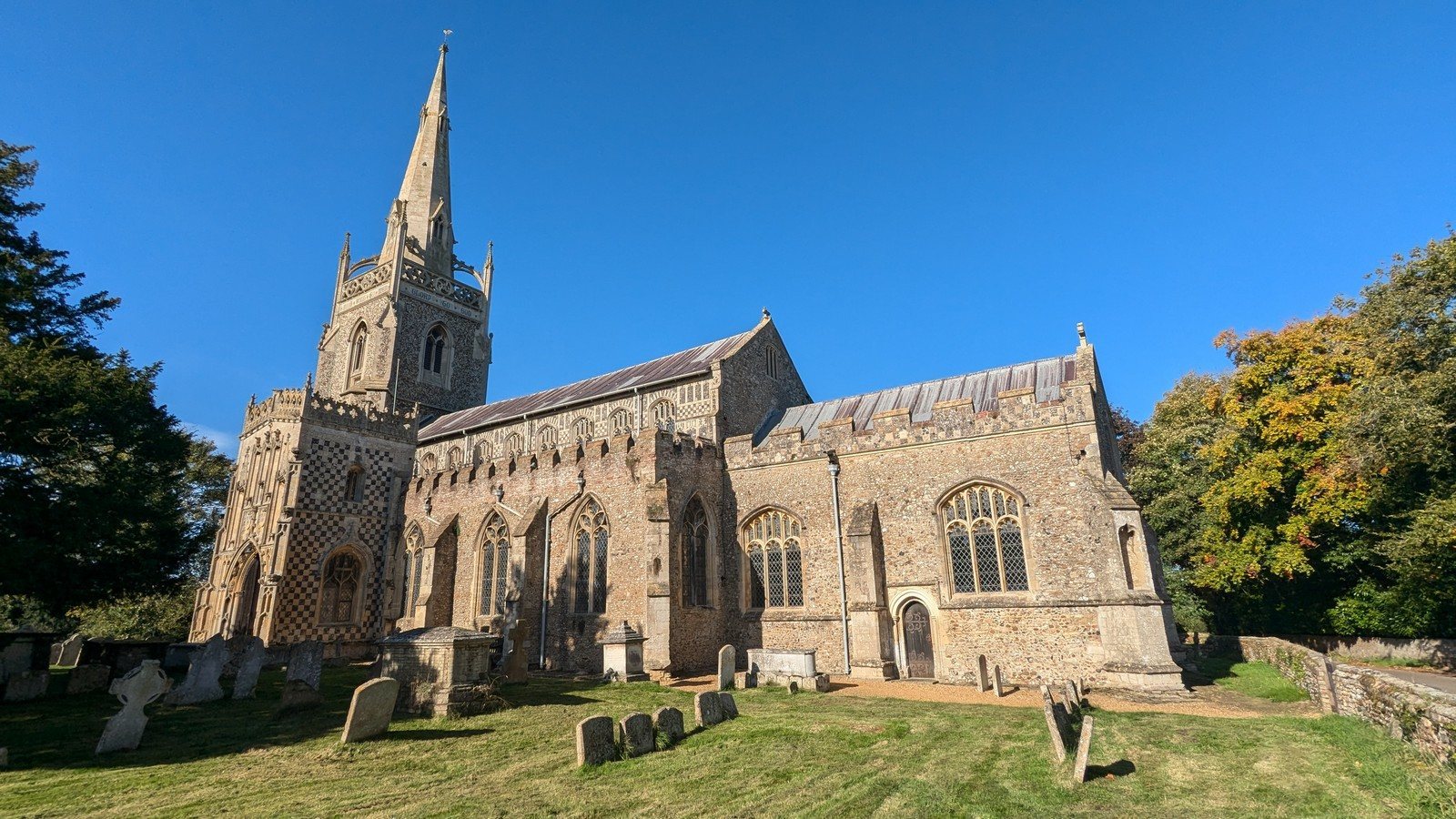
Church of St Mary, Woolpit was designated a Grade I listed building in 1954. The tower and spire were rebuilt after the original structures were lost to lightning in 1852 or 1853. The rebuilding is associated with the architect Richard Phipson’s work of the 1850s, while the spire is also described as having been rebuilt in 1870. The church therefore combines medieval fabric, Tudor survivals, and substantial nineteenth-century reconstruction.
Remains
Church fabric and interior
Medieval aisles, chancel, and porch
The church is chiefly Perpendicular Gothic in appearance, with the fourteenth-century south aisle and chancel forming important earlier elements. Its exterior clerestory carries elaborate flushwork, a decorative technique in which contrasting flint and stone are set into the wall surface to create patterns and architectural designs. The large porch, built between 1430 and 1455, is one of the principal surviving medieval features.
Roof and furnishings
Inside, the roof is a double hammerbeam structure. A hammerbeam roof uses short horizontal beams projecting from the walls to support the roof without spanning the full width, and this roof has two tiers of such supports. Its upper beam is false. The roof has been exceptionally well restored and is accompanied by numerous medieval carved pew-ends, together with good nineteenth-century reproductions. The church also preserves a rare original early-Tudor eagle lectern dating from before the English Reformation.
Tower and spire
The tower and spire represent the church’s major nineteenth-century rebuilding. Lightning destroyed the original structures in 1852 or 1853, after which they were reconstructed in association with Richard Phipson’s work of the 1850s. The spire is also described as having been rebuilt in 1870, giving the church a prominently renewed upper structure alongside its medieval lower fabric.
Shrine and associated enclosure
Shrine of Our Lady of Woolpit
A medieval shrine stood at the east end of the south aisle, but the chapel that housed the image of Our Lady of Woolpit has not survived. It may have occupied that position, although a location on the north side of the chancel, where the nineteenth-century vestry now stands, is considered more probable. The surviving church fabric and the shrine’s lost setting together reflect the importance of the former Marian cult within the medieval building.
Moated enclosure and Lady’s Well
About 300 yards north-east of the church is a small, irregular, undated moated enclosure, now largely covered by trees and bushes and maintained as a nature reserve. Its moat is partly supplied with water by a natural spring. The spring, known as the Lady’s Well or Lady Well, rises on the south side of the enclosure and is protected by modern brickwork. A nineteenth-century description called it a roughly quadrangular, brick-lined spring that supplied the moat with clear water.
In 1827 the spring was described as perpetual, about two feet deep, and exceptionally cold. It was occasionally used to immerse weak children and was visited by people suffering from weak eyes. These later practices belong to the spring’s physical and traditional history, while the nearby moated site and the spring are also protected as a scheduled monument.