Cappella d’Oro: The Golden Chapel of Gaeta
Site at a Glance
- Rating
- 4.4
- Popularity
- Very Low
- Country
- Italy
- Primary era
- Medieval
- External website
- Open
- Eras represented
- Medieval, Early Modern
- Civilizations
- Kingdom of Naples, Spanish
- Site type
- Religious
- Remains
- Chapel
On this page13 sections
History
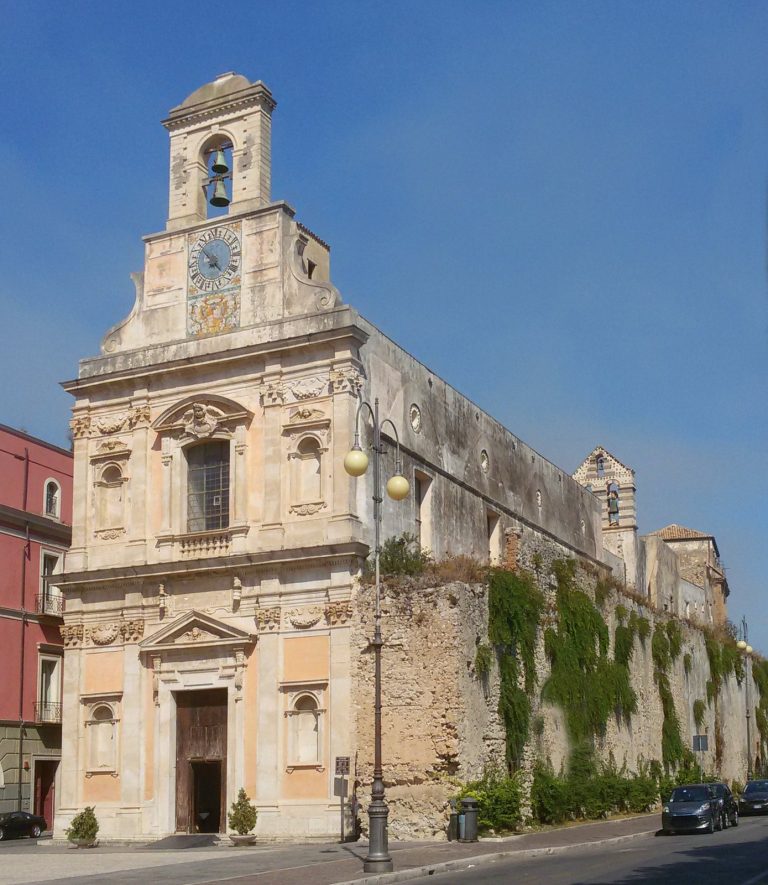
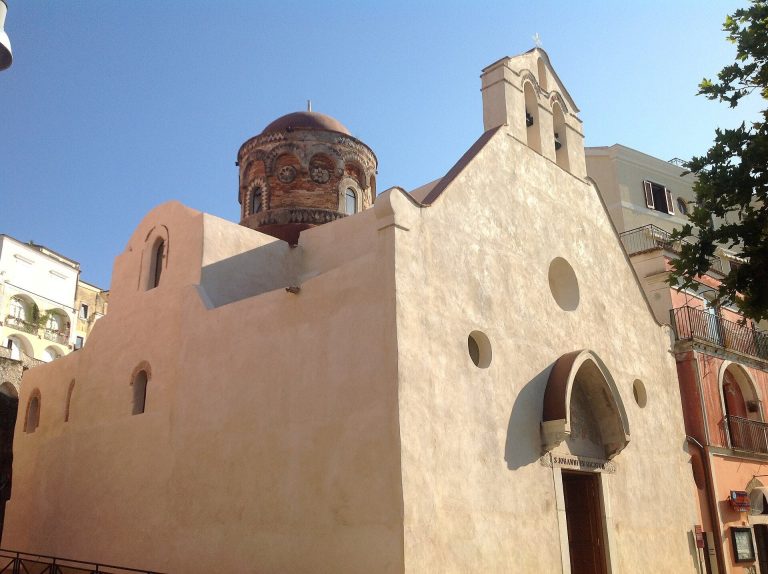
Cappella d’Oro, formally the Chapel of the Immaculate Conception, is a Roman Catholic chapel in Gaeta, Italy, incorporated into the Sanctuary of the Santissima Annunziata in the city’s historic center. Construction began in 1321 and continued during the fourteenth century, with consecration dated to 1354. The chapel was completed in 1531 and became an important place of worship within the wider religious complex.
Fourteenth-century foundation
The chapel’s original fresco decoration belongs to the second quarter of the fourteenth century and is attributed to the final phase of Antonio Speziario Cavarretto’s activity. Cavarretto worked within the tradition of Giotto’s workshop, a major force in the development of more naturalistic and spatially convincing figure painting in late medieval Italy. Parts of this early decoration later became detached from the walls and are now preserved in the adjoining Santissima Annunziata complex.
Renaissance decoration
During the first half of the sixteenth century, the chapel acquired the decorative scheme that largely defines its present character. Giovanni Filippo Criscuolo produced the principal painting cycle, completed and signed in 1531. The cycle combines episodes from the lives of Jesus and Mary with scenes from the Old Testament. Its style reflects the influence of Criscuolo’s teacher, Andrea Sabatini, while giving the compositions a more dramatic quality.
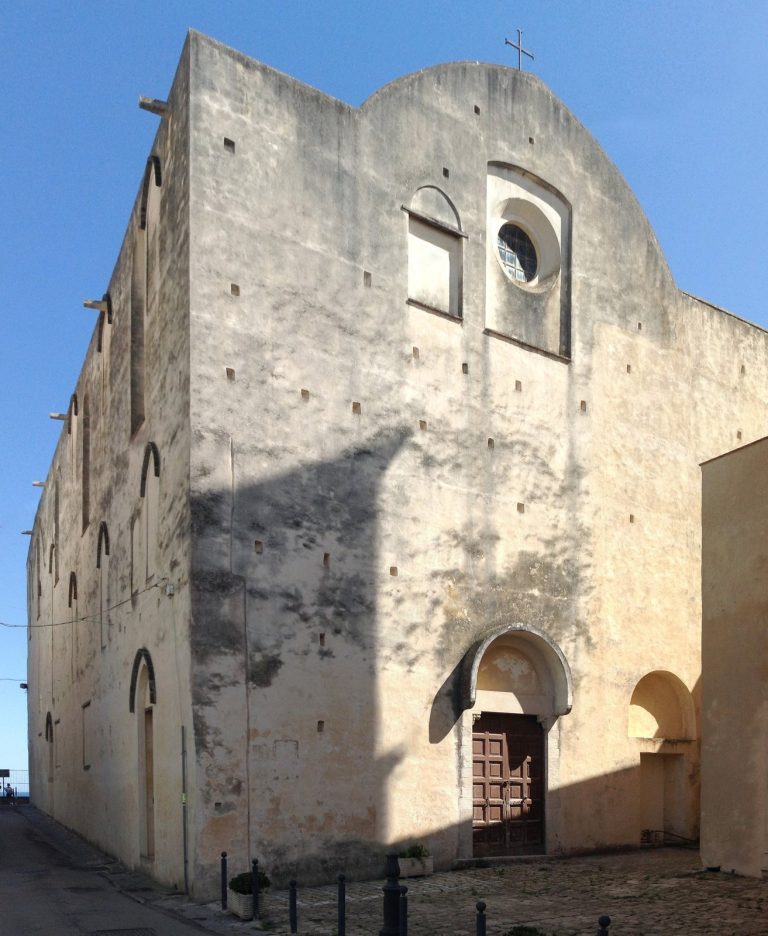
The chapel’s name, meaning “Golden Chapel” or “Golden Grotto,” refers to the richly finished interior, including surfaces decorated with pure gold. In the following century, Dionisio Lazzari, a Baroque architect and sculptor active in southern Italy, created the marble portal that now marks the entrance from Via Annunziata.
Pius IX and the Immaculate Conception
Pope Pius IX frequently prayed in the chapel during his exile in Gaeta amid the political upheavals surrounding the creation of the unified Italian state. He is said to have drawn inspiration there for defining the Immaculate Conception as a dogma in 1854. This doctrine holds that Mary was preserved from original sin from the moment of her conception. The chapel therefore carries a particular association with the formal definition of the belief to which it is dedicated.
Remains
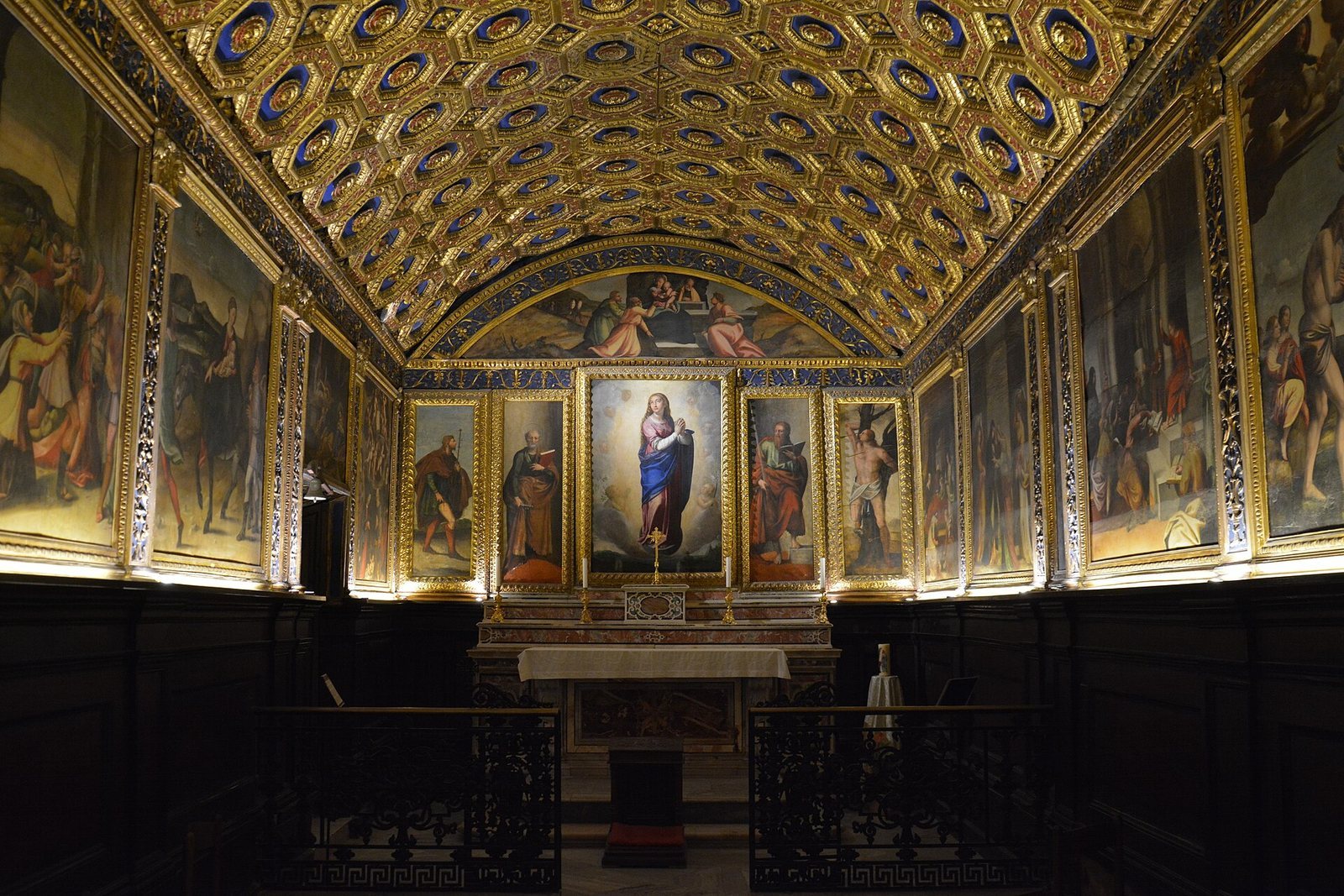
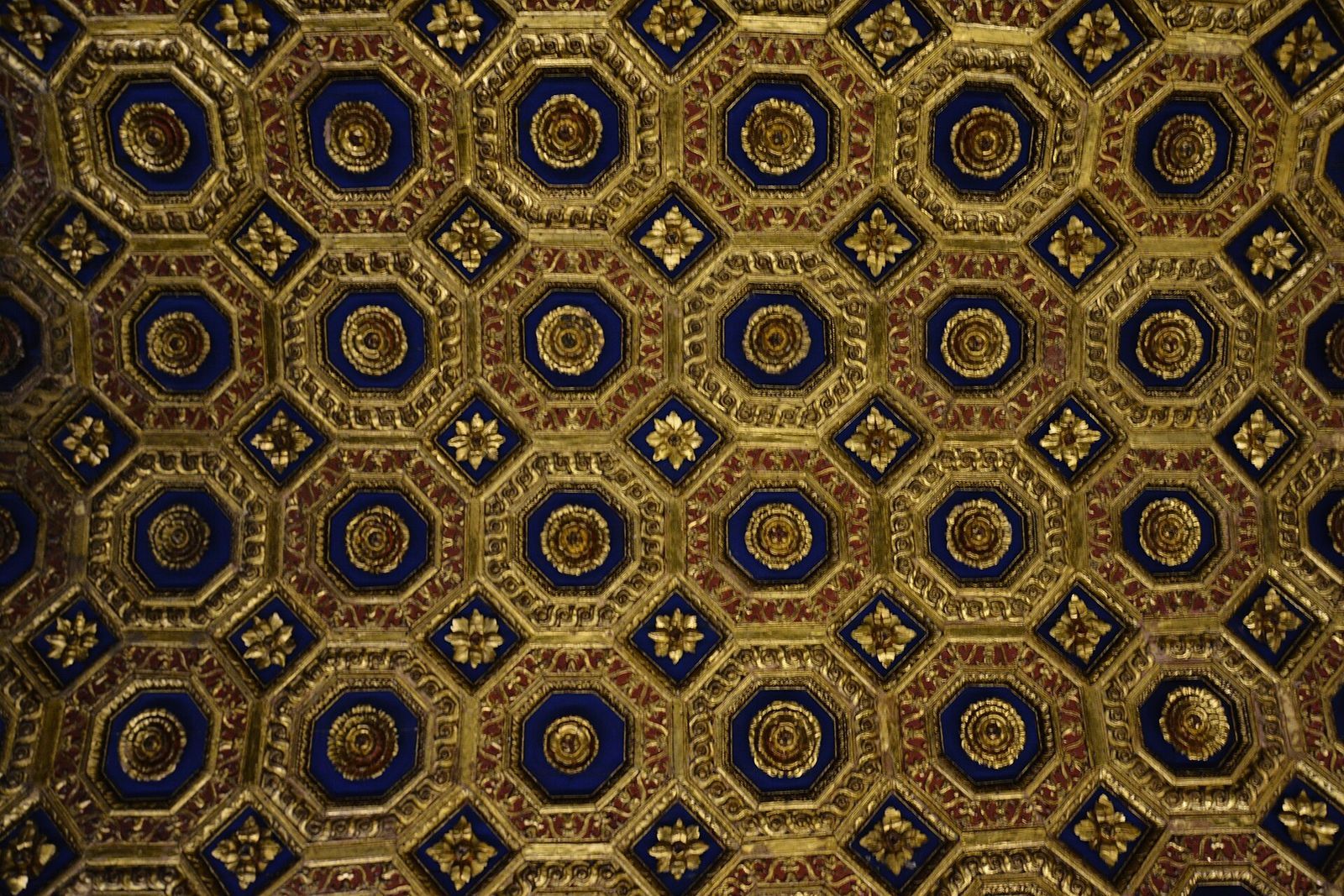
The chapel is a single-nave interior without an apse, incorporated into the Sanctuary of the Santissima Annunziata and opening onto Via Annunziata through a Baroque marble portal. A lowered barrel vault covers the space. Beneath it, an octagonal wooden coffered ceiling is richly finished in pure gold, while wooden paneling covers the lower parts of the walls. The upper wall areas hold Criscuolo’s multi-canvas cycle in carved and gilded wooden frames.
Entrance and exterior features
Marble portal
Lazzari’s seventeenth-century portal is framed by two Corinthian pilasters. These support an architectural composition with a broken triangular pediment, whose architrave bears the coat of arms of Gaeta. The arrangement gives the chapel a formal Baroque entrance while preserving its direct connection with the street.
Window and commemorative plaque
A single centrally placed window sits above the portal within the pediment and supplies the interior lighting. Its ornamental marble frame forms part of the entrance elevation. A commemorative plaque dedicated to Pope Pius IX is fixed to the left of the portal.
Painted interior
Criscuolo’s painting cycle
The signed and dated 1531 cycle extends across the upper walls in several canvases. On the counter-facade, the two Annunciation paintings place the Archangel Gabriel on the left and the Virgin Mary on the right. Along the right-hand wall, beginning at the entrance, are the Wedding at Cana, Jesus welcoming children, the Baptism of Christ, Jesus disputing with the teachers in the Temple, the Visitation, and the Nativity of Mary.
The left-hand wall, beginning at the rear wall, contains the Nativity of Jesus, Joseph’s Dream, the Flight into Egypt, the Massacre of the Innocents, the Circumcision of Jesus, and the Presentation of Jesus in the Temple. Differences in style among the canvases suggest that Criscuolo worked with assistants, while the overall series remains connected to Sabatini’s artistic influence.
Rear-wall altarpiece
The rear wall is divided into two registers. Above, a lunette, meaning a semicircular pictorial field, depicts the Adoration of the Magi. Below it stands a five-panel polyptych, an altarpiece made from several painted panels. Its central image is Scipione Pulzone’s 1582 Immaculate Conception. Criscuolo painted the four lateral panels, showing Saint Sebastian, Saint Paul, Saint Peter, and Saint Roch.
Detached early frescoes
Two fragments from the chapel’s original fourteenth-century fresco decoration are preserved in the permanent exhibition of the adjoining Santissima Annunziata complex. One shows the Annunciation within an architectural setting, while the other preserves part of a Choir of Angels. Their survival provides a material link with the chapel’s earliest decorative phase.
Presbytery
A wrought-iron balustrade encloses the presbytery. Within it stands a polychrome marble altar made in the late eighteenth century to a design by Pietro Paolo Ferrara. The altar forms the later liturgical focus of the gilded chapel and completes the sequence of medieval, Renaissance, Baroque, and eighteenth-century elements preserved within the same space.