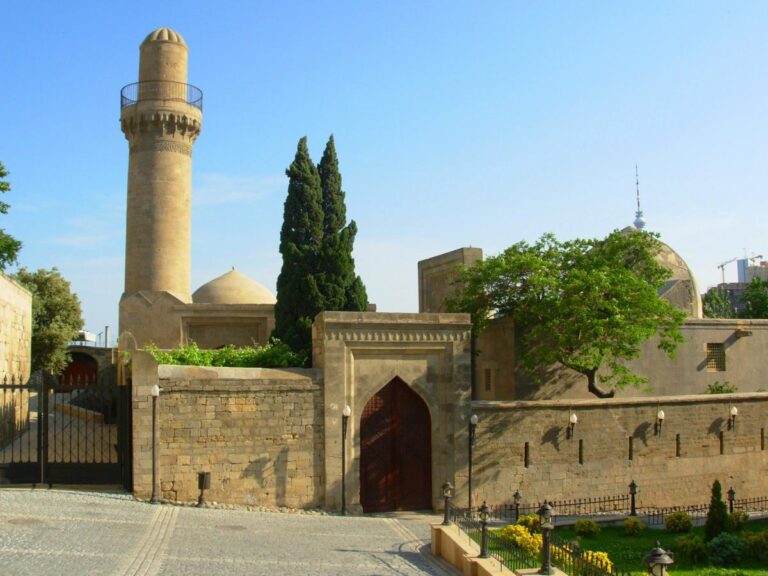
Multani Caravanserai: A Fourteenth-Century Merchant Lodging Complex in Baku
Site at a Glance
- Rating
- 4.1
- Popularity
- Very Low
- Country
- Azerbaijan
- Primary era
- Medieval
- Eras represented
- Medieval
- Civilizations
- Shirvanshah
- Site type
- Economic
- Remains
- Caravanserai
On this page7 sections
History
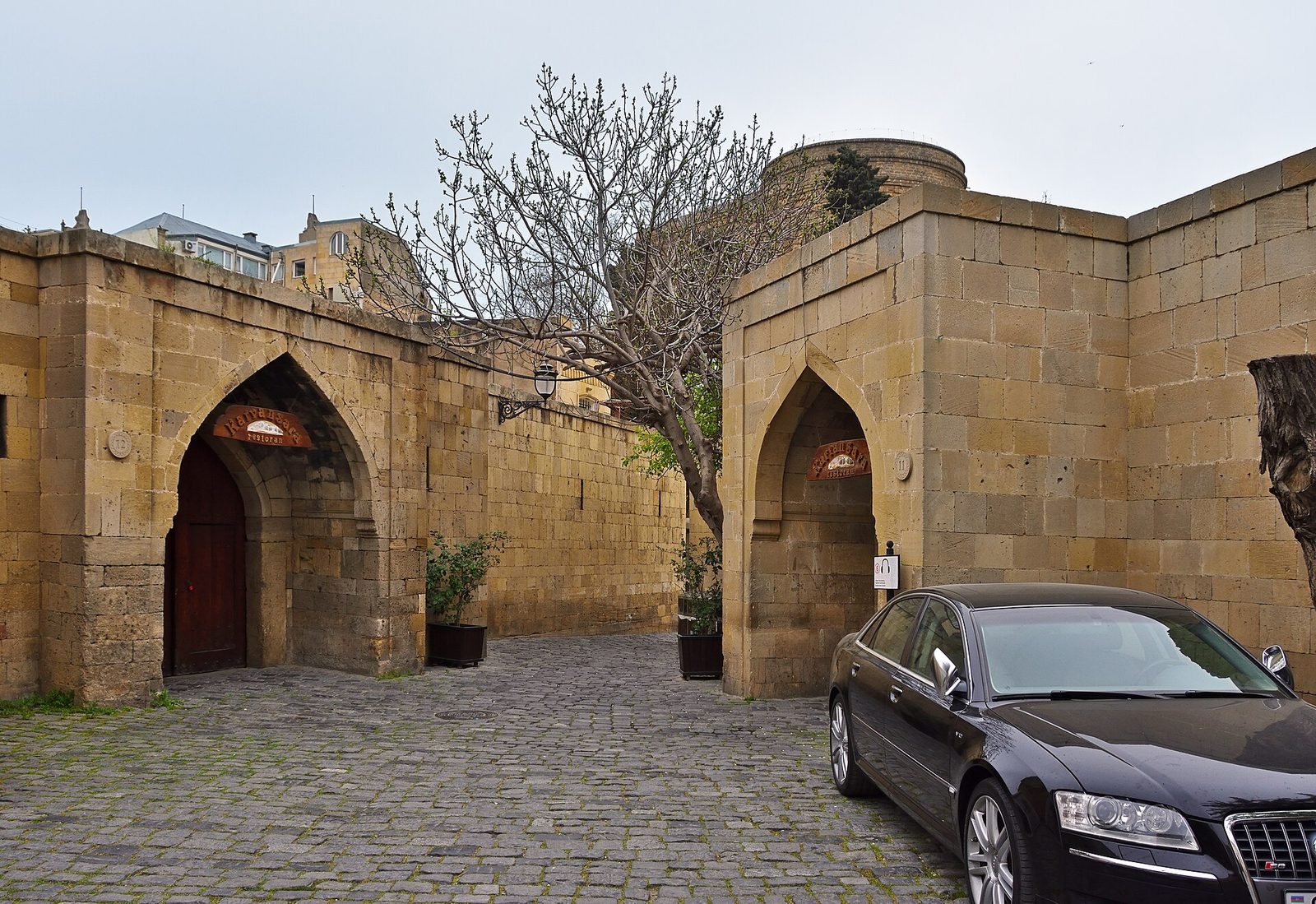
Multani Caravanserai is a fourteenth-century merchant lodging and trading complex in Baku, Azerbaijan. Established in Icherisheher, Baku’s walled historic old town, it stood opposite the Bukhara Caravanserai and accommodated merchants from Multan, a medieval city in present-day Punjab, Pakistan.
A Trading Place for Merchants from Multan
The building served as a stopping place for merchants travelling through the region for trade. Its functions extended beyond lodging: it is also described as a local shopping center, embassy, and exchange. The merchant community included Zoroastrians, followers of an Iranian religious tradition in which fire has an important ritual role. They are believed to have erected the Ateshgah Temple, a historic fire sanctuary at Surakhani near Baku.
Renovation and Continuing Use
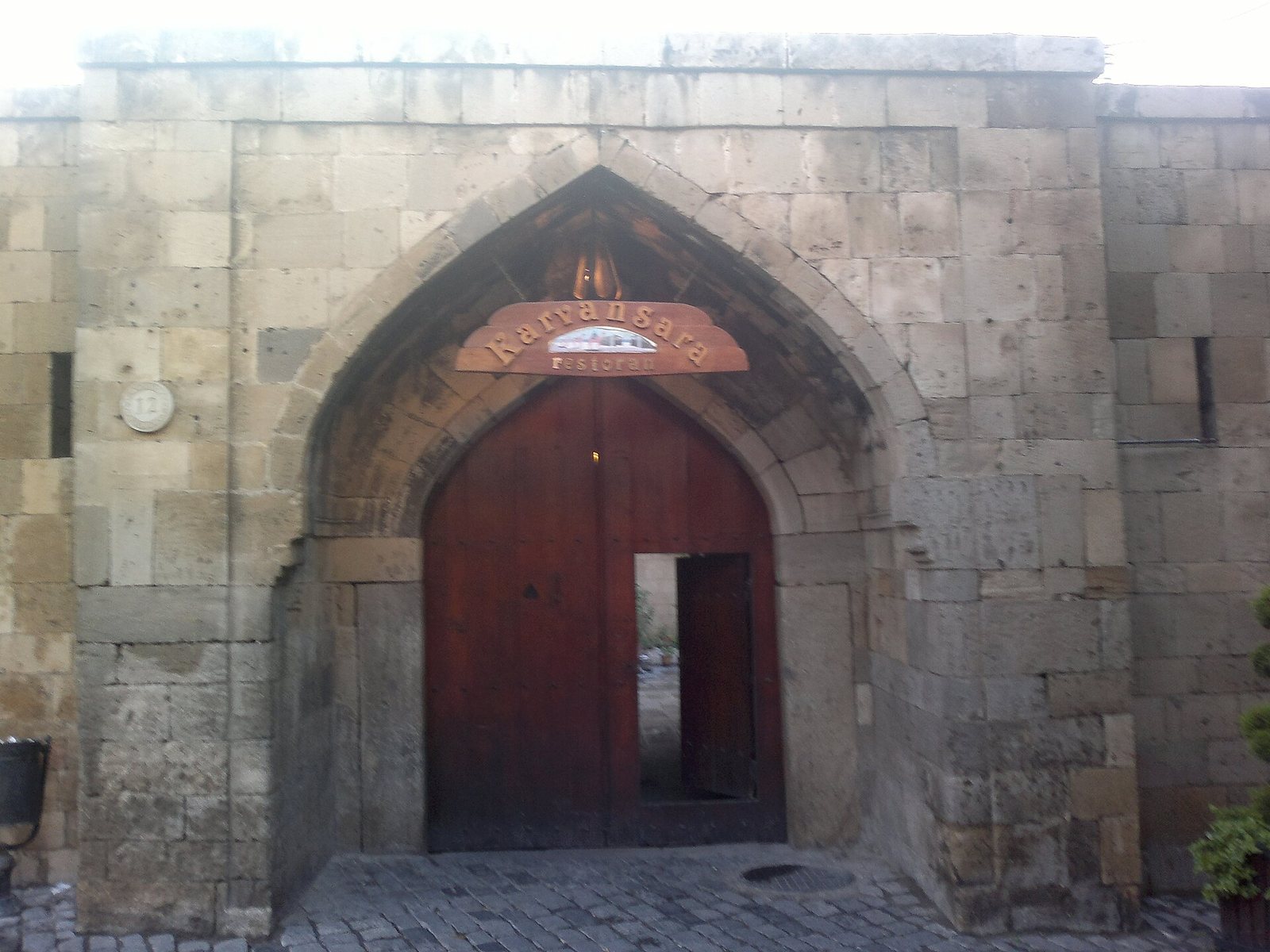
The caravanserai underwent renovation in 1973 and 1974. Since the 1970s, it has operated as a restaurant-caravanserai complex and houses a restaurant serving Azerbaijani cuisine. The Ministry of Culture and Tourism of Azerbaijan protects it as a nationally significant architectural monument. The building is also associated with the historical relationship between Azerbaijan and Pakistan.
Remains
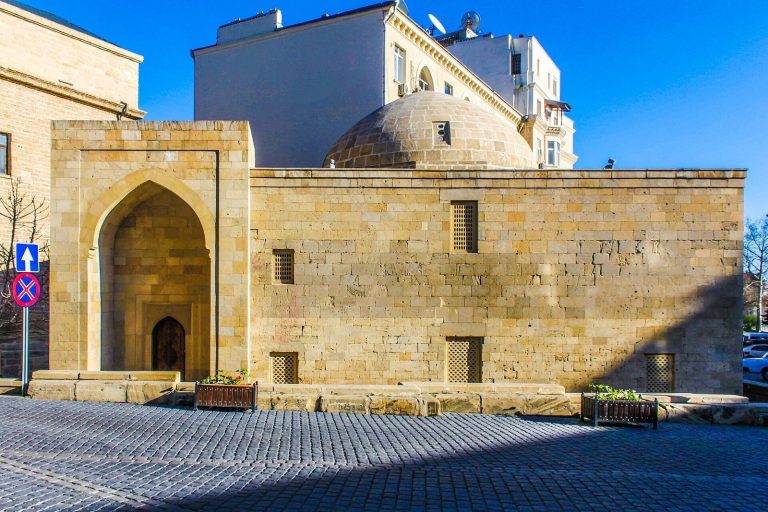
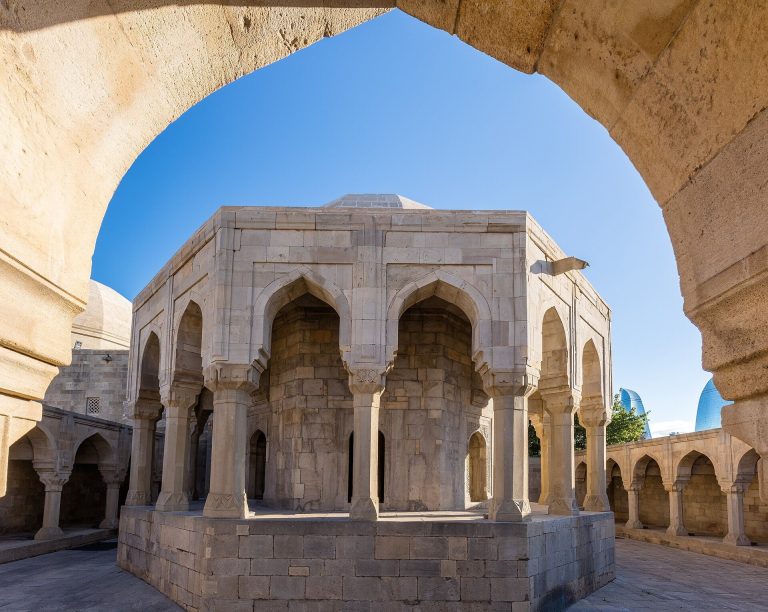
The caravanserai has a nearly square plan, measuring approximately 35 by 35 metres. Its side facing the commercial street follows a traditional composition with a simple facade and separate residential rooms. At the center is an enclosed octagonal courtyard with numerous balconies. The single-storey building contains ten rooms overall, including six vaulted rooms with lower spaces beneath them.
Upper Rooms and Courtyard
Six residential rooms with slate roofs survive in their original condition. The main western facade, the rooms on the southwestern side, and the entrance openings leading toward the Bukhara Caravanserai have also survived. Stairs connected the lower areas with the guest rooms and led upward to the courtyard, allowing merchants to move between the accommodation spaces and the working areas of the building.
Underground Animal Market
The underground lower floor consists of three large halls and has three entrances. It was used for selling animals, and one entrance leads toward the Maiden Tower, a major historic tower in Baku’s old town. Medieval merchants kept their animals in these lower spaces before climbing the stairs to the guest rooms.
Interiors and the Sim-Sim Entrance
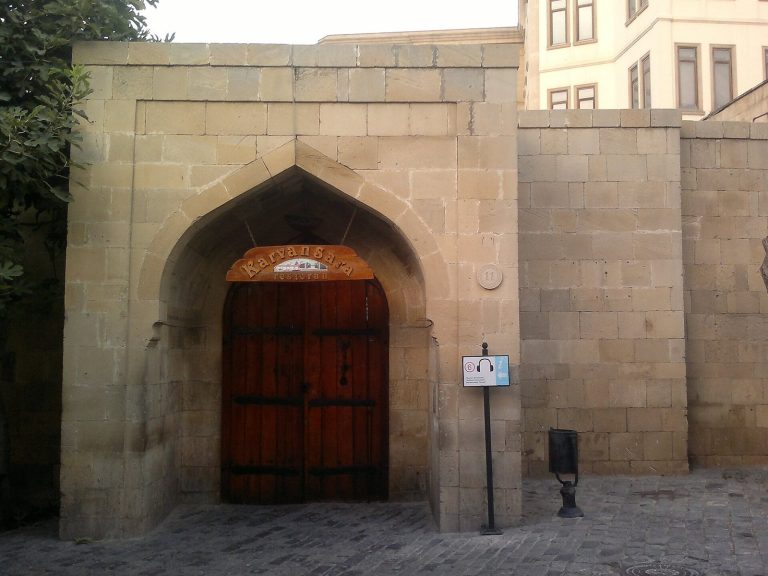
The entrance known as Sim-Sim is described as unusual because it resembles the “Open Sesame” door in the tale Ali Baba and the Forty Thieves. Azerbaijani carpets, ornaments, and paintings of Baku decorate the walls. Tables, chairs, armchairs, and sofas provide modern furnishings in the halls, while the rooms retain their old character apart from certain items. Near the entrance to Sim-Sim Hall stands a gift presented by Pakistani President Pervez Musharraf. An accompanying cabinet bears the inscription “Kitchen utensils from Multan, Pakistan” and contains ceramic tableware, containers, a lamp, flower vases, a box, a cup, a water vessel, tea equipment, cooking pots, an open vessel, and a mirror.