St Mary’s Church, Stoke-by-Nayland: A Perpendicular Parish Church
Site at a Glance
- Rating
- 4.7
- Popularity
- Very Low
- Country
- United Kingdom
- Primary era
- Medieval
- External website
- Open
- Eras represented
- Medieval, Early Modern
- Civilizations
- English
- Site type
- Religious
- Remains
- Church
On this page14 sections
History
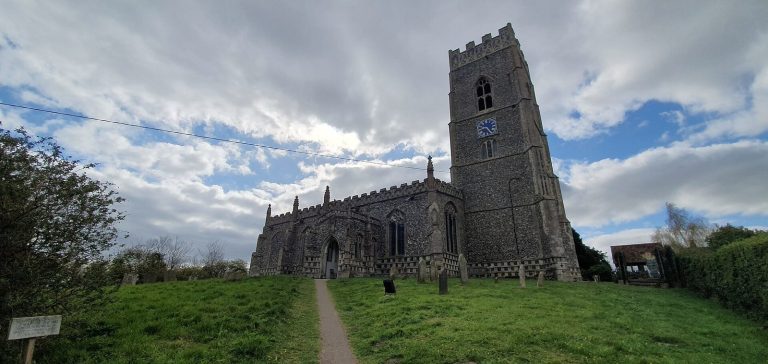
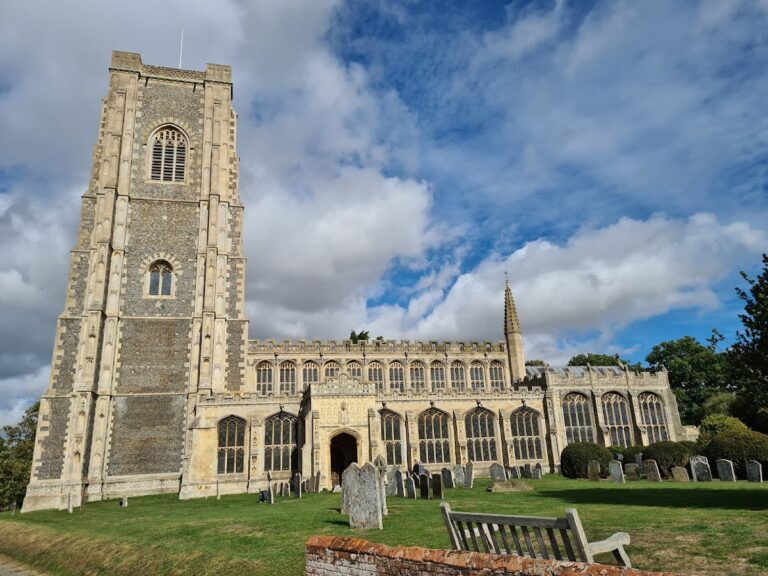
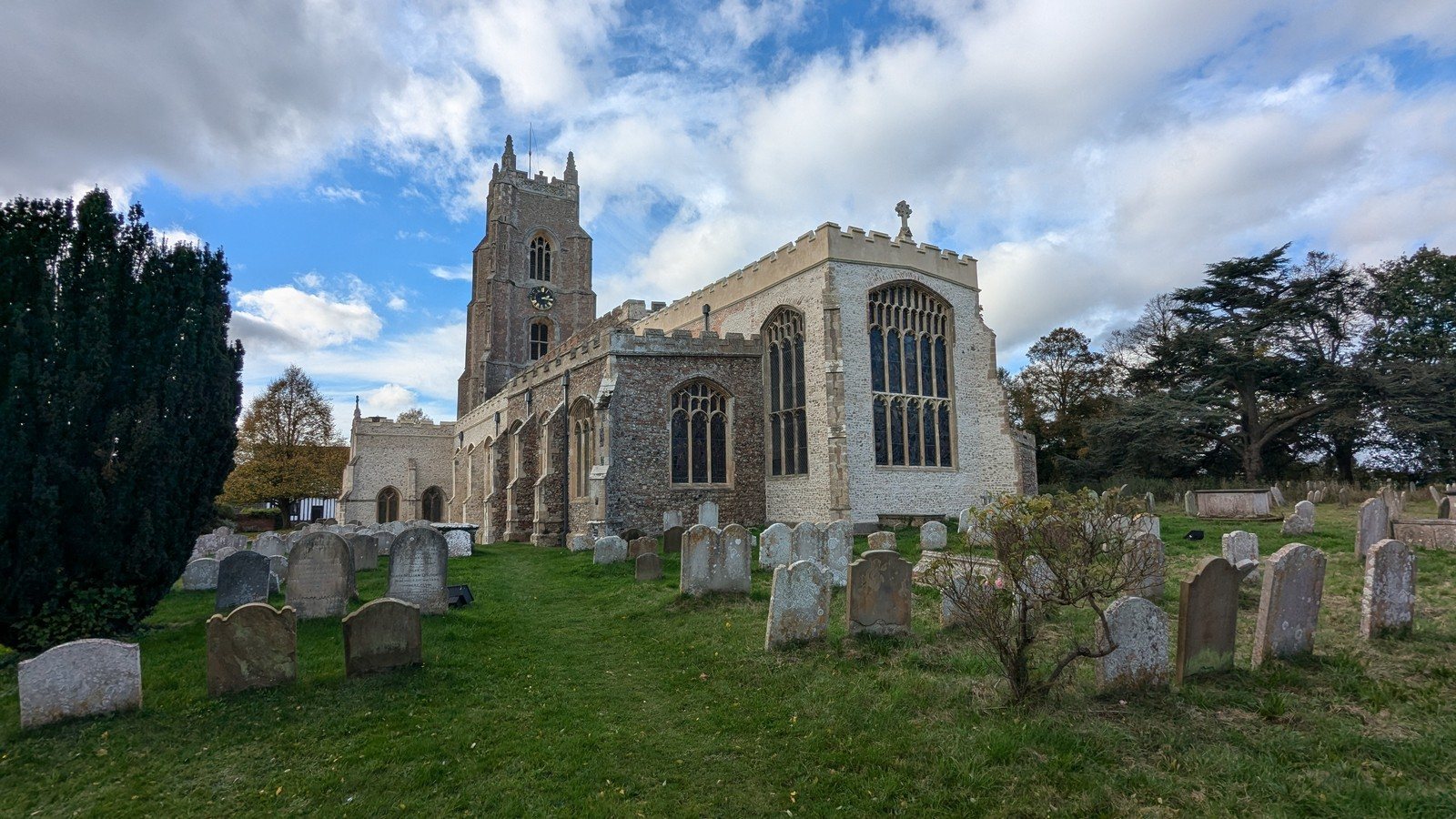
St Mary’s Church, Stoke-by-Nayland, in the United Kingdom, is a Church of England parish church whose earliest surviving parts date from the late thirteenth or early fourteenth century. Most of the building was reconstructed during the fifteenth century in the Perpendicular style, the later medieval English Gothic style known for strong vertical lines, large windows, and elaborate tracery. The church remains a Grade I listed building and is administered within the Diocese of St Edmundsbury and Ipswich, the Ipswich Archdeaconry, and the Hadleigh Deanery.
Medieval origins and rebuilding
The early fabric includes the south porch, St Edmund’s Chapel, which dates from approximately 1318, and part of an aisle wall. The extensive fifteenth-century rebuilding was supported by Sir John Howard, who was raised in Stoke-by-Nayland and made Tendring Hall his principal home in the village. Howard served the Yorkist kings Edward IV and Richard III during the Wars of the Roses, the dynastic conflicts between the houses of Lancaster and York, and Richard created him Duke of Norfolk in 1483. His arms, impaled with those of the Tendring family, appear in several parts of the church.
The church preserves several reminders of the Howard and Tendring families. A brass commemorates Lady Catherine Howard of Tendring Hall, the daughter of Sir William Molyns and wife of John Howard, later 1st Duke of Norfolk and Earl Marshal of England. Her funeral at Stoke-by-Nayland in 1465 was attended by Richard Plantagenet, Duke of Gloucester, later Richard III, as well as George Plantagenet, Duke of Clarence, and Anthony Woodville, 2nd Earl Rivers. Her son Thomas paid for the brass in 1520, which explains the Tudor dress shown on the figure. Her husband’s arms appear on one side of her mantle and the Molyns arms on the other.
Lady Catherine Howard was the great-grandmother of Anne Boleyn and Catherine Howard, the second and fifth wives of Henry VIII. The Howard family was regarded as the third most powerful family in England during the Wars of the Roses. Another brass commemorates Sir William de Tendring, who died in 1408 and is regarded as a portrait. These memorials connect the church with the local families who shaped its fifteenth-century reconstruction and later history.
Later history and worship
Medieval glass in the church was destroyed in 1643 by Colonel Dowsing’s Parliamentary Commissioners during Puritan iconoclasm, a campaign against religious images and decoration. Later memorials include a wall monument to Sir Francis Mannock, 1st Baronet of Giffords Hall, who died in 1634, and a monument to Lady Anne Windsor, who died in 1615 and endowed four almshouses, charitable residences for people in need. The almshouses continue to be administered by a village committee.
The present organ reflects the church’s continuing musical use. It is a two-manual pipe organ incorporating an instrument made by Gray around 1834. It was later renovated or altered by Gray and Davison, Henry Jones, Rayson, and Bishop and Son.
Remains
St Mary’s is approximately 168 feet (51 metres) long. Its late-medieval structure includes a south porch, chapels and aisles, a tall central tower, and an interior arch beneath the tower. The building combines surviving early fabric with the fifteenth-century work that gives much of the church its character.
Porch, doors, and early fabric
South porch
The south porch has a groin-vaulted roof, formed by the intersection of two barrel vaults, with restored carved bosses. A priest’s chamber occupies the space above it. The porch also retains its original, or almost unique, fifteenth-century south doors. Carved in oak, they show a Jesse tree, a Christian image representing Jesus’s ancestry through Jesse, the father of King David. Figures, birds, and insects are incorporated into the design.
St Edmund’s Chapel and aisle wall
St Edmund’s Chapel dates from approximately 1318 and belongs to the earliest surviving phase of the church. Part of an aisle wall also survives from this period, giving the building physical evidence of its medieval beginnings alongside the later reconstruction.
Tower and interior
Medieval tower and arch
The tower rises 126 feet (38 metres) to the tops of its pinnacles and is described as one of the fifty finest medieval church towers in England. It is visible from miles around and dominates the skyline of Dedham Vale. Beneath it, a soaring and exceptionally elegant arch forms a major feature of the interior. The landscape painter John Constable, whose work often depicted Suffolk and Essex, called the arch “the crowning beauty of the interior” and regarded the tower as the church’s grandest feature.
Bells and organ
Eight bells hang in the tower. The tenor weighs 22 hundredweight and is tuned to D. The two-manual pipe organ contains the earliest identified part of the present instrument, the Gray organ of approximately 1834, within its later history of alteration.
Glass and memorials
Stained glass
A stained-glass window in the south chapel contains a contemporary depiction of John Howard at prayer. The image is believed to have been reproduced around 1500 in a painting at Tendring Hall. Both that painting and the hall are now lost, leaving the window as an important surviving representation associated with Howard.
Brasses and monuments
The church contains the brass of Lady Catherine Howard, with the heraldic arms of her husband and the Molyns family, and the brass of Sir William de Tendring, regarded as a portrait. Other fifteenth-century brasses remain alongside the wall monument to Sir Francis Mannock and the monument to Lady Anne Windsor. Together, these memorials preserve the physical record of local families and their connections with the church.
Font
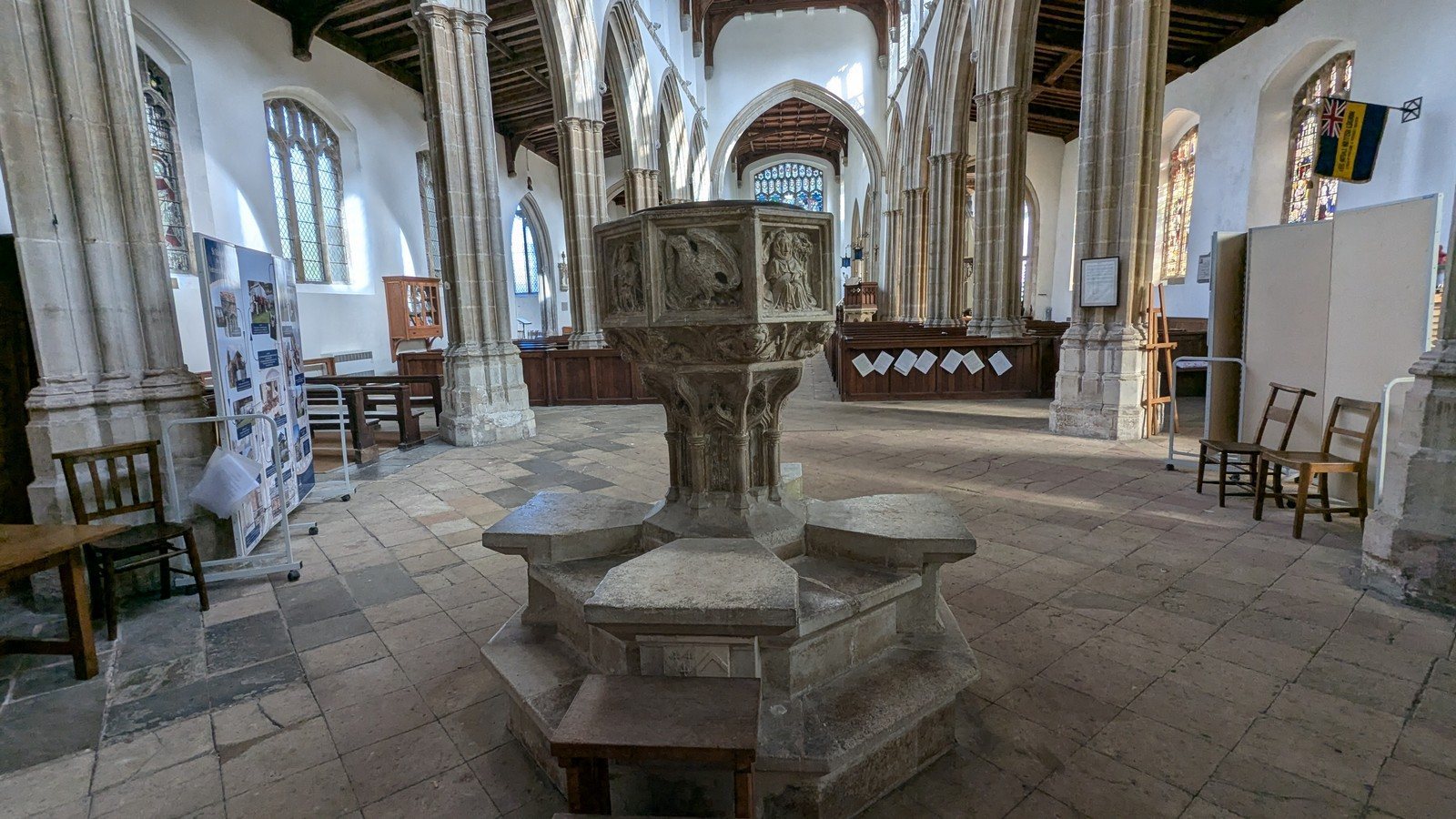
The font bears Edward IV’s rose-en-soleil badge. Its panels display the emblems of the four Evangelists, adding another medieval and royal association to the church’s furnishings.