Borley Church: A Medieval Parish Church in England
Site at a Glance
- Rating
- 4.4
- Popularity
- Very Low
- Country
- United Kingdom
- Primary era
- Medieval
- Eras represented
- Medieval, Early Modern
- Civilizations
- English
- Site type
- Religious
- Remains
- Church
On this page9 sections
History
Medieval development
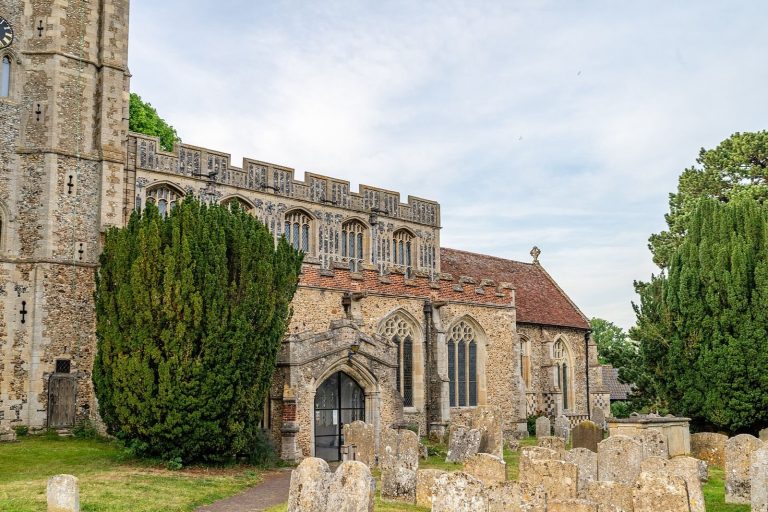
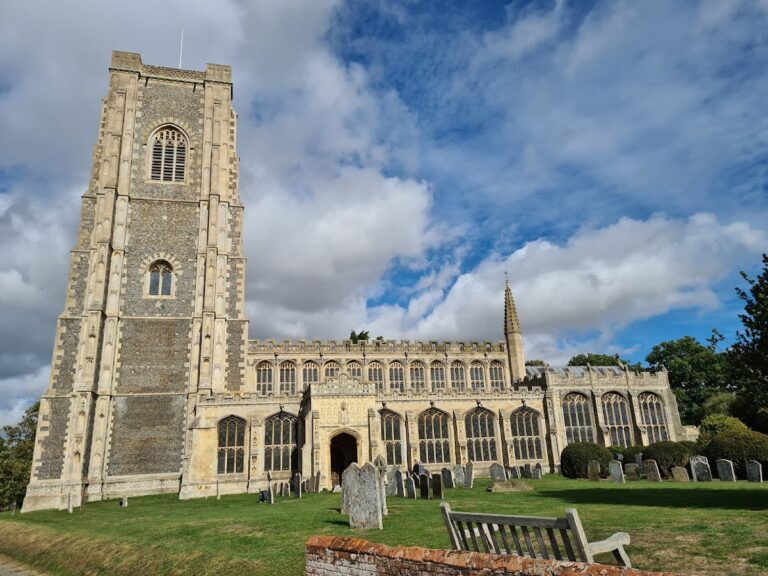
Borley Church is a medieval parish church in the United Kingdom, serving the parish of Borley within the ecclesiastical parish of Borley and Liston. Its nave may date from the eleventh century, while later work from the mid-fourteenth to sixteenth centuries gave the chancel and western tower their mainly Perpendicular character. Perpendicular is a later English Gothic style noted for strong vertical lines and elaborate architectural detailing. The church’s original dedication is unknown.
The church now forms part of the Fifteen Churches of the North Hinckford Benefice, within the Diocese of Chelmsford of the Church of England. Its Grade I listing, a designation for buildings of exceptional interest and sometimes international importance, reflects the value placed on the surviving building and its history.
The Waldegrave connection
Shortly after 1545, Henry VIII granted the manor of Borley to Sir Edward Waldegrave. Henry VIII was England’s Tudor king from 1509 to 1547. Waldegrave was knighted at the coronation of Henry’s daughter Mary I in 1553 and joined her Privy Council after the death of Edward VI. The council was the monarch’s formal body of senior advisers. Waldegrave also served as Master of the Wardrobe to Mary and her husband, Philip II of Spain, an office concerned with royal clothing, furnishings, and ceremonial possessions.
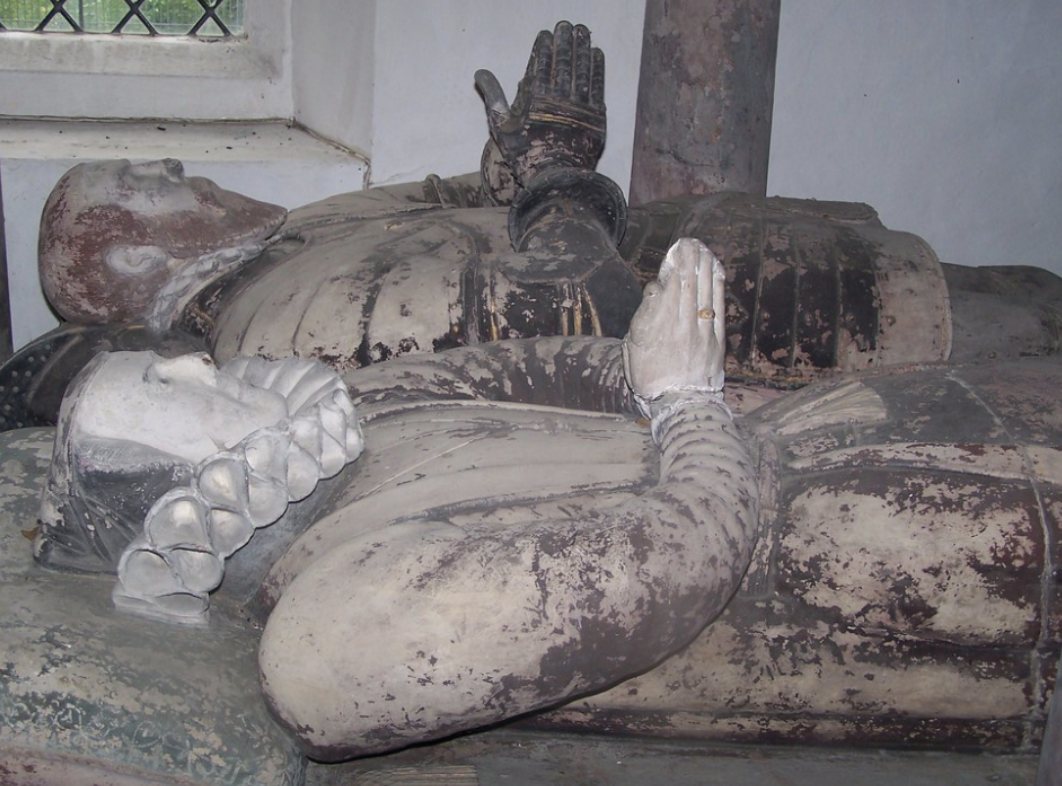
Waldegrave later received the manor of Navestock and moved the family seat there. He died in the Tower of London on 1 September 1561. Several Waldegrave tombs remain in the church, preserving the family’s connection with Borley after his rise at the Tudor court.
Parish life and later traditions
The parish had 195 inhabitants in both 1821 and 1831. In the mid-nineteenth century, its glebe comprised 10 acres, or about 4.0 hectares. A glebe was land assigned to support a parish church and its incumbent. The church also preserves memorials to the nineteenth-century rectors John Philip Herringham and his son William Herringham. John Philip was a graduate of Pembroke and signed an 1845 declaration protesting the Maynooth Grant, while William studied at Peterhouse, Cambridge.
Borley Church is associated with local ghost stories, although the alleged activity is described as less extensive than that formerly associated with Borley Rectory. Stories include phantom organ music, ghostly chanting, mysteriously ringing bells, and a ghostly nun moving through the churchyard. Another tale describes a headless monk leaving cryptic messages on the walls. A local legend links these stories to a supposed Benedictine community, whose monks followed the Rule of Saint Benedict. In the tale, a monk began a forbidden relationship with a nun from nearby Barking Abbey. After the relationship was discovered, the monk was hanged and the nun was walled up alive within the convent.
During the 1970s, the American paranormal investigators Ed and Lorraine Warren and a group of photographers investigated the alleged activity. They claimed to have encountered the ghostly nun in the cemetery and later inside the church, where she appeared to walk through the building while praying.
Remains
Building and approach
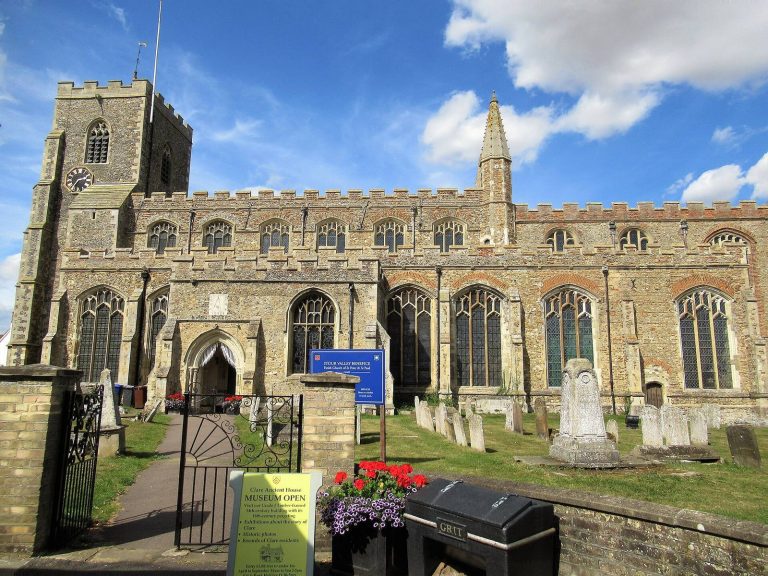
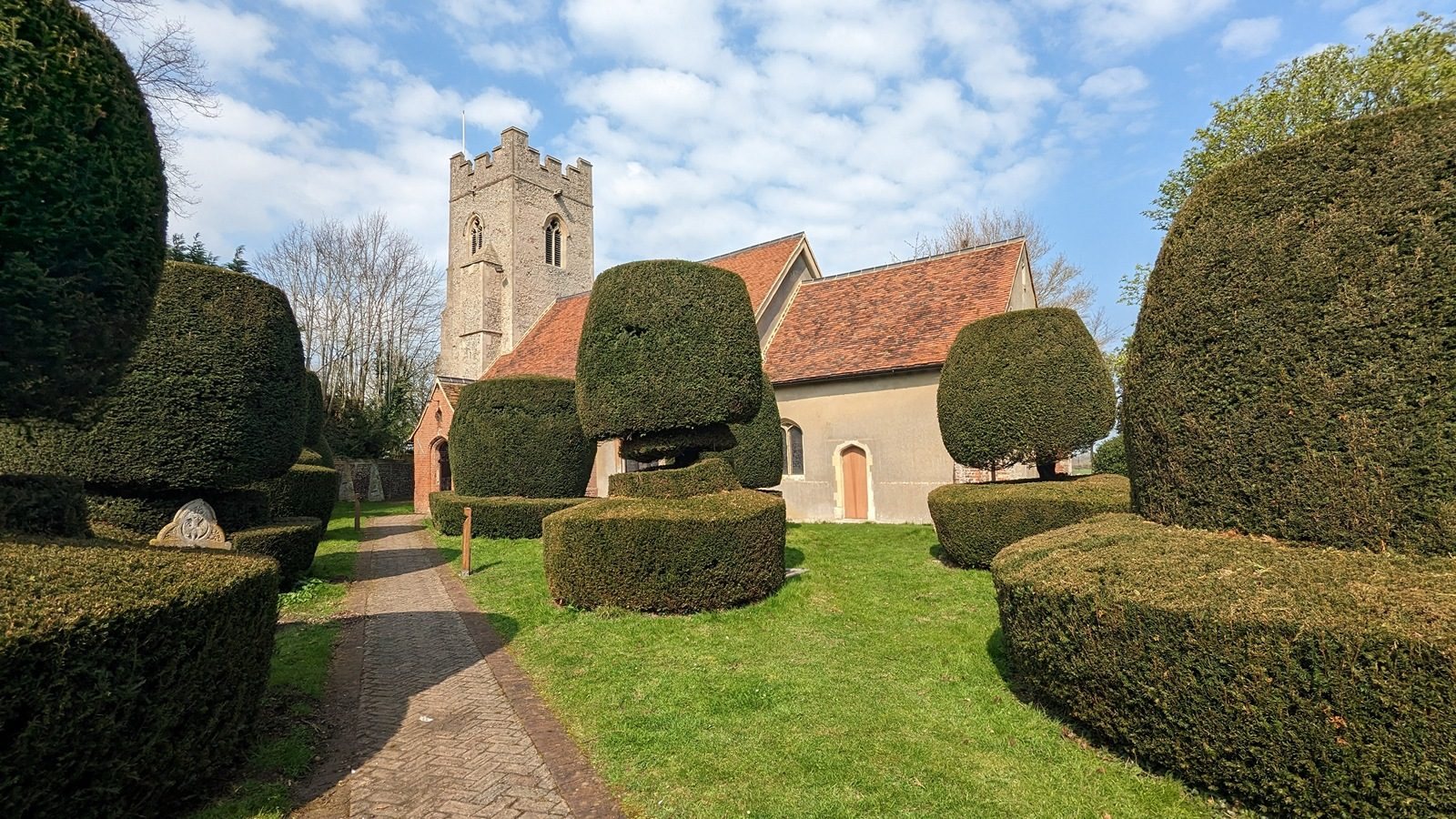
Borley Church is a small stone building formed around a chancel, nave, south porch, and crenellated western tower. A crenellated tower has a battlemented parapet made up of raised sections separated by gaps. The approach to the south porch follows a topiary walk. Its bushes were formerly shaped like Indian chess pieces. The walk originally had a flagstone surface, before a wheelchair-accessible brick path with side lights was installed in 2017.
Western tower and bells
The western tower contains three bells suspended in their original oak frame. Two were cast by Alfred Bowell of Ipswich in 1926, while the third was cast in 1574 by S II Tonni. Evidence within the frame suggests that a fourth bell may once have been present.
Waldegrave tombs
Several Waldegrave family tombs survive inside the church. One monument is 14 feet high, 9 feet long, and 5 feet wide. Six pillars in the Corinthian order support its cornice. The Corinthian order is distinguished by columns with ornate capitals, usually decorated with acanthus leaves. Beneath the cornice are full-length marble figures of Sir Edward Waldegrave and Lady Frances Waldegrave, née Neville, who died in 1599. Marginal Latin inscriptions on the tombs record other family alliances.
Chancel statue and memorials
A devotional statue of Magdala Southcote, identified as Waldegrave’s daughter, stands on the north wall of the chancel. She died on 8 September 1598. The architectural historian Nikolaus Pevsner described the statue as “not good.” The chancel also contains the monument to John Durham of Norfolk, while memorials to John Philip Herringham and William Herringham preserve the memory of the later rectors.