Vester Egesborg Church: A Medieval Parish Church in Denmark
Site at a Glance
- Rating
- 4.1
- Popularity
- Very Low
- Country
- Denmark
- Primary era
- Medieval
- External website
- Open
- Eras represented
- Medieval, Early Modern
- Civilizations
- Danish
- Site type
- Religious
- Remains
- Church
On this page13 sections
History
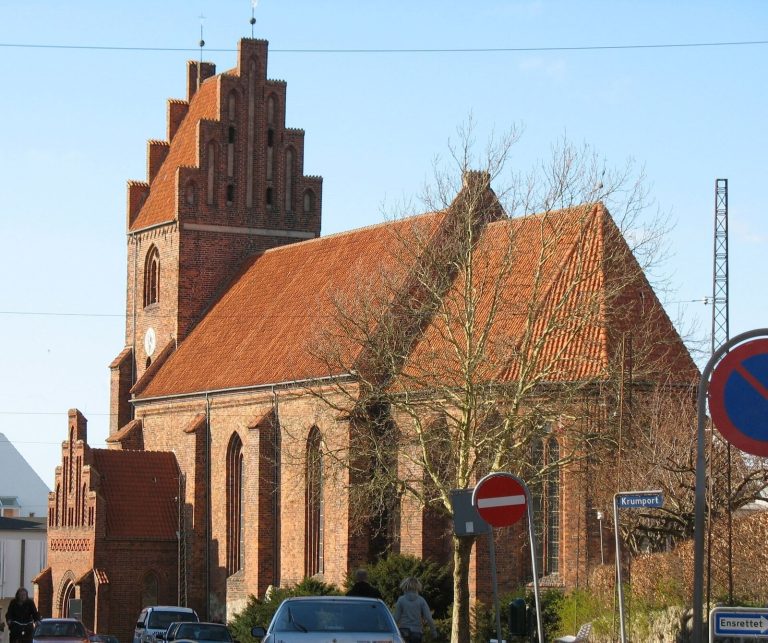
Vester Egesborg Church is a medieval parish church in Denmark, built between 1250 and 1300 in the Early Gothic period. It belongs to the Church of Denmark, Denmark’s established Lutheran church, and was formerly Catholic. The building was constructed in brick masonry over part of an existing structure, placing its origins within the medieval development of Vester Egesborg.
Medieval origins and later additions
The church’s original medieval fabric was expanded around 1500, when a tower and a north-facing vestry were added in the Late Gothic period. The vestry contains cross vaults, linking this later addition to the surviving architectural character of the church.
The chancel was completely rebuilt in 1780. Its earlier Gothic arch was retained, preserving a visible connection between the later rebuilding and the church’s medieval phase.
Patronage and religious change
Frederick Reedtz, the lensmand responsible for Vordingborg and an important local figure, supported the church’s later interior decoration. A lensmand was a royal or noble official who managed a territorial district and its revenues. Reedtz paid for the Baroque altarpiece and pulpit and was buried on the church premises.
The church also preserves associations with local maritime devotion. Farmer John Jensen and his wife left money so that the church could have a ship, and a representation of Neptune, the Roman god of the sea, hangs from the ceiling. Vester Egesborg Church is approximately 4.8 kilometres north of Kong, where another church is located.
Remains
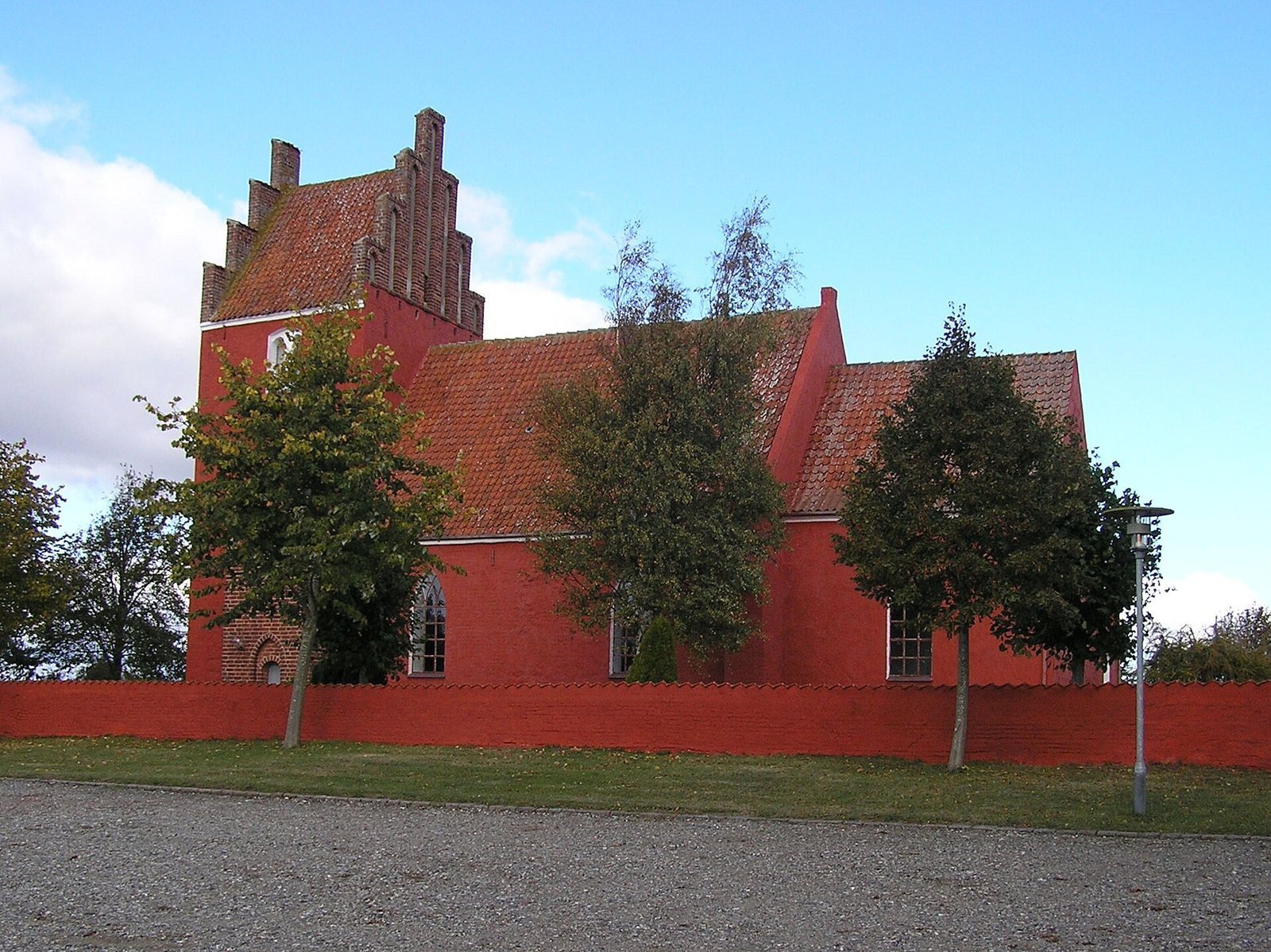
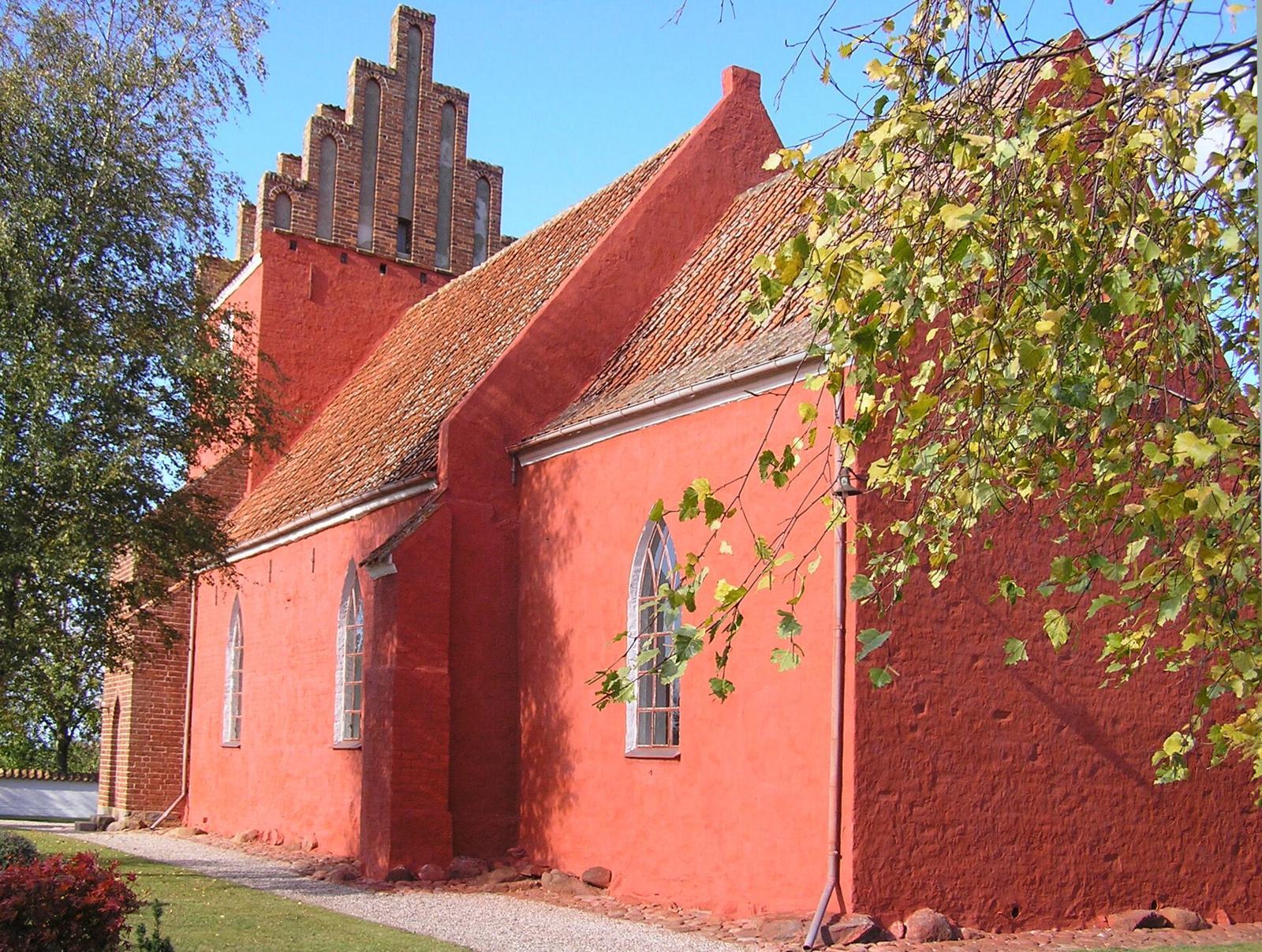
Vester Egesborg Church is faced in red brick and includes a stepped gable. Its surviving fabric combines the Early Gothic body, the Late Gothic tower and vestry, the rebuilt chancel, and a richly furnished interior containing carved woodwork, metalwork, and memorials.
Exterior and medieval fabric
Tower and vestry
The tower belongs to the Late Gothic enlargement carried out around 1500. On the north side, the associated vestry contains cross vaults, a form of vaulted ceiling made by the intersection of two arched vaults. Together, these elements form a distinct later addition to the earlier brick church.
Chancel and stepped gable
The chancel took its present form after its complete rebuilding in 1780, while the earlier Gothic arch survived. The exterior walls are faced with red brick, and the church includes a stepped gable as part of its visible architectural form.
Carved furnishings
Baroque altarpiece
The elaborately carved Baroque altarpiece dates from 1669 and was made in Abel Schrøder’s workshop in Næstved. Its central scene shows the Last Supper, flanked by the Evangelists. Side panels depict the Baptism, the Nativity, the Bearing of the Cross, and Gethsemane. Above them, the Crucifixion is accompanied by the monograms of Frederik III and Sophie Amalie, the king and queen consort of Denmark and Norway, together with Frederick Reedtz’s carved arms. The pedestal shows the Washing of the Feet, flanked by the apostles Peter and Paul.
Pulpit
The pulpit was carved in oak by the Schrøder workshop in 1632. Figures of the Evangelists decorate its body, while the canopy carries Christian IV’s monogram and Frederick Reedtz’s arms. Reedtz’s arms also appear on the chairs and gables, extending his commemorative presence across the church furnishings.
Baptismal font and ceiling ship
A wrought-iron baptismal font from the 1670s bears the arms of Niels Trolle and the Rosenkrantz family. Niels Trolle was a Danish nobleman and statesman, while the Rosenkrantz family was a prominent Danish noble family. A ship hangs from the ceiling in connection with the bequest made by John Jensen and his wife, and a representation of Neptune forms part of this maritime display.
Memorials and burial monuments
Tombstones and epitaphs
The church premises contain tombstones and epitaphs, including memorials to Frederick Reedtz. Some headstones date from 1450 to 1600. The oldest displays two coats of arms, while later stones associated with Frederick Reedtz and his wife display sixteen. The epitaphs are made of sandstone and wood, preserving the memory of individuals and families connected with the church.