Barbegal Roman Flour Mill: A Roman Water-Mill Complex in France
Site at a Glance
- Rating
- 4.5
- Popularity
- Very Low
- Country
- France
- Primary era
- Classical
- External website
- Open
- Eras represented
- Classical
- Civilizations
- Roman
- Site type
- Economic
- Remains
- Watermill
On this page4 sections
History
The Barbegal Roman Flour Mill is a Roman water-mill complex in France, near Fontvieille, constructed in the second century AD. It operated until the beginning of the third century and is regarded as one of the best-preserved Roman water-mill installations.
Its estimated production was about 4.5 tonnes of flour each day, a quantity considered sufficient for Arles when the city had a population of roughly 12,500. Later estimates place the output as high as 25 tonnes per day and suggest that the product may instead have been used for ship’s biscuit, a durable dried bread made for long voyages.
Isotopic analysis of lime deposits indicates that the mills stopped operating in late summer and autumn. This seasonal interruption may reflect reduced demand from shipping during those seasons. The technically complex installation has also been interpreted as evidence that, as the slave-based economy declined, profitable machinery became increasingly important.
Archaeologists excavated the complex between 1937 and 1939. The surviving mill and aqueduct remains were later presented in the exhibition of the Musée départemental Arles antique in Arles.
Remains
Aqueduct and slope
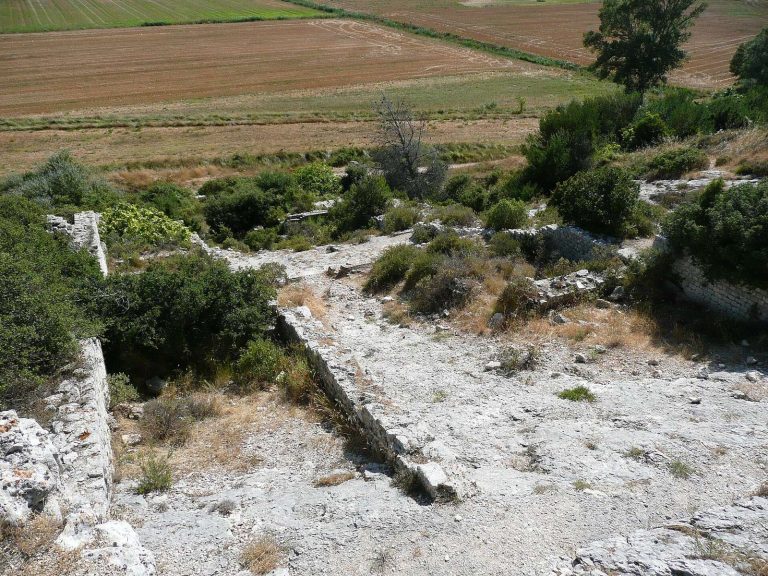
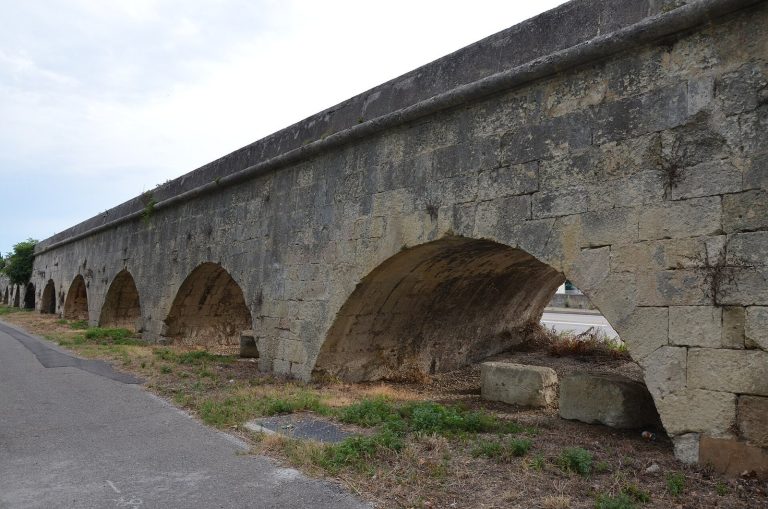
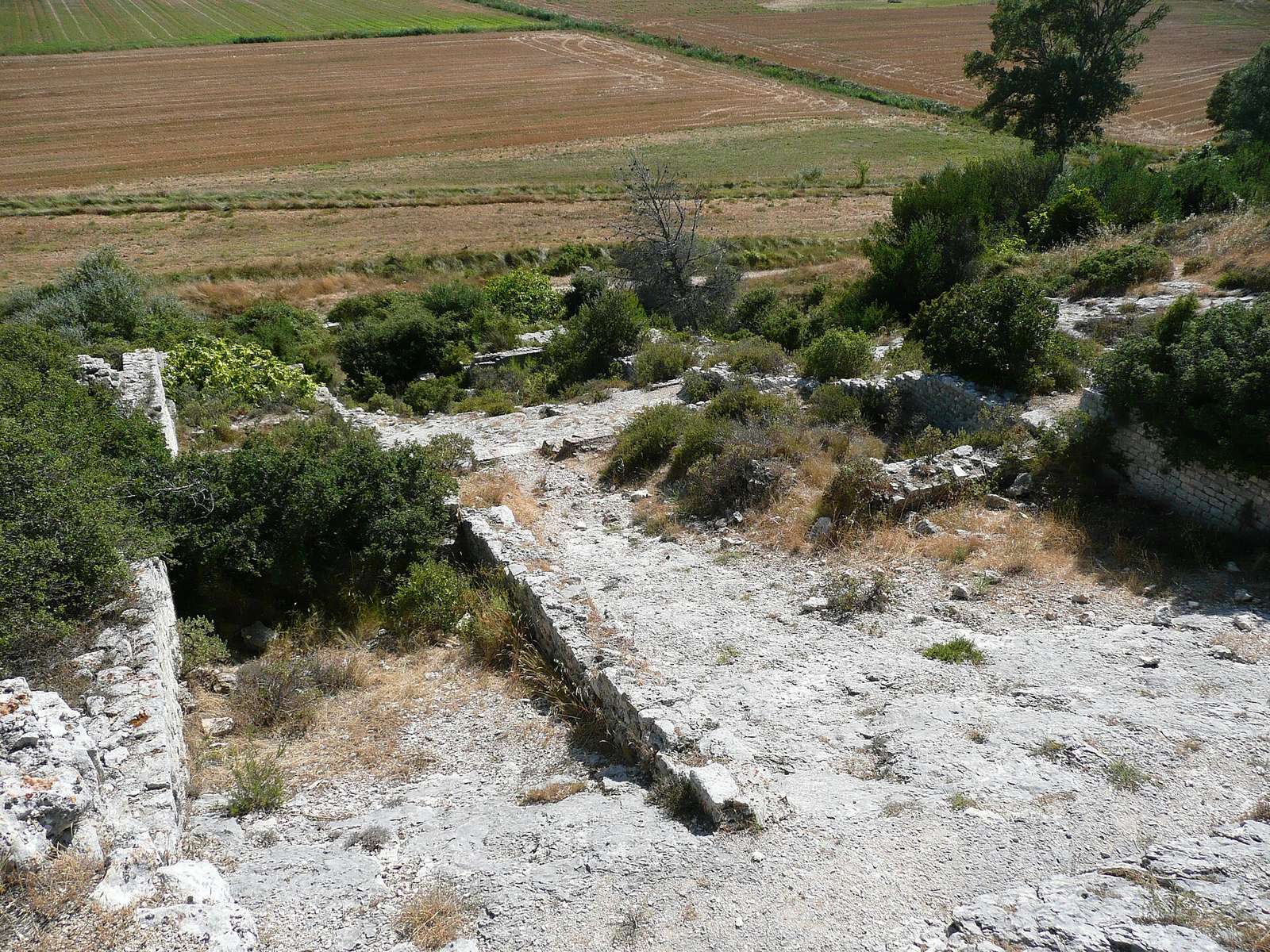
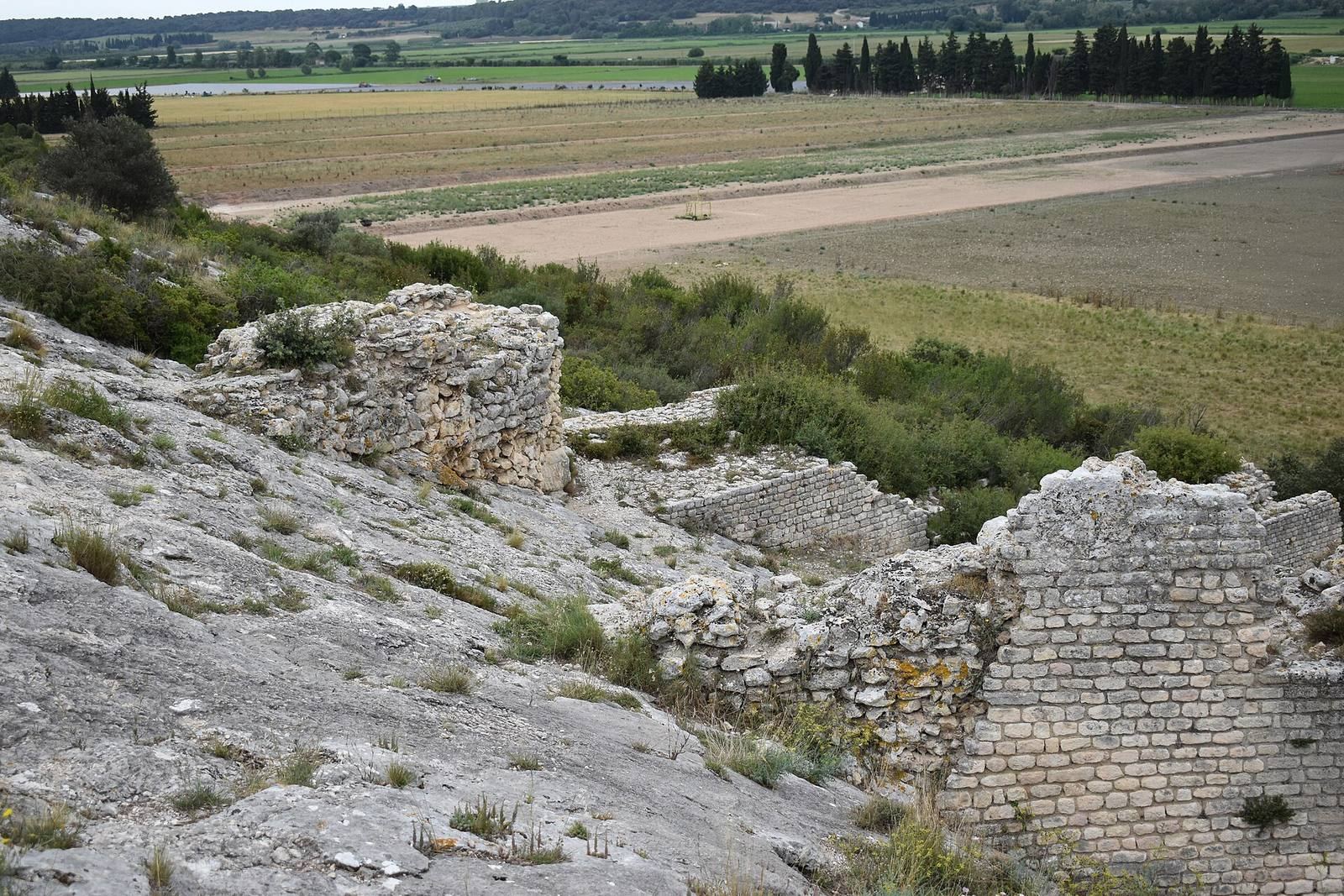
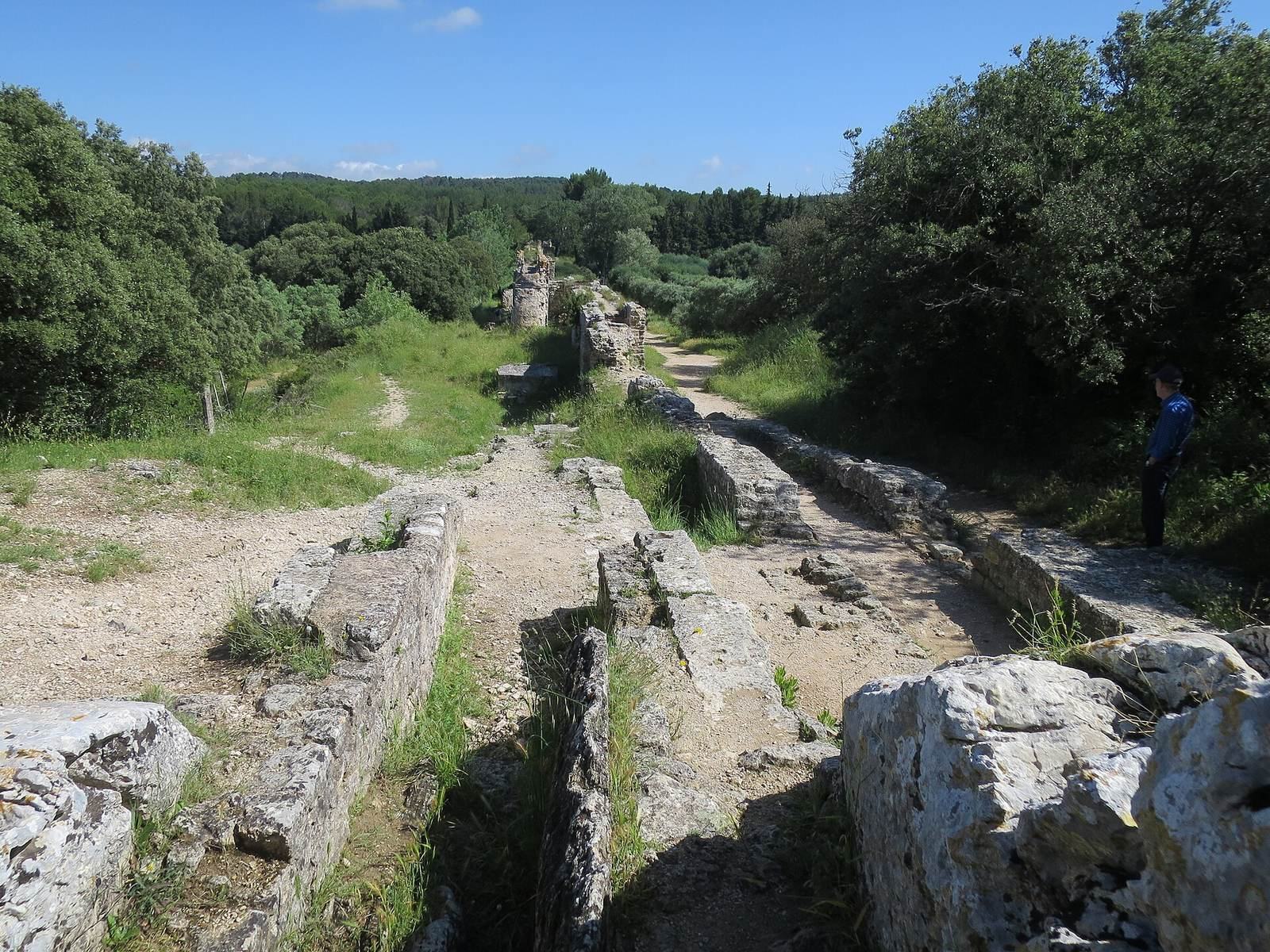
The ruined complex lies approximately 2.5 kilometres southeast of Fontvieille, near Grand Barbegal and Arles, on a natural slope of the Alpilles with an incline of about 30 percent. An aqueduct, a constructed channel for transporting water on a controlled gradient, supplied both the mill and Arles. Immediately before the slope’s edge, it divided into two branches. The branch toward Arles turned about 90 degrees and continued on a slight gradient, while the other crossed the edge of the slope toward the mill. After passing through the installation, the water flowed into a marsh in the valley.
Mill building and machinery
The machinery occupied a building approximately 61 metres long and 20 metres wide. Sixteen separate grinding units, each fitted with a millstone, were arranged in two parallel rows of eight that followed the slope downward. Flowing water turned the mill wheels, transferring rotary motion through wooden shafts to the grinding units positioned between the two outer rows of wheels. The arrangement is considered the earliest known example of vertically rotating grinding mechanisms. A further wheel at the upper end of the channel powered a cable hoist, which pulled sacks of grain up a ramp to the individual grinding units. A wall enclosed the operating area, and remains survive on the valley side.