Saint Anne Chapel in Sosnówka: A Baroque Pilgrimage Chapel


Site at a Glance
- Rating
- 4.8
- Popularity
- Low
- Country
- Poland
- Primary era
- Early Modern
- External website
- Open
- Eras represented
- Early Modern
- Civilizations
- Habsburg, Holy Roman Empire
- Site type
- Religious
- Remains
- Chapel
On this page8 sections
History
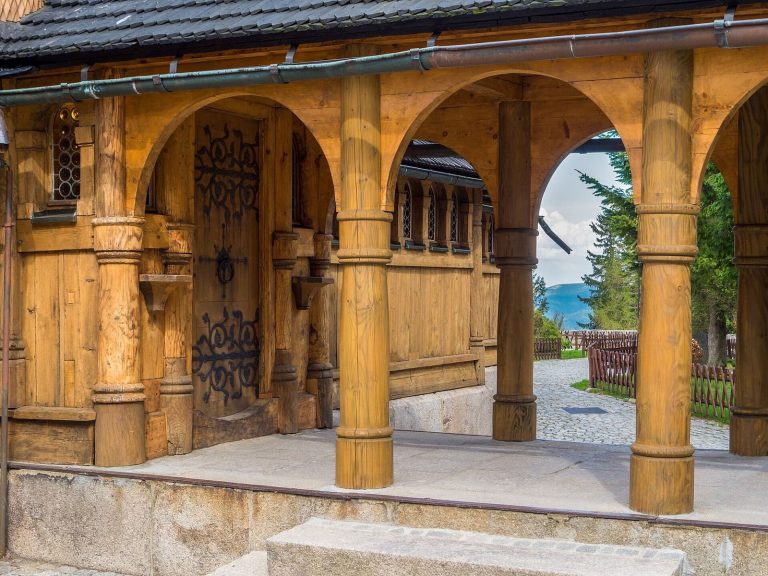
Saint Anne Chapel in Sosnówka is a Catholic chapel in Poland, standing on Grabowiec in the Western Sudetes and affiliated with the Parish of the Sacred Heart of Jesus and Our Lady of the Gate of Dawn in Sosnówka. The present building is a Baroque rotunda constructed between 1718 and 1719, but the site had a much older religious history connected with a sacred spring.
Early sacred site
The site was an early Slavic pagan cult center dating back to the Neolithic period. A wooden chapel was built beside the spring at the beginning of the thirteenth century, beside the road from Pagan Valley to Good Spring. This route was known as Babia Ścieżka, or Witches’ Path. The Sobieszów parish chronicle first names the chapel in 1212.
The chapel was initially cared for by the Joannites, also known as the Knights Hospitaller, a Catholic military religious order that combined monastic life with military and charitable duties. Its maintenance was financed by Bolko II, the medieval Duke of Świdnica-Jawor. The wooden building was destroyed during the Hussite Wars, a series of religious and political conflicts in central Europe between 1419 and 1436.
Rebuilding and eighteenth-century foundation
During the fifteenth century, Friedrich Liebenthal of Sosnówka, the Melke brothers, and Konrad von Schaffgotsch of Podgórzyn rebuilt the chapel. It suffered further damage during the Thirty Years’ War, the major European conflict that lasted from 1618 to 1648.
Count Hans Anton von Schaffgotsch of Cieplice founded the present masonry chapel. Construction began in 1718 and was completed in 1719 under Casper Anton Joseph Jentsch, who designed and built the structure. Its appearance is described as having undergone no major changes since the eighteenth century. In 1812, a Baroque altar with a sculpture of Saint Lawrence, a third-century Christian deacon and martyr, was moved to the chapel from Saint Lawrence Chapel on Sněżka.
Neglect, recovery, and protection
After the Second World War, the chapel fell into neglect. A Baroque painting from the high altar, made on copper by a pupil of the Silesian painter Michael Leopold Willmann, disappeared after being taken to Toruń for conservation during the first half of the twentieth century. It was recovered and returned to its original place in 2006. The chapel entered the Polish register of historic monuments on 9 September 1980 under designation A/775/658/J.
Remains
Rotunda and interior
The chapel is a Baroque rotunda, a centrally planned building with a circular or near-circular form, although its plan is specifically elliptical. It measures approximately 14 by 10 metres and is built of masonry on a stone foundation. Its walls are about 1.7 metres thick. The single-nave interior is covered by a flattened dome, while the exterior has a wooden barrel-vault construction beneath a shingle-covered roof. Oval windows, cut flat at the bottom and fitted with glass, light the building.
Altars and paintings
Early-eighteenth-century furnishings include the high altar, a pulpit, two side altars, and a statue of Saint Lawrence. The high-altarpiece painting shows Saint Anne, traditionally regarded as the mother of Mary and grandmother of Jesus, with Jesus and Mary, while Joseph stands behind them. The paintings were made on copper sheets because radon associated with the spring water caused paint on canvas to fade.
Spring and surrounding features
The high altar stands directly above the spring. Its lightly mineralized water is described as weakly radioactive because of radon and is carried outside the chapel through a channel. The spring installation is associated with anti-inflammatory, analgesic, and diuretic effects. At the water intake, a carved deer appears above the inscription “Der gute Born,” meaning “Good Spring.” Inscriptions on either side state that the healing spring was mentioned in 1212 and that Count Schaffgotsch newly enclosed it in 1920.
A sycamore beside the chapel has a trunk circumference of approximately 4.5 metres and is described as the thickest sycamore in the Karkonosze Mountains.