Pons Cestius: An Ancient Roman Bridge in Rome


Site at a Glance
- Rating
- 4.6
- Popularity
- Medium
- Country
- Italy
- Primary era
- Modern
- External website
- Open
- Eras represented
- Classical, Modern
- Civilizations
- Italian, Roman
- Site type
- Infrastructure
- Remains
- Bridge
On this page8 sections
History
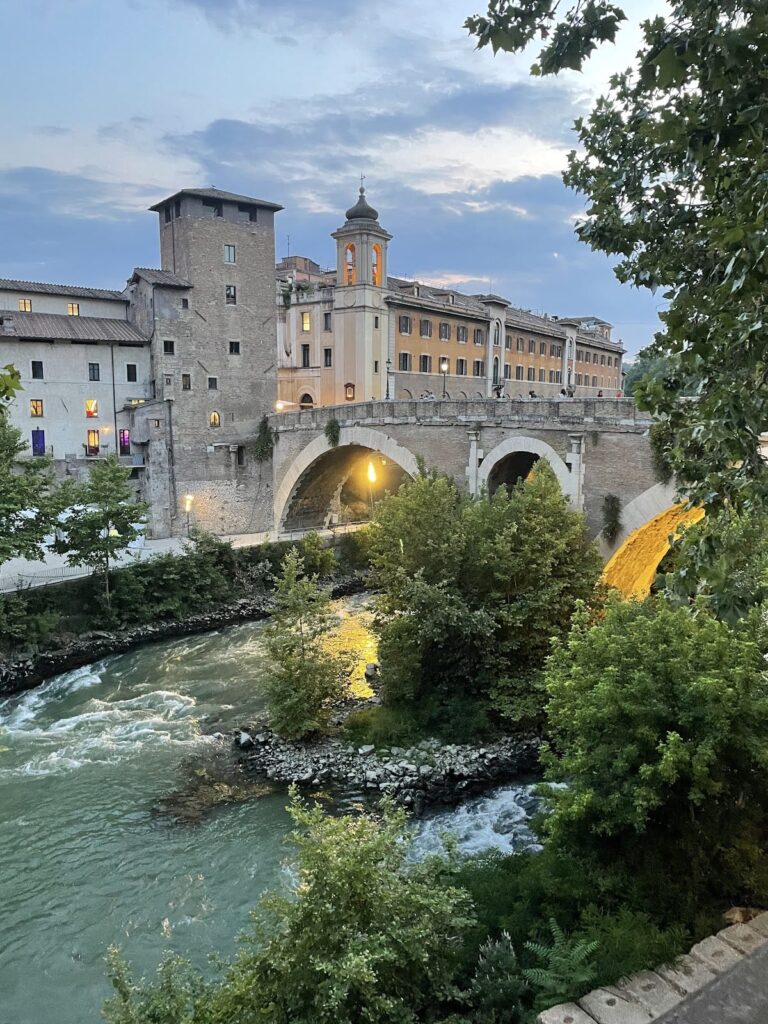
Pons Cestius is an ancient Roman bridge in Rome, Italy, built during the 1st century BC to connect Tiber Island with Trastevere on the Tiber’s right bank. It followed the construction of Pons Fabricius and created the first link between the island and this side of the river, while Pons Fabricius connected the island with Rome’s left bank and the ancient city centre.
Republican origins
The original stone bridge was probably built between 62 and 27 BC, although its exact date is uncertain. The Cestius associated with its name is also not securely identified. He may have commissioned the bridge or restored an earlier crossing, and may have belonged to the Cestia family.
Imperial rebuilding
During the reign of Antoninus Pius, the bridge was restored with reused building material. Antoninus Pius was Roman emperor from AD 138 to 161, and an inscription commemorating the reconstruction was placed on the bridge.
In the 4th century, the bridge was replaced by a new structure that probably retained the principal lines of its Republican predecessor. In AD 370, it was rededicated as Pons Gratiani, meaning “Bridge of Gratian,” in honour of the emperors Valentinian I and Valens and Valentinian’s son Gratian. The new name is reported by the 5th-century Latin historian Polemius Silvius. Valentinian I and Valens ruled as brother emperors from AD 364, while Gratian became co-emperor in AD 367.
Medieval names and later rebuilding
The bridge was restored again between 1191 and 1193 and underwent repeated repairs from the 12th century onward. From the 15th century, it was called Ponte San Bartolomeo, or Bridge of Saint Bartholomew, after the church and minor basilica of San Bartolomeo all’Isola on Tiber Island. The island had also acquired a hospital and a shelter for homeless people during the Middle Ages.
In the 18th and 19th centuries, another name, Ponte Ferrato or “Iron Bridge,” referred to the many chains attached to the bridge to secure mills in the river. Major changes came with the raising and embankment of the Tiber between 1888 and 1892. River walls and boulevards altered the channel and made the demolition and reconstruction of the Roman bridge necessary. Because the earlier structure no longer reached across the widened channel and embankments, a new three-arch bridge was built in its place.
Remains
The present bridge
The present Pons Cestius is a stone arch bridge measuring 80.4 metres in length. It has three large arches and two piers standing in the water, and carries pedestrians and motor vehicles between Tiber Island and Trastevere. The 19th-century rebuilding replaced the two small side arches with two larger arches of equal span beside the original central arch. About two-thirds of the central arch reused material from the earlier bridge, while approximately two-thirds of the present structure dates from the 19th-century work and roughly one-third consists of pre-modern material.
The ancient structure
The ancient bridge was 48 metres long and 8.2 metres wide. Its central arch spanned 23.65 metres, while two smaller side arches each measured 5.8 metres across. The 4th-century bridge used volcanic tuff, peperino, a hard volcanic building stone, and a travertine limestone facing. Some of its rebuilding material came from the demolished portico of the nearby Theatre of Marcellus. Marble panels carrying commemorative inscriptions and the emperors’ names were installed on the bridge and its parapet.
Position within the river crossing
Tiber Island divides the river into two channels at Pons Cestius. Its eastern connection continues across the island through Pons Fabricius, the ancient bridge linking the island with Rome’s left bank. Together, the two bridges define the crossing between the island, Trastevere, and the central area of ancient Rome.