Erlöserkirche (Lüdenscheid): Lüdenscheid’s Historic Protestant Church

Site at a Glance
- Rating
- 4.4
- Popularity
- Very Low
- Country
- Germany
- Primary era
- Modern
- External website
- Open
- Eras represented
- Medieval, Early Modern, Modern
- Civilizations
- German, Holy Roman Empire, Kingdom of Prussia
- Site type
- Religious
- Remains
- Church
On this page12 sections
History
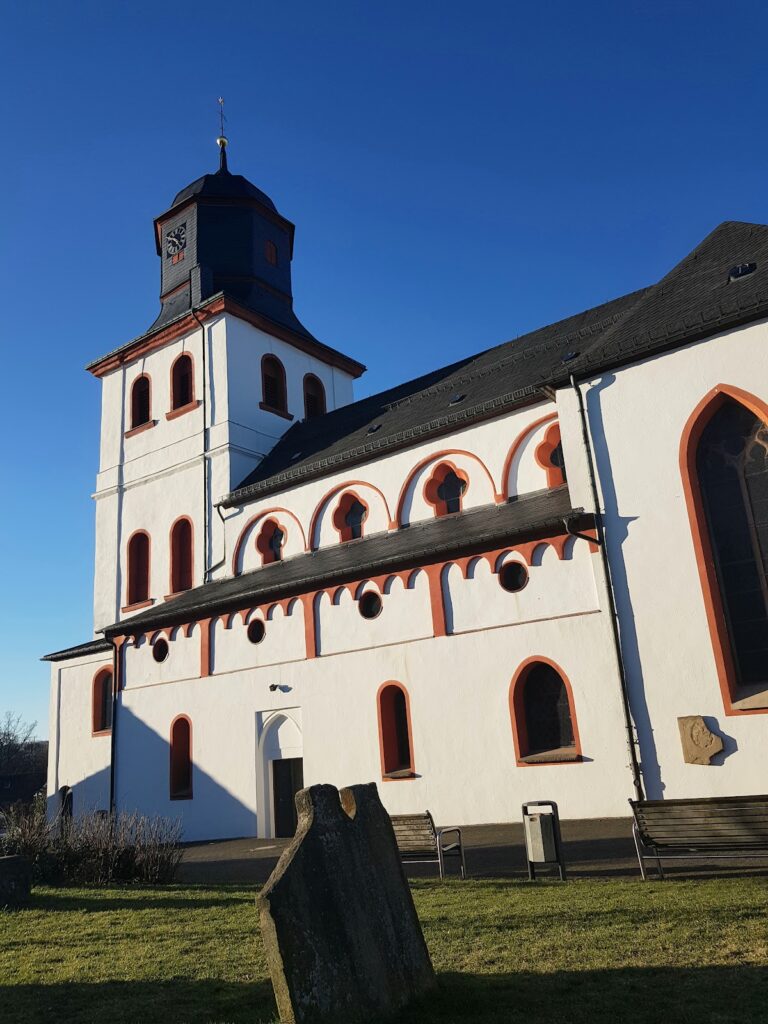
Erlöserkirche (Lüdenscheid) is a Protestant church in Germany whose history includes a twelfth-century late Romanesque building and an earlier church or predecessor first documented in the eleventh century. It stands in the historic old town and is Lüdenscheid’s oldest church. Until 1902, it was known as the Medardus Church.
Medieval origins
Before the Reformation, the church was dedicated to Saint Medardus, a sixth-century Christian bishop and saint associated with the early medieval church in western Europe. He was regarded as Lüdenscheid’s patron saint. In the twelfth century, a late Romanesque two-bay pillar basilica was erected on the site of an earlier Romanesque church. A pillar basilica is a church with a central nave and supporting spaces divided by substantial pillars. The choir was later rebuilt in the Gothic style, the later medieval architectural form associated with this rebuilding.
Rebuilding in the nineteenth century
Structural deterioration led to the demolition of the earlier church in 1822. Its Romanesque tower shaft was retained, preserving the oldest surviving part of the complex. The present nave was dedicated on 26 March 1826 and was designed by Engelbert Kleinhanz, a building master of Werden Abbey.
An earlier proposal had been prepared in 1823 by Wilhelm Tappe, who was born in Lüdenscheid, was the son of a church sexton, and served as a princely Lippe building official. The design was rejected after an expert assessment by Karl Friedrich Schinkel, a major Prussian architect and architectural theorist. The church bell installation was renewed in 1920 and again in 2000.
War damage and later musical changes
Heavy artillery fire struck Lüdenscheid in 1945. The church’s stained-glass windows collapsed, while the organ remained undamaged. Later changes to the organ shaped the church’s musical history. In 2014, the Führer organ was taken out of service because its electrical equipment had deteriorated and become unsafe. It was dismantled and sold to Poland in 2015. The Altstadtorgel Foundation in Lüdenscheid was established that year.
Albert Baumhoer Organ Building of Salzkotten began constructing a replacement instrument in 2016. The new organ was completed in November 2018, providing the church with a concert instrument in the French symphonic style.
Remains
Medieval tower and nineteenth-century church
Romanesque tower
The surviving Romanesque tower shaft probably dates from the eleventh century and is regarded as the oldest surviving structure in Lüdenscheid. It is secured by 180 iron anchors, whose arrangement also contributes a decorative effect. The tower’s characteristic stepped cap, with a Baroque-like appearance, was added in 1785 and remains a prominent feature of the townscape.
Round-arched friezes, typical of Romanesque architecture, survive on the tower’s north and east sides, although the nave roof now conceals them. The upper storey was originally open to the nave. It served both as a lord’s gallery or manorial seat and as a chapel dedicated to Saint Michael.
Classical nave and choir
The present church is a Classical-style nave with an apse, the rounded end of the church. Round-arched windows and pilasters articulate the facade, while the interior contains a wooden vault and galleries. In front of the choir stands a pulpit altar, a structure combining pulpit and altar so that preaching and the celebration of the Eucharist form one architectural focal point. The altar setting includes a “starry sky.”
Bells and organs
Bells
The church has five bells. Their installation was renewed in 1920 and 2000, linking the present bell system with the continuing use of the historic church building.
Earlier organs
An organ built in 1792 by Johann Christian Kleine for the predecessor church was installed in the present church in 1825 by Christian and Daniel Roetzel of Alpe near Derschlag. Its equipment included couplers II/I, I/P, and II/P, a tremulant, a valve, a calcant bell used to summon the person operating the bellows, and three bellows measuring 9 feet long and 4.5 feet wide.
Wilhelm Sauer of Frankfurt an der Oder built a new pneumatic organ in 1898. Donated by the widow of the Lüdenscheid manufacturer Leonard Ritzel, it had 36 stops distributed across three manuals and a pedal. A manual is a keyboard, the pedal is the foot-operated keyboard, and a stop controls a distinct set of organ pipes. In 1911, Sauer recommended Bernhard Koch of Barmen near Wuppertal for maintenance because of the distance between the church and his workshop.
At the initiative of cantor Oswald Schrader, a church musician responsible for leading or organizing worship music, the Koch firm remodeled the instrument in 1953. It received electro-pneumatic action, which uses electrical assistance alongside air pressure to transmit the player’s movements to the mechanism. The console was moved to the left side of the gallery and the case was painted white, while only a small part of the pipework was altered.
In 1964, cantor Eberhard Essrich arranged for Alfred Führer of Wilhelmshaven to build a new organ. The Sauer instrument was removed, refurbished by the Koch firm, and installed in the newly built Kreuzkirche. During that work, the old case and more than half of the historical pipe material were lost. Führer’s organ was dedicated in Erlöserkirche in 1968 and was later removed after being taken out of service.
Baumhoer organ
The replacement organ completed in 2018 by Albert Baumhoer is a concert instrument in the French symphonic style. It has 41 speaking stops distributed across three manuals and a pedal. Its disposition is modeled on the work of Aristide Cavaillé-Coll and includes couplers II/I, III/I, III/II, I/P, II/P, and III/P, together with a combination-setting system.