Church of Saint Basil of Caesarea on the Hill: An Orthodox Church in Pskov


Site at a Glance
- Rating
- 4.8
- Popularity
- Low
- Country
- Russia
- Primary era
- Medieval
- External website
- Open
- Eras represented
- Medieval, Early Modern
- Civilizations
- Pskov Republic, Russian
- Site type
- Religious
- Remains
- Church
On this page10 sections
History
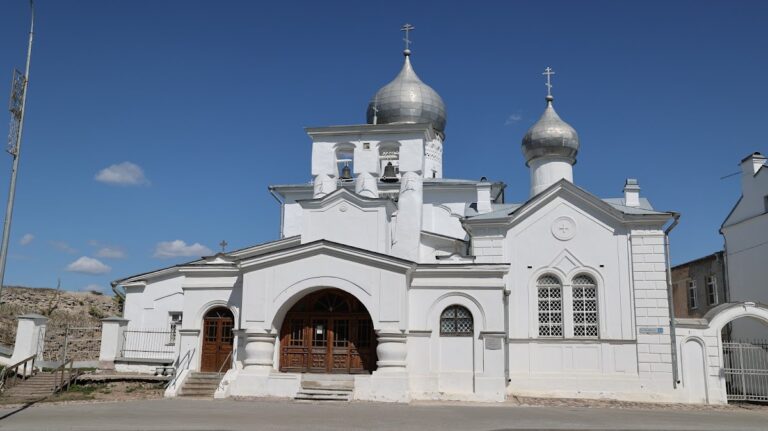
The Church of Saint Basil of Caesarea on the Hill is an Orthodox church in Pskov, Russia, whose stone building was erected in 1413–1415 on the site of a fourteenth-century wooden church. Its principal altar is dedicated to Saint Basil the Great, a fourth-century Christian bishop and theologian of Caesarea honored as a major saint in Eastern Orthodox Christianity. The church stands on Vasilyevskaya Hill in Pskov’s Middle City, the historic central urban area, and is now part of the UNESCO World Heritage property Churches of the Pskov School of Architecture.
Medieval Foundation and Growth
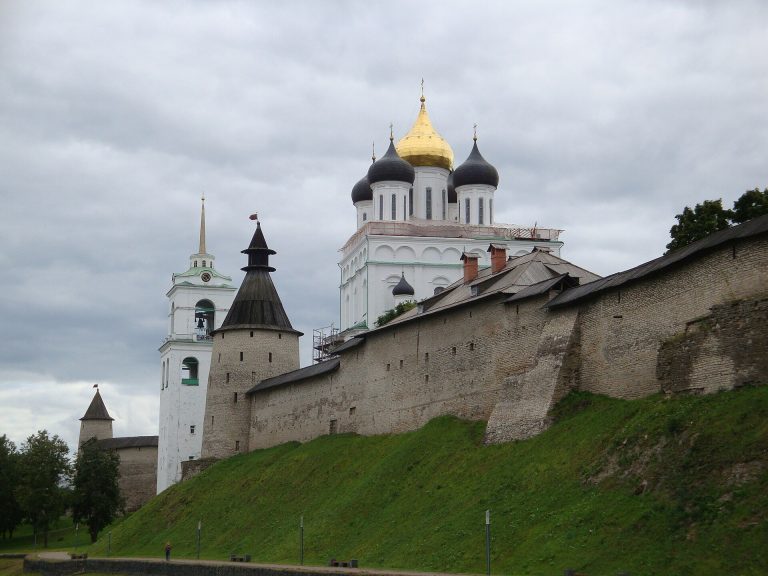
The first church on the hill stood beside the Zrachka stream, in terrain that was then marshy. The stream has since been filled. In 1375, the wall of the Middle City was built along its course, and the Vasilyevskaya Tower stood opposite the church. Its belfry held an alarm bell that was used to warn the entire city of danger. The wooden church was replaced by the present stone foundation and structure in 1413–1415.
The church prospered from the late fifteenth through the sixteenth century. During this period, chapels and a gallery were added, extending the building and its religious functions. An early-sixteenth-century Tikhvin icon of the Mother of God was revered there.
Decline and Nineteenth-Century Changes
Pskov and the church entered a period of decline from the end of the seventeenth century. In the mid-eighteenth century, the original belfry was rebuilt as a bell tower. In 1786, the small size of the parish led to the church being attached to the nearby Church of Saint Nicholas at Usokha.
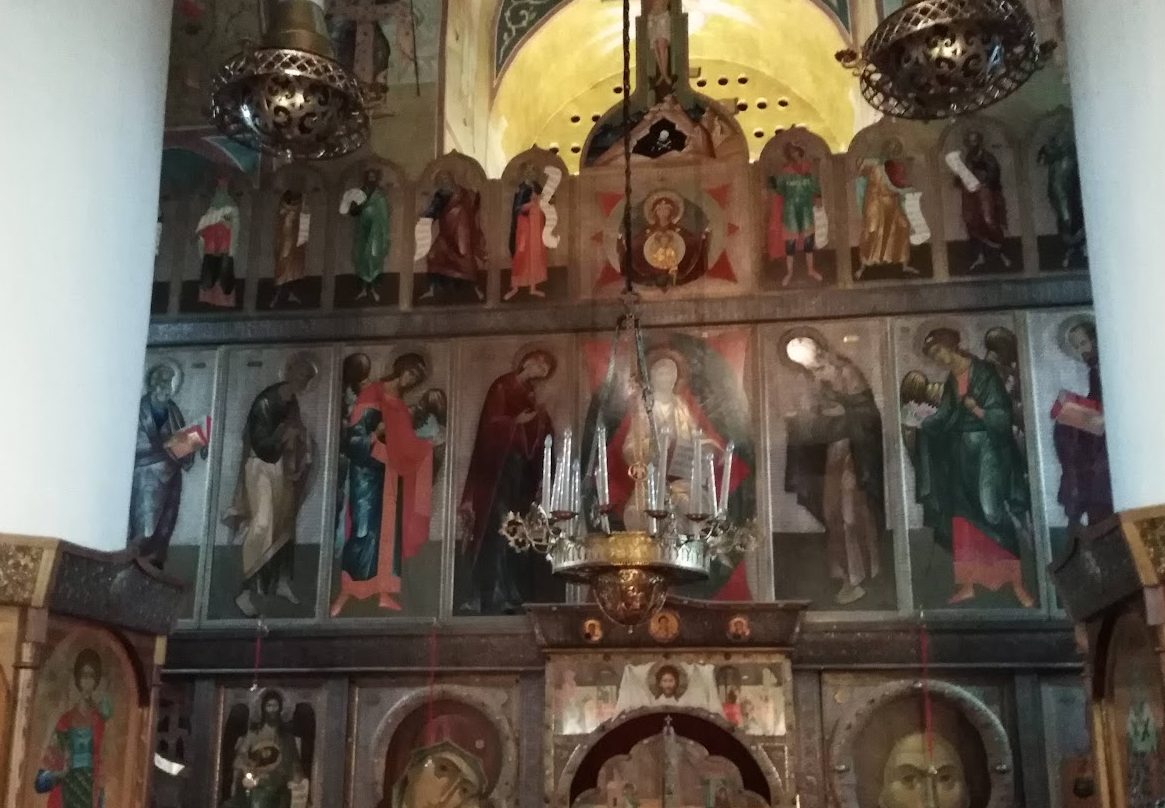
By the early 1830s, the building had seriously deteriorated. The northern chapel collapsed, and the old iconostasis, the screen separating the sanctuary from the main worship space, was lost along with the carved choir loft. Repairs carried out in the mid-nineteenth century altered the church’s ancient appearance. By the end of that century, it had become a dependency of Krypetsky Monastery, an Orthodox monastic institution, and served as the monastery’s affiliated courtyard. A procession with the cross came to the church once each year, while the building remained empty for most of the rest of the year.
Closure, War, and Restoration
Authorities closed the church for worship in 1921 and converted it into a warehouse. During the German occupation of Pskov in 1941, the Pomor Old Believers reopened it for worship. The Pomor communities belonged to the Old Believer movement, whose religious practices had separated from those of the established Russian Orthodox Church after seventeenth-century liturgical reforms.
A bomb damaged the northern part of the church in 1944, and the building was closed again in 1947. Following repair and restoration, it was used to house documents belonging to the regional archive.
In 2003, the church was transferred to a community of the Russian Orthodox Church. Restoration was undertaken in preparation for the celebration of the 1,100th anniversary of Pskov’s mention in a chronicle. The first service after the transfer took place on 3 December 2003. The restoration plans called for the building’s original appearance to be recovered, including the reconstruction of its curved zakomary roofing, a traditional Russian gable-like form, and the restoration of the chapels dedicated to Saint Alexis and Saint John.
Archbishop Eusebius, a senior bishop in the Eastern Orthodox hierarchy, consecrated nine new bells on 8 February 2007. The largest weighs 530 kilograms and bears cast images of Saint Basil the Great, the Apostle Andrew, Saint Nicholas, and the Passion-Bearer Boris. Architect V. A. Popov’s restoration project was approved in 2008, and the zakomary roofing of the main body, the cupola, and the multi-pitched roof of the northern chapel were reconstructed in 2009–2010.
The church is a federally significant cultural-heritage monument of the Russian Federation. In 2019, it was included in the UNESCO World Heritage serial property Churches of the Pskov School of Architecture under criterion (iv), which recognizes an outstanding example of a building, architectural ensemble, or landscape illustrating a significant stage in human history. The church is active, and its rector is Archpriest Andrei Bolshanin, a senior priest in the Russian Orthodox Church.
Remains
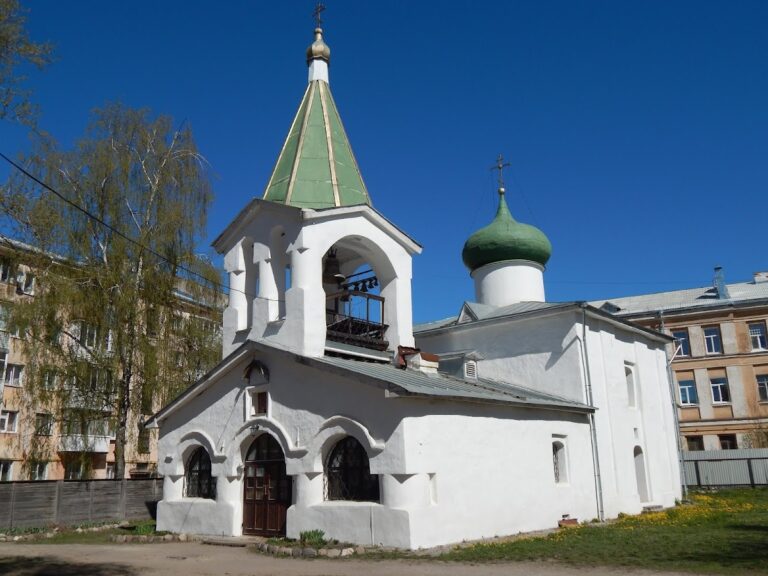
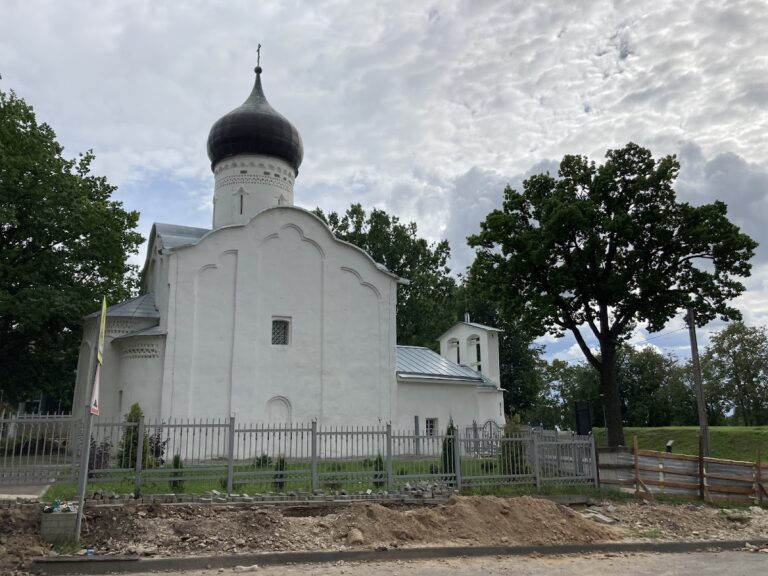
The surviving church is organized around a four-pillar main structure with raised supporting arches, three apses, and a central cupola. Northern and southern chapels flank the main space. The rectangular nave is preceded by an entrance stairway beneath an arcade, while an octagonal turret on the northern side serves as an entrance. The bell tower, formed by rebuilding the earlier belfry in the mid-eighteenth century, remains part of the site.
Church Building
Main Structure
The main church has four internal pillars and raised arches that support its upper structure. Three apses project from the building and mark the sanctuary area. The central cupola rests on a drum, the cylindrical or polygonal structure that supports a dome. The main volume originally carried zakomary roofing, but it was later changed to a four-sloped roof. The curved roofing form of the main body was reconstructed in 2009–2010.
Chapels and Entrance Features
The principal space is flanked by northern and southern chapels. The northern chapel is associated with the church’s period of decline, when it collapsed by the early 1830s, and its multi-pitched roof was reconstructed in 2009–2010. The restoration plans also included the chapels dedicated to Saint Alexis and Saint John. An entrance stairway beneath an arcade leads toward the rectangular nave, and an octagonal turret on the northern side serves as another entrance feature.
Decorative Friezes
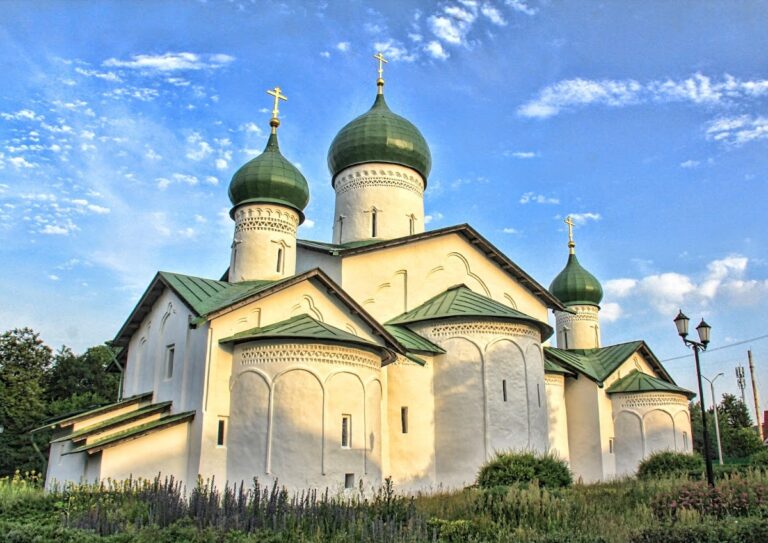
The apses and the drum of the cupola are finished with triple ornamental friezes. Their motifs derive from Novgorodian ornament and are arranged in three bands that reflect Moscow influence. This treatment is a characteristic feature of Pskov churches of the period.
Bell Tower
The bell tower survives as part of the church complex. It was created in the mid-eighteenth century when the earlier belfry was rebuilt. Nine new bells were consecrated in 2007, including the largest, which weighs 530 kilograms and carries cast images of Saint Basil the Great, the Apostle Andrew, Saint Nicholas, and the Passion-Bearer Boris.