Sidi Abderrahman Mosque: A Seventeenth-Century Mosque and Mausoleum in Algiers


Site at a Glance
- Rating
- 4.4
- Popularity
- Very Low
- Country
- Algeria
- Primary era
- Early Modern
- Eras represented
- Early Modern
- Civilizations
- Ottoman
- Site type
- Religious
- Remains
- Tomb
On this page12 sections
History
Sidi Abderrahman Mosque is a seventeenth-century mosque and mausoleum in Algiers, Algeria, built around the tomb of the Muslim theologian and religious thinker Sidi Abderrahman et-Thaâlibi (1384–1471). The complex forms part of the Zaouïa of Sidi Abderrahmane and the historic Casbah of Algiers, which is included within a UNESCO World Heritage Site.
From Tomb to Mausoleum
A tomb may have been established for Sidi Abderrahman after his death in 1471, but the form and even the existence of an original structure are unknown. In 1621, 143 years after his death, a more substantial mausoleum was built. Its construction reflects the continuing strength of his religious reputation and memory.
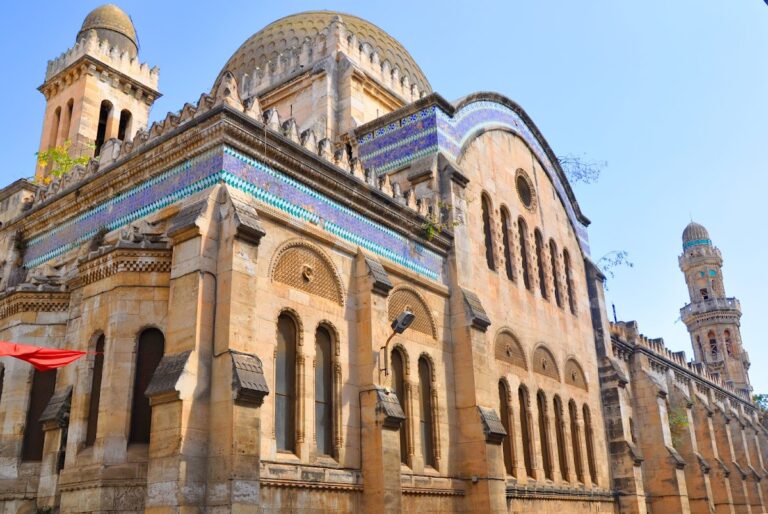
In 1696, Dey Hadj Ahmed el Atchi transformed the mausoleum into a mosque, more precisely a zaouïa, an Islamic religious institution linked with teaching, spiritual practice, and devotion to a religious master or saint. He also added a square minaret for the call to prayer. The mosque therefore belongs to a later phase than the original mausoleum.
Religious and Funerary Role
The complex became a place of religious contemplation and the center of a small necropolis. Dey Moustapha Pacha, who ruled Algiers from 1798 to 1805, was buried in the oratory with his son Brahim. Dey Omar Pacha, who ruled from 1815 to 1817, was also buried there.
Hadj Ahmed Bey, the last bey of Constantine, and several of his dignitaries were buried in an enclosure outside the building. A bey was a provincial governor within the political system of the Ottoman Regency of Algiers. The writer Mohamed Ben Cheneb was later buried in the same cemetery complex.
Colonial and Modern Phases
During the colonial period, around 1845, graves were moved to the peripheral mausoleums of Sidi Mansour and Ouali Dada. Sidi Mansour had originally been buried near the Bab Azzoun area. These burials added to the importance of the cemetery beside the mosque.
Sidi Abderrahman came to be regarded as the patron saint of Algiers, and his tomb attracted prominent visitors. Queen Victoria visited the mosque during a stay in Algiers and donated the chandeliers that decorate the tomb chamber. Queen Amélie of Portugal, King Oscar of Sweden, King Edward VII, Queen Alexandra of England, and French President Alexandre Millerand, who visited in 1922, also visited the cemetery or tomb.
After Algerian independence, the authorities recovered the mausoleum of Sidi Abderrahman and other shrines and historic monuments that had been taken over during French colonial rule. Recommendations issued by the Ministry of Religious Affairs and Endowments after the Fourth National Quran Week, held from 29 September to 1 October 2003, called for the shrine to be cared for and for its zaouïa to be developed as a scientific, cultural, and spiritual institution. They also proposed reviving its library by printing and publishing manuscripts and encouraging research into the heritage of Sidi Abderrahman et-Thaâlibi.
Many Algerian families continue to visit the tomb daily, maintaining a long-established devotional practice. Reported practices include weeping, applying henna and perfumes, lighting candles, and seeking the blessing of holy persons or the fulfillment of wishes. The permissibility of these practices remains contested.
Remains
The complex combines a small mosque, a domed mausoleum, or koubba, built around Sidi Abderrahman’s tomb, and an enclosed cemetery within the zaouïa compound. The mausoleum’s form belongs to the Maghrebi tradition and has been compared with funerary monuments at Tlemcen and Fez and with the Saadian tombs of Marrakesh, royal monuments associated with Morocco’s Saadian dynasty.
Mausoleum and Tomb Chamber
Burial Chamber
The burial chamber contains eight groups of three engaged half-columns set into its four walls. Each half-column has a base and capital carved from a single block of white marble. Together, the half-columns support four arches incorporated into the dome structure. These arches were probably added at a later date.
Dome and Roof
The mausoleum has a domed ceiling carrying a straight, four-sided roof covered with tiles. The later covering of the dome was influenced by a style described as analogous to Anatolian domes. The tomb chamber was subsequently furnished with a mihrab, the niche indicating the direction of prayer, which contains two small columns and tiles from Asia Minor.
Oratory and Furnishings
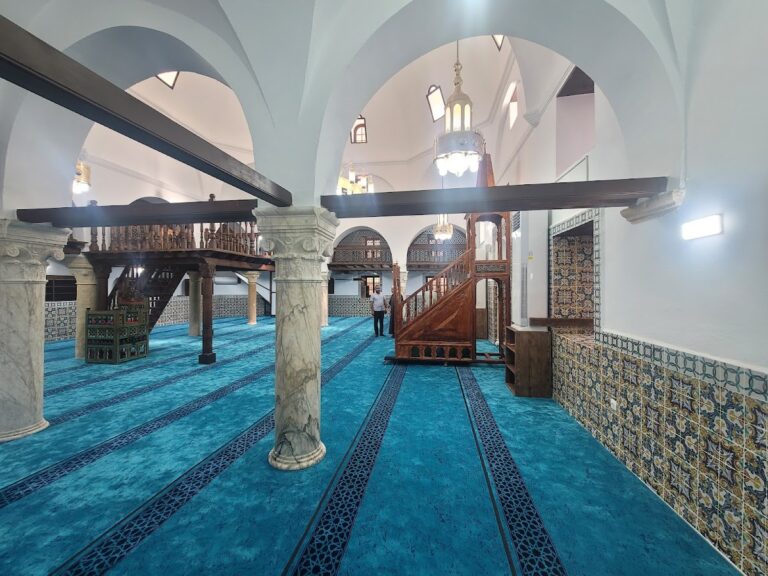
The tomb chamber also functions as an oratory, an arrangement considered unusual because Islamic practice generally prohibits prayer over a tomb. Worshippers deposited gifts at the site, including clocks, brotherhood standards, ostrich eggs, and calligraphic works. Chandeliers donated by Queen Victoria decorate the chamber.
Mosque and Cemetery
Mosque and Minaret
The mosque occupies the later religious phase of the complex, when the mausoleum was transformed into a zaouïa in 1696. Its square minaret, a tower associated with the public call to prayer, was added as part of that transformation.
Enclosed Cemetery and Peripheral Mausoleums
An enclosed cemetery extends outside the main building. It includes the tombs of historical figures and peripheral kubbas associated with the relocated burials of Sidi Mansour and Ouali Dada. The cemetery therefore forms a funerary extension of the mosque and mausoleum complex.