Blois-Vienne Church: A Historic Catholic Church in Blois, France
Site at a Glance
- Rating
- 5
- Popularity
- Very Low
- Country
- France
- Primary era
- Early Modern
- External website
- Open
- Eras represented
- Early Modern, Modern
- Civilizations
- French
- Site type
- Religious
- Remains
- Church
On this page14 sections
History
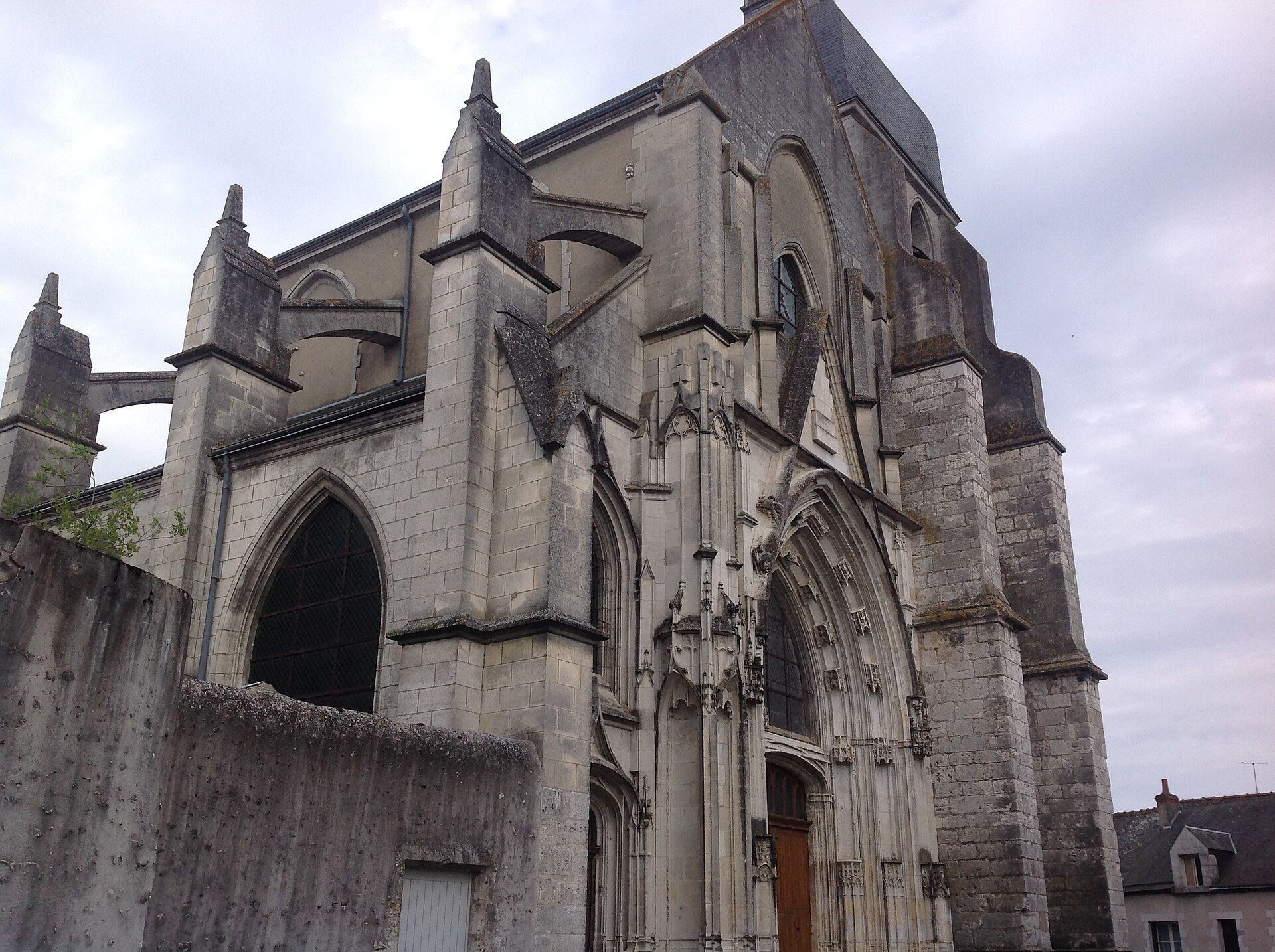
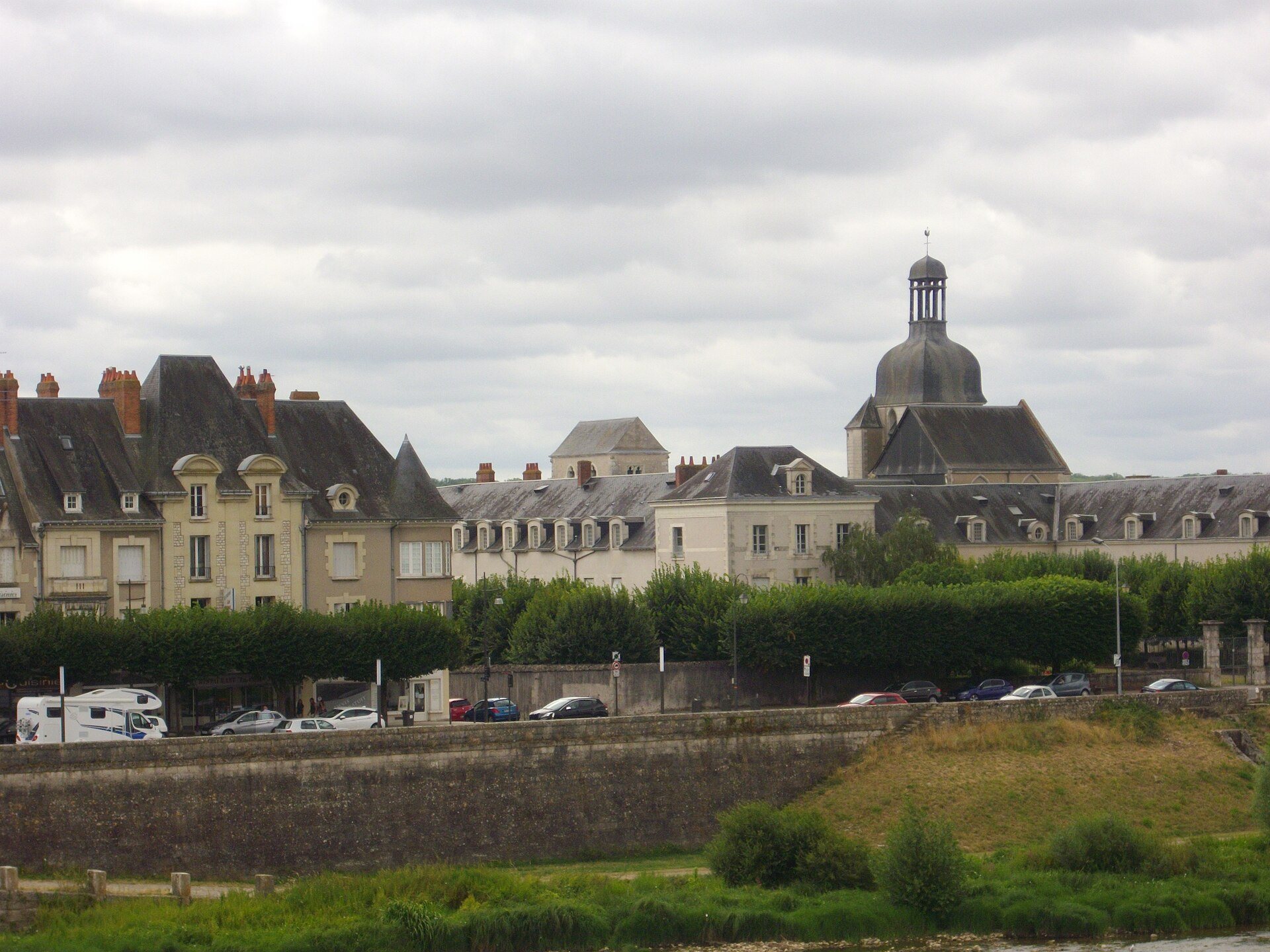
Blois-Vienne Church is a Roman Catholic church in Blois, France, built and repeatedly reconstructed in the Flamboyant Gothic style between the early sixteenth century and 1528. Located on the left bank of the Loire in the former Vienne suburb, it is dedicated to Saturnin of Toulouse, an early Christian bishop and martyr traditionally associated with the Christianization of Toulouse. Its west façade adjoins the Renaissance Saint-Saturnin churchyard.
Early Church and Parish
A chapel dedicated to Saint Anthony of the Woods may have stood in Vienne during the early Middle Ages. A Catholic church occupied the present site between the tenth and eleventh centuries, initially under the name Saint-Saturnin. Over time, it was called Saint-Germain-de-Vienne in 1326, Saint-Cernin in 1391, Saint-Cerny in 1449, and Notre-Dame-des-Aydes-de-Vienne in 1631.
A parish linked to the church was founded in 1400 and depended on Saint-Laumer Abbey. The abbey retained jurisdiction until the eighteenth century, while the church belonged to the Diocese of Chartres until 1697, when it passed to the Diocese of Blois. In 1792, its ecclesiastical attachment was transferred to Saint-Louis Cathedral.
Pilgrimage and Reconstruction
Although the successive churches at Vienne were modest buildings, the site became an important place of worship during the fifteenth and sixteenth centuries. Local tradition relates that boatmen from La Creusille found a statue of the Virgin in the Loire and came to the church to seek her help. This story established devotion to Our Lady of Assistance. The church also stood on the Via Turonensis, one of the principal French pilgrimage routes to Santiago de Compostela, passing through Tours.
Fires and storms repeatedly destroyed or damaged the church, and the French Wars of Religion caused further harm. Queen Anne of Brittany, who became queen consort of France through her marriages to Charles VIII and Louis XII, initiated a reconstruction in the early sixteenth century. The work ended after her death in 1514. A later project also remained unfinished, but it produced substantial additions, including the churchyard created between 1515 and 1520 and a chapel completed in 1528.
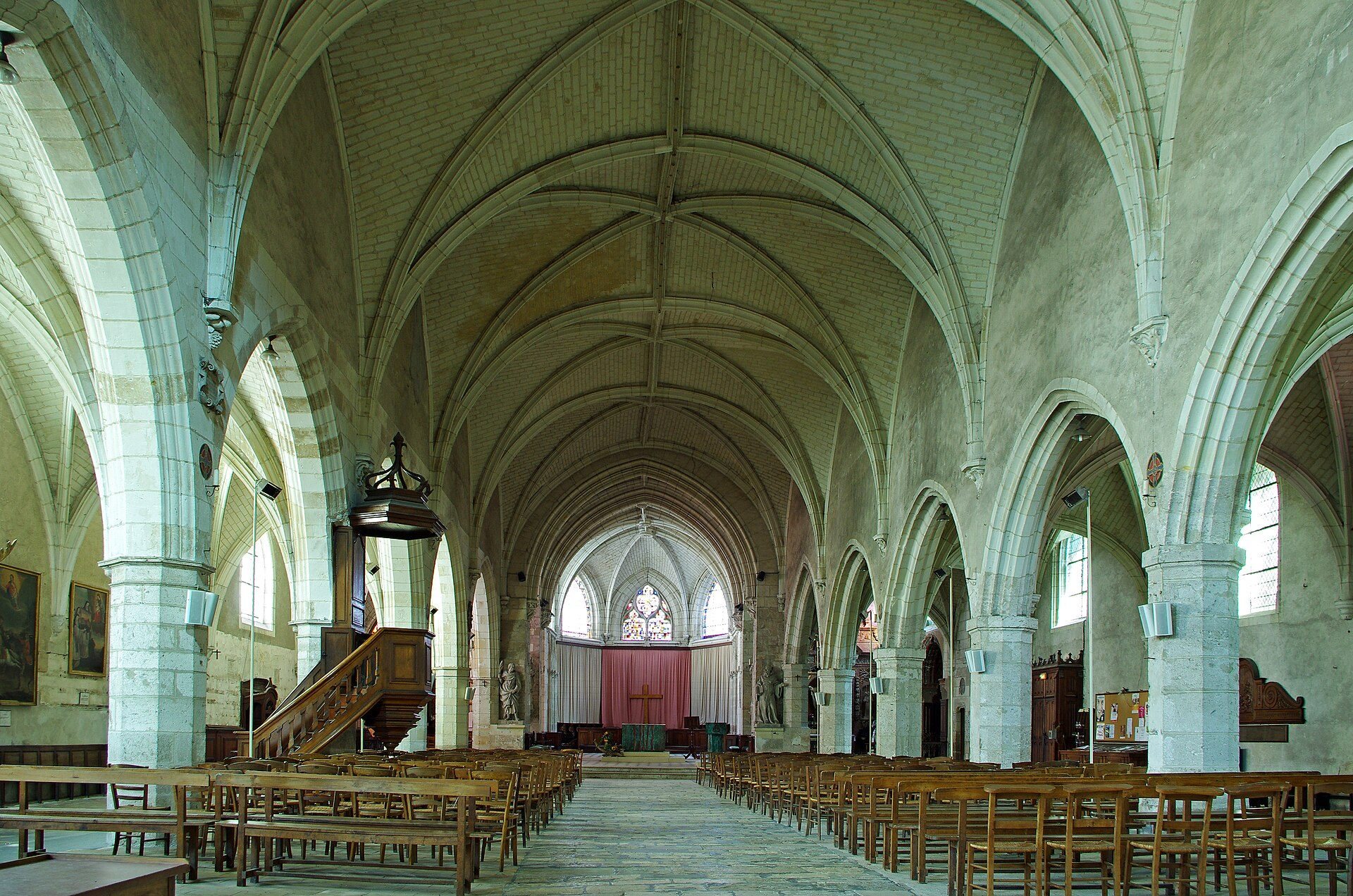
Protestant forces burned the roof framework in 1568. The rebuilding that followed replaced the wooden roof over the nave with ribbed vaults, ceilings supported by intersecting stone ribs, constructed between 1570 and 1578. A violent storm on 8 June 1678 destroyed the bell tower. Work resumed late in the eighteenth century but was interrupted during the Terror, the most violent phase of the French Revolution. Revolutionaries ransacked the church while seeking to suppress what they called “superstition and fanaticism,” burning many paintings, wooden statues, and doors.
Floods, Preservation, and Heritage Status
The church was inundated during the Loire flood of 1856. A later devotion associated with the floods of 1866 is represented by a stained-glass window showing an invocation to Our Lady of Assistance to save the Vienne suburb. The Saint-Saturnin churchyard stopped serving as a burial ground in 1807 and became the city’s lapidary museum in 1934. A lapidary museum preserves and displays stone architectural fragments, sculptures, inscriptions, and related remains.
Blois-Vienne Church was listed as a historic monument by an order dated 11 July 1942. It also forms part of the Loire Valley World Heritage property between Sully-sur-Loire and Chalonnes, inscribed in 2000.
Remains
The surviving complex consists of the church and the adjoining Saint-Saturnin churchyard, which is distinct from the building and now functions as a lapidary museum. The church was almost entirely reconstructed over time, leaving a mixture of architectural styles. Its present form is principally associated with the rebuilding around 1500 to 1528, while later work altered the roof, bell tower, upper sections, and interior chapels.
Exterior and Structural Elements
West Façade and Churchyard
The west façade opens onto the Saint-Saturnin churchyard, a Renaissance cemetery created between 1515 and 1520. The churchyard is one of the four remaining Renaissance churchyards in France and now displays stone architectural fragments and related remains as a lapidary museum.
Portals and Bell Tower
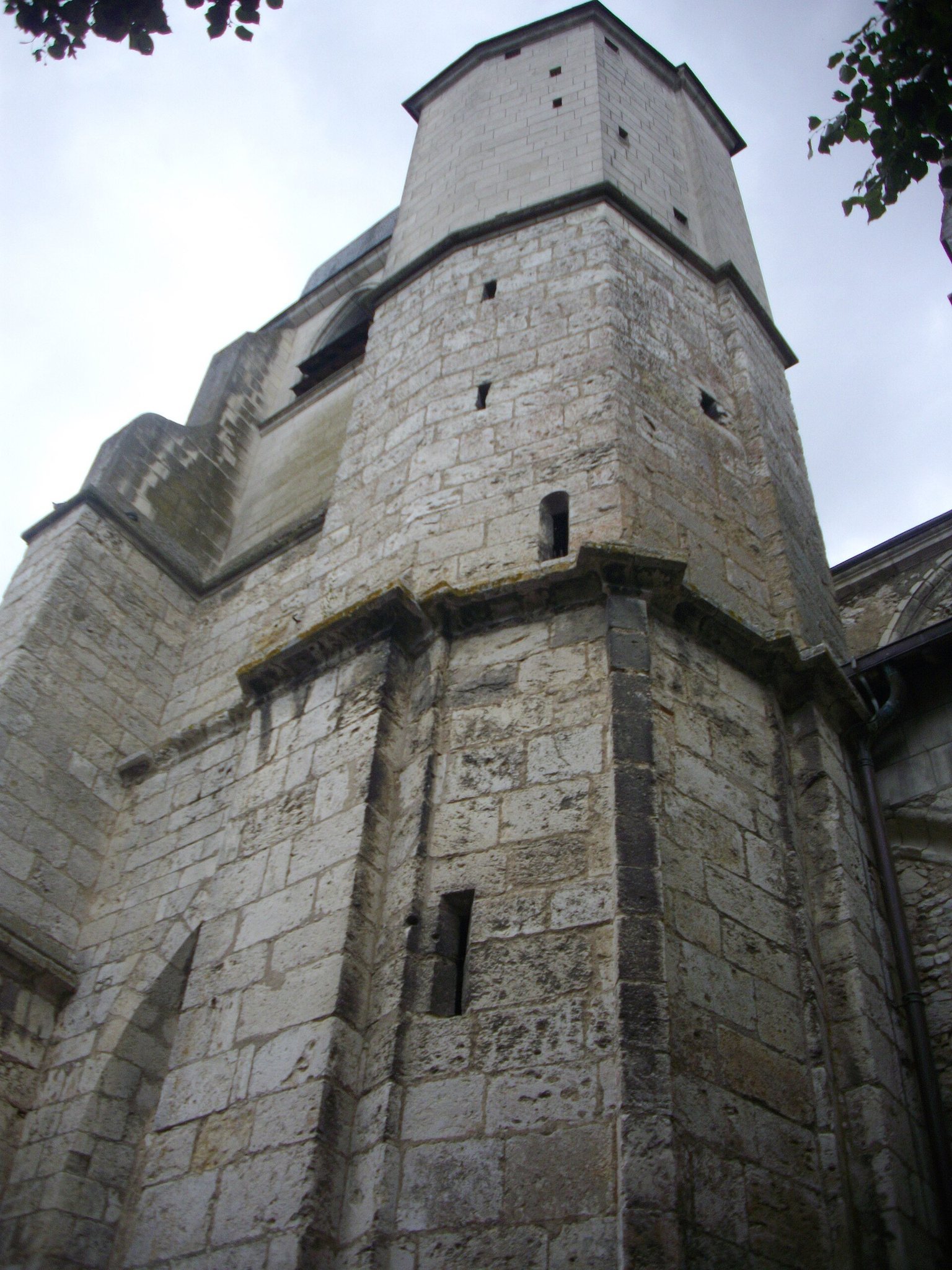
Anne of Brittany’s enlargement included a central portal and two lateral portals in the Gothic style. The rectangular bell tower was begun in the sixteenth century and completed in the early seventeenth century. Its upper parts, like other elevated sections of the building, were reconstructed during the church’s successive building campaigns.
Chapel of Saint Peter
The south side was enlarged in 1528 with a Renaissance chapel built by the boatmen’s confraternity. Called the Chapel of Saint Peter or the Chapel of the Loire Boatmen, it has fluted pilasters and contains a diptych of Saints Peter and Clement dated 1859. Both saints are identified as protectors of the Loire boatmen.
Interior Chapels and Devotional Features
Nave Vaults
The nave’s former wooden roof was replaced after the 1568 fire by ribbed vaulting built between 1570 and 1578. These stone-ribbed ceilings express the major structural change produced by the post-fire reconstruction.
Chapel of Our Lady of Assistance
Catherine de Medici, queen consort and later queen mother of France during the sixteenth century, founded the Chapel of Our Lady of Assistance, which received a rich decorative treatment. It contains a statue of the Virgin, a 1634 ex-voto painting by Jean Mosnier, and two nineteenth-century stained-glass windows.
One window represents the invocation to Our Lady of Assistance during the 1866 floods, described as a recognized miracle. The other depicts the coronation of Our Lady of Assistance on 20 May 1860 and includes figures representing the personalities who attended the ceremony.
Other Chapels and Furnishings
The Chapel of the Sacred Heart contains an Art Deco stained-glass window and a statue of Saint James the Greater, recalling the church’s association with the pilgrimage route to Santiago de Compostela. Other interior features include the Chapel of Saint Anne, a statue of Joan of Arc, and a statue of Our Lady of Assistance. Baptismal fonts with a bronze basin on a supporting bracket also survive within the church.
Ex-Votos
Numerous ex-votos, devotional offerings made in fulfillment of a vow or in thanksgiving for an alleged favor or rescue, are preserved in the church. Most are dedicated to Our Lady of Assistance. Among them are an offering concerning the destruction of the Blois bridge in 1716 and another associated with the plague epidemic of 1631.