Corpus Christi Church in Gdańsk: A Gothic and Baroque Parish Church


Site at a Glance
- Rating
- 4.8
- Popularity
- Very Low
- Country
- Poland
- Primary era
- Early Modern
- External website
- Open
- Eras represented
- Medieval, Early Modern
- Civilizations
- Polish–Lithuanian Commonwealth, Teutonic Order
- Site type
- Religious
- Remains
- Church
On this page7 sections
History
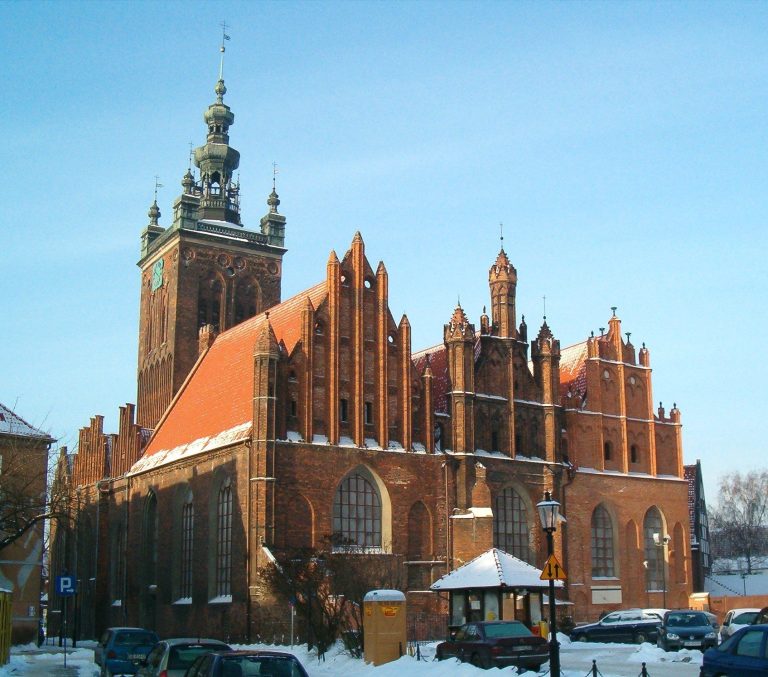
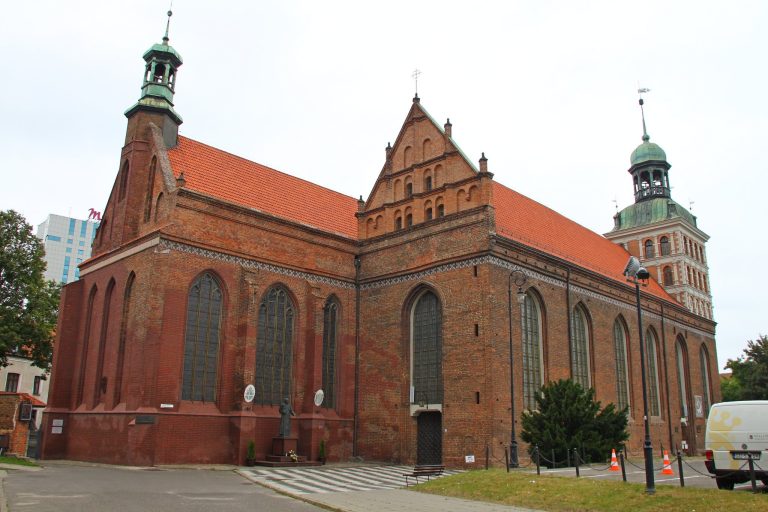
Corpus Christi Church in Gdańsk, Poland, is a brick church combining Gothic and Baroque forms. It developed from a Catholic hospital complex traditionally dated to around 1350, although the first reference to the church dates from 1385 and the first confirmed reference to the hospital and chapel dates from 1395.
Medieval hospital chapel
The complex was dedicated to Corpus Christi and initially housed a hospital for people with leprosy. It later became an almshouse for elderly, sick, and solitary people. The church was originally a filial church of St. Mary’s Parish. Toward the end of the fifteenth century, the Gothic hospital chapel was enlarged and became the presbytery, the area around the high altar reserved for clergy, of the expanded church. Work is thought to have begun before 1454, but the Thirteen Years’ War, a conflict between the Polish Crown and the Teutonic Order from 1454 to 1466, interrupted the enlargement.
Rebuilding and Evangelical use
The church was damaged during the siege of Gdańsk in 1577 and rebuilt in 1578. This rebuilding established its present overall form, including the principal nave, which follows an approximately east–west axis. From 1592, the church served as an Evangelical parish church. Its change of function led to another enlargement in 1688–1689, when a Baroque nave was added at right angles to the northern side of the main body. Barthel Ranisch designed this addition.
An exterior pulpit for open-air preaching was installed in 1707, with figures of the Apostles and a pelican representing Christ. It was later moved inside the church. An eastern tower with a timber-frame structure was built in 1749 and encased in masonry during the middle of the eighteenth century. In 1765–1767, Friedrich Rudolph Dalitz, a pupil and collaborator of the Gdańsk master Hildebrandt, built a 34-voice Rococo organ for the western gallery.
Twentieth-century changes
Lightning damaged the church in 1916, prompting repairs, and the building was restored in 1936. During the Second World War, the organ was removed, stained-glass windows fell out, two bells and the tower clock mechanism were lost, and the underground crypts were looted. Restoration followed in the early 1960s.
After 1945, some buildings in the former hospital complex were demolished, while the surviving buildings were converted into residences. Three of the five complex buildings began revitalization in 2021 for adaptation to Hevelianum, a Gdańsk science and education institution housed in historic buildings. The oldest of these buildings dates from 1786. In 1974, the church and parish house were transferred to the Polish Catholic Church, an Old Catholic denomination distinct from the Roman Catholic Church and retaining Catholic liturgical and sacramental traditions outside papal jurisdiction. The parish belongs to the Pomeranian–Greater Poland deanery of the Warsaw Diocese. The hospital complex has been a protected heritage complex since 31 October 1988, under registration number A-1061.
Remains
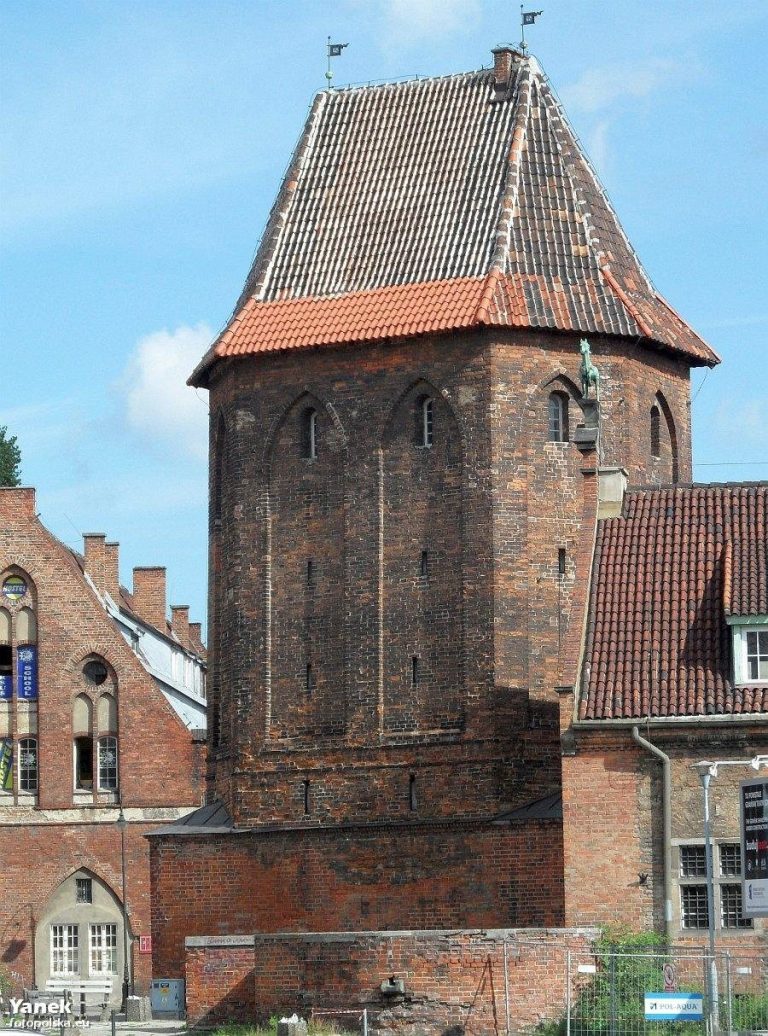
The surviving site consists of a two-nave, two-tower brick church integrated with the former hospital complex. Its principal body is aligned approximately east–west, while the Baroque nave projects at right angles from the north side. The former Gothic hospital chapel forms the presbytery, linking the medieval chapel to the later church layout.
Church structure and furnishings
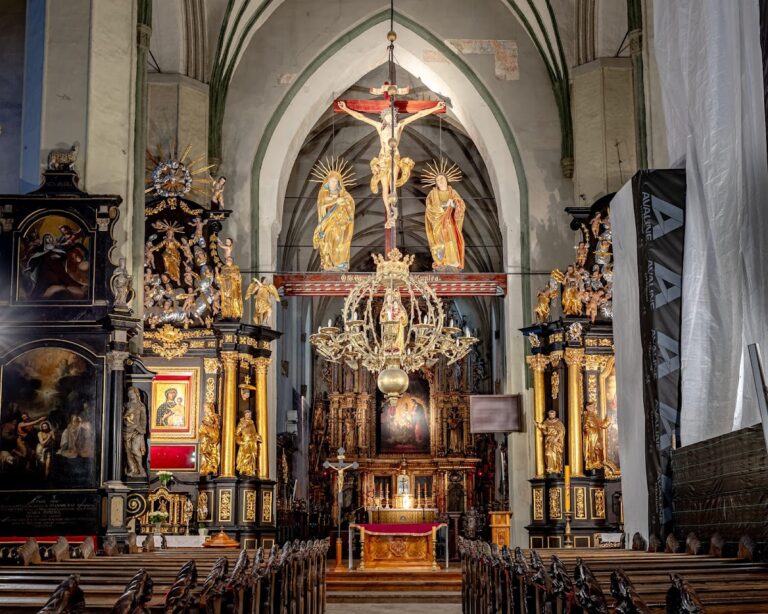
The church combines the Gothic fabric of the former hospital chapel with the Baroque nave added in 1688–1689. The eastern tower was first built in 1749 with a timber-frame structure, in which a visible timber framework is filled with other material, and was later protected by a masonry casing. The 1707 exterior pulpit survives inside the church with its Apostles and pelican figure. The 34-voice Rococo organ built by Friedrich Rudolph Dalitz for the western gallery was removed during the Second World War.
Hospital complex and cemetery
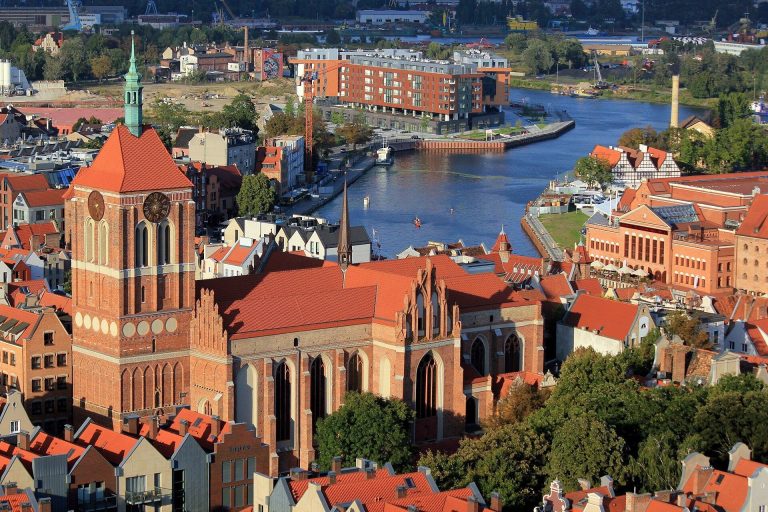
The associated hospital complex comprises five buildings. The oldest surviving building dates from 1786, and the remaining structures were converted into residential buildings after the Second World War. The site also includes the former Evangelical Corpus Christi cemetery, which operated from 1815 to 1956.