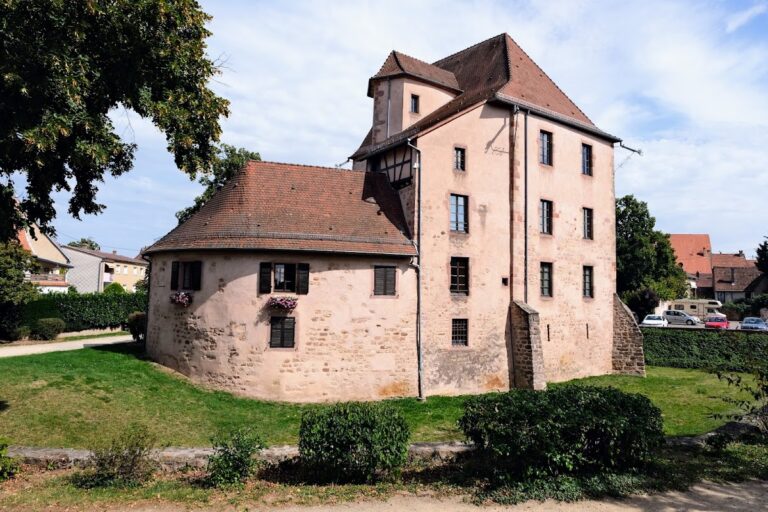
Abbaye Notre-Dame d’Oelenberg: A Cistercian-Trappist Monastery in France


Site at a Glance
- Rating
- 4.6
- Popularity
- Low
- Country
- France
- Primary era
- Early Modern
- External website
- Open
- Eras represented
- Medieval, Early Modern, Modern
- Civilizations
- French, Habsburg, Holy Roman Empire
- Site type
- Religious
- Remains
- Monastery
On this page16 sections
History
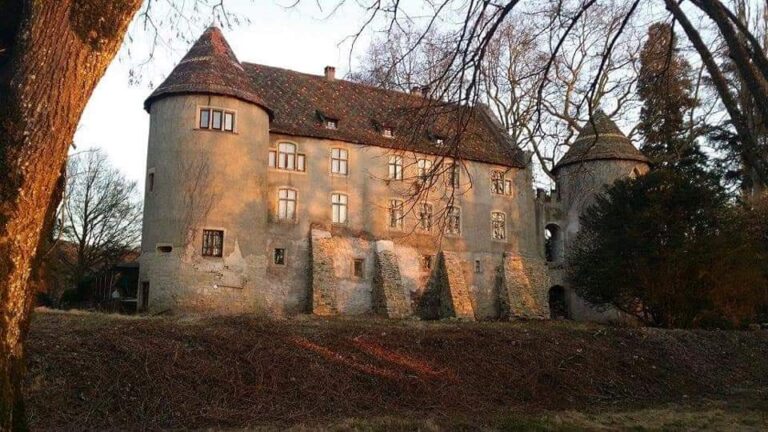
Abbaye Notre-Dame d’Oelenberg is a historic monastery in Reiningue, France. Founded as a priory for the Canons Regular of St. Augustine in 1046, it preserves a church with Romanesque, late Gothic, and Baroque elements. Its long history includes an early double monastery, transfers between religious and academic institutions, destruction during two world wars, and a later Cistercian-Trappist community.
Augustinian foundation
Heilwig of Dabo, Countess of Eguisheim and the mother of Pope Leo IX, founded the priory in 1046. The foundation began as a double monastery, housing separate communities of men and women within one institutional framework. Leo IX consecrated its church in 1049. The nuns later moved to Cernay in 1273, ending this first period of shared monastic life at Oelenberg.
Jesuit and university ownership
In 1626, the site was transferred to the Jesuit college of Freiburg im Breisgau. The Jesuits, members of the Society of Jesus, were a Catholic religious order founded in the sixteenth century. Ownership passed to the University of Freiburg in 1774 and remained with the university until the French Revolution, when the property was sold as national property.
Cistercian-Trappist revival
Cistercian monks from Darfeld in the Rhineland settled at Oelenberg in 1825. Trappist nuns also returned from Darfeld-Rosenthal that year, restoring the foundation as a double monastery. Trappists are Cistercians of the Strict Observance, a reform branch known for disciplined monastic life. The nuns moved to Altbronn in 1895 because the available space was insufficient.
Oelenberg belongs to the Cistercian-Trappist tradition and descends from the Port-du-Salut line. Its community founded Mariawald Abbey in Germany in 1862 and Engelszell Abbey in Austria in 1925. The Polish Romantic poet Józef Bohdan Zaleski also used the abbey for spiritual retreats in August 1845 and June 1846.
War damage and rebuilding
Bombing on June 26, 1915, during the First World War destroyed a major part of the abbey. The church, its Rinckenbach organ, and the conventual buildings suffered extensive damage. The church and convent were rebuilt in 1920 by the Mulhouse architect Paul Kirchacker, who used surviving remains. The choir stalls carved by Théophile Klem were carefully restored during the work.
The abbey was partly destroyed again in November and December 1944 during the Second World War. French artillery had intended to spare the monastery, but German forces had installed an observatory in the church bell tower, which was then bombarded. A replacement organ was built in 1951, and the grand organ underwent restoration in 2016.
Manuscript and monastic life
In 1970, a manuscript containing 54 tales collected by the Brothers Grimm was found at Oelenberg. The Grimms had sent it to the German writer Clemens Brentano in 1810, and it was never returned. Known as the 1810 Manuscript or Oelenberg Manuscript, it is the earliest known surviving version of the Grimms’ fairy tales. The manuscript is now held by the Martin Bodmer Foundation in Cologny, Switzerland.
Monastic life followed Ora et labora, meaning “pray and work,” through the Rule of Benedict as interpreted by Cistercian and Trappist practice. The community gathered seven or eight times each day for sung or recited liturgical offices, while Sunday high mass was partly sung in Gregorian chant.
The community declined from five monks, one oblate, and two people in the novitiate in 2017 to four monks, one oblate, one professed monk, and one novice in 2020. By 2023, it numbered roughly ten monks, including monks in training. In March 2024, the community announced a temporary withdrawal to other Cistercian communities while considering its future. The monks left Oelenberg on June 8, 2024, and voted to end monastic life there permanently, continuing their monastic lives elsewhere. Mass continues to be celebrated on Sundays.
The former Jesuit church and associated historic components have been protected as a French Historic Monument since June 16, 1992. A French Historic Monument is a heritage designation under French law. The protected complex includes the nave, the two levels of the transept, the choir, the burial vault, the former cellar, the novice chapel, and the former mill. A July 22, 2024 order replaced the earlier protection order.
Remains
The surviving complex is organized around the abbey church and associated monastic buildings. The church combines Romanesque elements from the twelfth century, late Gothic work dating to 1486, and Baroque additions from 1755. Its principal layout includes a nave, a two-level transept, a choir, and a burial vault. Other surviving components include a former cellar, a novice chapel, a former mill, and three chapels dedicated to Saint Michael, Saint Leo, and the Mount of Olives.
Church and furnishings
Abbey church
The abbey church retains architectural elements from several periods. Twelfth-century Romanesque work is joined by late Gothic features from 1486 and Baroque elements added in 1755. Historic furnishings include a processional cross from the twelfth century, a fourteenth-century crucifix, and statues of the Virgin Mary from the fifteenth and eighteenth centuries. The Rosary altar and Saint Joseph altar were made in 1908 by the Moroder Brothers art workshop.
Organ
The church’s 1904 organ by Martin and Joseph Rinckenbach was destroyed in the bombing of 1915. Georg Schwenkedel built its replacement in 1951. The instrument has 22 sounding stops, two transmissions, two manuals, and a pedal, with electrically operated key and stop actions. Its couplers include I/I, II/I, I/P, and II/P, together with sub-octave and super-octave functions specified for individual couplers. The grand organ was restored in 2016.
Chapels and associated buildings
Three chapels
The chapels of Saint Michael, Saint Leo, and the Mount of Olives contain architectural elements from the twelfth century and from 1486. They also hold a painting and a reliquary transferred from Lucelle Abbey after that monastery was dissolved during the French Revolution. A reliquary is a container made to hold or display a relic.
Former cellar, novice chapel, and mill
The wider monastic complex includes the former cellar, the novice chapel, and the former mill. These components form part of the historic group associated with the church. The mill reflects the abbey’s productive activities, which included making flour from grain cultivated by the community.
Cemetery and working landscape
Monastery cemetery
The monastery cemetery contains the grave cross of Eugen Rugel, who entered the monastery in 1900 as Father M. Bonifatius. After he married civilly, he used a book published in 1938 to promote Nazi propaganda. Following the Second World War, he returned to Oelenberg, lived in an outbuilding, and worked as an ordinary laborer until his death.
Gardens, fields, and workshops
The abbey’s activities extended beyond worship and prayer. The community maintained a vegetable garden and orchard and cultivated wheat, maize, and potatoes. Its mill produced flour, while workshops made pasta, small pastries, cakes, and meringues.
Nearby sites