Church of the Holy Cross: A Historic Lutheran Church in Hanover


Site at a Glance
- Rating
- 4.6
- Popularity
- Low
- Country
- Germany
- Primary era
- Medieval
- External website
- Open
- Eras represented
- Medieval, Early Modern, Modern
- Civilizations
- German, Holy Roman Empire
- Site type
- Religious
- Remains
- Church
On this page24 sections
History
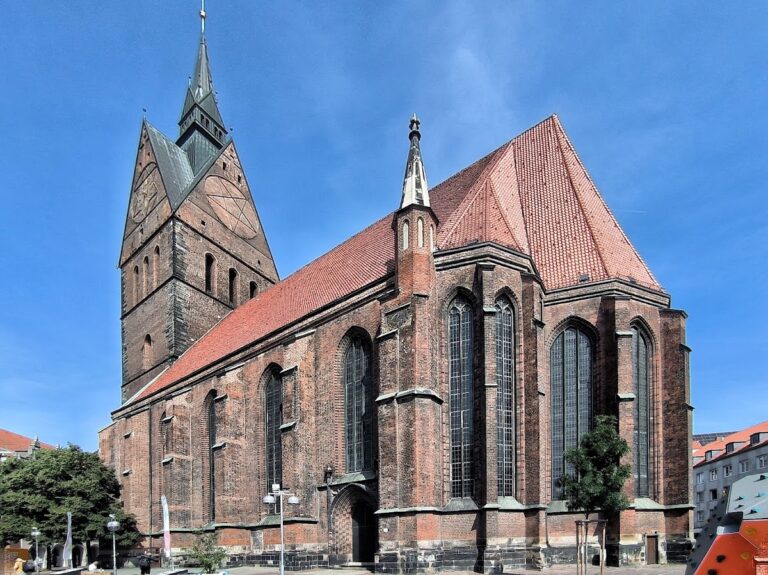
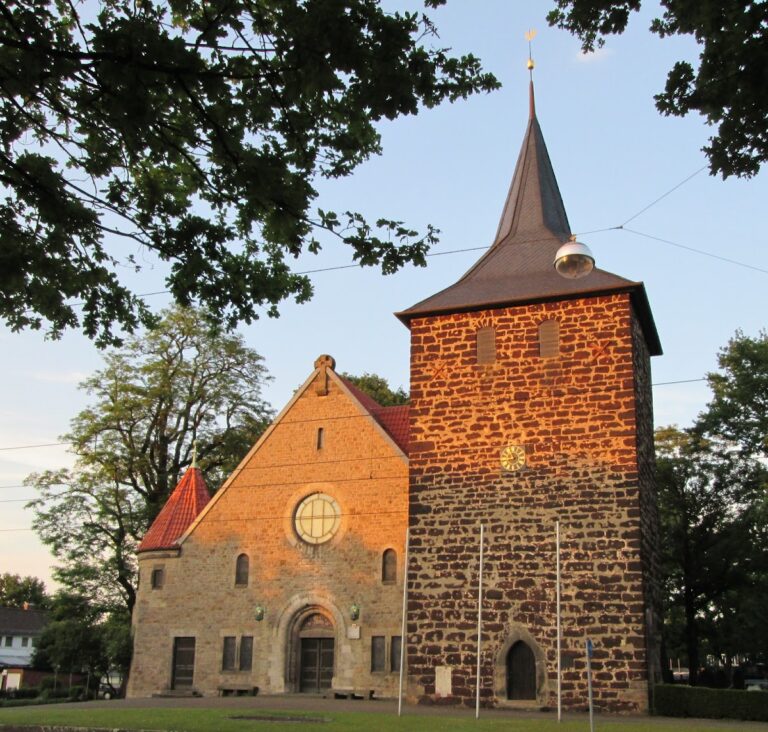
The Church of the Holy Cross is a Lutheran church in Hanover, Germany, in the city’s old town. Consecrated in 1333 as the Church of the Holy Spirit and the Holy Cross, it is a Gothic hall church and one of Hanover’s three historic old-town churches, alongside the Market Church and Aegidien Church.
Medieval parish origins
The parish was separated from the Market Church parish in 1284 at the request of Otto the Strong, a medieval Welf duke whose dynasty ruled territories in northern Germany. The new parish initially worshipped in the Church of the Holy Spirit, which stood beside the Holy Spirit Hospital at the northern junction of Knochenhauerstrasse and Schmiedestrasse. That earlier church has since disappeared. The present building was consecrated as St. Spiritus et Crucis, meaning the Church of the Holy Spirit and the Holy Cross, in 1333.
The church was originally Catholic. In 1533, during the Reformation, the sixteenth-century movement that challenged Catholic ecclesiastical authority and established Protestant churches, it became Lutheran. It was the first church in Hanover to host a Lutheran sermon. The growing Protestant congregation led to major changes in 1560, when the north side was opened toward the St. Anne Chapel and new arrangements were made for worship and music. In 1591, an intermediate floor was inserted into the chapel, and a round stair tower was built on its eastern side for the new Lutheran liturgy.
Alterations and seventeenth-century rebuilding
Claus von Münchhausen installed a Renaissance stone pulpit in 1594. It was removed in 1658 and later transferred to the church in Lauenau. The Gothic spire was destroyed by a storm in November 1630. Its fall brought down the vaults and damaged the organ and part of the pulpit. Johann Duve financed a Baroque rebuilding of the tower in 1652 and 1653, and in 1655 he received permission to construct a private burial chapel beside the south choir.
The interior originally contained as many as 19 altars and was changed repeatedly. A choir screen was installed in 1675, followed by a private gallery in the upper side area in 1692. In 1758, the court sculptor Johann Friedrich Blasius Ziesenis made a carved hanging pulpit. It was destroyed during the Second World War, together with much of the church’s interior.
Nineteenth-century changes
Renovations in 1822 and 1823 removed, sold, or destroyed most of the remaining medieval and post-Reformation artifacts and liturgical furnishings. The medieval baptismal font survived largely because Hanover collector Bernhard Hausmann intervened to preserve it.
The church also became associated with religious reform movements in Hanover. In 1851, lawyer and publicist Adolf Mensching helped establish an Association for Religious Progress with other members of the People’s Association within the Kreuzkirche parish. Its organ was the Norddeutsche Volkszeitung.
War damage and postwar reconstruction
Allied air raids on Hanover in July 1943 severely damaged the church. The vaults and spire collapsed, the St. Anne Chapel was destroyed, and the interior, including the hanging pulpit and the organ built in 1910, was lost. Architect Ernst Witt rebuilt the church in simplified form between 1959 and 1961. The former side aisle and St. Anne Chapel were not reconstructed.
The Palace Church parish moved into the building in 1960. Its former church, the court church in Hanover’s Leine Palace, had been destroyed in 1943 and was not rebuilt. The Church of the Holy Cross thereafter officially became the Palace and Town Church of the Holy Cross, or Schloss- und Stadtkirche St. Crucis. A small sacristy was added on the north side in 1961, occupying the site of the former St. Anne Chapel. The Serbian Orthodox community of Saint Sava used it for worship until 1995.
Parish and cultural use
In 1982, the Kreuzkirche parish became part of the Market Church parish together with the Aegidien Church parish. The Market Church parish is responsible for the building and for activities including concerts and exhibitions, while Sunday services are often organized by the Protestant student community. The church remains a functioning Lutheran place of worship and is also used for educational programs, guided tours, concerts, and other cultural events.
Remains
The surviving church is a Gothic sandstone hall church with a single nave of four bays, or structural divisions defined by the vaulting, and a one-bay choir ending in five sides of an imagined eight-sided polygon. The building is approximately 23 metres long and 6.5 metres wide. The nave rises about 10 metres, while the tower reaches approximately 70 metres. Its interior is now simply finished, but the building preserves elements from its medieval, Baroque, and postwar history.
Church structure and tower
Nave and choir
The nave is covered by ribbed cross-vaults, masonry vaults supported by intersecting ribs. The choir retains the church’s five-eighths east end. The present form reflects the postwar rebuilding of 1959 to 1961, which simplified the earlier arrangement by leaving out the former side aisle and the St. Anne Chapel.
Tower and stonemasons’ marks
The medieval tower originally carried a slender octagonal spire, a pointed upper termination with eight sides. The present tower incorporates the Baroque rebuilding undertaken after the storm of 1630. Distinctive stonemasons’ marks appear beside the main portal and, together with reused architectural fragments, on the south side of the tower.
Duve burial chapel
Johann Duve’s private burial chapel beside the south choir is a single-storey sandstone structure with an elaborate Baroque facade. Its central round-arched doorway is flanked by shell niches framed by pilasters with capitals shaped as putti. Curved gables contain inscription panels and the coats of arms of the Duve family.
North-side chapel and sacristy
St. Anne Chapel
The St. Anne Chapel was added to the north side of the nave in 1496 and 1497. It was built of brick in the monastery format, with bricks approximately 8 by 13 by 28 centimetres, at the same eaves height as the church and beneath a steep gabled roof. Its eastern side had a Gothic stepped gable containing a stone with a trefoil carried by two angels, part of Hanover’s city arms.
Sixteenth-century alterations
The changes of 1560 broke through the church’s north wall toward the chapel and inserted substantial piers. They created a side aisle, a gallery for the school choir, and a sacristy with the church library in the lower level of the chapel. The present north-side sacristy occupies the site of the former St. Anne Chapel.
Interior furnishings and works of art
Cranach altar painting
The principal artistic feature of the interior is an altar painting by Lucas Cranach the Elder, a major German Renaissance painter and printmaker, probably made before 1537. Its central panel shows the Crucifixion, while the side panels depict Saints Alexander and Felicitas, Christian saints associated with the collegiate church of St. Alexandri in Einbeck, for which the altar was originally made.
The dukes of Brunswick later owned the altar and placed it in the Palace Church in the Leine Palace between 1666 and 1680. During the French occupation, the outer panels were separated. Parts later entered the Hausmann collection and the state gallery of Lower Saxony before the central and side panels returned to the Palace Church. After the Second World War, the altar came into the possession of the Hanover church.
Medieval baptismal font
The bronze baptismal font dates from about 1410 and was probably made in Hildesheim. Its round basin rests on three kneeling figures, possibly the bronze founders. An arcade of eight fields around the basin contains relief figures of saints and a Crucifixion scene. The font is the principal medieval furnishing to have survived the nineteenth-century removals.
Chandeliers and epitaph
Three brass chandeliers from the seventeenth and eighteenth centuries came from Aegidien Church. They were evacuated before the bombing of 1943 and later installed in the Church of the Holy Cross. An epitaph for the merchant Berendt Duve is mounted on the outer northeast side. His family coat of arms includes the dove motif associated with the name Duve.
Funerary monuments and crypts
Palace Church tomb slabs
Two medieval tomb slabs originally belonged to the Palace Church. City archaeologist and museum director Helmut Plath found them among the ruins of the Leine Palace in 1949. One commemorates city captain Dietrich von Rinteln, a municipal officeholder who died in 1321. He is shown in a long coat with his coat of arms, beneath an inscription in Gothic capital lettering. The slab is regarded as Hanover’s oldest surviving funerary monument.
The second slab commemorates city captain Johannes von Stenhus, who died in 1332, his wife Hildegardis, who died in 1335, and their sons and daughters. It may be the earliest German funerary monument to depict an entire family. The figures have individualized features and appear at different ages, an unusual treatment for human representations in the early fourteenth century.
Medieval crypts
Parts of the medieval crypts survive beneath the church. They once housed historical human-bone finds from Hanover and served as air-raid shelters during the Second World War. The largely empty crypt is used in guided tours and educational programs.
Organ and bells
Organ
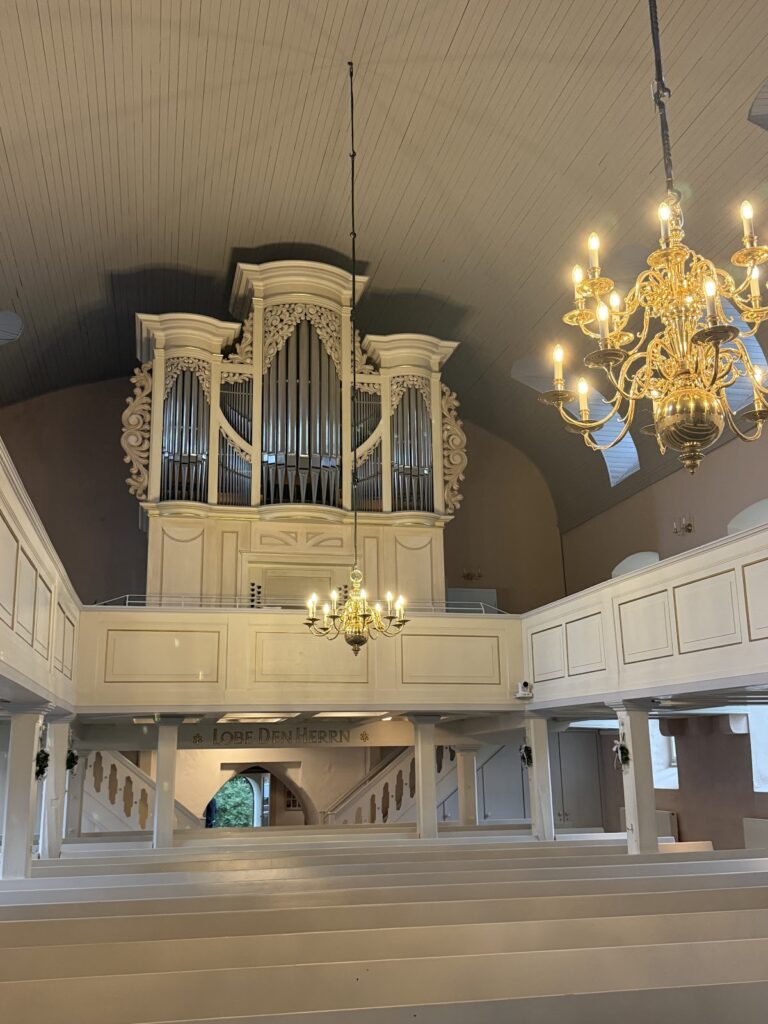
The present neobaroque organ was built by Emil Hammer Orgelbau in 1965. It has 34 stops distributed across three manuals and pedal. The keys use mechanical action, while the stops use electric action. Jörg Bente substantially overhauled and revoiced the instrument in 2011 and 2012.
Bells
Four church bells were cast for the building by Friedrich Wilhelm Schilling in 1961. They sound the notes E1, G-sharp1, B1, and C-sharp2. Schilling also cast two striking bells, E2 and G-sharp2, in the same year to accompany an older B2 striking bell from the former Palace Church. Following complaints about noise, the larger striking bell marks the quarter hours, while the smallest ringing bell marks the hours.
Other bells historically associated with the church are now in the tower of the Market Church. They include the Great David bell, originally donated to the Church of the Holy Cross by Pastor David Meyer, the George bell, and the larger quarter-hour bell.