St. Jakobi, Kirchrode: A Lutheran Parish Church in Hannover
Site at a Glance
- Rating
- 4.9
- Popularity
- Very Low
- Country
- Germany
- Primary era
- Early Modern
- External website
- Open
- Eras represented
- Medieval, Early Modern
- Civilizations
- Holy Roman Empire
- Site type
- Religious
- Remains
- Church
On this page10 sections
History
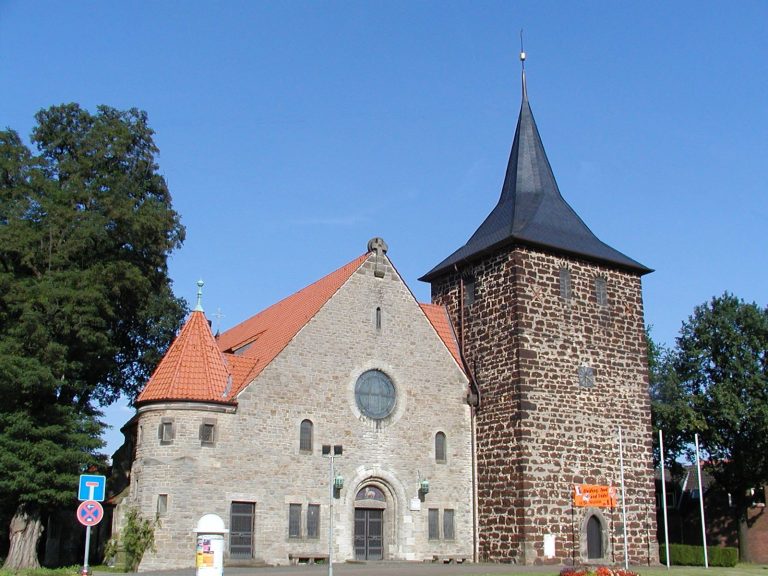
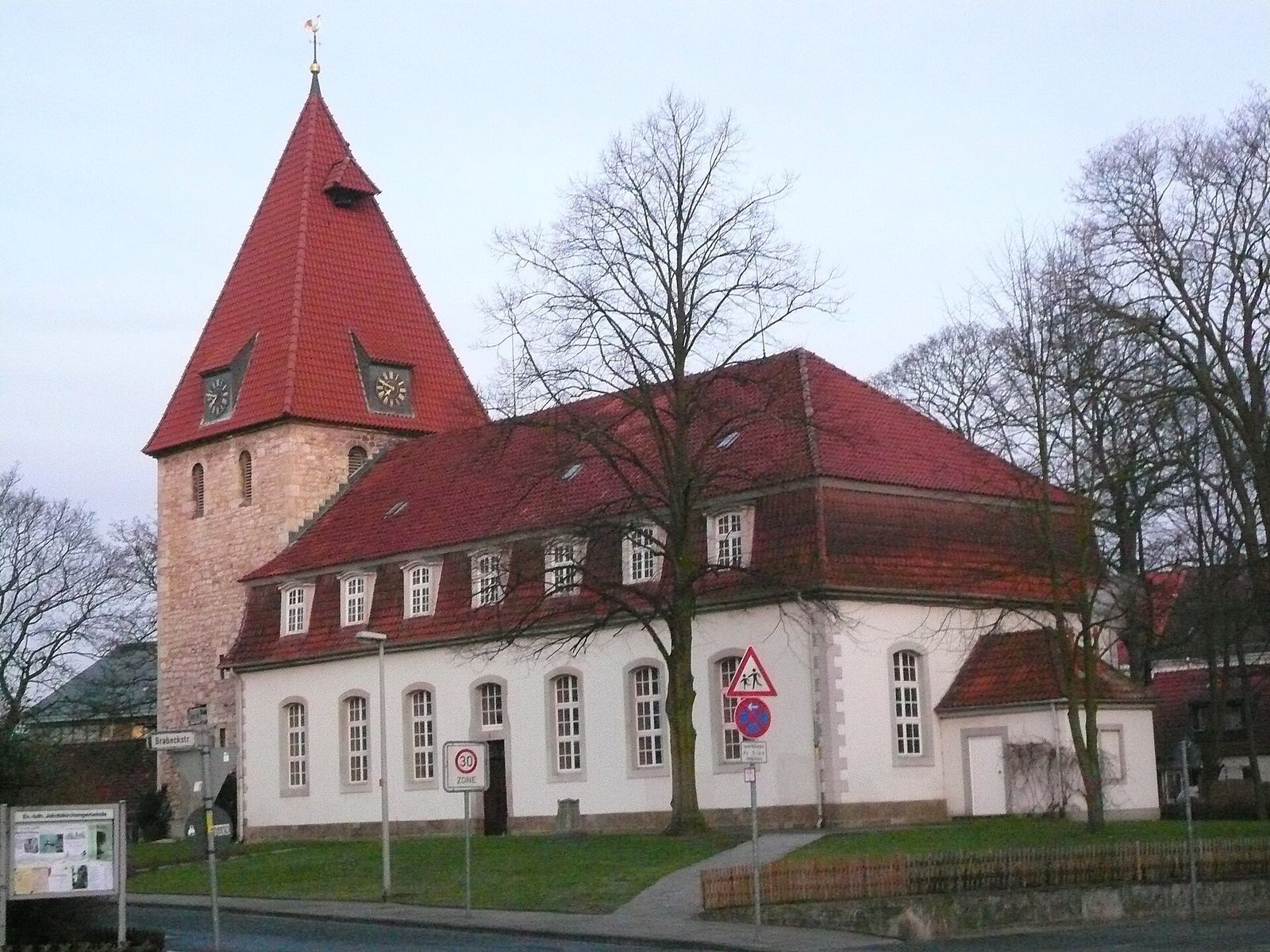
St. Jakobi, Kirchrode is a Lutheran parish church in Hannover, Germany, whose origins are placed in the twelfth century and whose present nave belongs to the late Baroque period. Dedicated to Saint James, also called James the Greater, one of the Twelve Apostles of Jesus, it stands on the Kleiner Hillen elevation and forms part of the architectural-heritage group of Kirchrode town centre.
Medieval origins and the parish
The date of the first church on the elevation is uncertain. A simple parish and baptismal church may have existed as early as around 990, when the dioceses of Minden and Hildesheim disputed influence in the area. A boundary was fixed that year with the participation of Deddi de Rothun, who was locally knowledgeable. The church’s origins are otherwise placed in the twelfth century.
The settlement was first recorded as “Rhoden” in 1296. In that year, Bishop Siegfried of Hildesheim exchanged the right of patronage over the church at Groß Freden for the corresponding right at Kirchrode, which had been acquired from Marienrode Abbey. A document from 1295 names the church as ecclesia Sancti Jacobi. In its early period, it served as a mission church for a considerably larger area and belonged to the Diocese of Hildesheim. A patronage right gave its holder authority over the appointment or presentation of clergy and related institutional privileges.
Reformation and parish development
The parish adopted Lutheranism around 1540 during the Reformation, the sixteenth-century religious movement that led many western European churches from Catholic affiliation to Protestant traditions. Lutheranism follows the theological movement associated with Martin Luther. St. Jakobi remained the principal church for Kirchrode and the village of Bemerode until the St. Johannis parish of Bemerode became independent in 1950. Further parts of the congregation later separated into independent parishes.
Rebuilding before the Second World War
After the Thirty Years’ War, the sacristy and several adjoining structures were demolished and only partly rebuilt. A sacristy was provided again in 1777. By the end of the seventeenth century, the interior had been renewed with a new pulpit, galleries, and painted decoration. In 1679 and 1680, H. J. Schrader painted representations of the twelve Apostles, scenes based on the Ten Commandments, the Passion, the Last Judgment, John the Baptist, and Paul the Apostle.
The first organ was installed in 1701 and 1702. The old nave was demolished in 1782, and its late-Baroque replacement was inaugurated in 1784. Another organ followed in 1809. In 1888, it was replaced by a monumental Gothic Revival slider-chest organ built by F. Becker. Gothic Revival was the nineteenth-century renewal of medieval Gothic architectural forms.
As the cemetery around the church became too small for further burials, the new Kirchröder Cemetery was established in 1864. That cemetery is also protected as a historic monument.
War damage and later restoration
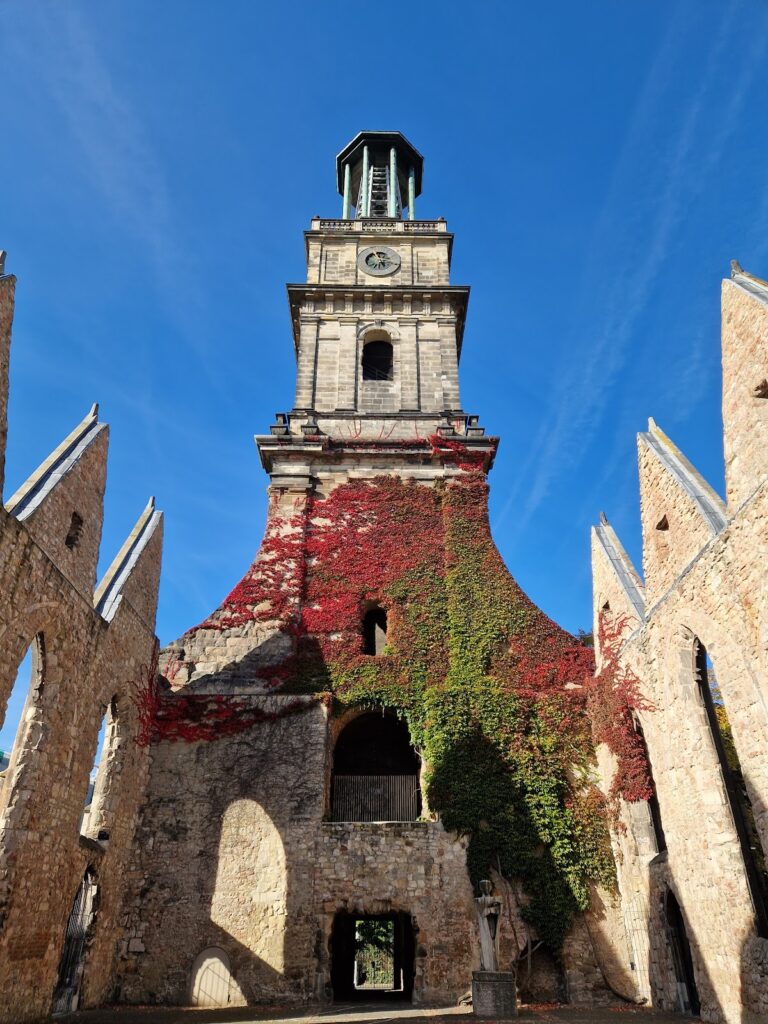
On 4 November 1944, an aerial mine destroyed the church during an air raid on Hannover in the Second World War. The medieval tower and outer walls remained standing, while the historic interior was largely destroyed. The building was gradually restored during the 1950s, and further restoration followed from 1980 onward. Most surviving furnishings date from the 1950s and 1980s, although some older objects remain.
In 1989, the Hillebrand organ-building workshop of Altwarmbüchen installed a new organ. Its design was based on the instruments of Gottfried Silbermann, the eighteenth-century German organ builder. St. Jakobi remains a Lutheran parish church within the Evangelical-Lutheran Church of Hanover and is included in the list of architectural monuments for Kirchrode, Bemerode, and Wülferode.
Remains
The surviving church combines the medieval tower and outer walls with the late-Baroque nave erected after the earlier nave was demolished. Inside, the postwar and later furnishings form the main body of the present interior, while a small number of older objects preserve links with earlier phases of the building.
Medieval tower and late-Baroque nave
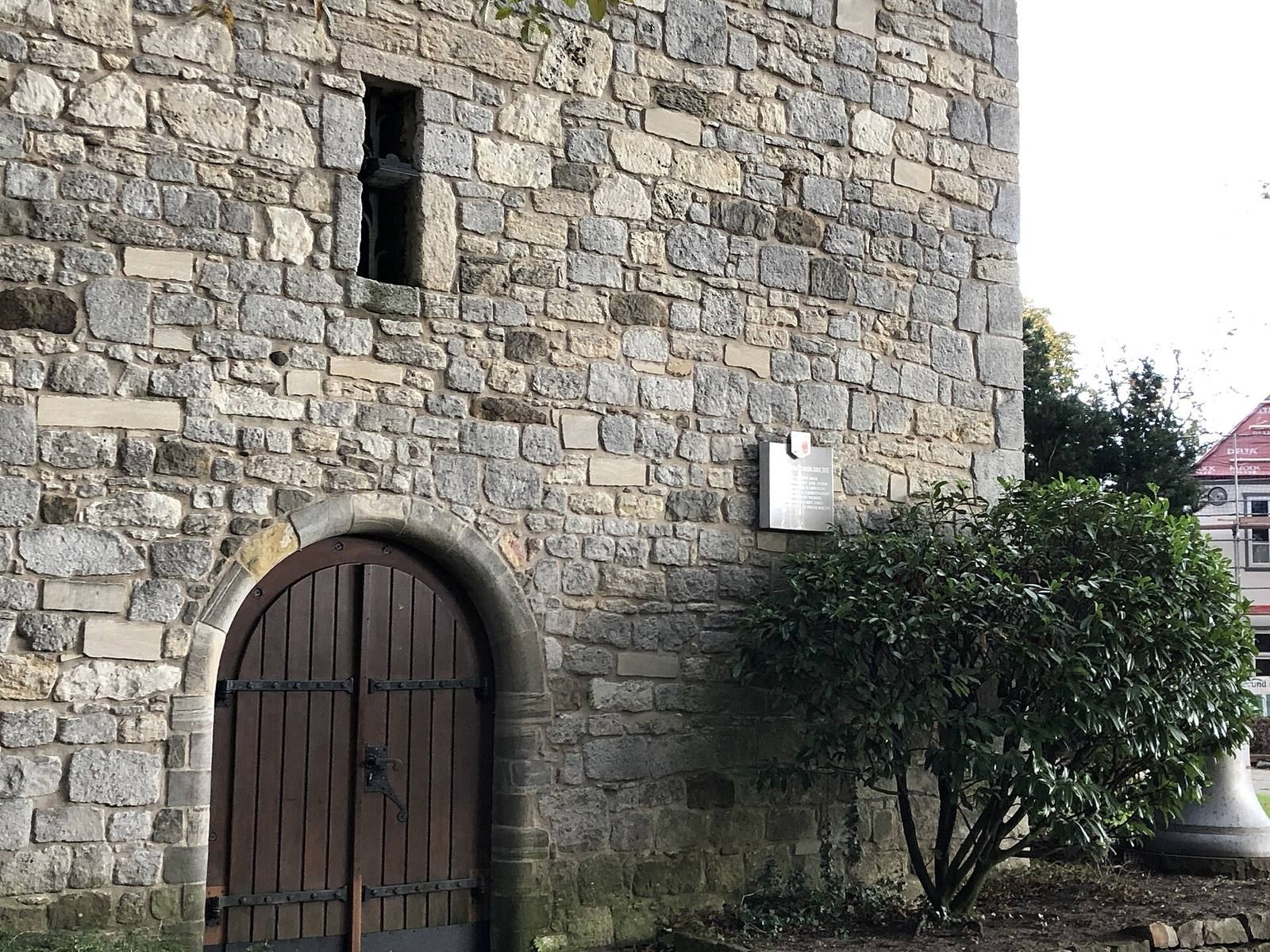
The medieval church tower is the principal surviving element of the earlier building phase. It remained standing with the outer walls after the destruction of 1944. The present nave is the late-Baroque replacement inaugurated in 1784. Its construction followed the demolition of the older nave in 1782, giving the church its principal surviving eighteenth-century architectural form.
Interior furnishings
The interior contains furnishings dating mainly from the restorations of the 1950s and the 1980s. A baptismal font in the altar area dates from 1786. An offering box regarded as the oldest object in the church has stood since 1994 in the passage leading to the tower hall. The tower hall contains old photographs and images concerning the history of the church and congregation.
Organ
The organ installed in 1989 is a slider-chest instrument with 24 stops and 1,374 pipes. Its pipes are distributed across two manuals, the keyboards played by the hands, and a pedal, the keyboard operated by the feet. Both its playing action and stop action are mechanical. Its design draws on the organs of Gottfried Silbermann. A slider-chest organ uses sliding valves beneath the pipes to control the flow of air.
Bells and clock bells
The earliest documented bell was cast during the first half of the fourteenth century. In 1917, all the bells except this medieval bell were surrendered, and the Bochumer Verein cast two replacement steel bells in 1923. A third proposed steel bell could not be produced because of inflation. During the Second World War, the remaining bronze bells, including the medieval bell and the clock bell, were surrendered. The ringing bell was recovered in 1948 from the bell cemetery in Hamburg, but its 25-centimetre crack led to its being melted down.
The present main installation consists of three large bells cast by Rincker of Sinn in 1997 and consecrated on 21 September that year. The Resurrection Bell has pitch d′+9, a diameter of 1,387 millimetres, and a weight of 1,754 kilograms. The Homeland Bell has pitch e′+9, a diameter of 1,255 millimetres, and a weight of 1,298 kilograms. The Reconciliation Bell has pitch g′+10, a diameter of 1,075 millimetres, and a weight of 858 kilograms.
Rincker cast the Peace Bell in 1984. It has pitch b′+9, a diameter of 820 millimetres, and a weight of 346 kilograms. The large steel bell is suspended below the bell chamber and is struck on the national day of mourning, while the small steel bell was placed at the memorial to the fallen. A clock bell cast by Rincker in 1983, with pitch g″, was later transferred to the neighboring Old Catholic Church of St. Maria Angelica. St. Jakobi received another Rincker clock bell in 2008, with pitch d″ and a weight of 225 kilograms.