Zavordas Monastery: A Patriarchal Monastery in Greece
Site at a Glance
- Rating
- 4.9
- Popularity
- Low
- Country
- Greece
- Primary era
- Early Modern
- External website
- Open
- Eras represented
- Early Modern, Modern
- Civilizations
- Greek, Ottoman
- Site type
- Religious
- Remains
- Monastery
On this page13 sections
History
Zavordas Monastery, also known as the Monastery of Saint Nikanor, is a sixteenth-century Orthodox monastery in Greece, founded around 1534 by the hieromonk Nikanor. It developed as a patriarchal stavropegic institution, meaning that it was placed directly under a patriarch rather than under the ordinary authority of a local bishop.
Foundation and ecclesiastical history
Before establishing the monastery, Nikanor restored the Church of Saint George and spent several years living as an ascetic on Mount Kallistrato. After a visionary experience, he discovered an icon of the Life-Giving Christ and understood the event as a divine command to found a monastery. The foundation is generally placed around 1534, although a slightly later date is also given. Nikanor died on 7 August 1549 and was buried in the monastery’s Chapel of Saint John the Baptist.
The monastery was associated with the Archbishopric of Ohrid from its foundation until 1767, when it passed to the Ecumenical Patriarchate. It remains within that patriarchal framework under the 1928 Patriarchal and Synodal Act and is ecclesiastically associated with the Metropolis of Grevena, a major Orthodox diocese.
The name Zavordas, also written Zampourda or Zapourta, is most commonly linked to a nearby settlement whose name was later transferred to the monastery. Another tradition connects it with a Turkish expression meaning “take whatever you want from here,” supposedly spoken by a local bey who believed that Nikanor had cured his child. The monastery was formally listed under the older name Moni Zapourta in 1918, as the Monastery of the Venerable Nikanor in 1927, and as the Monastery of Saint Nikanor from 1928.
Religious, cultural, and economic influence
From the seventeenth through the nineteenth centuries, Zavordas Monastery flourished spiritually and economically. It stood along an old route connecting the Thessalian plain with Epirus and Macedonia and provided refuge for travelers. More than 250 people were fed there each day. Its estates and livestock supported nearby communities, while the monastery also maintained schools, offered scholarships to impoverished students, and provided financial assistance to the Halki Theological School, an Orthodox seminary associated with the Ecumenical Patriarchate.
The monastery’s land and livestock were progressively reduced or seized, weakening its charitable and economic activities and contributing to the depopulation of neighboring villages. In 1952, it granted 50,000 stremmata of land to landless people in the region. That same year, 5,000 stremmata in Krokos were compulsorily sold to help finance construction of the Grevena bishop’s residence. The financially weakened monastery then had to borrow from the Bank of Greece, while demands from the newly established General Ecclesiastical Fund placed further pressure on its finances.
War, decline, and revival
Zavordas supported the Greek uprising of 1821 by melting down its silver oil lamps to aid the Revolution. During the Macedonian Struggle, the early-twentieth-century conflict over political and national control in Macedonia, it served as a reception center for fighters arriving from free Greece, a refuge, and a weapons store. Monks also secretly helped Macedonian fighters cross the Aliakmon River by means of a metal cable known as a spartina.
After the collapse of the Albanian Front in 1941, the monastery sheltered and cared for dozens of soldiers. In 1947, its abbot Gabriel and the monk Gerasimos were murdered, and left-wing guerrillas comprehensively looted the monastery. Its community subsequently declined from forty monks at the end of the nineteenth century to eight in the mid-twentieth century, continuing to shrink until the death of its last abbot, Archimandrite Amphilochios of Imvros, in 1984.
A new brotherhood settled at Zavordas in 2015 and began efforts to revive monastic life and restore the historic appearance of the complex. The monastery’s principal celebrations take place on consecutive feast days dedicated to the Transfiguration of Christ and Saint Nikanor. Its buildings, apart from older surviving structures, were rebuilt or constructed after the destructive earthquake of 1995. The Metropolitan of Grevena Sergios protected the monastery’s relics and ecclesiastical treasures in an internal crypt and published a catalogue in 1991. The later brotherhood made their conservation and presentation a central priority.
Remains
Mountain setting and monastic layout
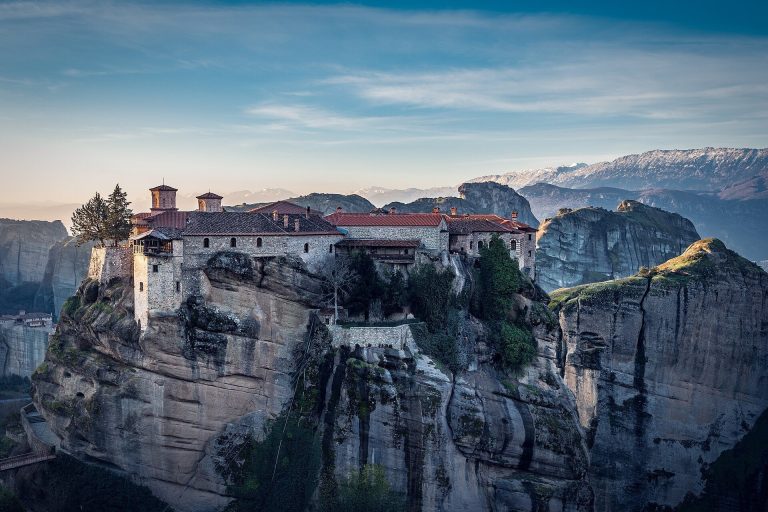
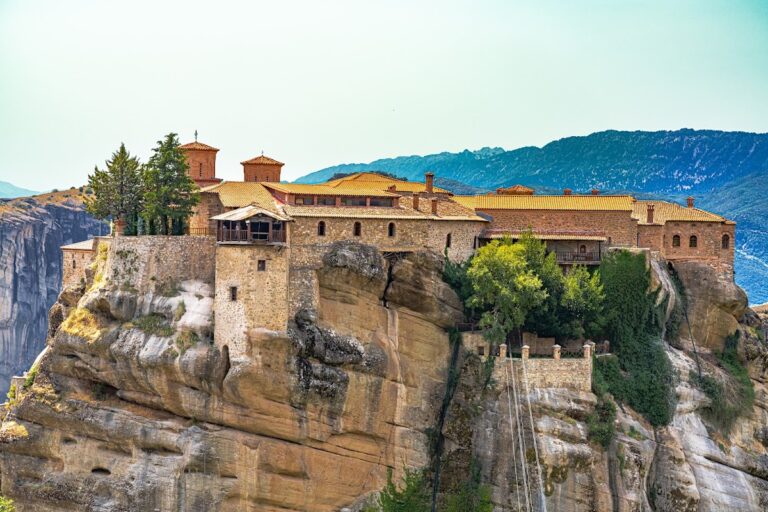
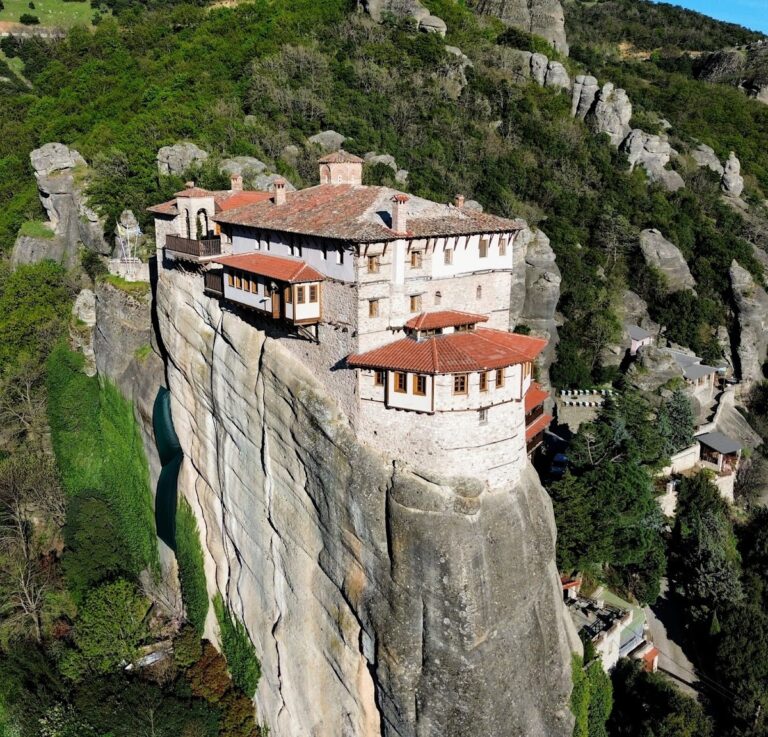
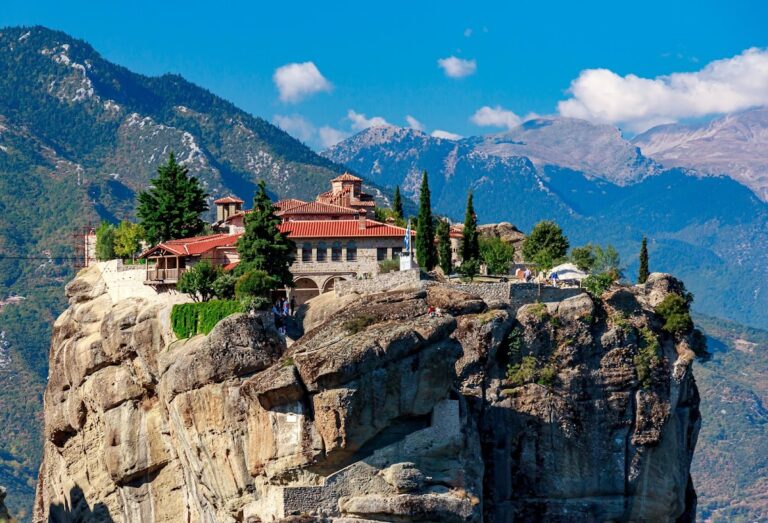
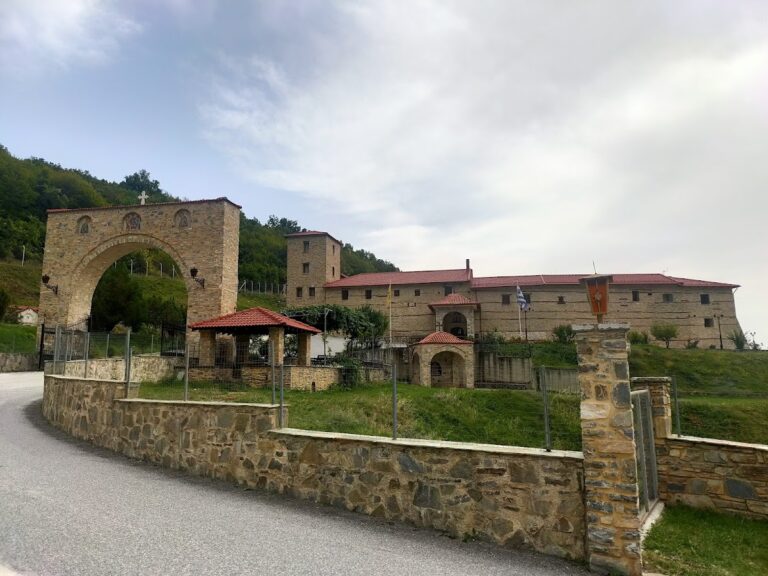
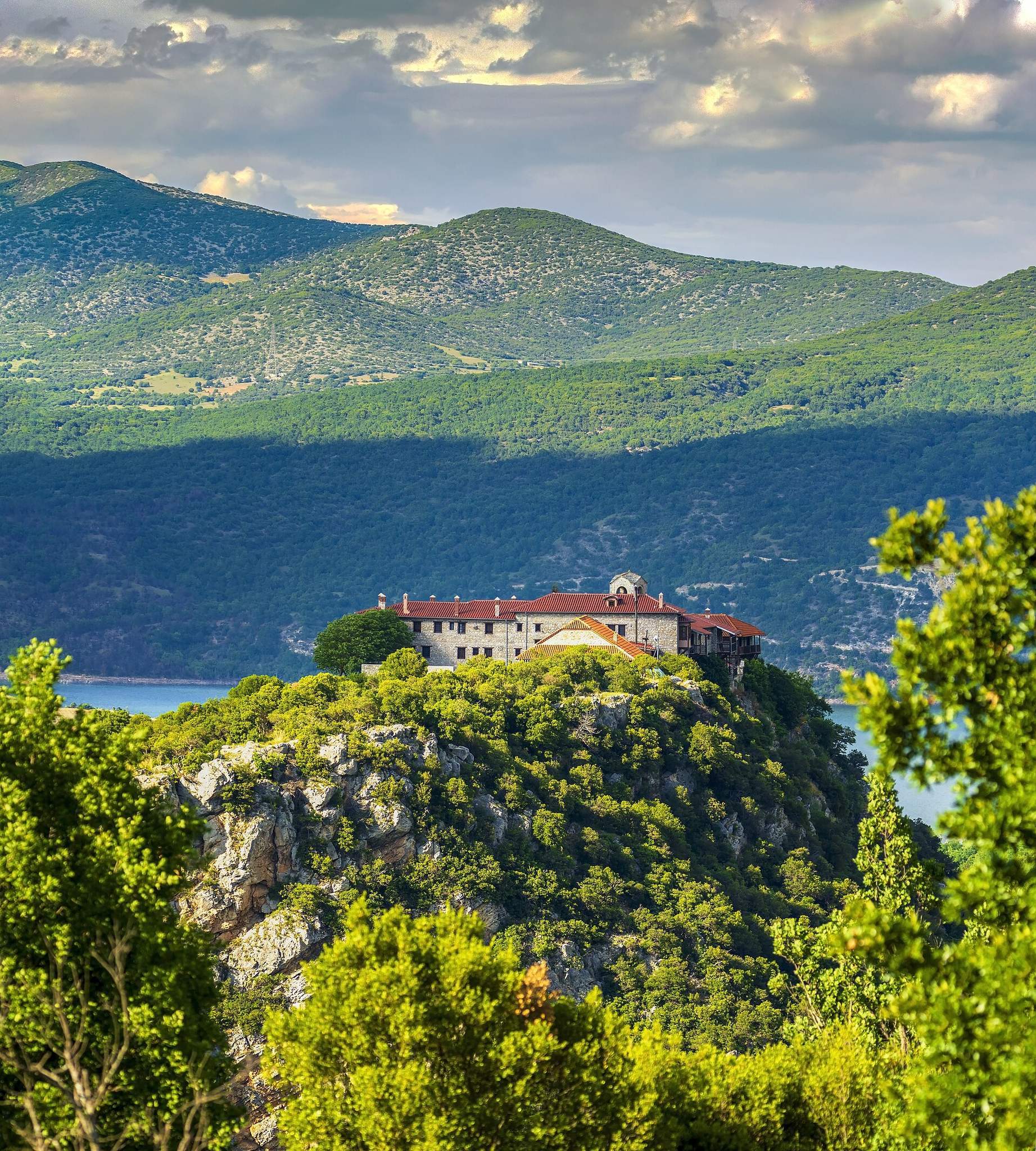
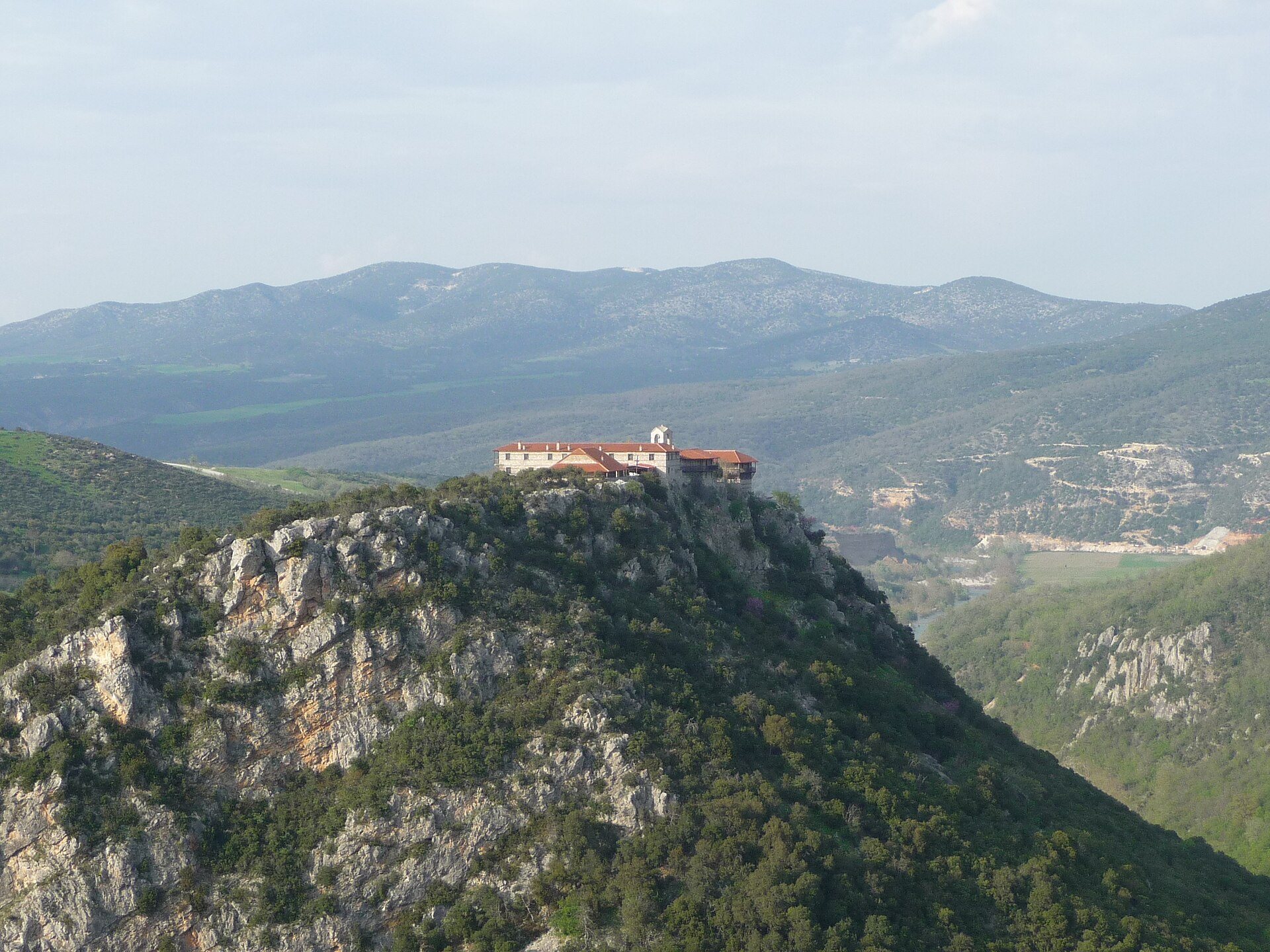
The monastery stands at about 535 metres above sea level on the summit of Mount Kallistrato, above the Aliakmon River in a gorge separating the mountain from Mount Vounasa. The mountain rises about 150 metres above its base, and the complex lies in the wider area of Panagia and Deskatí in western Macedonia. The principal buildings are arranged around an inner courtyard paved with grey river stones from the Aliakmon. This organization is comparable to the courtyard arrangement of monasteries on Mount Athos.
Churches and bell tower
Katholikon
The katholikon, or principal monastery church, is dedicated to the Transfiguration of Christ and was built in 1534. It is a Byzantine-style cross-domed church, with the dome set above the crossing of its cross-shaped plan. Its main fresco cycle was completed in 1547 and is attributed to Frankos Katelanos, a prominent sixteenth-century Orthodox church painter associated with monumental fresco decoration.
Narthex and chapels
The elongated narthex, the entrance area of the church, contains frescoes painted on its eastern wall in 1835 by Georgios Manuel of Selitsa. The scenes include episodes from the life of Saint Nikanor and figures of saints venerated by the Archbishopric of Ohrid. Manuel Georgiou of Selitsa painted the dome in 1869, and further nineteenth-century frescoes survive within the church.
Two chapels stand beside the katholikon, one dedicated to Saint Athanasius and the other to Saint John the Baptist. The Chapel of Saint John contains the tomb of Saint Nikanor. Another description places the tomb on the south side of the katholikon, at the site of an earlier chapel dedicated to the same saint.
Bell tower
The monastery’s stone bell tower was built in 1873 and rises about 20 metres. An inscription on the tower gives the date of its construction.
Relics, manuscripts, and treasures
Relics and sacred objects
The relics of Saint Nikanor are preserved almost in their entirety in a silver reliquary. Elaborate reliquaries hold relics of dozens of other saints, together with a large fragment of the True Cross, the Christian relic traditionally believed to come from the cross on which Jesus was crucified.
The monastery also preserves the icon of the Saviour Christ beneath a silver covering. The treasury contains hundreds of ecclesiastical objects, including crosses, chalices, icons, gold-embroidered vestments, and liturgical coverings. Personal objects associated with Nikanor include an iron staff, an epitrachelion, the stole worn by an Orthodox priest during services, and a prayer book. Manuscript no. 95 is identified as especially important.
Library
The library holds 207 manuscripts and thousands of printed books dating from the beginnings of printing to the present. Its best-known manuscript is the Photius Lexicon, the lexicographical work of Photius, a major Byzantine patriarch and scholar. The manuscript is described as the sole surviving copy containing the complete work.