Castle in Morawica: A Medieval Noble Family Seat
Site at a Glance
- Popularity
- Medium
- Country
- Poland
- Primary era
- Early Modern
- Eras represented
- Medieval, Early Modern
- Civilizations
- Kingdom of Poland, Polish–Lithuanian Commonwealth
- Site type
- Religious
- Remains
- Church
On this page7 sections
History
The Castle in Morawica was a medieval stronghold in Poland, completed around the turn of the twelfth and thirteenth centuries. The Toporczyks, a Polish noble family, lived there, and their descendants, the Tęczyńskis, later made it their original family seat.
The castle and parish in the Middle Ages
The earliest mention of Morawica’s knights and parish appears in the Greater Life of Saint Stanislaus, a work by the cleric Vincent of Kielcza. Its account for 1247–1253 names the knight Andrzej of Morawica and the parish priest Świętek. Saint Stanislaus was an eleventh-century bishop of Kraków venerated as a martyr and saint.
An entry for 1286 names Piotr as both chaplain of the castle chapel and parish priest. Fourteenth-century church records list Stanisław, serving from 1319 to 1326; Florian and Stanisław in 1326; Stanisław and Piotr from 1350 to 1355; Nawój Andrzejowic of Morawica and Tęczyn from 1374 to 1384; and Marcin in 1395. Some of these priests may also have served as chapel chaplains.
Transfer, destruction, and later use
During the fourteenth century, the Tęczyńskis moved their seat to Tenczyn Castle. Construction there began in 1319 under Jan Nawój of Morawica, a Polish nobleman and castellan of Kraków. A castellan was a medieval official responsible for administration associated with a castle and its district.
By 1408, the castle at Morawica was considered very old, and it was destroyed around that time. Jan Długosz’s Book of the Benefices of the Diocese of Kraków, compiled in 1470–1480, gives 1408 as the year the church was built. Part of the castle was adapted as a rectory in 1666. The old church was demolished and replaced in 1743, and the rectory was partly rebuilt after 1871.
A local legend links a treasure-filled cave discovered by Mateusz Tęczyński to a rock in neighboring Aleksandrowice called Krzywy Sąd. The rock was said to commemorate the unjust death sentence of a squire who learned the cave’s location by chance. In the tale, Mateusz died tormented by remorse after being bitten by a viper, the castle fell into ruin, and the Tęczyńskis later gave its remains to the church.
Remains
Hilltop site and surviving features
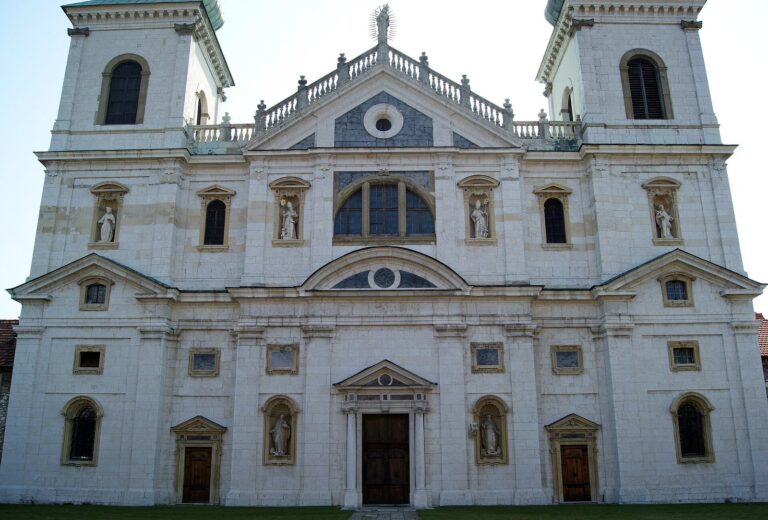
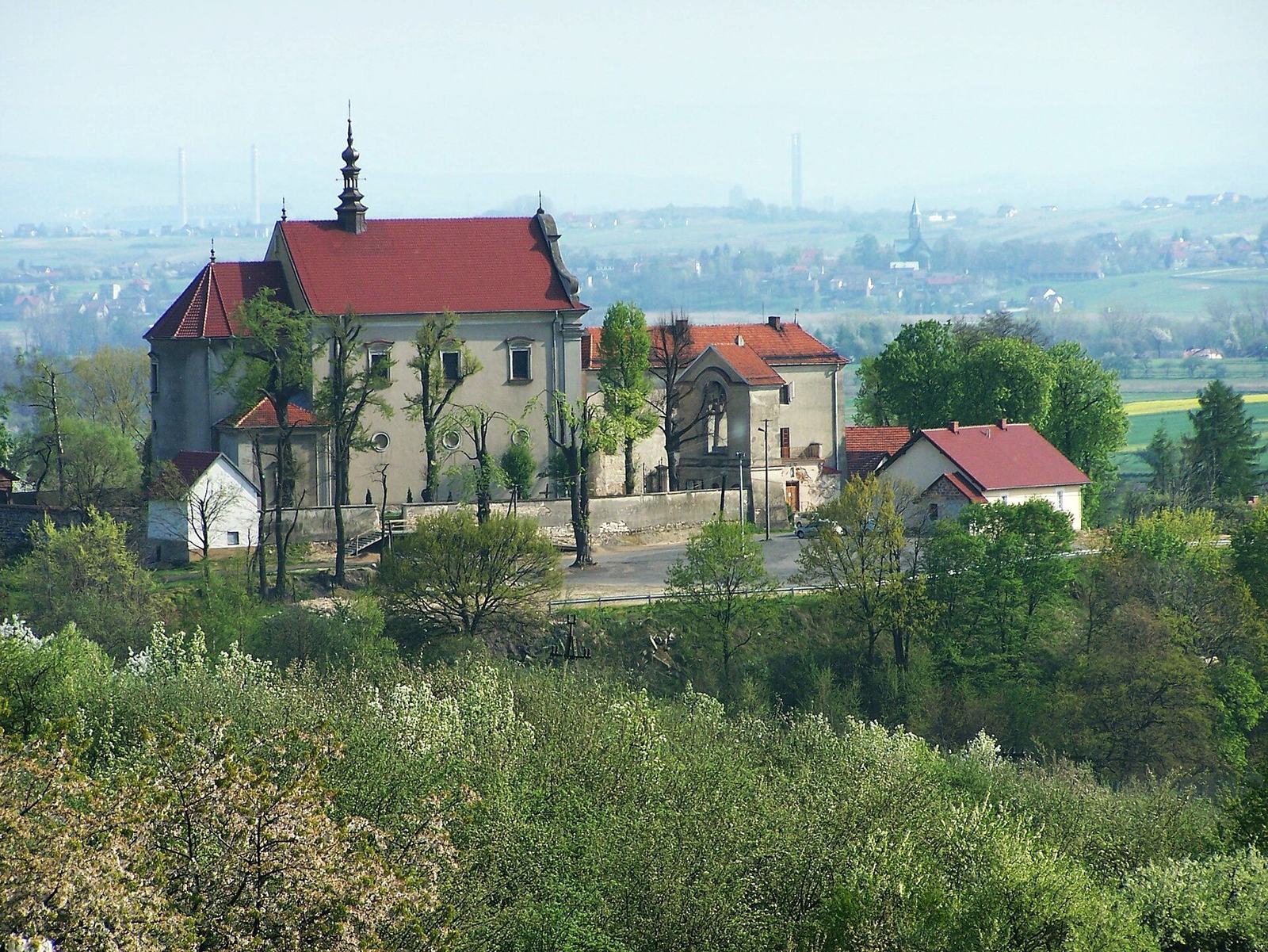
The castle occupied the summit of a hill overlooking the surrounding area. The Church of St Bartholomew and the rectory now occupy its site. Castle foundations and passages cut into the underlying rock are among the surviving physical features.
Chapel, church, and foundations
A small wooden chapel stood at the castle’s center before 1200. It was converted into a stone church using material taken from a dismantled part of the castle. Długosz described the church as built of white stone. The church erected in 1743 stands on the former castle foundations, which also extend beneath the eighteenth-century bell tower.
Rock-cut passages
Underground passages cut into solid rock survive beneath the rectory. They served as an escape route during a siege.