Wormleybury: A Hertfordshire Country Estate
Site at a Glance
- Popularity
- Medium
- Country
- United Kingdom
- Primary era
- Early Modern
- Eras represented
- Early Modern
- Civilizations
- British
- Site type
- Domestic
- Remains
- Manor House
On this page7 sections
History
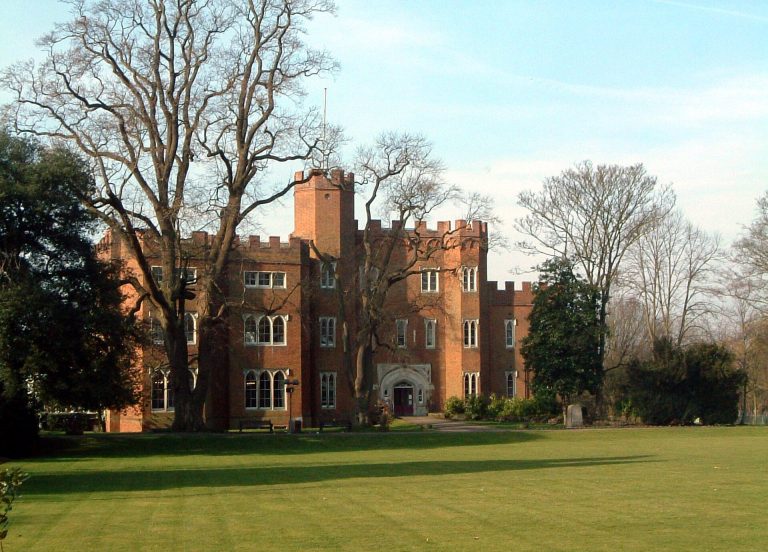
Wormleybury is an eighteenth-century country house and estate near Wormley in Broxbourne, Hertfordshire, United Kingdom. Its history includes a long period of religious ownership and a later horticultural legacy, when the Hume family cultivated and introduced rare plants.
Abbey ownership and early houses
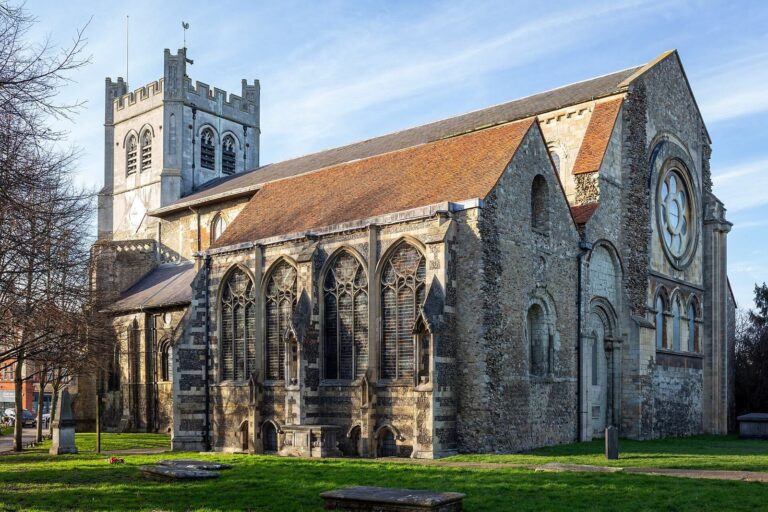
First called Wormley Bury, the estate was among those King Harold Godwinson granted to the canons of Waltham Abbey, a community of clergy living together in a religious house. In 1220, the canons built a water conduit, a channel for carrying water, from Wormley to their monastery. A house erected in 1525 stood north of the present one, and its first owner was Edward Sharnebrook.
The abbey held the estate until the Dissolution of the Monasteries, the Crown’s suppression of religious houses and transfer of their property between 1536 and 1541. The Crown then granted it to Edward North, who administered Crown lands and revenues acquired through the Dissolution. North transferred the property to London textile merchant William Woodliffe, also known as Woodcliffe. When Woodliffe died in 1548, half the estate passed to his daughter Ann and her husband, John Purvey; North sold the other half of the manor to Elizabeth Woodcliffe. The house was later bequeathed to William Woodcliffe. By 1597, John Purvey’s son William appears to have held the reunited manor. It subsequently passed to the Tookes, descendants of the other sister, and then to Richard Woollaston, who died in 1691.
The Hume estate and its gardens
Woollaston conveyed the manor to William Fellowes. His eldest son, Coulston, held it in 1728, before John Deane bought it in 1733. Deane replaced the sixteenth-century house with a new one in 1734 and sold the estate to Alexander Hume in 1739. Alexander’s brother, Sir Abraham Hume, 1st Baronet, a hereditary title below that of baron, inherited the estate in 1765. After Sir Abraham’s death in 1772, his son, Sir Abraham Hume, 2nd Baronet, succeeded him. The house was remodelled in 1767–1769 and again in 1781–1782. Robert Adam oversaw interior decoration from 1777 to 1779 and designed garden buildings for the estate.
The second baronet and his wife, Lady Amelia, became prominent horticulturalists in England and abroad. Working with their gardener James Mean, they cultivated exotic plants in the estate’s gardens and glasshouses. Between 1785 and 1825, the Humes brought in a large collection of rare plants, mainly from India and the Far East, and many recently introduced species were first cultivated at Wormleybury.
In 1793, botanist James Sowerby observed exotic mushrooms in the estate’s hothouses and greenhouses; he included his observations in his illustrated 1796 book Coloured Figures of English Fungi or Mushrooms. Botanist James Edward Smith and others also discussed the Humes’ horticultural work. Smith described a young Dellinia speciosa from Malabar, sent to Lady Hume by botanist Dr Roxburgh, as thriving. He thought it might be the first living plant of its kind to reach Europe. The Humes introduced England’s first white pomegranate in 1796, a ‘Maiden’s Blush’ camellia and a large Mandarin orange in 1805, and their first Tea Rose from China in 1810.
Later owners and present status
When the second baronet died without a male heir in 1838, the estate passed to the male children of his daughter Sophia, Lady Brownlow: Viscount Alford and the Hon. Charles Henry Cust. They sold it to Henry John Grant in 1853. After Grant’s death, his widow Mary inherited it; under his will, the manor passed in 1880 to his cousin Henry Jeffreys Bushby and subsequently to Bushby’s son, Henry North Grant Bushby. Sir Whittaker Ellis later leased the property and modernised the house. After Ellis’s death, Albert Pam bought the long lease, and the estate passed through further owners. The house is now divided into flats. It is a Grade I listed building, the highest listed-building category, denoting exceptional interest; the park and garden are Grade II in the Register of Historic Parks and Gardens, indicating special historic interest.
Remains
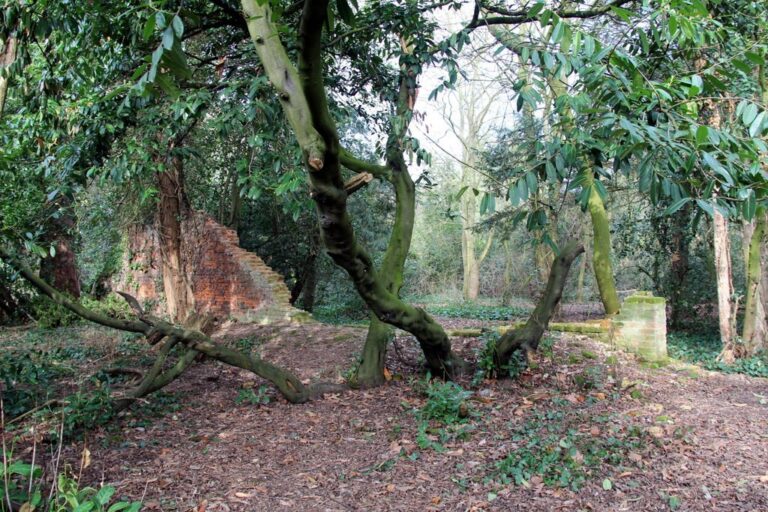
The surviving estate includes the house and a landscaped park covering 57 hectares (140 acres), with gardens, greenhouses, hothouses, garden buildings, and a crescent-shaped lake.
The house
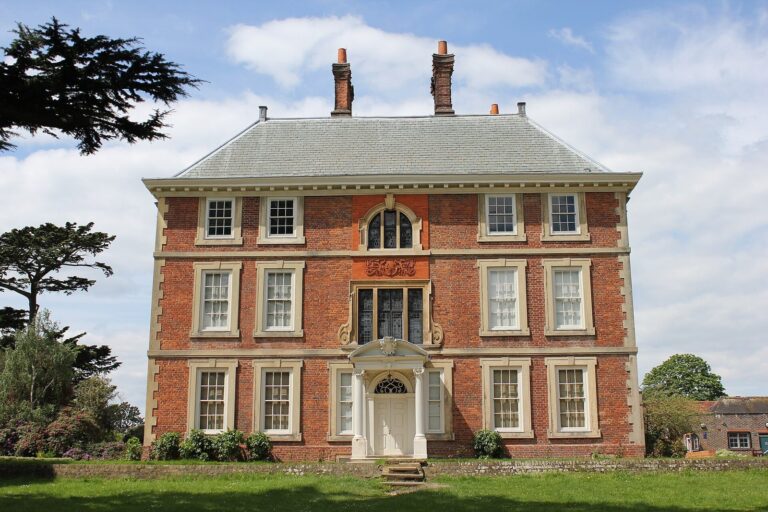
The present house was built in 1734 to replace the earlier sixteenth-century building. Its drawing room contains painted roundels, or circular panels, by painter Angelica Kauffman.
Park and gardens
The gardens, greenhouses, and hothouses are associated with the estate’s historic collection of rare plants. Adam designed garden buildings for the grounds. A crescent-shaped lake lies within the park, bordered by woods on three sides. The rose cultivar ‘Hume’s Blush Tea Scented China Rose’ was planted at Wormleybury in 1810. The tropical fungus Leucocoprinus birnbaumii, also called the plantpot dapperling, was observed growing in the hothouses and greenhouses and may have arrived with the exotic plants.