Woodstock Castle: A Norman Hall-Keep in Athy, Ireland

Site at a Glance
- Rating
- 3.7
- Popularity
- Very Low
- Country
- Ireland
- Primary era
- Medieval
- External website
- Open
- Eras represented
- Medieval, Early Modern
- Civilizations
- English, Norman
- Site type
- Military
- Remains
- Castle
On this page13 sections
History
Norman foundation and medieval development
Woodstock Castle is a Norman castle in Athy, Ireland, built in the early 13th century by Robert de St Michael. The Norman expansion in Ireland had brought new lords and fortified settlements into the region. Robert received Rheban Castle and the surrounding territory from Richard de Clare, the Anglo-Norman nobleman commonly known as Strongbow.
The castle was established near the ford of the River Ae, or Ath Í, whose name gave Athy its name. Its first defenses consisted of earthen banks topped with wooden palisades. These were later replaced by a stone hall-keep, a compact castle centered on a substantial hall and incorporating storage and defensive masonry within a rectangular structure.
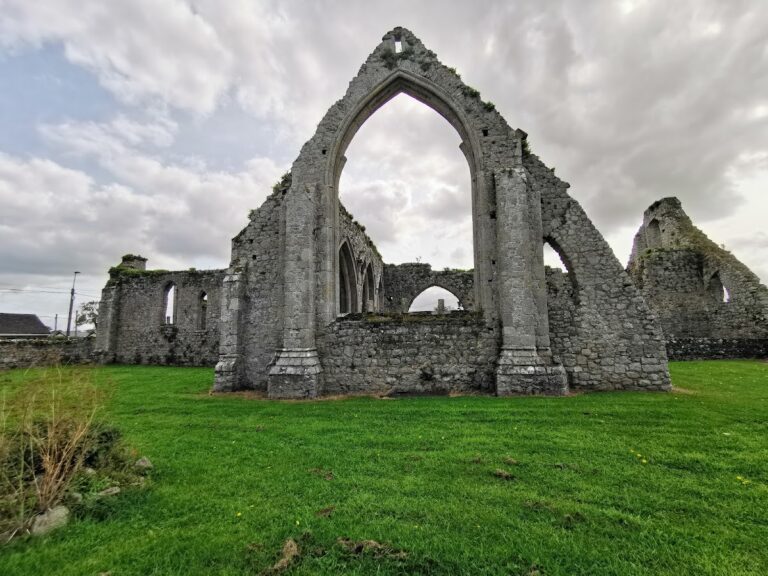
During the 13th century, the Crutched Friars, a religious order that established and operated monasteries, founded a monastery beside the castle. Displaced Gaelic Irish attacked Athy at least four times during the century, badly damaging the town, Woodstock Castle, and its monasteries.
Changing control and the rise of White’s Castle
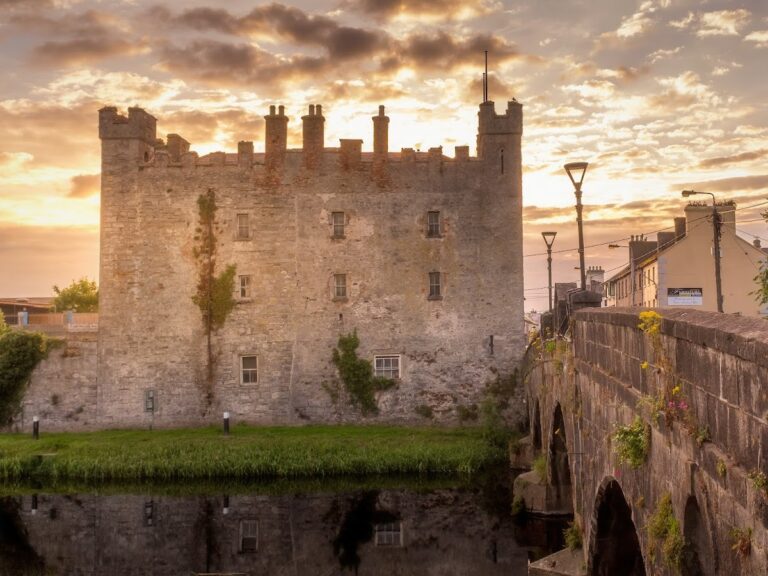
In 1417, John Talbot, 2nd Earl of Shrewsbury, built White’s Castle to guard the bridge over the River Barrow. The new stronghold stood 620 metres south-southwest of Woodstock Castle, on the opposite side of the river. Athy’s centre of gravity then shifted southward, leaving Woodstock Castle isolated.
Around 1424, Woodstock Castle passed from the Barons of Rheban to the Earls of Kildare. This transfer followed the marriage of Thomas FitzGerald, 7th Earl of Kildare, to Dorothea of the Ó Mórdha family. In 1530, Gerald FitzGerald, 9th Earl of Kildare, garrisoned and fortified the castle.
The Irish Confederate Wars
Woodstock Castle became an important site during the Irish Confederate Wars, the conflicts fought in Ireland from 1641 to 1653 among Irish Confederate forces, English and Scottish royalists, and parliamentarian forces. Pierce FitzGerald initially commanded the castle. James Butler, 1st Marquess of Ormond, captured it from the rebels in 1642.
Eoghan Ruadh Ó Néill, an Irish military leader, took Woodstock Castle in 1647 and massacred its garrison. Murrough O’Brien, 1st Earl of Inchiquin, retook it in 1648. A local tradition later claimed that a tunnel connected Woodstock Castle with White’s Castle, although the tradition does not establish when or why such a passage might have been made.
Archaeological investigation
Magnetometry and electromagnetic-induction surveys were carried out at Woodstock Castle in 2015. These methods investigate buried features and changes in the ground without requiring excavation, adding archaeological evidence to the surviving structure and its known history.
Remains
The castle structure
Hall-keep
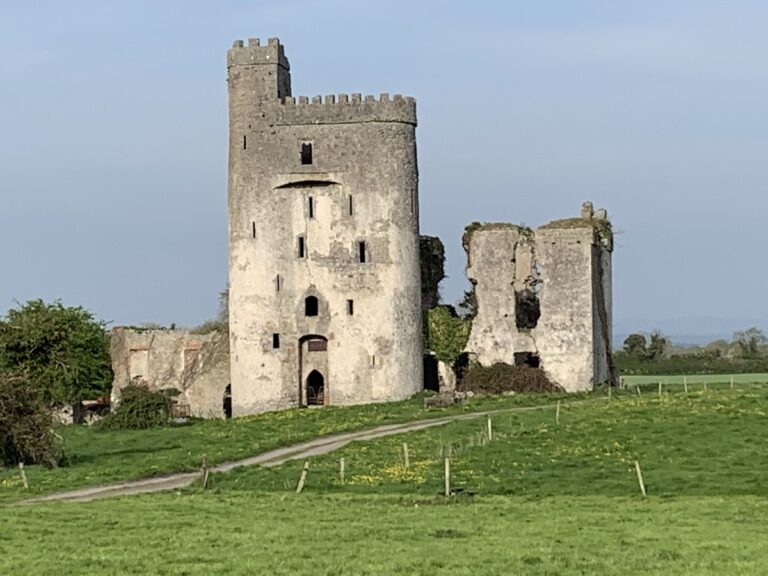
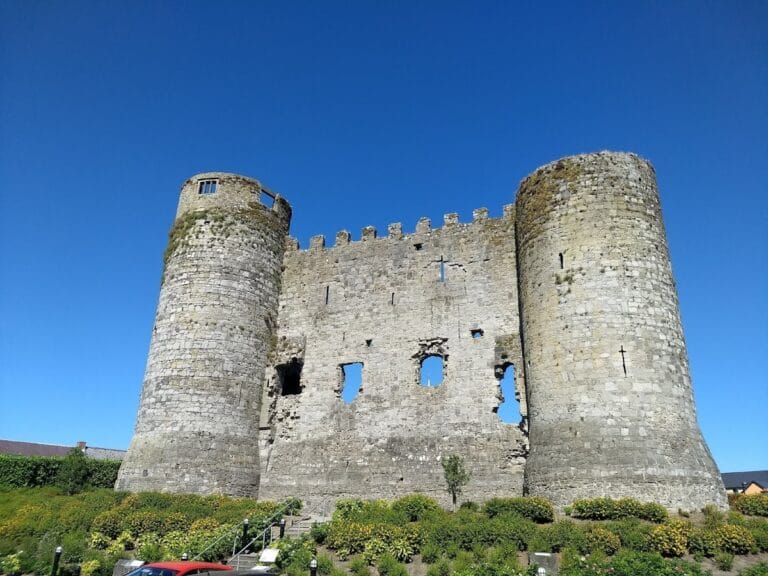
Woodstock Castle survives as a tall, three-storey stone building in Castle Park on the west bank of the River Barrow. The main structure is a rectangular hall-keep, formed by stone walls around a large hall and underground storage areas. It represents the replacement of the earlier earthen-and-timber defenses with more durable masonry.
Sixteenth-century alterations
Sixteenth-century work changed the building’s height and defensive arrangement. The walls were raised to create a third storey, and several windows received hood mouldings, projecting surrounds designed to throw rainwater away from the openings. A tower was added at the southeast angle during the same period of alteration.
Gunports
At the west end, two circular gunports were inserted within rectangular openings. A gunport is an opening through which firearms or artillery could be used from inside a fortified building. This form of gunport was invented in England during the 1520s, linking the castle’s later defenses to changing firearm technology.
Associated features and movable remains
White’s Castle
White’s Castle stands 620 metres south-southwest of Woodstock Castle, across the River Barrow. It was built in 1417 by John Talbot, 2nd Earl of Shrewsbury, to guard Athy’s bridge. Its position and purpose formed part of the change that shifted the town’s center southward and left Woodstock Castle apart from the later focus of settlement.
Piper carving
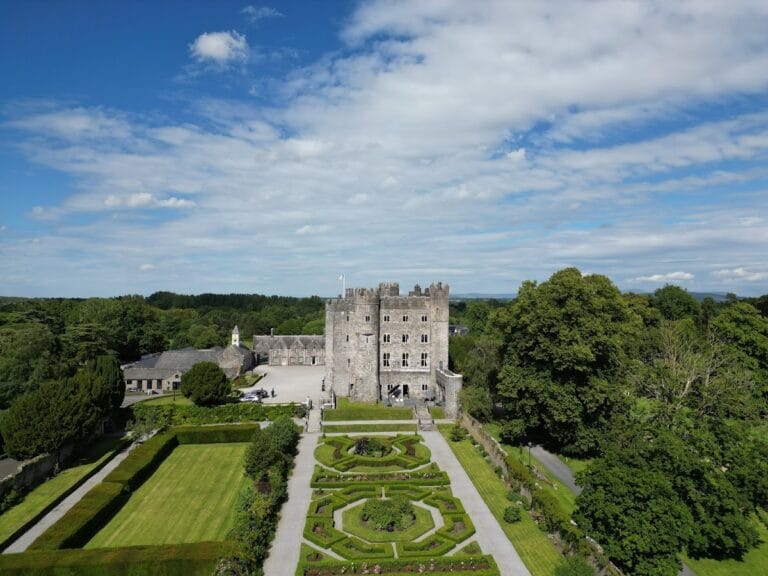
The castle once contained a stone carving of a piper playing the great Irish warpipes. The carving was later moved to Kilkea Castle, preserving an object associated with Woodstock Castle beyond the building itself.
Nearby sites