Fuirendal: A Danish Manor House and Estate
Site at a Glance
- Popularity
- Low
- Country
- Denmark
- Primary era
- Unclassified
- Eras represented
- Unclassified
- Civilizations
- Unclassified
- Site type
- Domestic
- Remains
- Manor House
On this page4 sections
History
Vindingegaard and the Dyre family
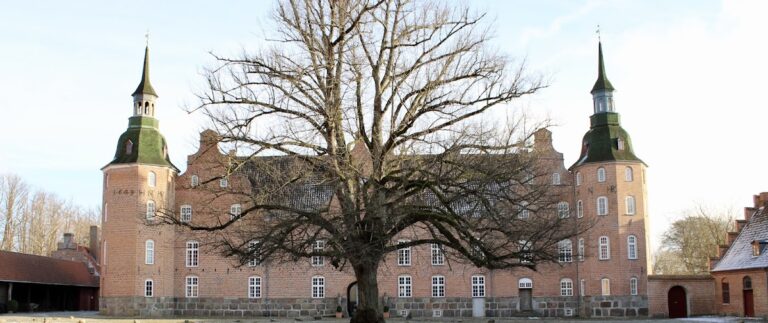
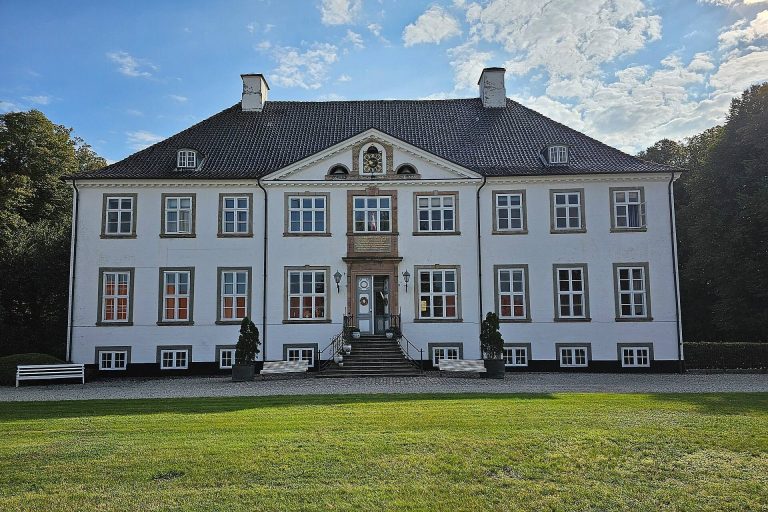
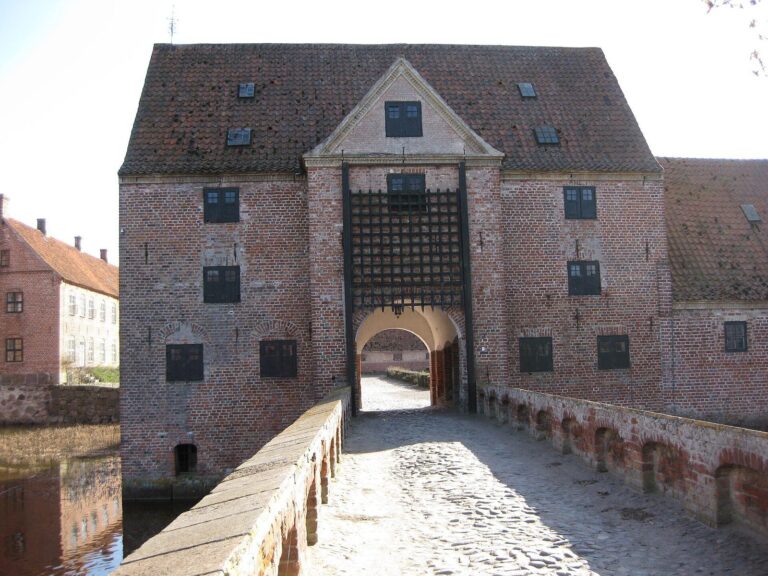
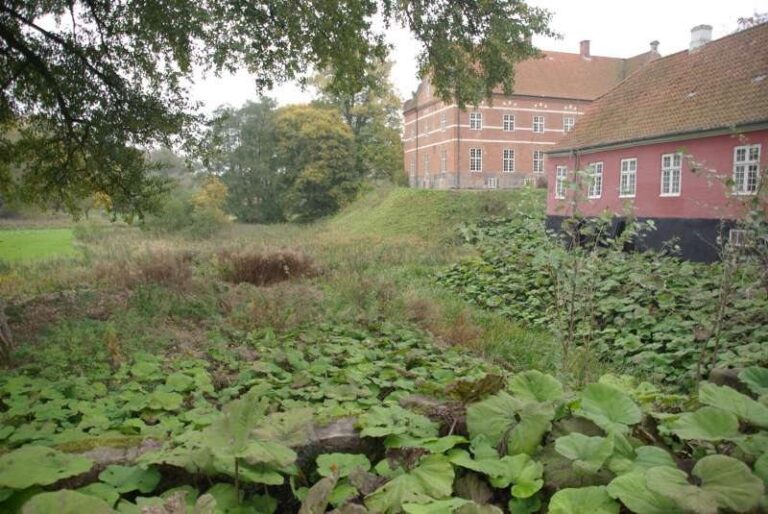
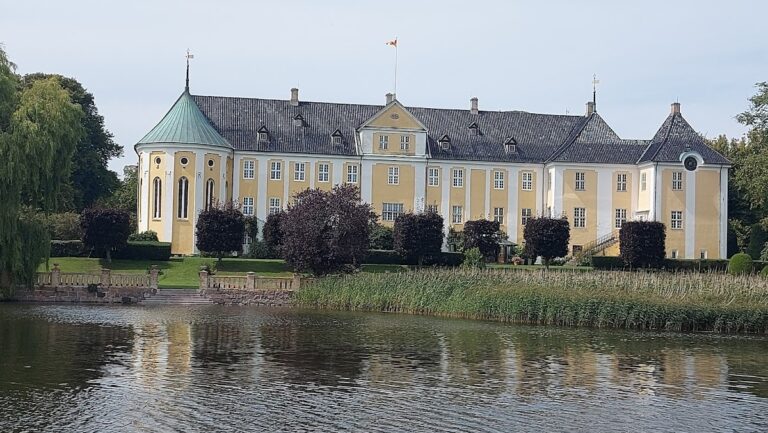
Fuirendal is a manor house and estate in Sandved, Denmark, whose recorded history begins under the name Vindingegaard. Its first known owner was Thidisius Skælle, who held it in 1387.
By at least the 1410s, the estate belonged to the Dyre family. Its first known Dyre owner was Jens, possibly Niels, Jensen, who died in 1417 and was also known as Jensen Sosadel. The estate later passed through Erik Jensen (1446–1493) and Christoffer Eriksen (1493–1509) to Erik Christoffersen, who died in 1554. Erik’s widow, Sidsel Mouridsdatter Skave, held Vindingegaard until her death in 1592.
Royal ownership and the Fuiren family
In 1592, Vindingegaard passed to the Dyres’ distant relative Niels Andersen Dresselberg. His son Peder inherited it in 1594 but died the following year, after which Peder’s brother Vilhelm took ownership. Vilhelm died in 1620, and his widow stayed at the estate. Their son-in-law Frederik Parsberg was the last member of the family to own it, holding it until 1632.
That year, Christian IV bought Vindingegaard for his illegitimate son Hans Ulrik Gyldenløve. Hans never lived there and died at the age of 30. In 1645, the estate passed to his widow, Regitze Grubbe, and later to Grunde Rosenkrantz, son of the Danish scholar Holger Rosenkrantz. Grunde transferred it to his brother Jørgen in 1660. Jørgen sold the estate in 1663 to Margrethe Frische, widow of Jørgen Fuiren.
The Fuirens were non-noble merchants and civil servants who had come to Denmark from Mecklenburg, a historic region in northern Germany. Their acquisition was among the early cases of a manor passing to a non-noble family after Denmark introduced absolute monarchy, a system concentrating royal authority in the monarch. Margrethe’s son Thomas inherited the estate in 1665 and left it to his nephew Diderik. Fuiren ownership continued through Diderik and Diderik II until 1700. By 1677, Vindingegaard had taken the name Fuirendal.
In the late seventeenth century, Diderik Fuiren established the Barony of Fuirendal, a hereditary noble title associated with an estate. The barony ended after his son, also named Diderik, died young without male heirs, and the estate passed to the Crown.
The Holstein-Holsteinborg family
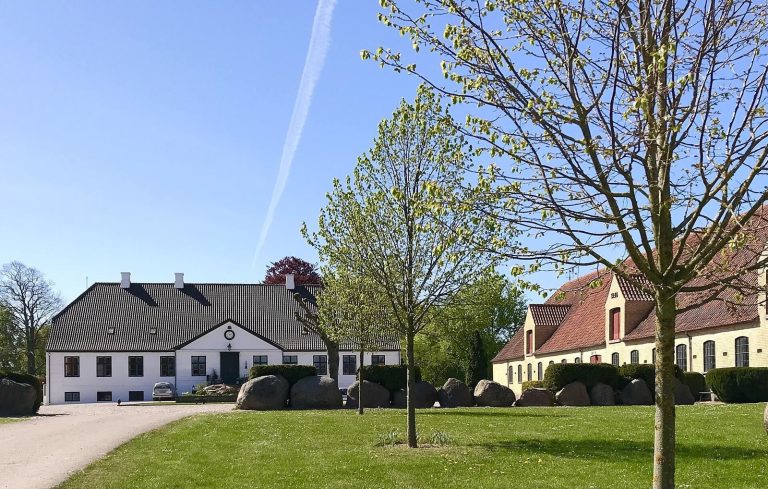
In 1700, Frederick IV granted Fuirendal to Ulrik Adolf Holstein, who expanded the estate by acquiring additional land. In 1728, Fuirendal and his other estates formed the Countship of Holsteinborg, a hereditary noble title associated with estates. Fuirendal was thereafter used as a dower house, a residence reserved for a widow, or leased out. Members of the Holstein-Holsteinborg family have held the estate since 1700.
The recorded succession ran from Ulrich Adolph Holstein-Holsteinborg (1700–1737) to Frederik Conrad (1737–1749), Christoph Conrad (1749–1759), Cay Joachim Detlev (1759–1760), Heinrich (1760–1796), Frederik Adolph (1796–1836), Ludvig Henrik Carl Herman (1836–1892), Frederik Conrad Christian Christoffer (1892–1922), and Erik Frederik Adolph Joachim (1922–1960). Later owners were Ib Holstein-Holsteinborg from 1960 and Ulrich Holstein-Holsteinborg from 1981.
From 1801, the estate housed an institution first called the Fuirendalske Hospital and, from 1833, the Fuirendalske Institute. It moved to Hjortholm in 1839, when Fuirendal was again needed as a dower house. After a Danish law adopted in 1919, the Countship of Holsteinborg was dissolved. Much of Fuirendal’s land was sold, while the remaining estate continued as a farm under the Holsteinborg family.