Wooden Church of the Ascension: Torzhok’s Oldest Building
Site at a Glance
- Popularity
- Medium
- Country
- Russia
- Primary era
- Early Modern
- Eras represented
- Early Modern, Modern
- Civilizations
- Russian
- Site type
- Religious
- Remains
- Church
On this page9 sections
History
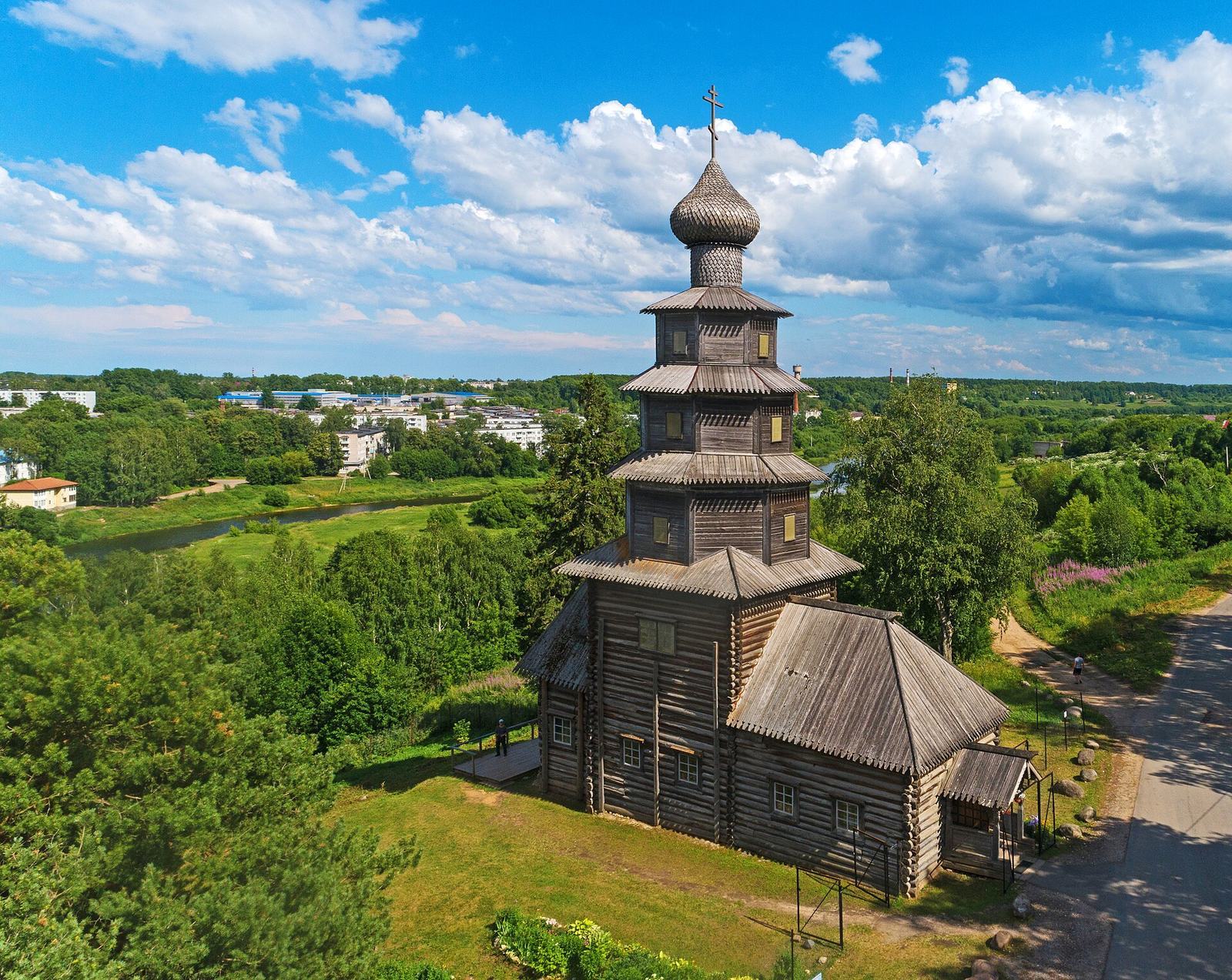
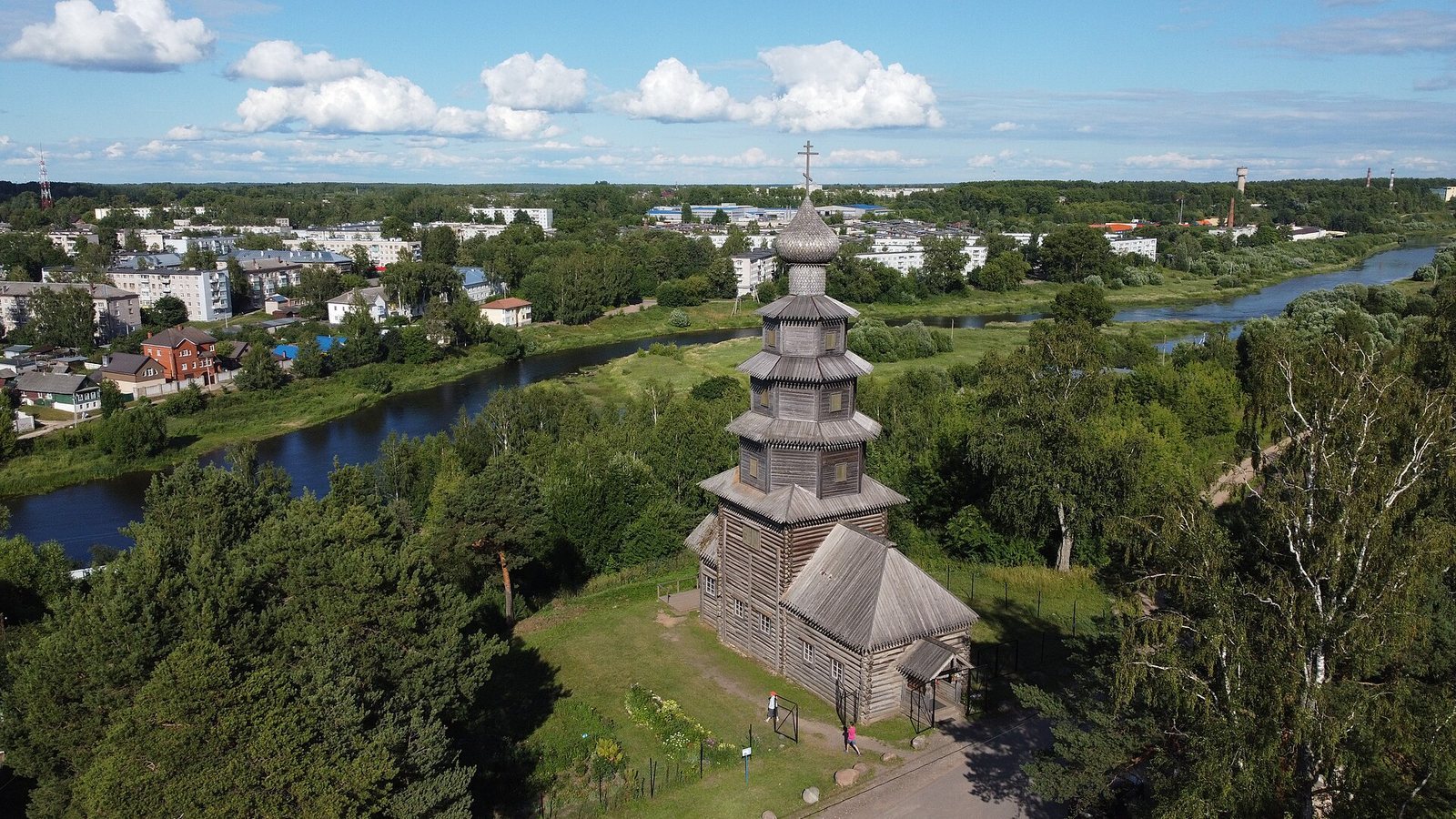
The Wooden Church of the Ascension is a Russian Orthodox church on the southern edge of Torzhok, Russia. Its major reconstruction in 1717 is commonly treated as the date of the present building, and it is the oldest building in Torzhok.
Early church and rebuilding
A land-survey and property register compiled by Potap Narbekov lists the church in 1625. At that time, it was a log building with a gabled roof and one cupola. A replacement church was built on the site in 1653, forming the basis of the present structure. A major reconstruction followed in 1717. Later changes included a stone foundation in 1782, a porch in 1806, and an alteration to the cupola in 1828.
Closure and renewed use
When a stone Ascension Church opened nearby in 1854, services in the wooden church stopped. The Archbishop of Tver opposed a proposal to demolish the older building and forbade its destruction. It remained unused until 1883, when Archimandrite Anthony, the senior monastic leader of Borisoglebsky Monastery, and A. K. Zhiznevsky initiated its reopening with help from Alexei Kuzmin, warden of the stone church. The wooden church was then consecrated to the Tikhvin Icon of the Mother of God, a revered Orthodox image of Mary associated with the town of Tikhvin. It became known as the Old Ascension Church or Tikhvin Church.
Twentieth-century history
Services ceased again in 1929, and the church’s interior furnishings were lost. During the Soviet period, officials planned to move the building to the Vasilyovo Architectural and Ethnographic Museum near Torzhok, but the transfer did not take place. Restoration and research were carried out from the mid-1970s to the early 1980s. The church has been protected as a cultural heritage site of federal importance since 1960. It is an active Russian Orthodox church within the Tver Eparchy, a territorial church district, and the Torzhok deanery, a grouping of parishes.
Remains
Main structure
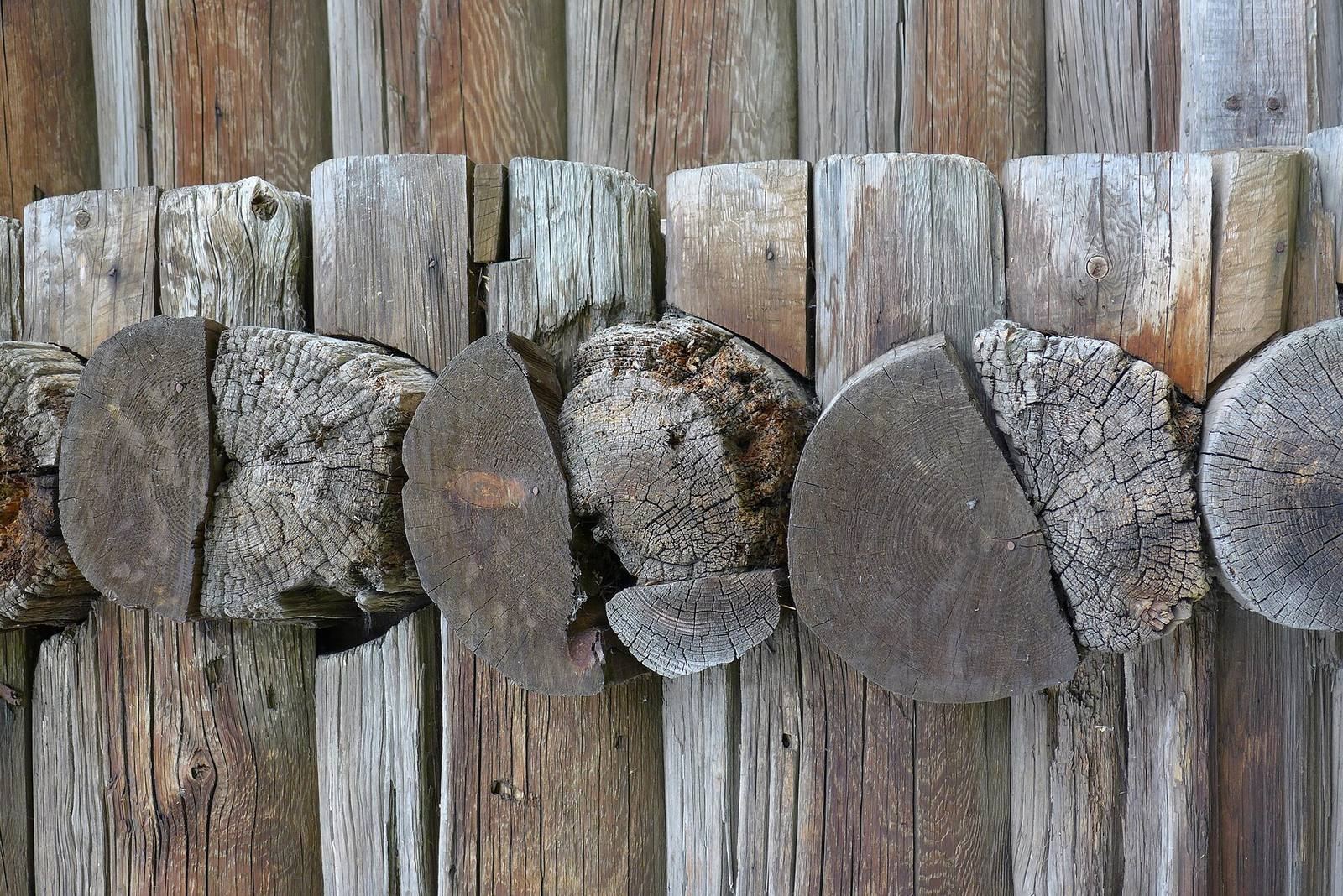
The pine-built church stands on the right bank of the Tvertsa River and rises 34 metres. Its composition centers on a tall, double-height square block, above which three successively smaller octagonal levels support a high, narrow drum, the structure beneath the dome. The drum has no windows and carries a large onion-shaped dome. Small windows pierce each upper level, with simple surrounds characteristic of ordinary Torzhok residential buildings in the late nineteenth century. A faceted apse, the projecting eastern end of a church, adjoins the main block; a rectangular refectory, or adjoining hall, and a porch extend to the west. Inside, the square core and octagonal levels form an open space more than 20 metres high, without intermediate floors. The church’s walls are smoothly hewn, and its stone foundation is made from white stone brought from Staritsa.
Paintings and furnishings
Painted upper levels
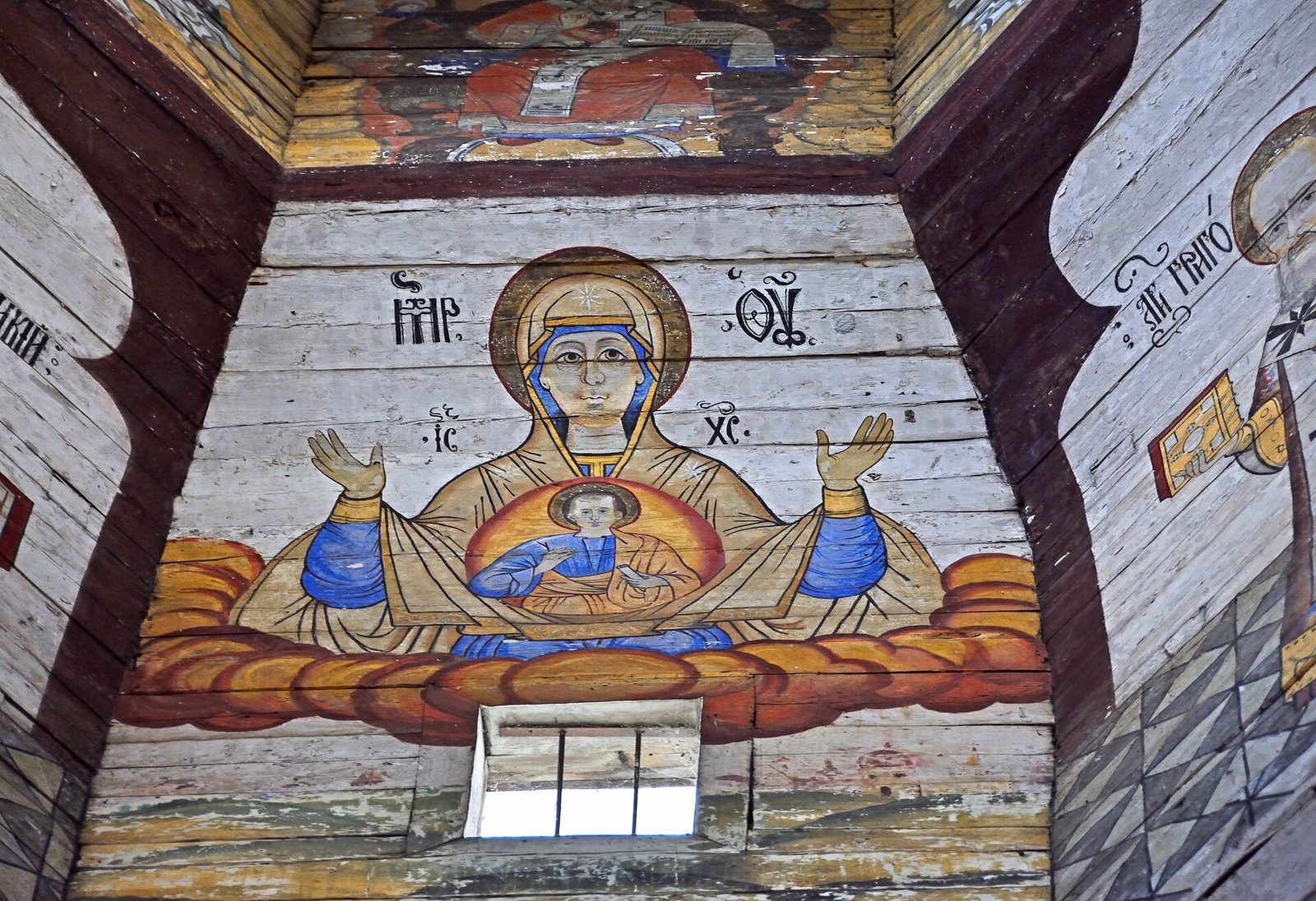
Eighteenth-century paintings made with glue-based paint decorate the upper levels. The east wall shows the Sign, an Orthodox icon type depicting Mary with raised hands in prayer and Christ before her. The side and west walls portray Basil the Great, Gregory the Theologian, and John Chrysostom, early Christian bishops and theologians.
Historic interior furnishings
The church’s historic furnishings included a five-tier iconostasis, the screen of icons separating the sanctuary from the main body of an Orthodox church. Alongside canonical images, it held an icon of the Tikhvin Icon of the Mother of God, images of the Holy Myrrh-Bearing Women, who are associated in Christian tradition with tending Jesus’s tomb, and an icon of Sergius of Radonezh, a medieval Russian monastic saint. Icons in the refectory stood in cases with carved columns bearing clusters of grapes. A wooden chandelier shaped like a dove with outstretched wings hung from a wrought-iron chain. Candleholders on its back and wings were lit on major feast days.