Alt Wädenswil Castle: A Medieval Hospitaller Fortress in Switzerland
Site at a Glance
- Rating
- 4.7
- Popularity
- Low
- Country
- Switzerland
- Primary era
- Medieval
- External website
- Open
- Eras represented
- Medieval
- Civilizations
- Knights Hospitaller
- Site type
- Military
- Remains
- Castle
On this page9 sections
History
Baronial origins
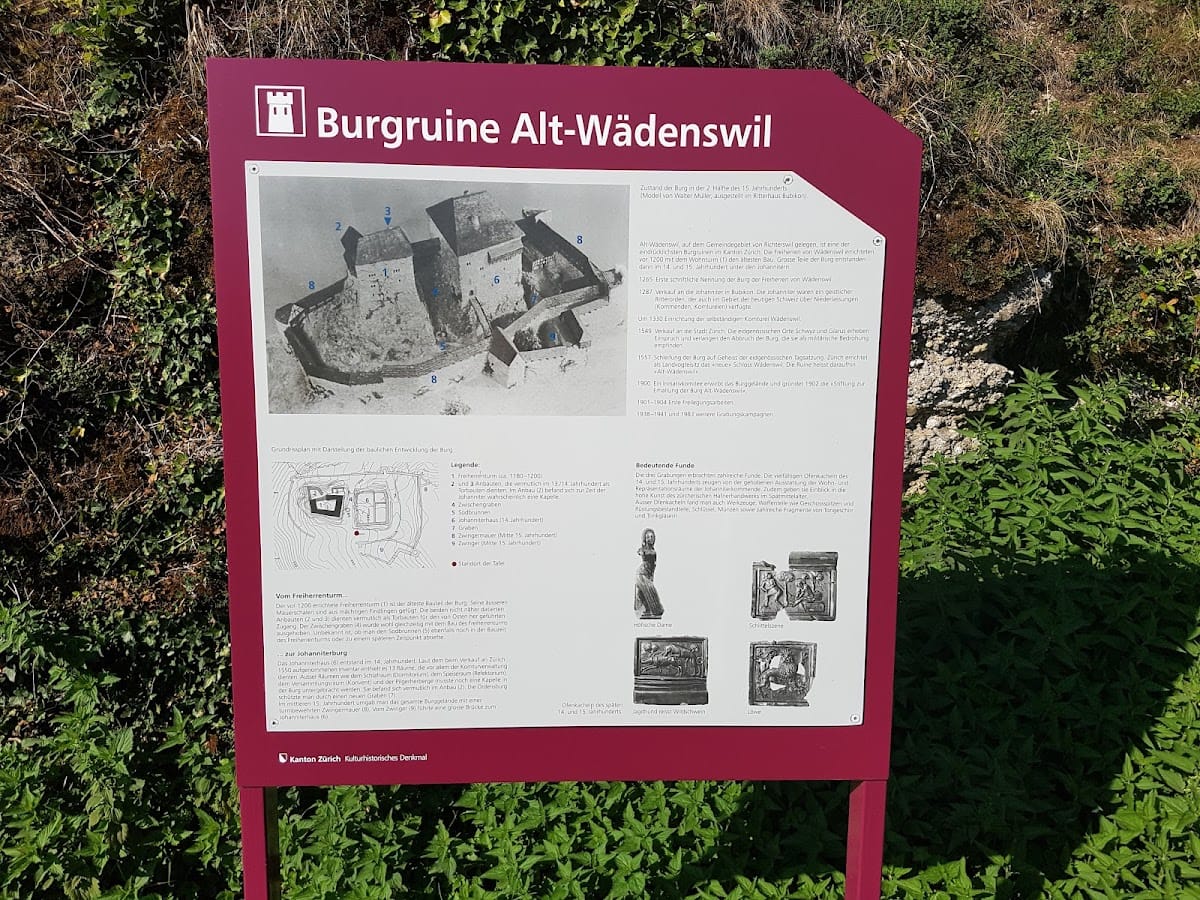
Alt Wädenswil Castle is a ruined hilltop castle in Richterswil, Switzerland. The barons of Wädenswil are first mentioned in 1130 in a charter of Fahr Abbey, and they established their residence at the castle during the thirteenth century. The site first appears in written records in 1265. Its oldest component, a baronial tower built before 1200, reflects the earlier phase of the lordship.
In 1287, Rudolf III, the last baron of Wädenswil, sold the lordship to the Hospitaller house at Bubikon because he had no heirs. The lordship included the territories of the present municipalities of Wädenswil, Richterswil, and Uetikon am See.
The Hospitaller commandery
Under the Hospitallers, also known as the Knights of St John, Wädenswil became a commandery, a territorial and administrative unit governed within a religious military order. During the fourteenth century, the Hospitaller establishment developed into a fortified complex with a new moat. Its buildings and rooms primarily supported the administration of the commandery.
In the fifteenth century, an outer defensive wall reinforced with towers enclosed the entire castle grounds. This enlargement gave the Hospitaller complex a wider defensive boundary around its earlier buildings.
Zurich rule and partial destruction
After the Reformation, the Hospitallers sold the lordship and all its rights to the city of Zurich in 1549. Wädenswil became a Zurich bailiwick, an administrative district governed by a bailiff, and Zurich constructed a new castle for the bailiff between 1550 and 1555.
In 1557, the Tagsatzung, the federal assembly of the Old Swiss Confederacy, ordered that the older castle be partly demolished and made unusable. Schwyz had viewed the enlarged city-state of Zurich as a threat. The surviving ruins were later quarried for building material. Particularly severe damage occurred in the 1870s, when sections were blasted apart to provide material for the Wädenswil-Einsiedeln railway line.
Archaeological preservation
An initiative committee acquired the castle grounds in 1900 and founded the Foundation for the Preservation of Alt Wädenswil Castle in 1902. Clearance work took place between 1901 and 1904, followed by excavation campaigns from 1938 to 1941 and another campaign in 1983. Alt Wädenswil Castle is classified as a Swiss cultural property of national significance.
Remains
Baronial tower
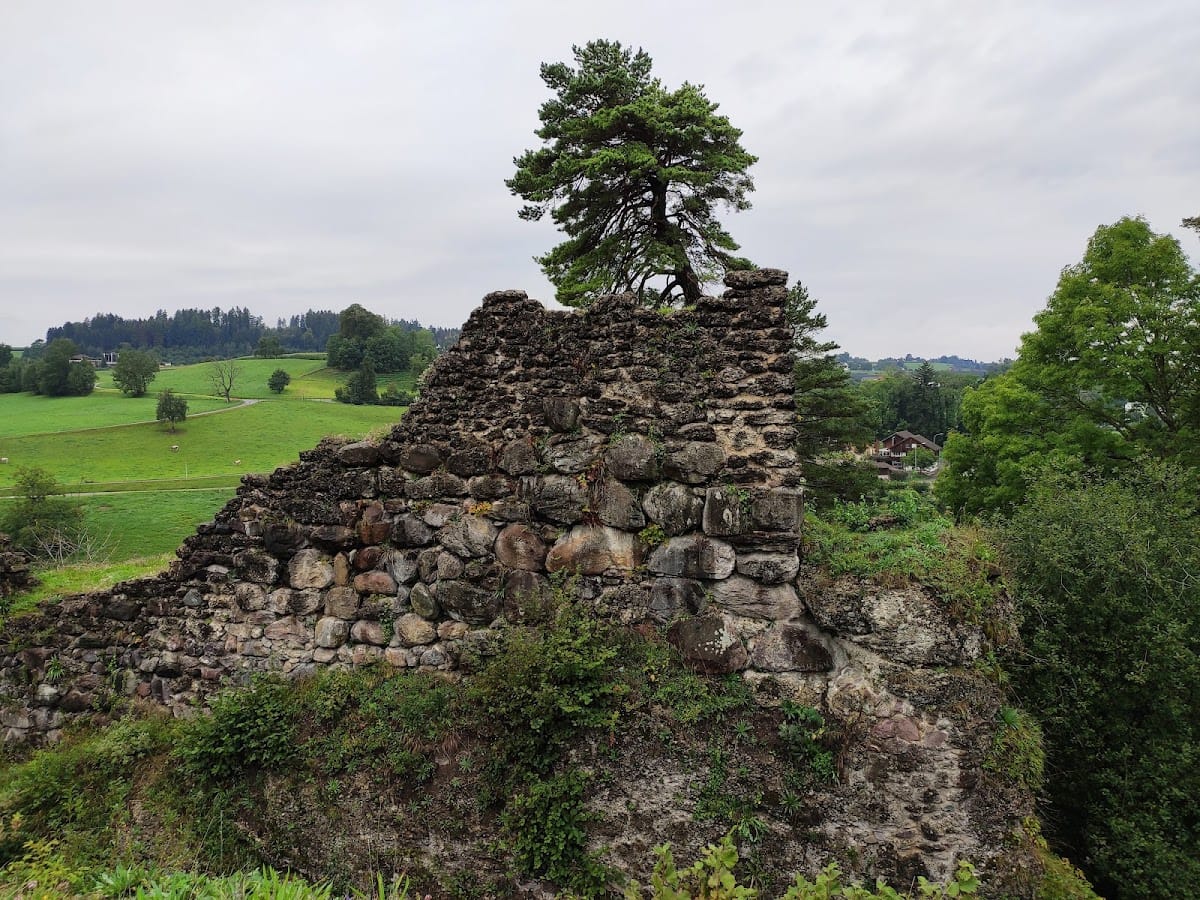
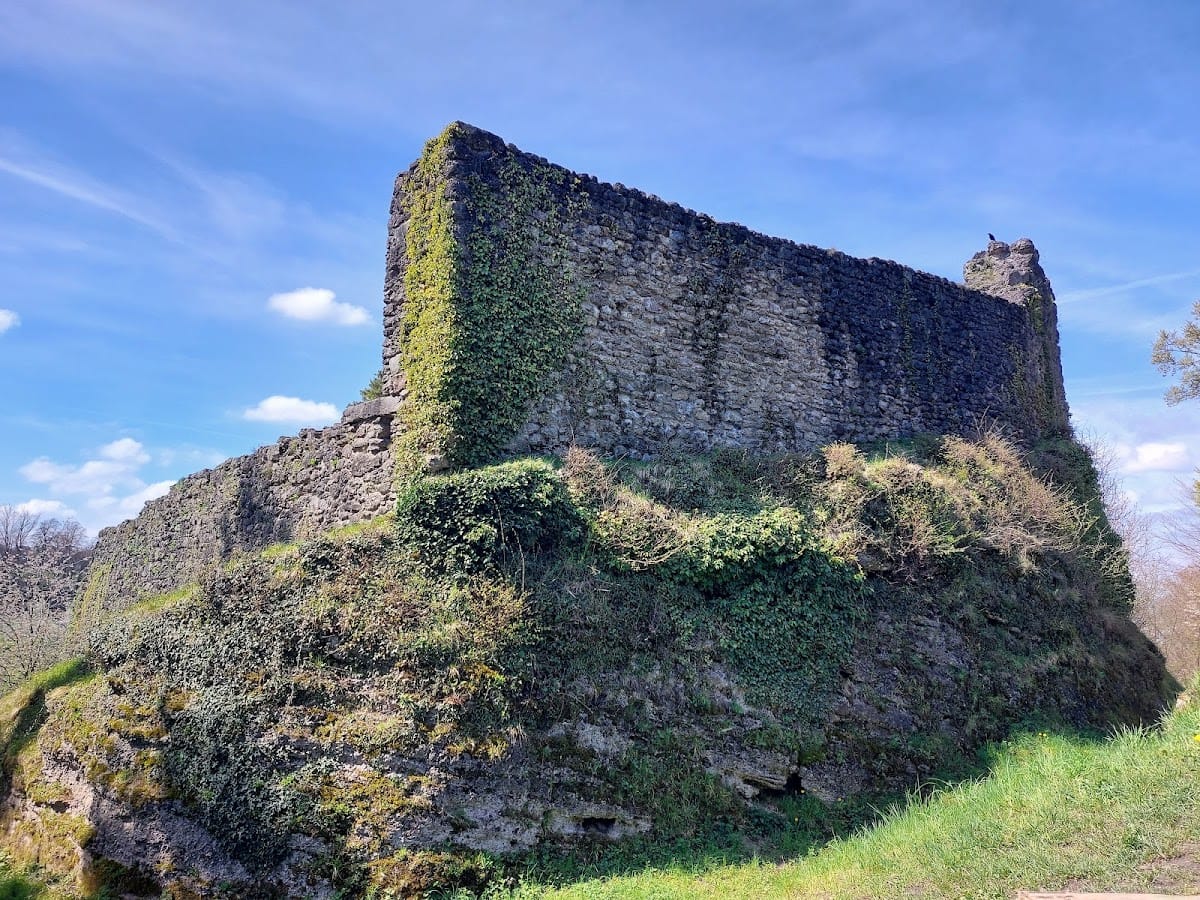
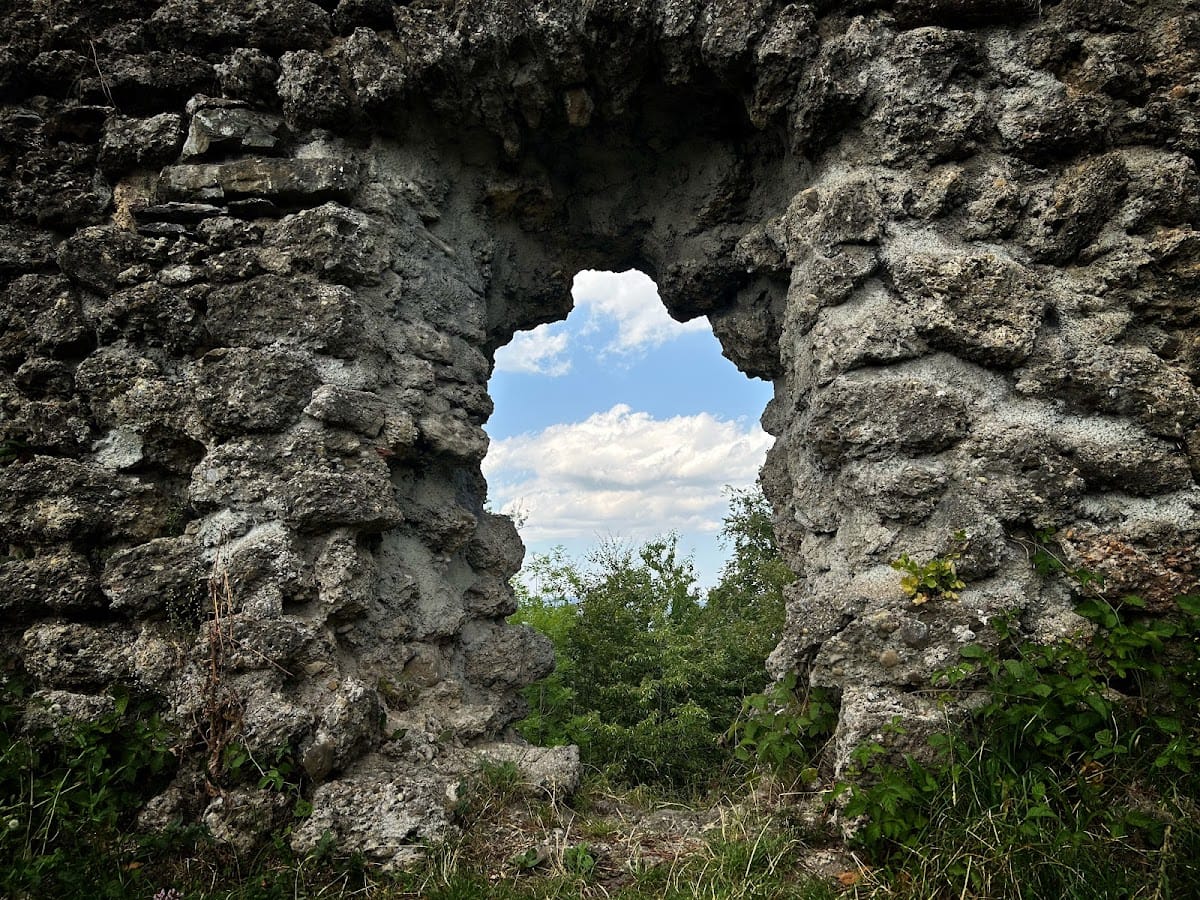
The oldest surviving feature is the baronial tower, constructed before 1200. Its outer masonry shells are made from massive glacial erratics. The tower is associated with a draw well, linking the earliest fortified residence with a provision for its water supply.
Hospitaller complex
The fourteenth-century Hospitaller house formed part of a fortified complex organized around the needs of the commandery. It contained thirteen rooms, including a dormitory, refectory, conventual area, pilgrims’ hostel, and chapel. A new moat belonged to this phase of construction. The rooms survive within the archaeological remains as evidence of the establishment’s administrative, religious, and residential functions.
Outer defenses
A defensive wall built in the fifteenth century surrounded the whole castle grounds. Towers reinforced the wall and extended the site’s defenses beyond the central buildings. The castle now survives in ruin after the partial demolition of 1557, later quarrying, and the blasting of sections in the 1870s. Clearance and excavation exposed and recorded parts of the former complex.