Western Fort in Świnoujście: A Prussian Coastal Fortification in Poland


Site at a Glance
- Rating
- 4.5
- Popularity
- Medium
- Country
- Poland
- Primary era
- Modern
- External website
- Open
- Eras represented
- Modern
- Civilizations
- German, Kingdom of Prussia
- Site type
- Military
- Remains
- Fort
On this page7 sections
History
Western Fort in Świnoujście, Poland, is a Prussian fortification built by the Prussian Army from 1856 to 1861 as part of the Świnoujście Fortress. Originally called Batterie A and later Westbatterie, it defended the port against enemy warships.
Prussian construction and expansion
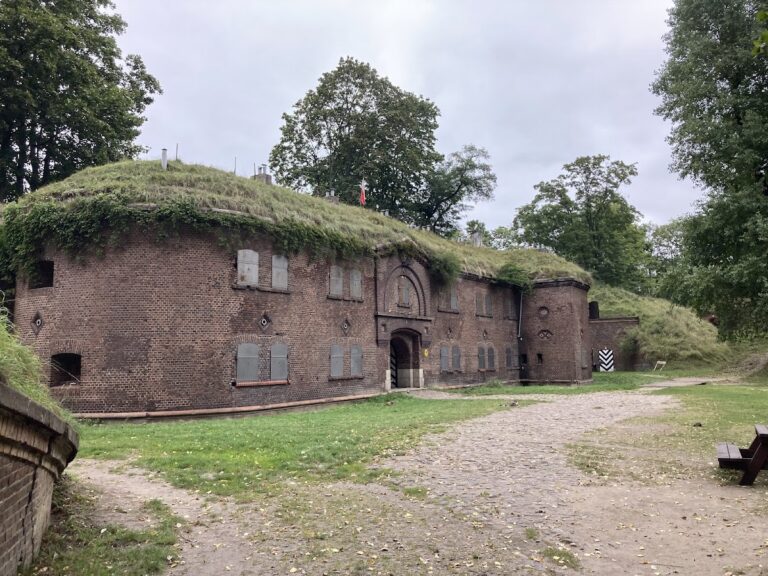
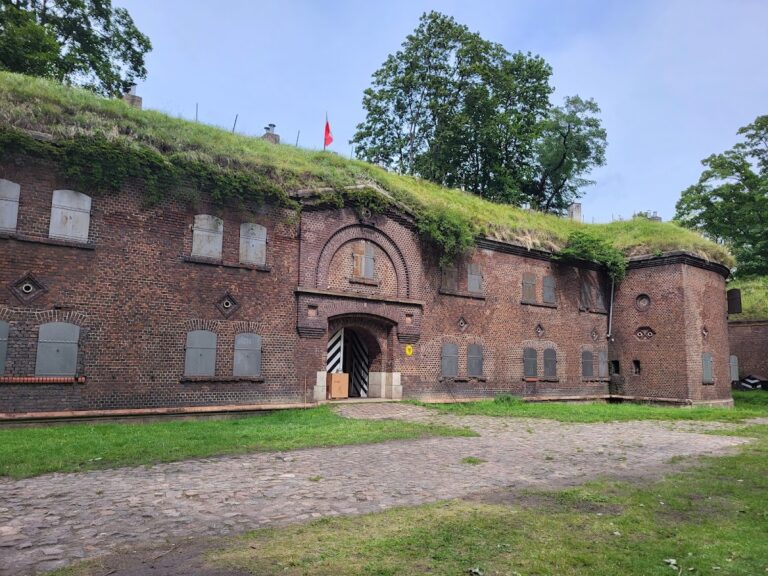
The fort began as a small artillery redoubt, a fortified enclosure designed to operate as an independent defensive position within a larger system. By 1863, its square redoubt had been reinforced with masonry wings, an earth rampart, and a water-filled moat. During the second half of the nineteenth century, it developed into a redoubt fort, while additional gun positions were planned on the raised earth rampart to the north.
After 1878, the fort operated as a fortified coastal battery, a position equipped to engage ships, with an artillery terrace and underground casemates, protected enclosed spaces used for guns, ammunition, storage, or personnel. Infantry and artillery troops, numbering about 300 men, staffed it until the beginning of the twentieth century.
Twentieth-century military phases
Machine guns and light mortars were introduced at the beginning of the twentieth century. The fort was disarmed after the First World War, but a battery of four 150 mm coastal guns was installed again during the interwar period. Their positions were built along the crest of the northern earth rampart.
In 1939, the fort was renamed Fort Henningsen in honor of Oberleutnant Wilhelm Henningsen, who was mortally wounded during the attack on Westerplatte, a fortified peninsula at the entrance to the port of Gdańsk where the opening fighting of the Second World War took place. A commemorative plaque was placed on the fort gate. In 1941, a concrete command bunker was constructed on the western wing.
After the Second World War, Soviet forces built three concrete bunkers for 127 mm coastal guns in the center and at both ends of the fort. A school coastal battery of the 3rd Naval Artillery Detachment was installed there after the war. At the beginning of 1945, the battery took part in shelling land targets; its personnel later destroyed the guns and evacuated westward by ship. The fort was subsequently used by the Soviet Navy, transferred to the city in 1962, and registered as a protected monument under registration number 563 on 2 August 1968.
Remains
Redoubt and defensive works
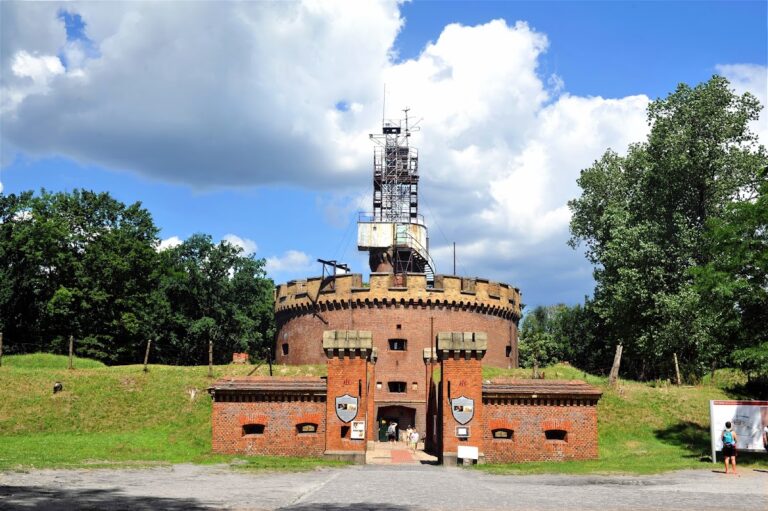
The oldest surviving part is a single-storey redoubt with a square plan. Masonry wings, a raised earth rampart, and a water-filled moat strengthened the enclosure. The defensive gate was formerly reached by a causeway, a raised crossing over the ditch, and its masonry walls contain loopholes for hand-held firearms. The square redoubt now houses a museum devoted to the history of the Świnoujście Fortress.
Underground spaces and nineteenth-century artillery
An underground communication corridor links halls that once served as ammunition chambers and storage rooms. Circular openings for nineteenth-century ammunition lifts remain visible in the corridor ceiling. Beneath the central earth rampart and on the wings of the artillery terrace are artillery sheds dating from the second half of the nineteenth century.
The fort also preserves an artillery gallery, a fortified passage or platform containing gun positions, for heavy nineteenth-century coastal guns. The central emplacement survives in its original condition, while one firing position of the Henningsen Battery stands to its right. Four interwar positions for 150 mm coastal guns were built on the crest of the northern earth rampart.
Twentieth-century bunkers and command shelter
The central area and left wing contain Russian shelters for coastal guns. On the western wing, the concrete command shelter of the Henningsen Battery includes staff rooms and a position for an optical rangefinder, an instrument used to calculate the distance to a target for artillery fire. Three concrete bunkers for 127 mm guns were added after 1945 in the center and at both ends of the fort, preserving the later coastal-defense arrangement alongside the earlier Prussian works.
Nearby sites