Weissenau Abbey: A Premonstratensian Imperial Abbey near Ravensburg
Site at a Glance
- Rating
- 4.6
- Popularity
- Very Low
- Country
- Germany
- Primary era
- Early Modern
- External website
- Open
- Eras represented
- Early Modern
- Civilizations
- Holy Roman Empire
- Site type
- Religious
- Remains
- Monastery
On this page8 sections
History
Weissenau Abbey is a former Roman Catholic Premonstratensian abbey near Ravensburg, Germany, founded in 1145 during the medieval period. The Premonstratensians were a religious order whose members combined communal religious life with pastoral and clerical work. Historically called Minderau and associated with the Latin names Augia Minor and Augia Alba, Weissenau became an Imperial Abbey, a territory governed directly by the emperor rather than by a regional prince, before its secularisation in 1802 and 1803.
Foundation and medieval development
A hermitage occupied the site from about 990. In 1145, Gebizo of Ravensburg, a ministerial of the Welfs, founded Weissenau with the association of his sister Luitgarde. A ministerial belonged to the dependent service nobility of the medieval German lands and commonly served a ruler in administrative or military roles. The first canons and their provost, Hermann I, came from Rot an der Rot Abbey. Weissenau began as a double monastery, with communities of men and women. The women’s community later moved to a nearby settlement known as Maisental or Weissenthal and continued into the later Middle Ages.
The first church and monastery were established during the twelfth century. The church was provisionally consecrated in 1163 and formally dedicated on 12 September 1172 by Otto, Bishop of Constance, whose diocese then included Weissenau. In 1164, Emperor Frederick I Barbarossa placed the monastery under his protection and granted the community the right to elect its provost freely. These privileges provided the foundation for Weissenau’s later imperial immediacy. In 1183, the abbey supplied canons for the foundation of Schussenried Abbey. The provostry became an abbey in 1257, with Henry I as its first abbot, and its position as an Imperial Abbey was established around the same period.
Relic cult and territorial power
King Rudolf of Habsburg gave Weissenau a relic of the Precious Blood in 1283. A relic is a physical object preserved for its association with a saint or sacred event; this relic was venerated as connected with the blood of Christ. It strengthened the abbey’s economic position and made Weissenau an important pilgrimage centre. The relic was mentioned in the medieval epic Lohengrin, and a mounted procession known as the Blutritt continued until 1783. The relic remains associated with the traditional Magdalene festival and is preserved in the former abbey church.
From the end of the thirteenth century, the Habsburg territorial administration of Swabia exercised high jurisdiction over Weissenau. The abbey acquired high jurisdiction over itself and its territory only in 1760. In the early modern period, it belonged to the Swabian Circle, an administrative and defensive division of the Holy Roman Empire, and to the Swabian College of Imperial Prelates, which represented ecclesiastical territories. The abbey’s imperial abbot represented its territory in the Imperial Diet, and Weissenau operated as an elective ecclesiastical principality.
The territory centred on Weissenau and included villages and hamlets such as Oberhofen and Untereschach. The parishes of St Christina and Bodnegg were also subject to the abbey. At secularisation, Weissenau had 27 canons, administered numerous parishes, possessed 198 estates, and exercised jurisdiction over 137 villages. Its territory was recorded as approximately 0.5 square miles in 1803.
War, rebuilding, and secularisation
Weissenau suffered repeated pillaging and serious losses during conflicts in the fourteenth century, including struggles associated with King Louis IV of Bavaria and the Battle of Mühldorf, also called Ampfing, in 1322 to 1324. The abbey was badly affected by the German Peasants’ War in 1525, the Schmalkaldic War in 1546, and the Thirty Years’ War from 1618 to 1648. During the Peasants’ War, the canons were temporarily expelled, and Abbot Jacob Murer, who served from 1523 to 1533, was replaced by the peasant Johann Wetzel.
Despite its economic difficulties, Weissenau rebuilt its church tower, choir, and high altar between 1623 and 1631. The high altar was completed in 1631, and the baroque choir stalls followed in 1635. A complete rebuilding of the monastery and church began in 1708. Imperial Prelate Leopold Mauch commissioned the work, which was designed by the Constance architect Franz Beer von Blaichten. The church was completed in 1724. Mauch’s successor, Michael Helmling, completed the church during his tenure as abbot from 1722 to 1724, while Anton Unold directed the completion of the monastic buildings.
Secularisation transferred Weissenau first to the Counts of Sternberg-Manderscheid. Their heirs sold the lordships of Schussenried and Weissenau to the Württemberg royal house in 1835 for one million florins. The territory had already become part of the Kingdom of Württemberg in 1806 through the Confederation of the Rhine.
Institutional reuse and the present parish church
The former convent buildings became a state psychiatric institution between 1888 and 1892. During the National Socialist period, the institution served as an intermediate facility for patients transferred from Göppingen, Rottenmünster, and Winnental. In 1940, 691 women, men, adolescents, and children were deported from Weissenau to Grafeneck killing centre in the Aktion T4 murders. Aktion T4 was the National Socialist program of systematic murder directed primarily against people with physical, intellectual, or psychiatric disabilities. People admitted for political reasons, including Theodor Roller, were also held at Weissenau.
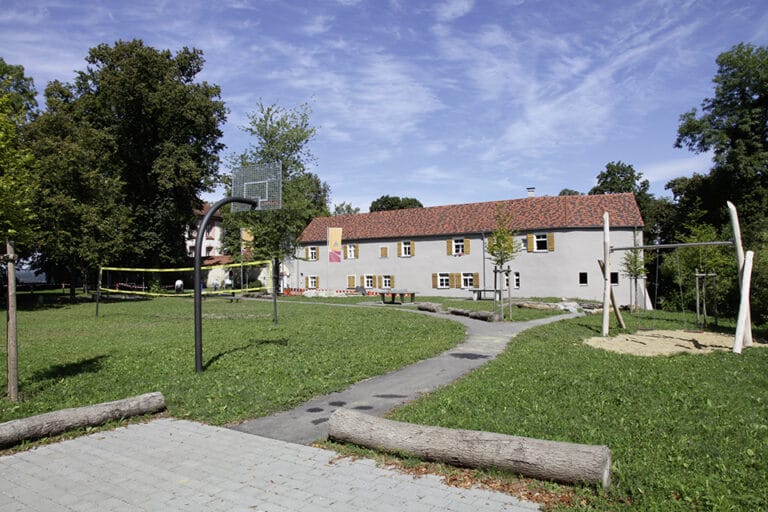
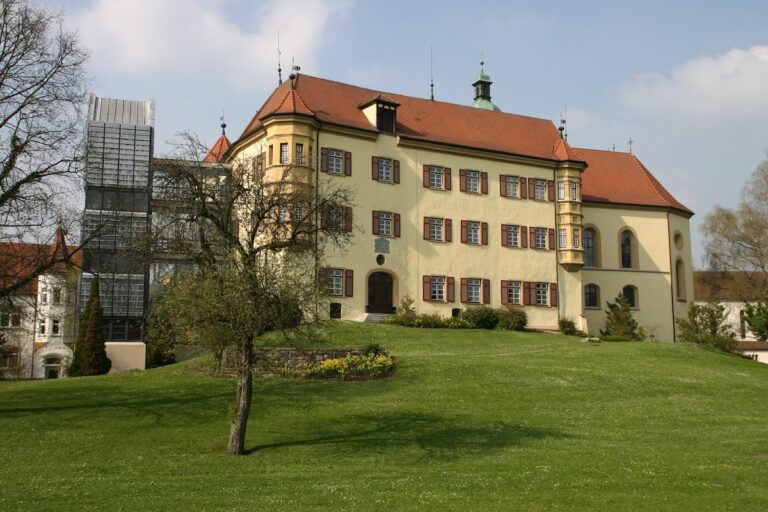
After 1945, Caritas operated a hospital for returning prisoners of war in the former monastery buildings, at least until 1949. Since 1953, the former convent and other former abbey buildings, together with later construction, have housed the psychiatric institution now known as the Centre for Psychiatry Weissenau. The former abbots’ summer residence at Rahlenhof later accommodated a specialist clinic and is now used by the Adolf Aich vocational training centre of the Liebenau Foundation for a residential group. A bleaching and finishing factory established in the nineteenth century operated in buildings near the abbey until production ended in 2006, with part of its administration remaining in Weissenau.
The former abbey church remains a Roman Catholic parish church. On 22 October 2023, Bishop Gebhard Fürst elevated it to the status of a bishop’s minster, approximately 300 years after its construction. The former abbey buildings and church now lie within the Ravensburg locality of Eschach.
Remains
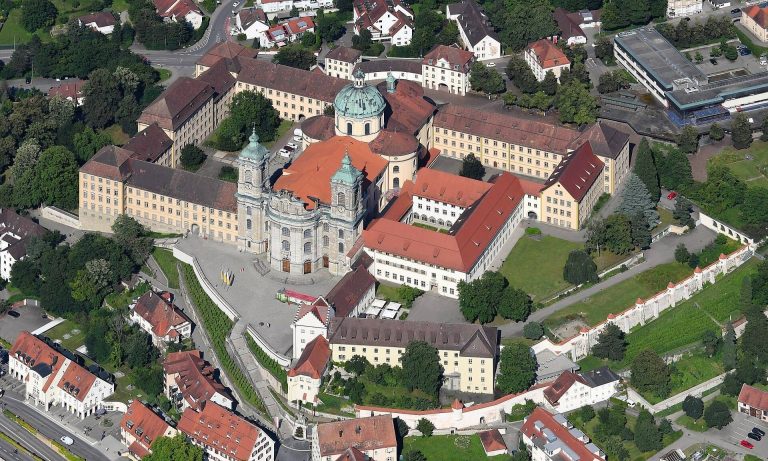
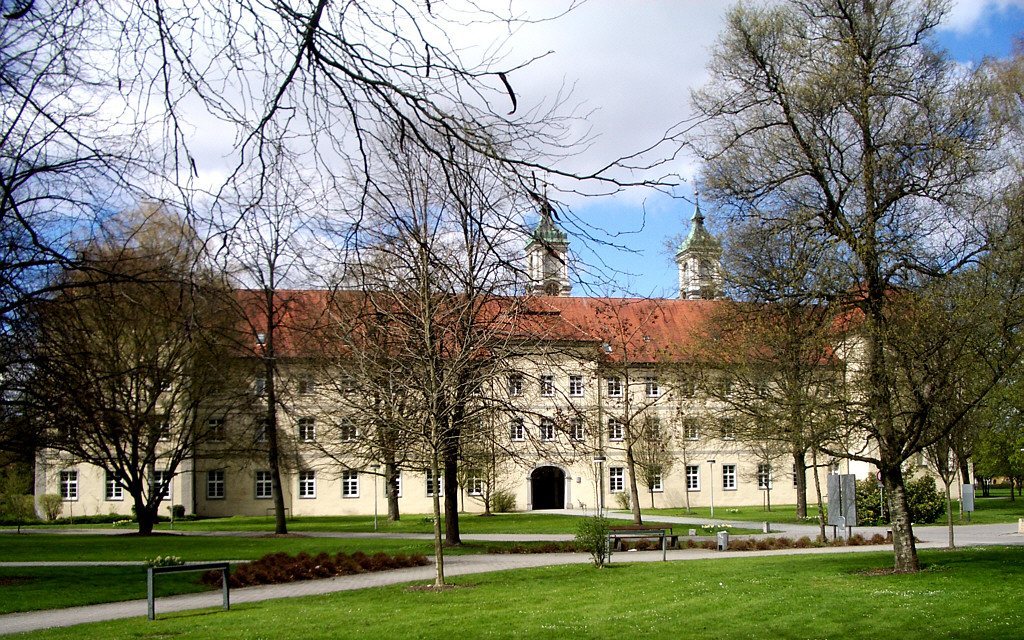
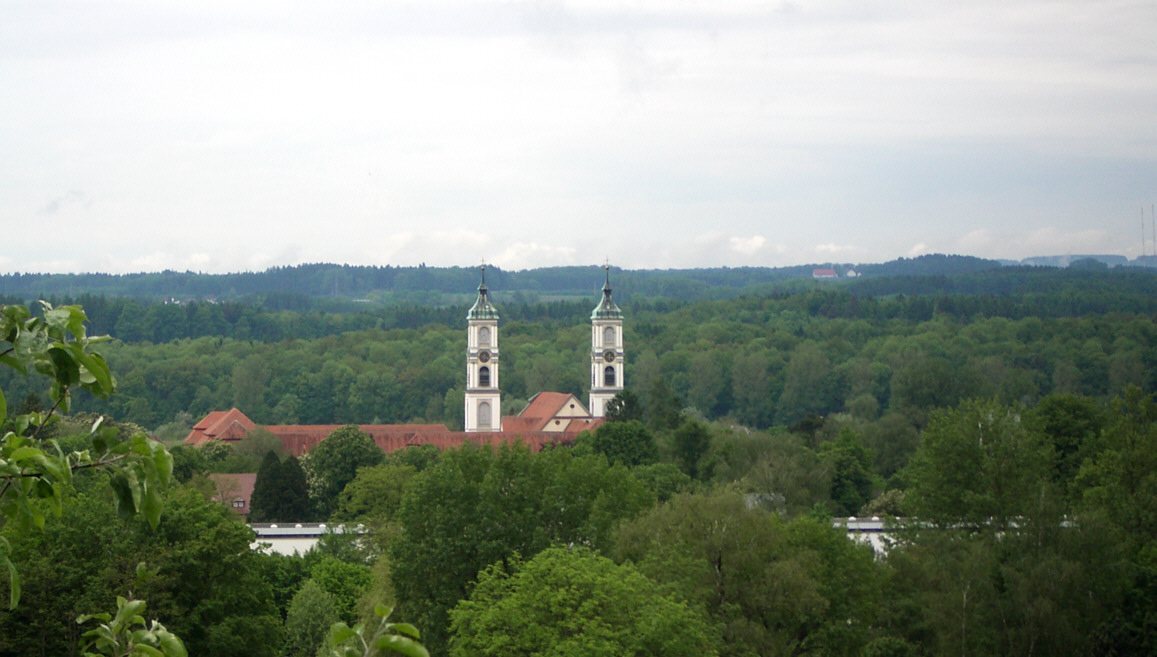
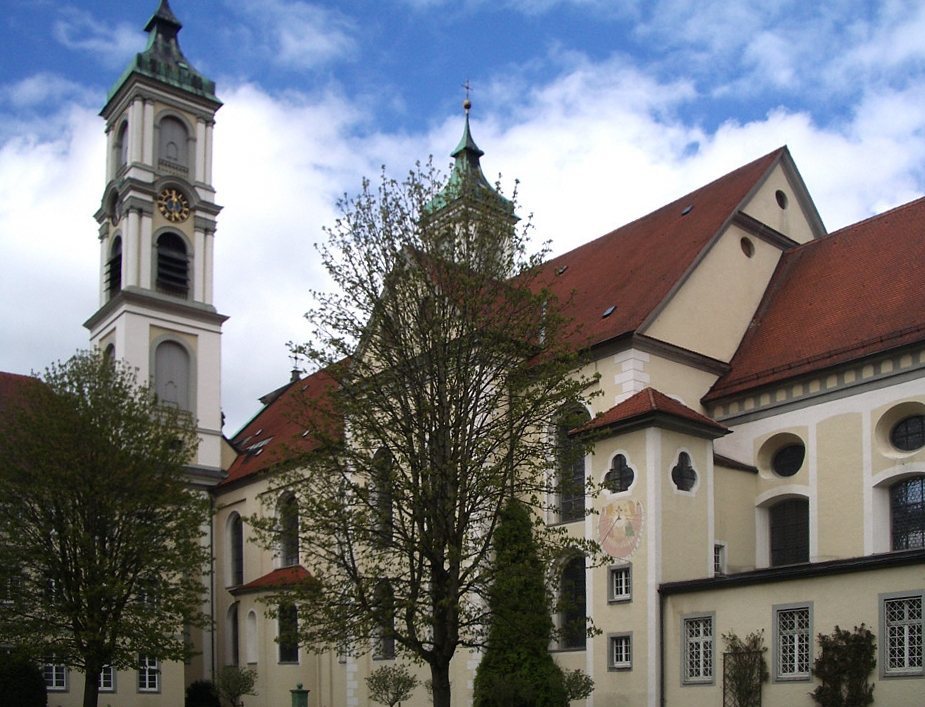
The surviving complex combines the eighteenth-century baroque church with the former convent buildings and associated structures. The church replaced the earlier basilica, while the rebuilding of 1708 to 1724 shaped the principal architectural character of the former abbey. The surrounding former monastic buildings preserve spaces that have been adapted to religious, institutional, cultural, and educational uses.
Church and furnishings
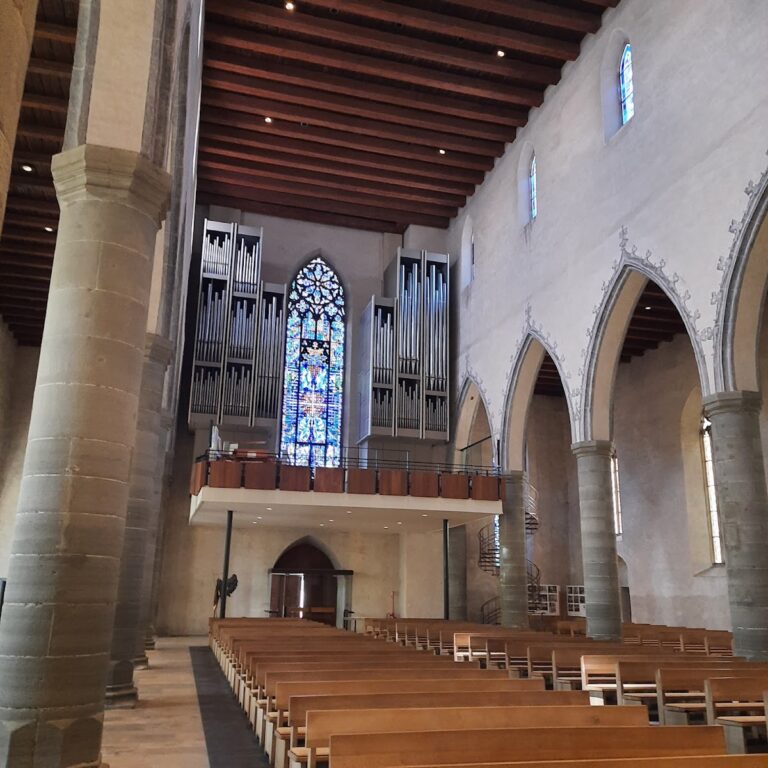
The first church was a high-Romanesque, three-aisled basilica dedicated to Saint Peter. A basilica is a longitudinal church plan with a central nave and side aisles. Its foundation stone was laid in 1152, and the building had a substantial eastern tower and six altars. Between 1459 and 1500, its altar area received Gothic features. The basilica gave way in 1717 to the present baroque church, the Minster Church of St Peter and Paul, completed in 1724. Its interior contains extensive stucco by Franz Schmuzer, made in 1710, and ceiling paintings by Jacob Carl Stauder and Josef Anton Hafner. The 1631 high altar and baroque choir stalls from 1635 remain part of the interior.
The former abbey church preserves the Holy Blood relic received in 1283. It also contains relics of Saturninus of Toulouse, transferred there in 1665 and placed in a side altar. Saturninus subsequently became Weissenau’s patron. A thirteenth-century Sicilian ivory casket associated with Weissenau may have served for storing relics. The late-baroque organ was built in 1787 by Johann Nepomuk Holzhey. It has 41 registers, three manuals, and a pedal, and was extensively restored in 1989 by the Sandtner organ-building company.
The church’s two towers contain twelve bells from four centuries, with the three largest in the north tower and the others in the south tower. By 2025, the bell set had been reduced to eight, while three small bells were newly cast and a large bell made in 1978 was acquired from the demolished Church of the Eight Beatitudes in Füssen. The four additions were installed in 2025.
Convent buildings and associated structures
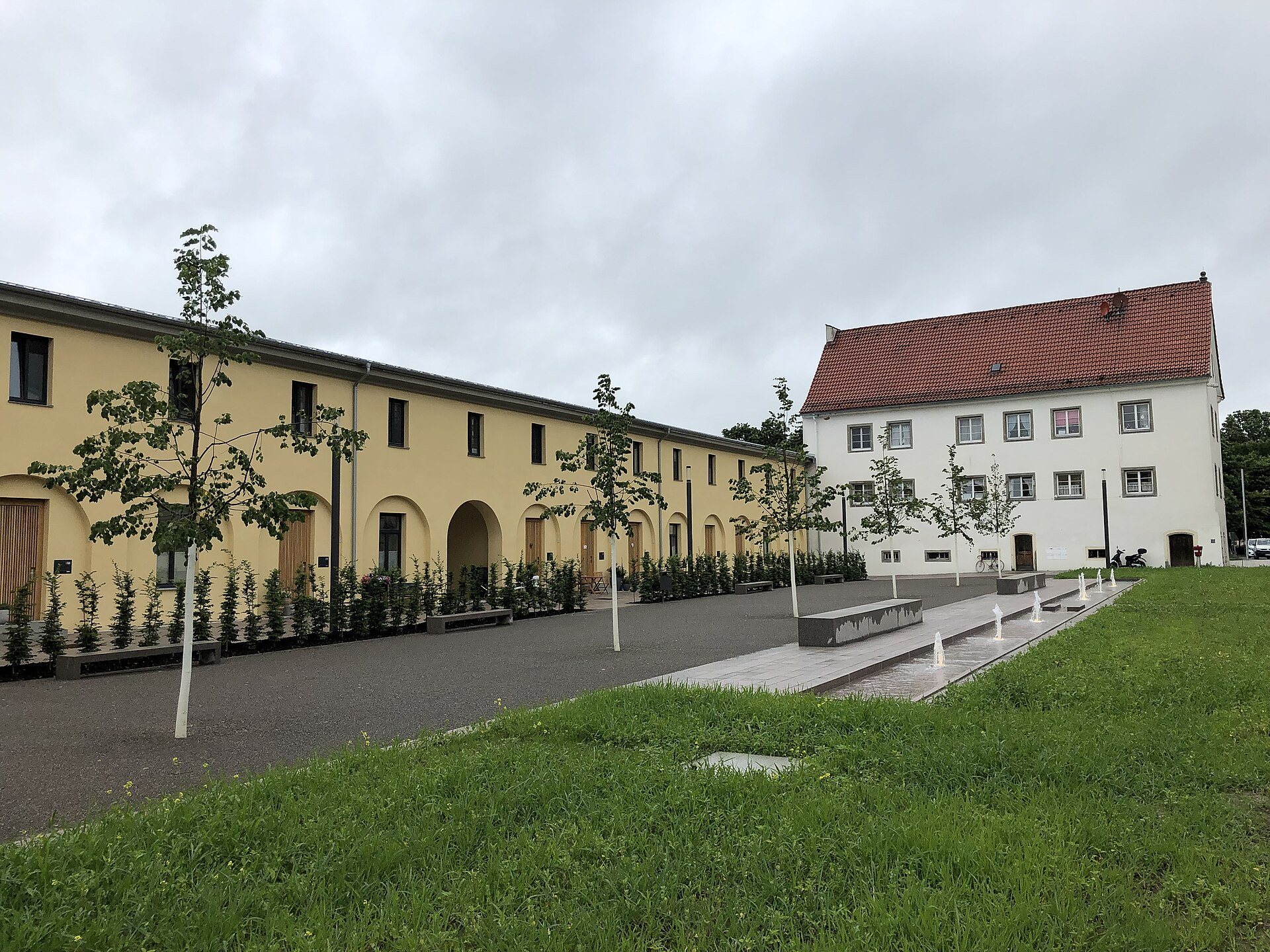
The former convent complex includes a richly stuccoed festival hall that survives as a concert hall with approximately 300 seats. The abbots’ former summer residence at Rahlenhof is a separate associated building. The former abbey’s territorial and manorial jurisdiction extended over Oberhofen and Untereschach and included associated parish properties at St Christina and Bodnegg, linking the surviving architectural complex to the wider territory once administered by Weissenau.