Watermill in Slup: A Renaissance Milling and Water-Power Complex in Czechia


Site at a Glance
- Rating
- 4.7
- Popularity
- Medium
- Country
- Czechia
- Primary era
- Early Modern
- External website
- Open
- Eras represented
- Early Modern, Modern
- Civilizations
- Habsburg, Holy Roman Empire
- Site type
- Economic
- Remains
- Watermill
On this page15 sections
History
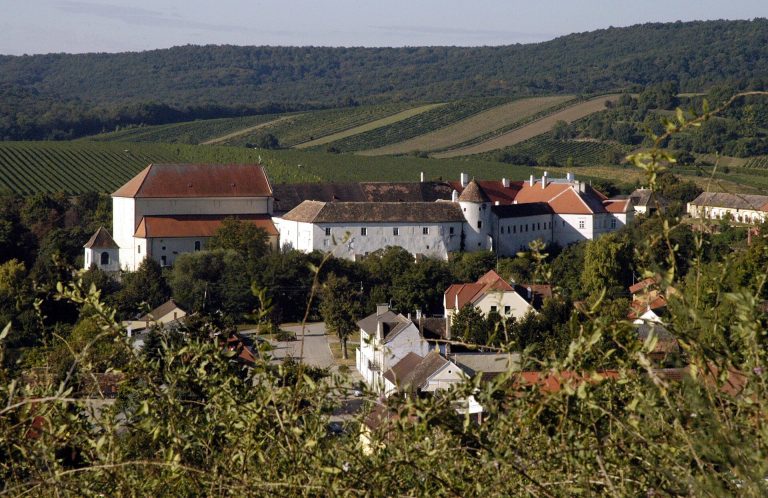
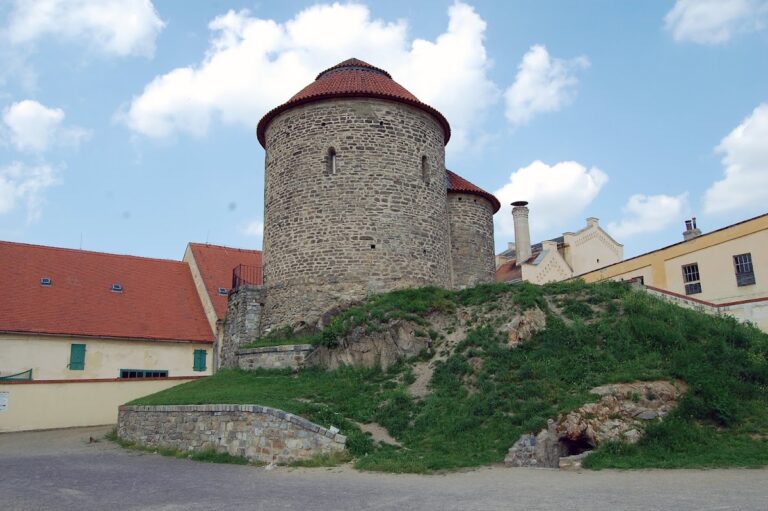
Watermill in Slup is a Renaissance and late-Renaissance technical building in Czechia, built and owned by the Cistercian nunnery at Oslavany and given its present form in the late sixteenth or early seventeenth century. It stands on the Krhovice–Jaroslavice millrace, a historic artificial waterway that supplied the mill with power and connected it to a wider system of mills, ponds, and small power stations.
Medieval origins and ecclesiastical ownership
The millrace existed before 1302, when a watermill in the surrounding area was mentioned in a document. The reference does not establish that the mill occupied the present site, but it places milling within Slup’s early water-management landscape. The Cistercian nunnery at Oslavany acquired the village in 1228 and became the builder and owner of the mill.
The first certain evidence for a mill at Slup is a document from 1512 belonging to the local millers’ brotherhood. This confirms the mill’s place within an established milling community by the early sixteenth century.
Estate ownership and Renaissance rebuilding
After the dissolution of the Oslavany nunnery during the first third of the sixteenth century, Slup and its mill became part of the Jaroslavice estate. Between 1541 and 1810, the estate passed through the hands of the lords of Kunštát, the Krajíř family, the lords of Hardegg, the Collalto family, and the counts of Berka of Dubá. The counts of Althan held it for the longest period, from 1609 to 1790.
The large building probably acquired its present late-Renaissance form during the last quarter of the sixteenth century or at the beginning of the seventeenth century. Its architecture therefore reflects the period when the mill was being integrated into the Jaroslavice estate and developed as a substantial technical structure.
Family ownership and industrial modernization
In 1810, indebted Althan owners transferred the mill to free miller families. The Hollí, Steimetz, and Mach families held it successively and carried out extensive changes to the building and its surroundings between 1810 and 1938.
The milling technology also changed during the nineteenth century. After the middle of the century, the traditional Czech arrangement was replaced by the more productive American, or art, arrangement. In the 1880s, the mill was converted to roller-mill technology, which used rotating cylinders to crush grain rather than millstones. During the interwar period, a water turbine replaced the earlier water wheels.
The millrace underwent repeated extensions, reconstructions, and reroutings as millers sought to improve the use of water power. Extensive works in the 1830s produced its last major modifications. At that time, an association of Czech and Austrian millers also established rules for sharing the available water supply. The waterway remains regarded as an important technical monument.
Confiscation, decline, and museum preservation
Before the Second World War, the mill passed into German ownership. It was confiscated in 1945 and placed under a Czechoslovak state administrator. An agricultural cooperative continued milling there until 1951 and used the building for grain crushing until 1957. Inadequate maintenance led to deterioration, while the machinery was dismantled.
The Czechoslovak state acquired the mill in 1970. The Technical Museum in Brno, a Czech institution devoted to industrial, scientific, and technical heritage, took it into its administration in 1976. With assistance from other institutions and individuals, the museum created an exhibition of milling technology that opened in 1983.
Between 1978 and 1983, milling equipment from several other locations was reassembled and renovated at Slup. The resulting installation is an interpretive reconstruction based on fragmentary archival information and surviving components, rather than an exact reconstruction of the mill’s original technology. Watermill in Slup became a national cultural monument in 1995, a Czech heritage designation for sites considered to have exceptional cultural or historical importance, and remains under the administration of the Technical Museum in Brno.
Remains
Watermill in Slup is a large Renaissance mill on the Krhovice–Jaroslavice millrace, also called the Dyje millrace or Mill Ditch. Its water-power system contains four functional undershot wheels, meaning wheels driven by water striking their lower sections. Each wheel operates one milling arrangement. The millrace is an artificial channel about 31.6 kilometres long. It branches from the Dyje River at Krhovice, passes through or near Strachotice, Micmanice, Slup, Oleksovičky, and Jaroslavice, continues toward Laa an der Thaya in Austria, and returns to the Dyje near Hevlín.
Milling arrangements and water-power machinery
Czech milling arrangement
One of the four installations is a Czech, or ordinary, milling arrangement transferred from Zábrdí near Prachatice. Its components date from 1874 to 1877. The arrangement is powered by its own undershot wheel, with power transmitted from the wheel shaft through wooden gearing that includes cog and lantern wheels.
American and jahelka arrangements
Two American, or art, milling arrangements were assembled from components salvaged from mills in the area flooded by the Dalešice Reservoir. They date from the early twentieth century and represent the more productive arrangement that replaced the traditional Czech system at Slup after the middle of the nineteenth century.
The fourth installation is a kašové, or jahelka, milling arrangement brought from Drozdovice near Prostějov. It dates from around 1940. Its separate undershot wheel forms part of the four-wheel water-power system.
Processing and transmission equipment
The reconstructed equipment includes bucket elevators, vertical conveyors that lift grain or milled material between processing stages, together with delivery pipes and prismatic sifters. A prismatic sifter is a screening machine that separates flour and other milled products by particle size. Wooden cog and lantern wheels transmit power through the machinery.
Roller-mill equipment
Front roller mill
A roller mill occupies the front of the building. It uses grinding rollers instead of millstones and includes three roller stands, preliminary grain-cleaning machinery, a grain husker, flour sifters, and bucket elevators. The equipment demonstrates the later industrial method introduced at the mill during the nineteenth-century modernization.
Blansko roller stands
Two roller stands used for rye milling and grain crushing were patented products of the Blansko ironworks from 1907 to 1910. Breitfeld–Daněk manufactured them according to the Steckl system, a roller-mill design associated with these machines. They were transferred from a mill at Holštejn in the Moravian Karst.
Wegmann porcelain roller stand
The third roller stand was intended to produce especially fine and pale wheat flour. It uses porcelain rollers, a system developed by the Swiss milling engineer Friedrich Wegmann of Zurich. The stand came to Slup from a mill at Strenice near Mladá Boleslav.
The roller-mill equipment also contains a younger grain-husking machine made by the Moravec factory in Úpice and a machine with a vibrating grate. Together with the four milling arrangements, these machines form a functional demonstration installation. They can be operated for demonstration, including dry running without grain.
Millrace and water-management system
The Krhovice–Jaroslavice millrace continues to function as an artificial channel for water management and milling. Along its course it supplies the Horní and Dolní Jaroslavice ponds and powers several mills and small power stations. Its long history of alteration reflects the practical demands of distributing water among mills and maintaining the power needed for processing grain.