Church of the Assumption of the Virgin Mary and Saint Wenceslaus: A Baroque Church in Znojmo
Site at a Glance
- Rating
- 4.6
- Popularity
- Very Low
- Country
- Czechia
- Primary era
- Early Modern
- External website
- Open
- Eras represented
- Medieval, Early Modern
- Civilizations
- Holy Roman Empire, Kingdom of Bohemia
- Site type
- Religious
- Remains
- Church
On this page7 sections
History
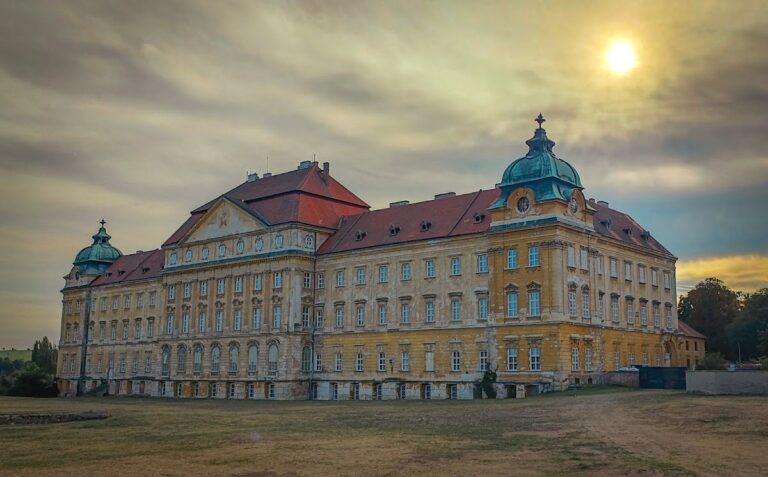
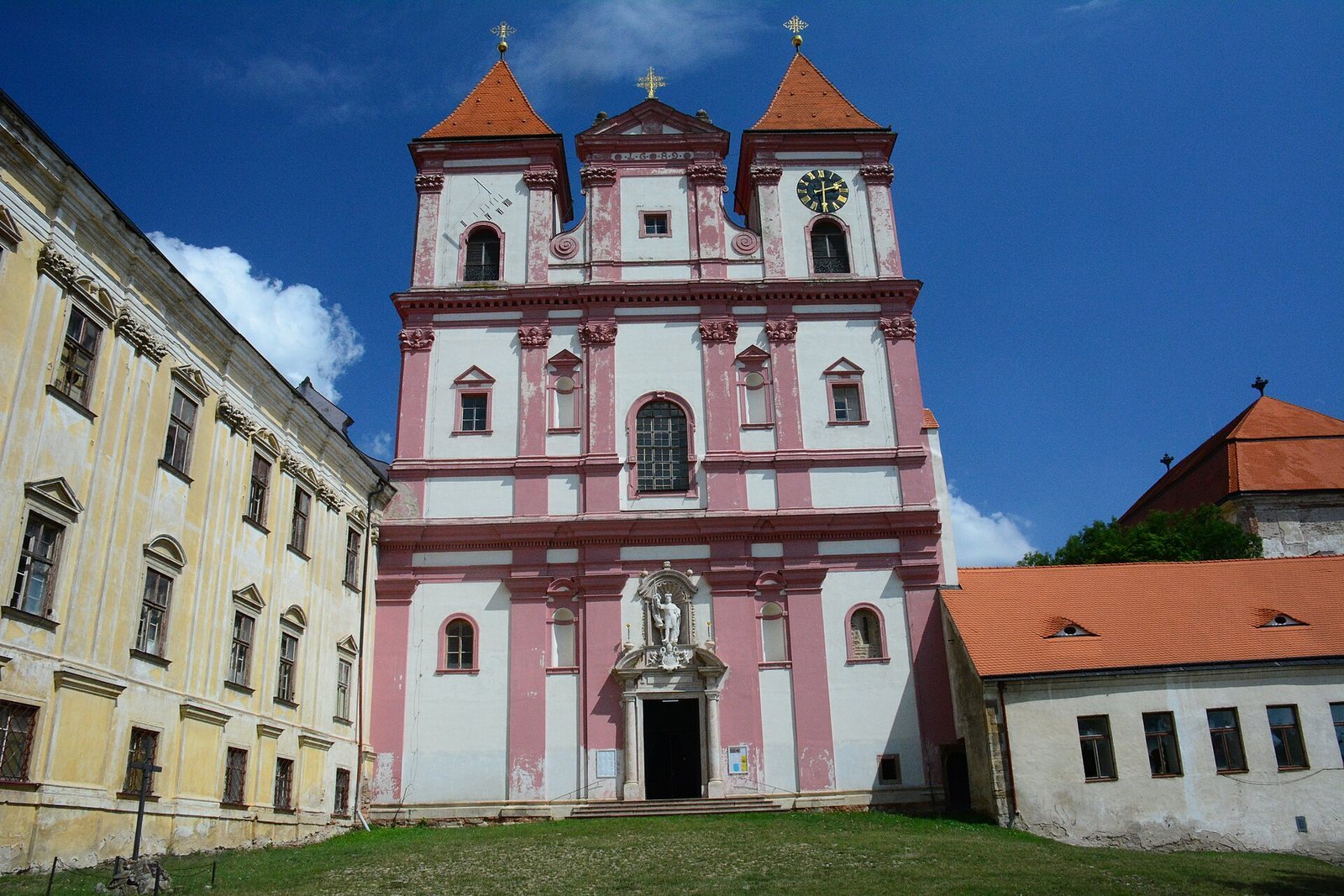
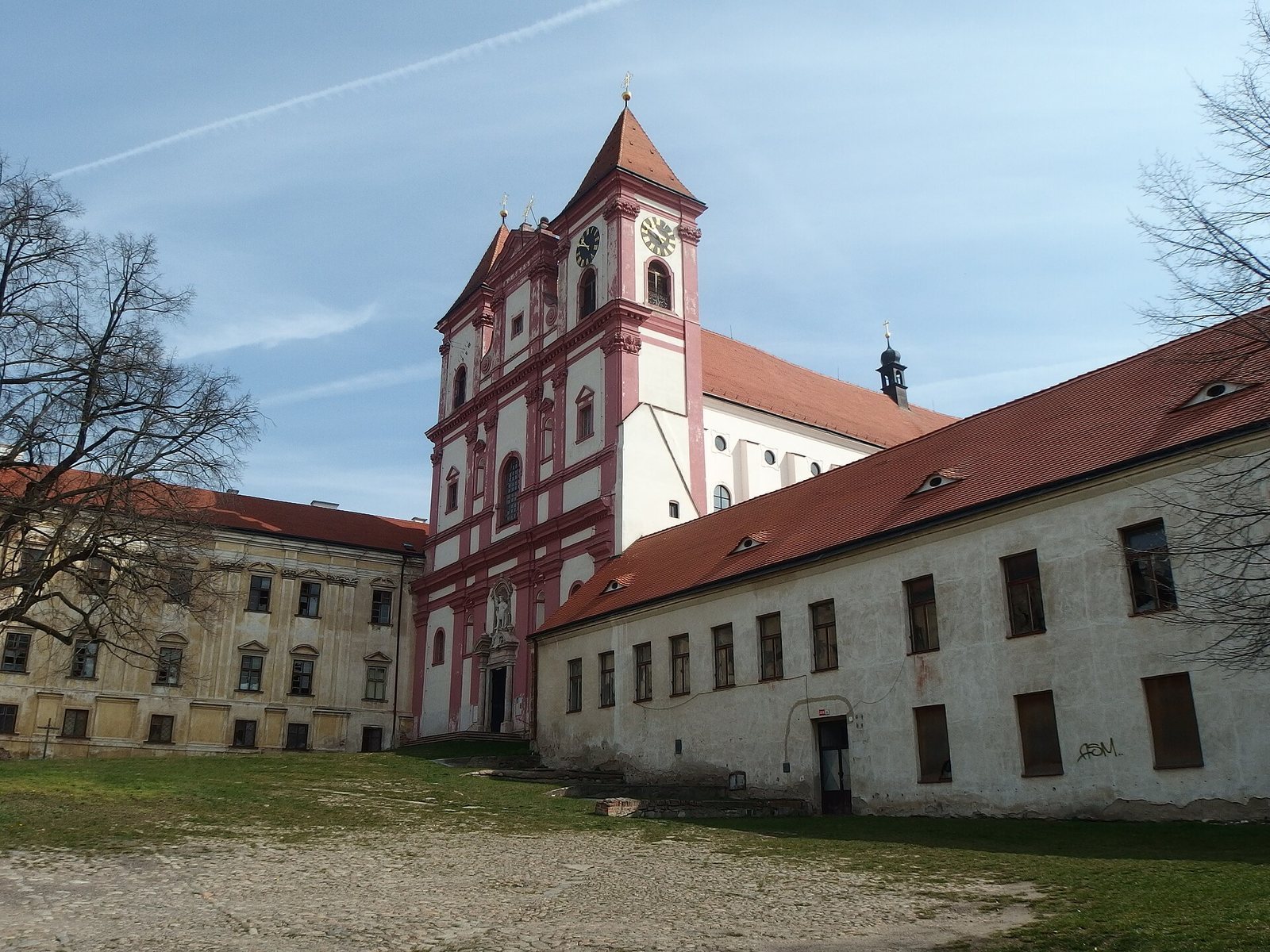
The Church of the Assumption of the Virgin Mary and Saint Wenceslaus is a Roman Catholic church in Znojmo, Czechia, whose origins lie in the thirteenth century and whose present architectural character is chiefly Baroque. Associated with Louka Monastery, it is linked to the Moravian Province, the Diocese of Brno, the Znojmo Deanery, and the Znojmo-Louka parish. The church was formerly a basilica, a church granted a special ecclesiastical status, and remains associated with the Premonstratensians, a Roman Catholic order of canons founded in the twelfth century.
Medieval origins and rebuilding
The church suffered major damage in 1425 during the Hussite Wars, a fifteenth-century religious and political conflict centered in Bohemia and Moravia. It was repaired and remodeled during the fifteenth century. The chancel, the part of the church containing the main sanctuary, was raised, and towers were added to the facade.
Further rebuilding took place in the seventeenth century, giving the church its recorded Baroque phase. The facade was altered again, while the side aisles were rebuilt. These changes transformed the appearance of the medieval building while preserving its connection with the monastery at Louka.
Music at Louka
The church’s musical tradition reaches back to the late fifteenth century. Around 1489 to 1490, the organ builder Gregorius, a member of the Minorite convent in Brno, worked at the church. His activity indicates that an organ probably already stood near the sanctuary at that time.
Music received particular attention at the Premonstratensian monastery during the long tenure of Abbot Sebastian Freytag of Čepirohy, who held office from 1533 to 1585. A music seminary was established with the participation of Filip de Monte, a Renaissance composer associated with the development of late Renaissance polyphony. In the eighteenth century, the Louka ensemble was led by P. Blasius Graf. In 1723, his orchestra of thirty-six musicians performed for Charles VI, the Habsburg emperor of the Holy Roman Empire.
The seventeenth-century organ and later repairs
The present organ began with a contract for a new instrument in 1675. During the following two years, Nikolaus Christeindl and Bernhard Wollers of České Budějovice built it for 500 gulden, together with food and substantial quantities of supplies. The monastery supplied the wood, parchment, and decorative work required for the instrument.
Around the middle of the eighteenth century, the Znojmo organ builder Ignác Florián Casparides probably enlarged the organ. The work added a positive, a smaller organ division, in the gallery railing and replaced the detached console, which had previously been set into the front of the case. Several stops, each a set of pipes with a particular tone color, were replaced, and a 16-foot Violonbaß was added to the pedal division.
Later repairs were undertaken by Znojmo organ builders Josef Silberbauer in 1775, Ignatz Reinold in 1811, Benedikt Batzl in 1860, Franz Kurka in 1908, and Karel Zadák the Younger in 1986. Despite these interventions, the instrument retains much of its original character.
Remains
The church building
The church is a masonry-built structure whose fabric combines a thirteenth-century foundation with the fifteenth- and seventeenth-century rebuilding phases. The raised chancel and the towers on the main facade belong to the medieval remodeling after the Hussite damage. The later Baroque work reshaped the facade and rebuilt the side aisles, creating the principal form of the building that survives today.
The surviving organ
The organ preserves an unusually large amount of its historical substance and remains almost in its original condition. Its case carries ear-shaped acanthus ornament, regarded as especially pure at Louka. The upper and lower lips of the prospect pipes in both the main division and the positive were probably gilded during the eighteenth-century enlargement or later. The visible Principal 8-foot stop has a classical cylindrical form, which was not then usual outside larger churches. The original instrument had one manual, or keyboard-operated division, with twelve stops and two pedal stops. In its surviving form, it has two manuals and a foot-operated pedal division, with twenty-one stops: twelve in the main division, six in the positive, and three in the pedal.
The organ also retains a manual coupler, which connects the keyboards, and a short octave in both the manuals and the pedal. The manuals contain forty-five tones and the pedal twenty-one. Among its early stops are the rare Salicional 4-foot and, especially, the Quintadena 8-foot, regarded as the oldest surviving example in Moravia. The instrument was originally tuned a semitone higher in the historical practice known as higher cornet pitch, in which an organ was tuned above modern standard pitch.
Behind the organ, three metres above the gallery floor, three bellows survive from the period of its enlargement. They stand with a bench and three treadles used by the bellows operators. Together with the case, pipes, keyboards, and pedal division, these elements preserve the working arrangement and Baroque character of the organ associated with Louka Monastery.