Wartenstein Castle: A Medieval Stronghold above Lauperswil
Site at a Glance
- Popularity
- Low
- Country
- Switzerland
- Primary era
- Medieval
- Eras represented
- Medieval
- Civilizations
- Holy Roman Empire
- Site type
- Military
- Remains
- Castle
On this page9 sections
History
Origins and the Wartenstein family
Wartenstein Castle is a medieval stronghold on a narrow ridge above Lauperswil, Switzerland. It replaced an earlier castle in the thirteenth century, although its construction date is uncertain. Knight Swaro von Wartenstein was living there by 1228. The surrounding area had originally belonged to the lordship of Signau, then came under the control of the lords of Ruoderswilare by the twelfth century. The Wartenstein family may have descended from, or succeeded, that earlier ruling family.
In 1284, Heinrich Swaro, the last member of the Wartenstein family, sold the castle and lordship to Trub Abbey, a Benedictine monastery in the Emmental. He continued to hold the lordship as a fief, meaning land or rights held under obligations to a superior. After Heinrich died in 1288, Werner von Schweinsberg acquired the castle, which remained with his family.
War, inheritance, and changing rule
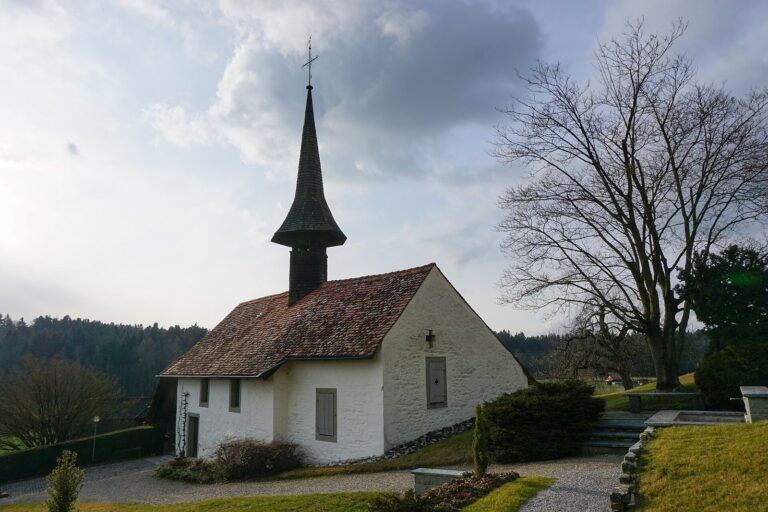
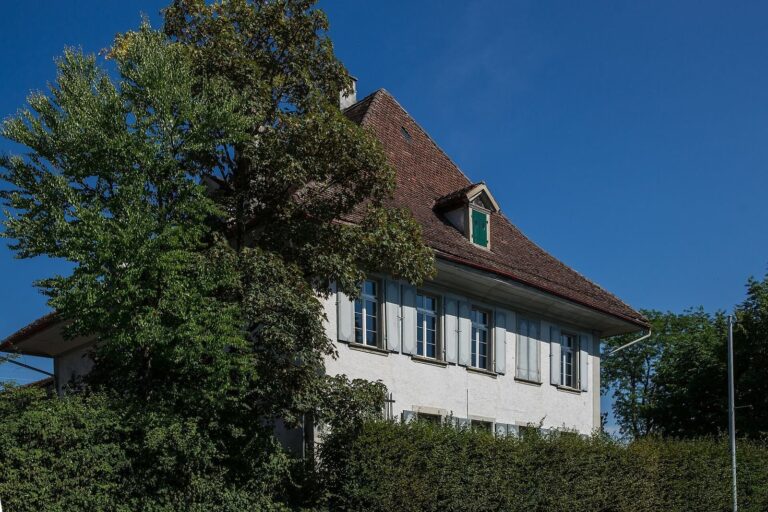
Bernese troops captured and burned Wartenstein in 1383 during the Burgdorf War, a late-medieval struggle over regional power between Bern and the counts of Neu-Kyburg. The property passed to Ulrich von Balmoos after the last male Schweinsberg heir, Thüring, died in 1415. In 1493, the lordship was inherited by Wilhelm Hug von Sulz, a nobleman from Basel; three years later, he built a manor house in the valley.
After further changes of ownership, the Güder family of Bern bought Wartenstein in 1603. The lordship was dissolved in 1690, and Lauperswil became part of the bailiwick of Trachselwald, an administrative district governed on behalf of a higher authority. It remained within that district until the French invasion of 1798.
Local legend links the castle’s fall to a tale of hidden treasure. During the Bernese siege, it says, the last lord cast his family’s treasure into the castle well and tried to flee with his daughter and warhorse. All three fell from the cliff. In another part of the story, a large dog guards the treasure, waiting beside the well at midnight. It leaves when the Lauperswil church bell strikes one, drinks from the village church fountain, and then disappears in the cemetery.
Conservation and ownership
A proposal to destroy the remains with explosives arose in the early twentieth century. In 1965, conservation work included excavation and repairs to the inner castle walls, but it also disrupted many relationships between archaeological layers that could have helped establish their sequence. The site is now owned by the Zollbrück local association.
Remains
Terraced castle remains
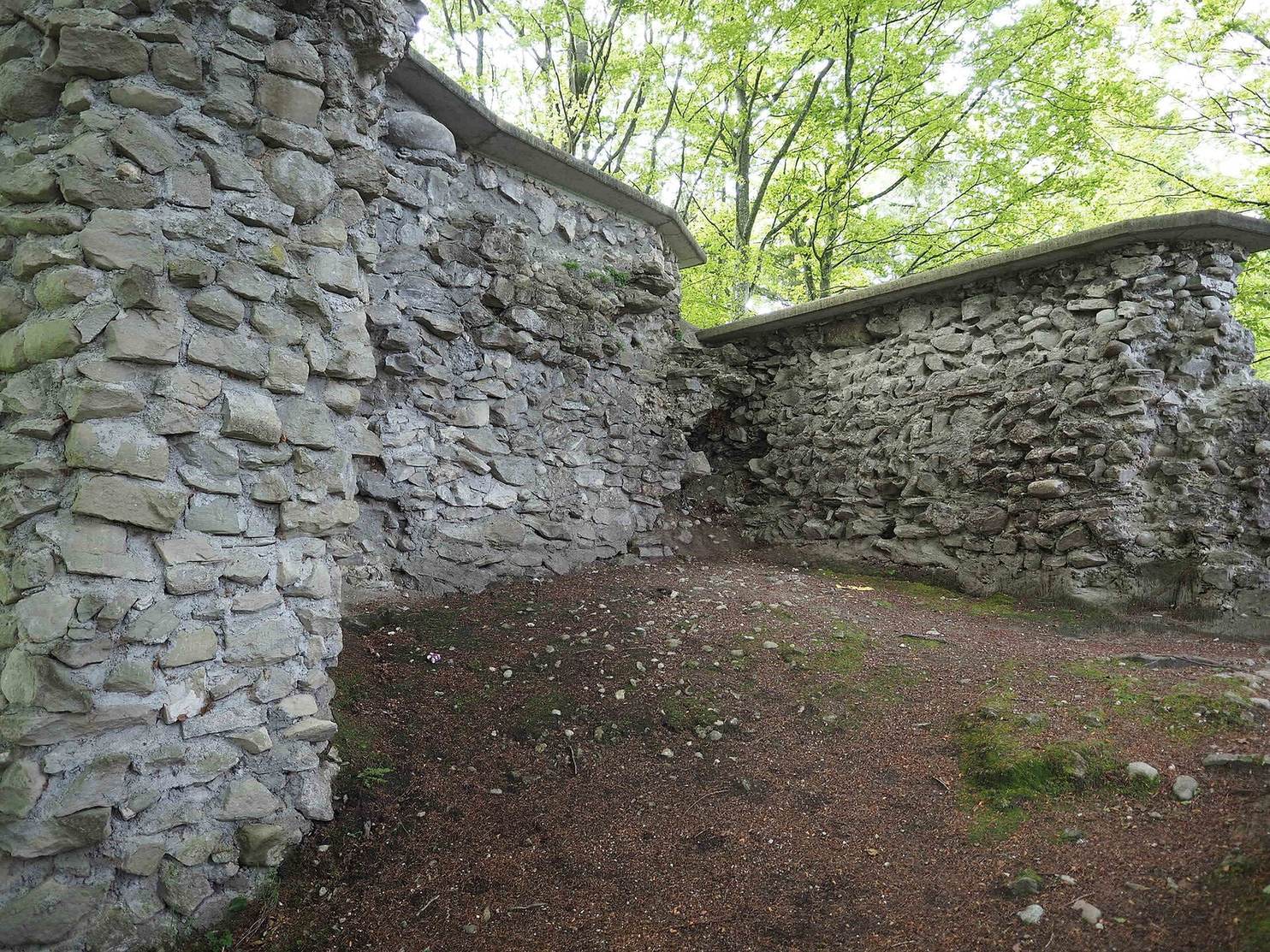
The wooded ruins extend along the narrow Hundschüpfen ridge above Lauperswil. Ditches cut across three sides of the ridge, and the castle was arranged on three terraces carved by hand. The remains are heavily weathered.
Terraces and main castle
The northern terrace may have held an enclosed outer courtyard, though this interpretation is uncertain. The southern terrace formed the main castle, with a tower, courtyard, and great hall. Together, the terraces preserve the broad arrangement of the castle across the ridge.
Eastern defenses and well
An outer defensive enclosure and a well occupied the eastern side of the castle. Traces of a separate building also survive on the eastern slope near the main complex.
Tower and walls
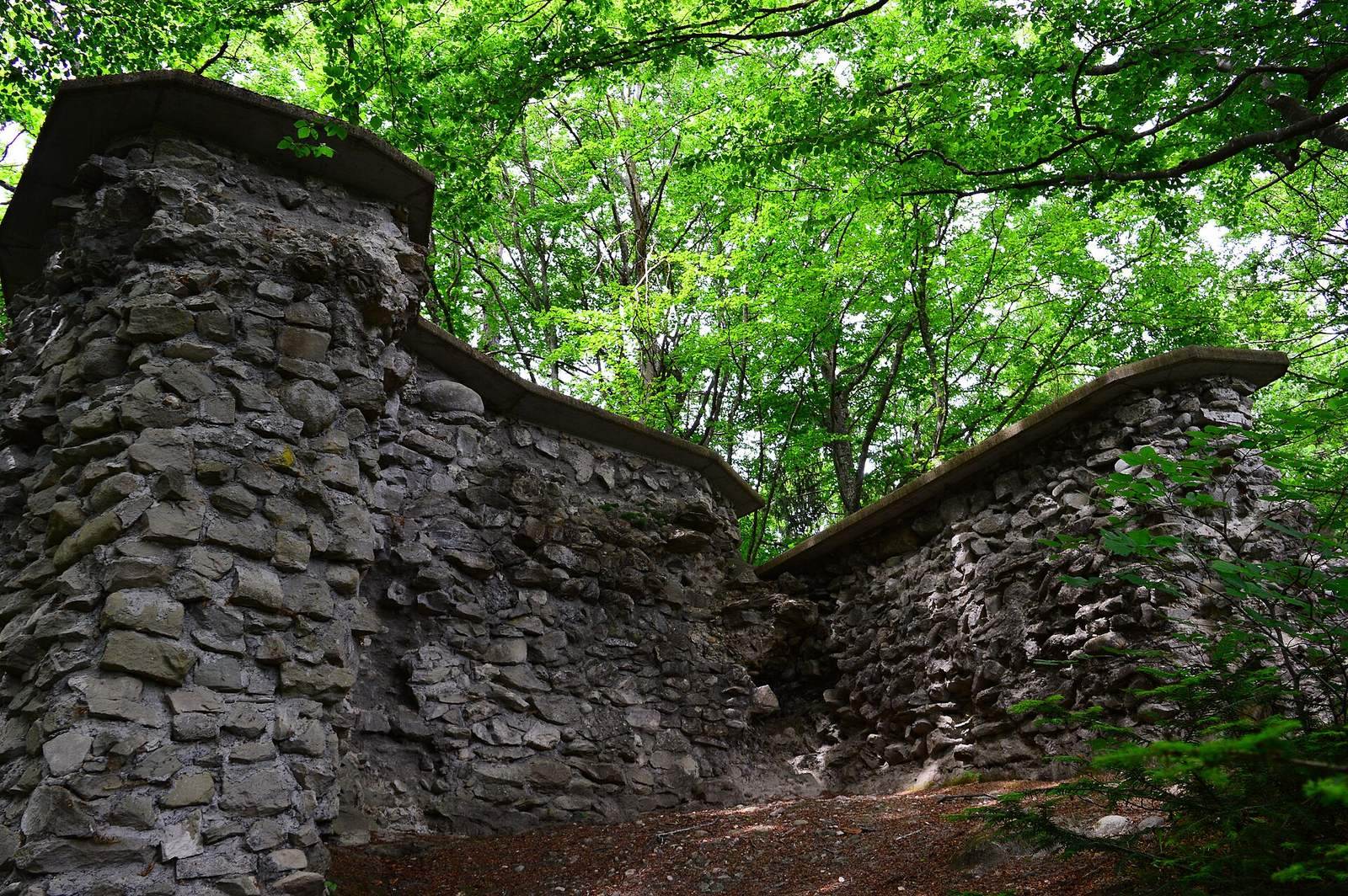
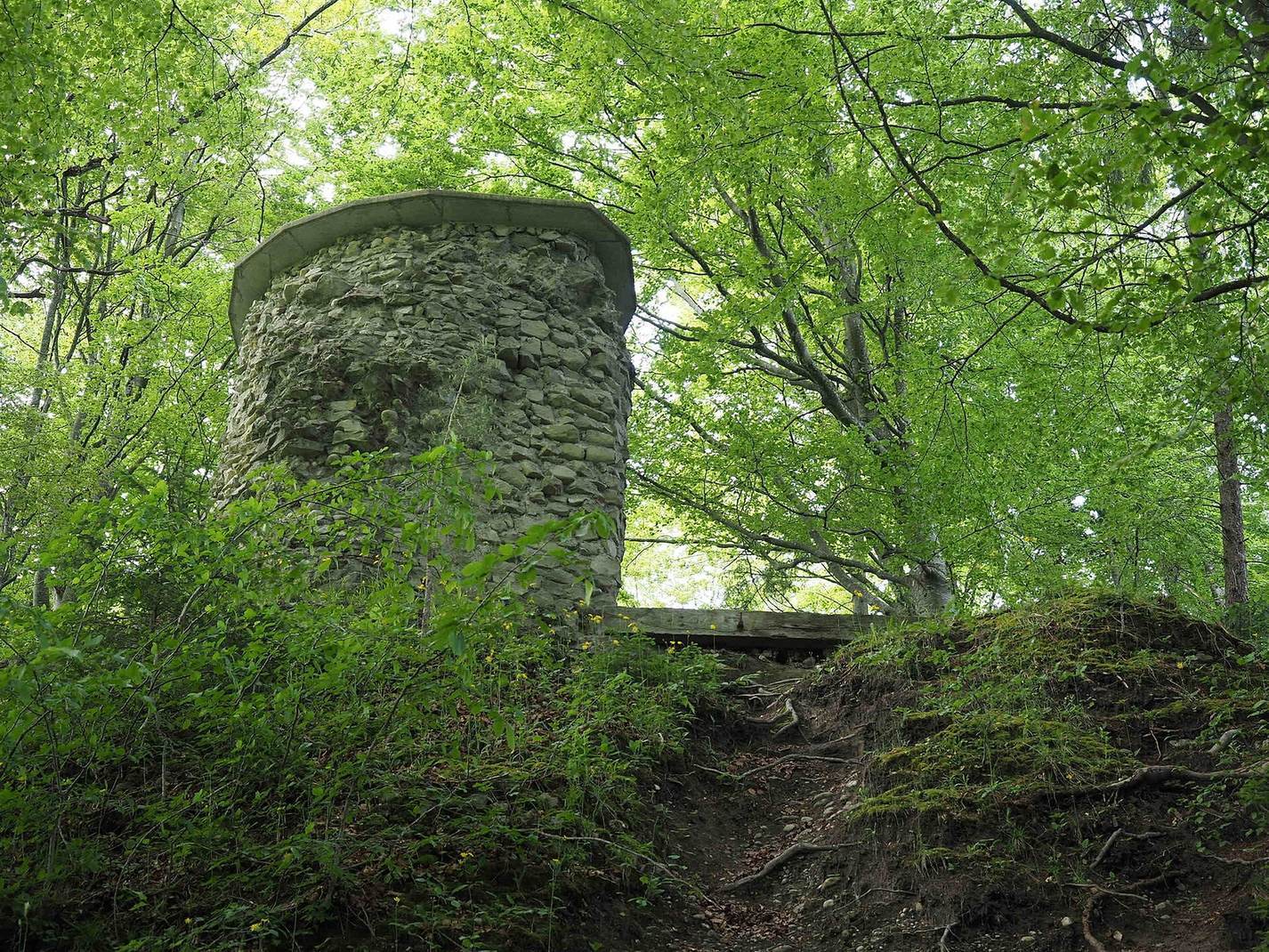
Nineteenth-century drawings show the tower largely intact, but parts have since collapsed. Tower remains and foundation walls are still visible, while the inner castle’s surviving walls were repaired during the 1965 conservation work.