David’s Tomb: A Disputed Memorial Site on Mount Zion


Site at a Glance
- Rating
- 4.6
- Popularity
- Medium
- Country
- Israel
- Primary era
- Medieval
- External website
- Open
- Eras represented
- Classical, Medieval, Early Modern
- Civilizations
- Byzantine, Crusader, Kingdom of Jerusalem, Mamluk, Ottoman
- Site type
- Religious
- Remains
- Tomb
On this page18 sections
History
David’s Tomb is a disputed memorial site on Mount Zion in Jerusalem, Israel, traditionally associated with the burial of King David. David is the biblical ruler linked with the unification of the Israelite kingdom, the capture of Jerusalem, and the establishment of the Davidic royal dynasty. An early medieval tradition placed his burial on Mount Zion by the ninth century, but the actual burial place is unknown, and historians, archaeologists, and Jewish religious authorities do not accept the present site as an authenticated tomb.
The site has remained sacred to Jewish, Christian, and Muslim communities. Christian tradition identifies its upper floor with the Cenacle, or Upper Room, traditionally understood as the setting of the Last Supper and an early meeting place of the Jerusalem Christian community. The lower level later became associated with David’s burial. This overlapping sacred geography made the complex a place of religious contact, as well as repeated disputes over ownership, worship, and access.
Byzantine foundations
A large Byzantine church called Hagia Zion, meaning Holy Zion, was built on the site in the late fourth century. Christian tradition connected the church with events in the lives of Jesus and his disciples, including the Last Supper, the gathering of the early Christian community, and the descent of the Holy Spirit upon the apostles. Memorial rites for David and James the Just were held there, but such rites did not necessarily indicate that either person was buried inside the church.
The church was repaired by John II, bishop of Jerusalem, before the Persian capture of Jerusalem in 614 led to its destruction. Modestus later restored it. In May 966, an attack encouraged by Muhammad ibn Isma’il al-Qinaji, the Ikhshidid governor of Jerusalem, resulted in the church being burned and looted. Its later history is uncertain. It may have ceased to function as a church, suffered during attacks on eastern churches in the early eleventh century, or survived until the Crusader siege of Jerusalem. The church buildings were no longer standing by late summer 1099.
Crusader and Franciscan occupation
During the first half of the twelfth century, the Crusaders built a new church over the ruins of Hagia Zion. Known as the Church of Saint Mary of Mount Zion, it had resumed religious use by 1107 at the latest. The church included a chapel dedicated to the tombs of the House of David, the biblical royal dynasty descended from David.
In 1332 or 1335, Franciscan friars, members of the Roman Catholic Order of Friars Minor, established themselves on Mount Zion with the support of Robert, king of Naples. They acquired the Cenacle and built a monastery beside the tomb building. Because Jewish visitors had to pass through the monastery courtyard, the arrangement produced repeated disputes between the communities.
During the fifteenth century, the Franciscans were expelled from the Cenacle, which was converted into a mosque, while the monastery remained. Mamluk authorities progressively assumed control of the complex. Sultan al-Malik al-Zahir Sayf al-Din Jaqmaq ordered the destruction of Christian structures on Mount Zion in 1452. Investigations in 1489 and 1490 culminated in the transfer of the site to Muslim control under Sheikh Yaqub al-Rumi of Jerusalem’s Hanafi school.
Ottoman transformation and restricted access
In 1549, Sultan Suleiman the Magnificent dedicated the monastery, its oven and gardens, and the Gaza Tower to the Muslim shrine of the Prophet David. He placed the complex under Sheikh Ahmad al-Dajani, leader of Jerusalem’s Sufi dervishes. The Franciscans were expelled from their remaining buildings in 1551, and the church beside the tomb was converted into a mosque.
Muslim authorities generally prohibited Christians and Jews from entering the building associated with the tomb. This exclusion remained in force until the twentieth century, apart from rare exceptions. From 1831, however, Franciscans were permitted to celebrate Mass there twice a year, on Maundy Thursday and Pentecost.
During the late Ottoman period, Italy sought control of the Cenacle, partly through a claimed inheritance from Robert of Naples. In 1920, after the Ottoman sultan was reported to have offered the site to the king of Italy, the British authorities stated that responsibility would rest with the Holy Places Commission established through the San Remo settlement.
Mandate and Israeli periods
During the British Mandate, the site was regarded as under the absolute authority of the Muslim waqf of the Prophet David. A waqf is a Muslim charitable or religious endowment whose property is dedicated to a religious or public purpose. The complex was therefore not treated as subject to the formal Status Quo arrangements governing rights and access at certain other Christian holy places in the Holy Land.
The site was nevertheless opened to visitors, and in 1936 the Franciscans were allowed to return and establish a monastery. Jews were permitted to pray on the upper floor on the day following Shavuot, the pilgrimage festival associated with the anniversary of David’s death in Jewish tradition.
During the 1948 war, the complex first served as a Jordanian military headquarters. On 18 May 1948, it was captured by the Harel Brigade and subsequently used as the brigade’s headquarters. After the war, southern Mount Zion, including David’s Tomb, lay on the Israeli side of the Green Line, while Jordan controlled the Old City and prevented Jewish access to the Western Wall and other Jewish holy places. The roof consequently became a place from which visitors viewed the Old City, the Western Wall, and the Temple Mount, as well as a setting for prayer and expressions of longing.
Israel’s Ministry of Religious Affairs began operating at the complex in 1949. Administration involved the custodian of absentee property, the Dajani family endowment, and the Committee for Holy Places. Legal difficulties eventually led to the cancellation of the committee’s lease in the 1970s. In 1953, the Mount Zion Committee, led by Samuel Zanvil Kahana, promoted the site’s importance for Jews. Stones from the complex were sent to serve as foundations for synagogues in Israel and abroad, providing substitutes for access to the Western Wall and Temple Mount.
From 1948 until Israel regained the Western Wall during the Six-Day War in 1967, David’s Tomb was promoted as Israel’s principal Jewish religious site and was widely regarded as the holiest Jewish site under Israeli control. Jordan and Iraq brought a dispute over the alleged conversion of the site from a Muslim shrine into a Jewish place of worship before the United Nations in 1953 and 1954. Israel denied that architectural or religious changes had been made in the Cenacle and stated that visitors continued to have access.
Continuing religious and archaeological debate
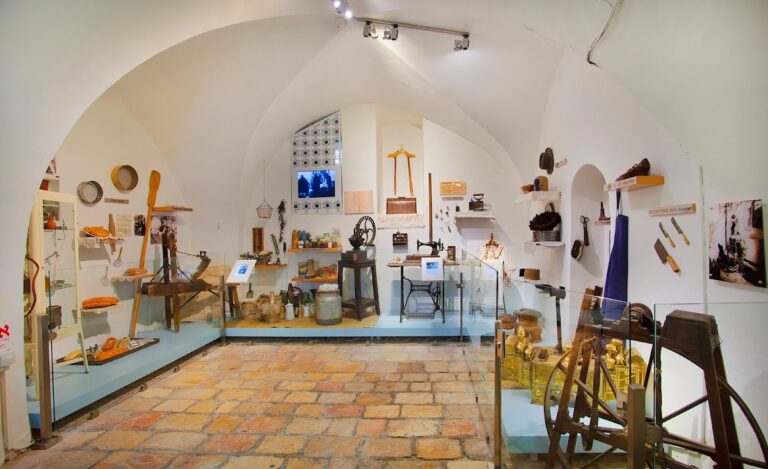
The building became part of the Diaspora Yeshiva after the yeshiva moved to Mount Zion in 1968. A presidential room was established near the rooftop viewing area, and President Yitzhak Ben-Zvi used an office on the roof twice a week to receive pilgrims during the three pilgrimage festivals. The nearby Holocaust Cellar Museum, described as the first museum dedicated to commemorating the Holocaust, hosted ceremonies for Jewish communities destroyed during the Holocaust, including communities from North Africa.
The complex was refurbished in 2012 by Israel’s National Center for the Development of Holy Sites. Modern tensions have included damage to Islamic tiles, disputes over Christian worship, and restrictions or police closures during Orthodox Christian Pentecost services in 2015, 2019, and 2020. A statue of David playing a violin, installed near the compound in 2008, was repeatedly vandalized and dismantled in 2018. Plans announced in 2012 proposed moving it from Mount Zion after objections from religious groups.
The identification of the site as David’s tomb remains contested. Biblical and later Jewish texts place the tombs of the House of David in the City of David. Some scholars instead associate the Mount Zion complex with the burial area called the Garden of Uzza, linked with Kings Manasseh, Amon, and possibly Josiah. Other proposed locations for David’s burial include Bethlehem, Gethsemane, the Cave of the Patriarchs, and the City of David.
The Mount Zion tradition may have developed from Byzantine Christian memorial liturgy, from early Islamic-period traditions later adopted by Christians and Jews, or from the medieval identification of the biblical Mount Zion with Jerusalem’s western hill. The earliest Jewish reference associating a burial place of the House of David with Mount Zion is attributed to Benjamin of Tudela in the twelfth century, although both his account and its interpretation remain contested.
Archaeological investigations have also shaped the debate. Raymond Weill excavated eight elaborate tombs south of the City of David in 1913 and 1914 and identified them as possible royal burials. His identification of one tomb with David’s Tomb was initially widely accepted, but later challenged because of its location, relatively simple construction, and competing interpretations of the Siloam Tunnel. Archaeologists have continued to investigate the City of David area as a possible location for the royal tombs.
In 1951, Jacob Pinkerfeld excavated below the floor and interpreted the remains as a late Roman synagogue that was later used as a church by Jewish Christians. This interpretation has been disputed because the structure lacks typical synagogue features, including original columns and benches. The wall niche that some interpreted as a Torah shrine is approximately 8 by 8 feet and may be too large and high for that purpose.
Jewish devotional practices continue to shape the use of the complex. During Shavuot, visitors traditionally recite Psalms and light 150 candles, corresponding to the number of Psalms, as well as candles for general devotion. A large Saturday-night meal called Melaveh Malkah, or the Meal of King David, is also held there. The candle-lighting custom is first mentioned in an account by a disciple of Nahmanides from around the beginning of the fourteenth century. Since 1967, the site’s relative importance as a Jewish substitute for the Western Wall has declined, although Jewish, Christian, and Muslim claims and practices continue to overlap. A yeshiva began operating in the room known as David’s Cave during Passover in 2015 and later moved to the Bertinoro Room.
Remains
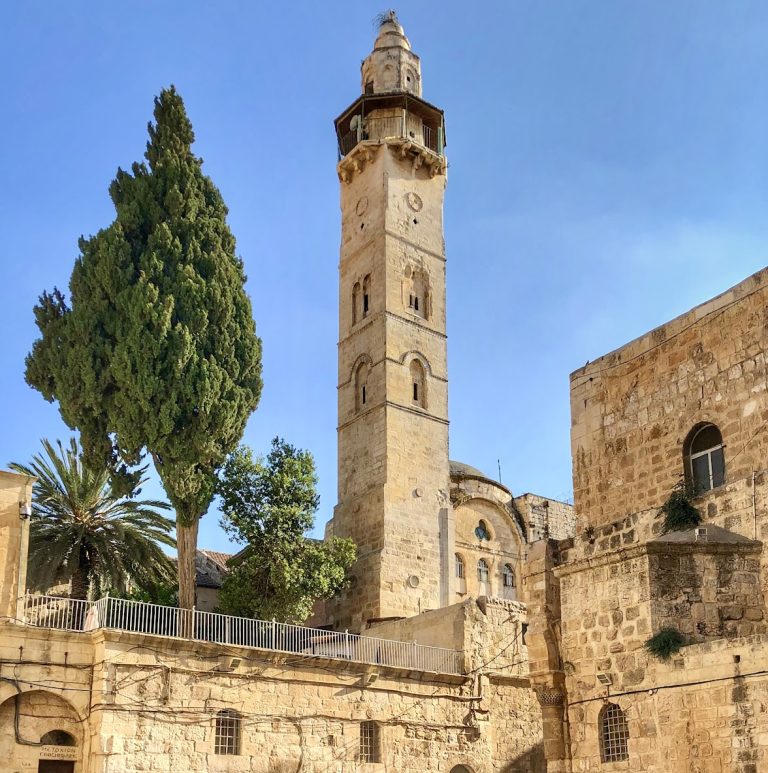
The compound occupies part of the ground-floor remains of the former Hagia Zion church on Mount Zion, near the Christian Abbey of the Dormition. Its surviving fabric belongs to successive Byzantine, Crusader, Franciscan, Islamic, Jewish, educational, military, and modern phases. The present building began as a church, was converted into a mosque, and now incorporates an upper hall traditionally identified as the Cenacle or Upper Room and a lower chamber associated with David’s Tomb.
The tomb chamber and lower remains
David’s Tomb
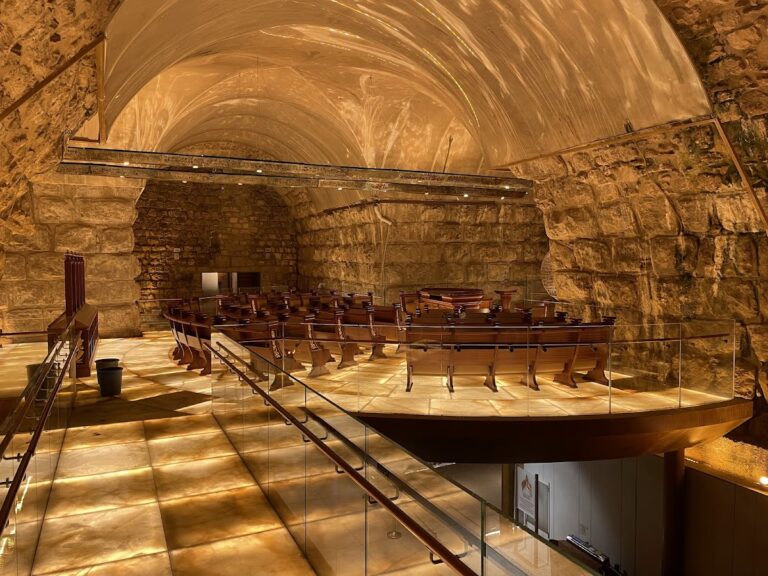
The lower chamber is an elongated room oriented from north to south and measuring approximately 4.5 by 6 metres. A sarcophagus covered by a parochet, a decorative curtain, stands inside and is venerated as David’s tomb. The object is a medieval commemorative monument, or cenotaph, rather than authenticated royal remains. Its preserved Gothic form is attributed to the Crusader period.
Since 1949, the sarcophagus has been covered by a blue cloth decorated with crown-shaped Torah finials above Torah scrolls, a violin, and Hebrew inscriptions. Twenty-two Torah-scroll finials were formerly placed on the tomb, corresponding to the traditional number of kings of the House of David. They were stolen in 2007.
Earlier floors and wall niche
Earlier floor levels survive beneath the present paving. In 1951, Pinkerfeld excavated approximately 70 centimetres below the floor and exposed a coloured mosaic pavement. He dated the mosaic and a wall niche to the Roman period, while interpreting the sarcophagus and remaining walls as later additions.
The niche in the original walling faces toward the Temple Mount. Pinkerfeld interpreted it as a Torah shrine belonging to a synagogue of the Second Temple period, the era associated with the later Jerusalem Temple rebuilt after the Babylonian exile. Other scholars have rejected that interpretation because the niche is approximately 8 by 8 feet and lacks the proportions expected for a Torah shrine. Interpretations of the lower structure include an early church, a late Roman synagogue, and parts of the Byzantine Hagia Zion church.
Underground cavity
In the mid-nineteenth century, Ermete Pierotti reported discovering a cavern beneath the Byzantine and Crusader church remains. He believed that it extended beneath David’s Tomb, and a limited exploration reportedly found human remains in a large vault supported by piers. Ground-penetrating radar investigations in February 2011 indicated a high probability of an underground cavity beneath the building.
Upper hall and Islamic alterations
The Cenacle
The upper floor contains the hall traditionally identified by Christians as the Cenacle, or room of the Last Supper. After the Franciscan expulsion, the hall functioned as a mosque. An inscription dated 1524 on its eastern wall records that conversion, and the room was later incorporated into the modern religious complex.
Franciscan monastery and courtyard
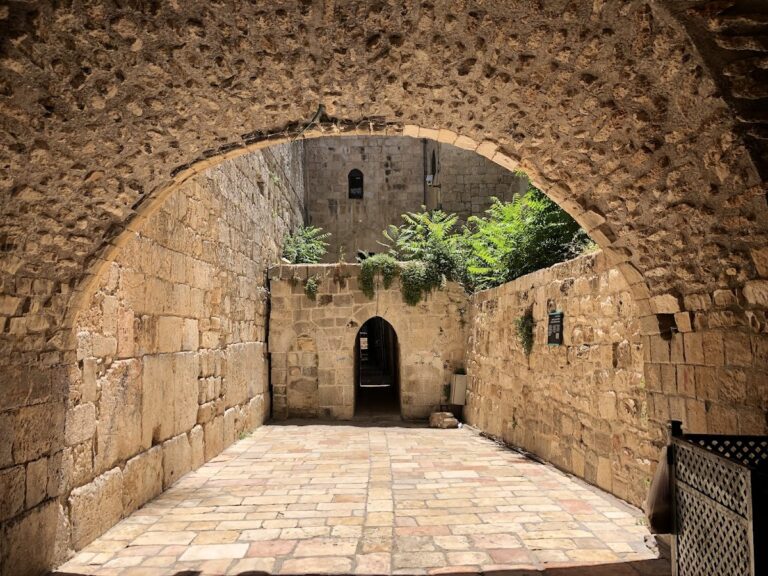
In the fourteenth century, the Franciscans built a monastery against the southern facade of the tomb building. They converted the entrance vestibule into an internal courtyard, or cloister, and later construction added two further levels of rooms above it. The monastery formed part of the complex that connected Christian religious use with the building associated with David’s Tomb.
Chapel of the Holy Spirit and maqam
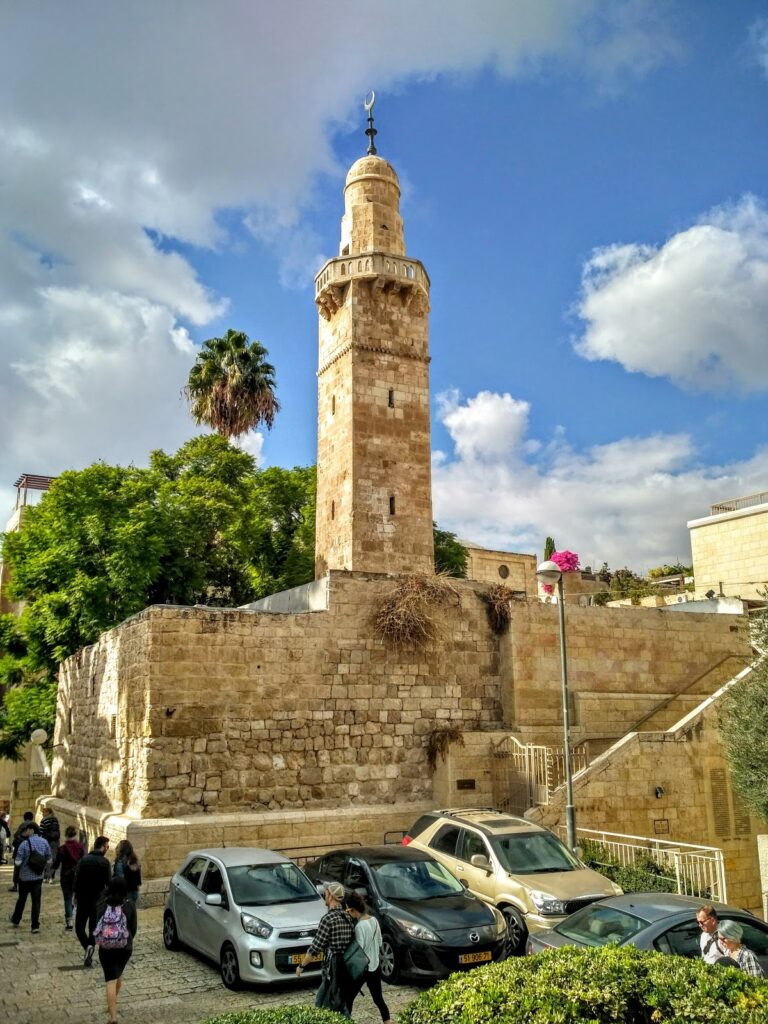
A domed maqam, an Islamic shrine or commemorative sanctuary, was built above the former Chapel of the Holy Spirit sometime between 1600 and 1639. The dome formed part of the Islamic architectural transformation of the former Christian complex.
Associated rooms and surviving decoration
Candle Room
The Candle Room lies east of the courtyard and is used for Jewish candle-lighting rituals. Other parts of the complex include a square khan, the area known as the Palombo Compound, and the arched-hall complex occupying the western part of the site and associated with the former khan.
Islamic tiles
Seventeenth-century Islamic ceramic tiles formerly decorated the walls. Unknown persons destroyed a large number in December 2012, and the Israel Antiquities Authority decided not to reconstruct the broken tiles.
The surviving plan and fabric therefore present a layered complex rather than a monument belonging to one period of construction. Byzantine church remains, Crusader rebuilding, the Franciscan monastery, Mamluk and Ottoman Islamic alterations, and modern religious and educational uses are preserved within the same compound. These physical layers explain why the building remains central to several traditions while providing no secure archaeological identification of David’s authentic burial place.