Walled City of Jajce: Fortified Capital of the Medieval Bosnian Kingdom
Site at a Glance
- Popularity
- High
- Country
- Bosnia and Herzegovina
- Primary era
- Medieval
- Eras represented
- Medieval, Early Modern, Modern
- Civilizations
- Austria-Hungary, Habsburg, Hungarian, Kingdom of Bosnia, Ottoman
- Site type
- City
On this page9 sections
History
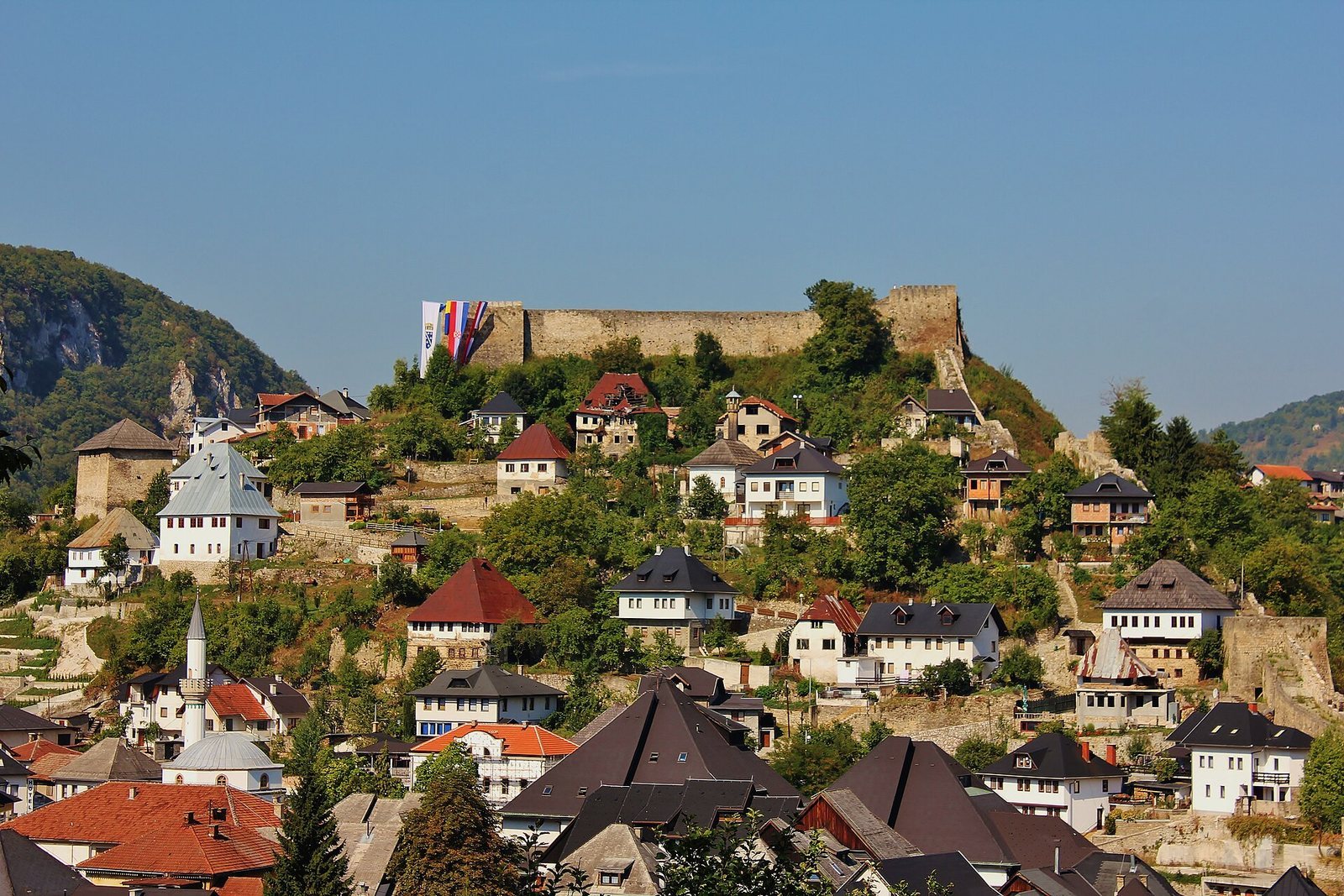
The Walled City of Jajce, in Bosnia and Herzegovina, is a fortified medieval centre whose citadel was built in the late 13th or early 14th century by Hrvoje Vukčić Hrvatinić on the site of an earlier fort. The town grew around the citadel during the 14th century and became the capital of the independent Kingdom of Bosnia, serving as its final stronghold before Ottoman expansion brought the kingdom to an end.
Early development and royal seat
A tradition holds that the settlement moved to Jajce from Komotin, an older, smaller place about 10 to 20 kilometres away, after the Black Death. The first written reference to the town by the name Jajce dates to 1396, when its fortress was already standing. As the settlement expanded, fortifications enclosed it.
Jajce became a seat of the Bosnian kings. Hrvoje may have died there, where he built a tomb known as the Catacombs of Jajce; another proposed burial place is Zgošća near Kakanj, where a monumental medieval tombstone may have belonged to him. Stephen Tomašević, the last king of medieval Bosnia, was crowned at Jajce in 1461.
Contested rule and the Ottoman period
Ottoman forces besieged and captured Jajce in 1463 and executed Stephen Tomašević. Their occupation lasted only six months before Matthias Corvinus, king of Hungary, retook the town and established the Banovina of Jajce, a regional territory governed by a ban. In 1501, the Ottoman commander Skenderbeg Mihajlović failed to capture Jajce. Ivaniš Corvin defeated him with assistance from the Zrinski, Frankopan, Karlović, and Čubor houses. Queen Catherine restored the Church of Saint Mary during this period.
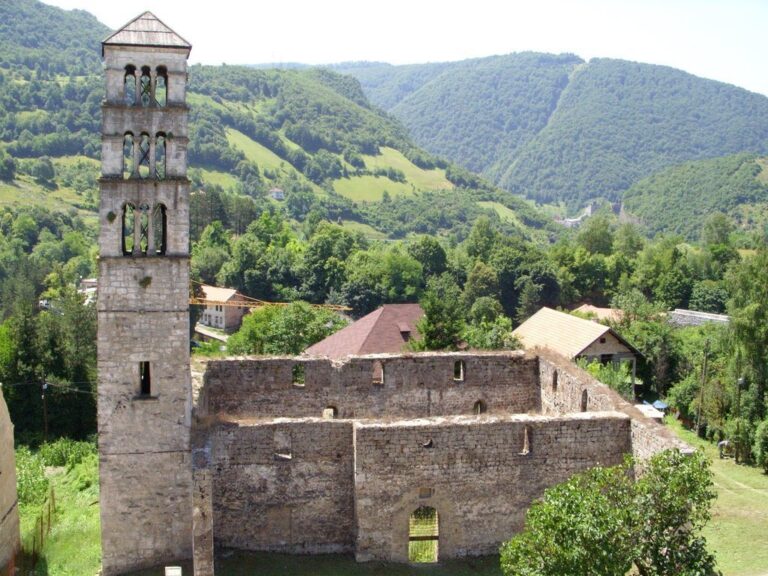
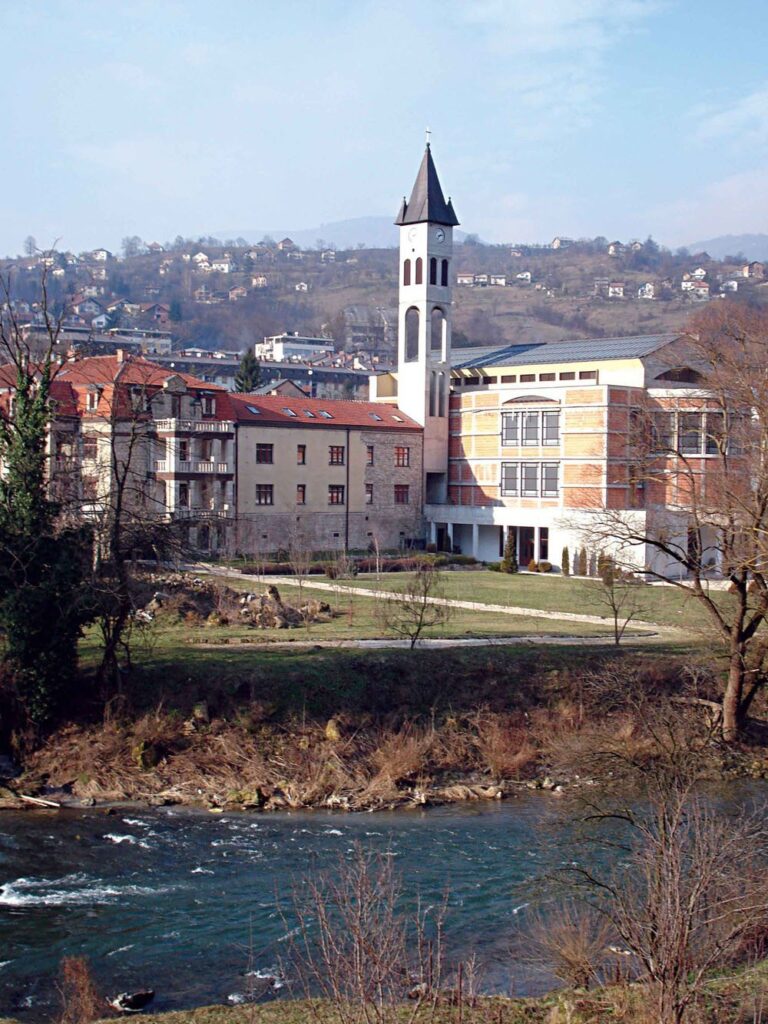
Jajce became the last Bosnian town to fall under Ottoman rule in 1527. Its strategic importance then declined as the frontier shifted farther north and west, and the town acquired its final form during the Ottoman period. In 1878, it came under Austro-Hungarian administration along with the rest of Bosnia and Herzegovina. The Franciscan monastery of Saint Luke was completed in 1885.
The old city core and the wider natural and architectural ensemble, which includes the waterfall and sites beyond the fortifications, are designated a National Monument of Bosnia and Herzegovina. The ensemble is also on UNESCO’s Tentative List for possible consideration as a World Heritage site.
Remains
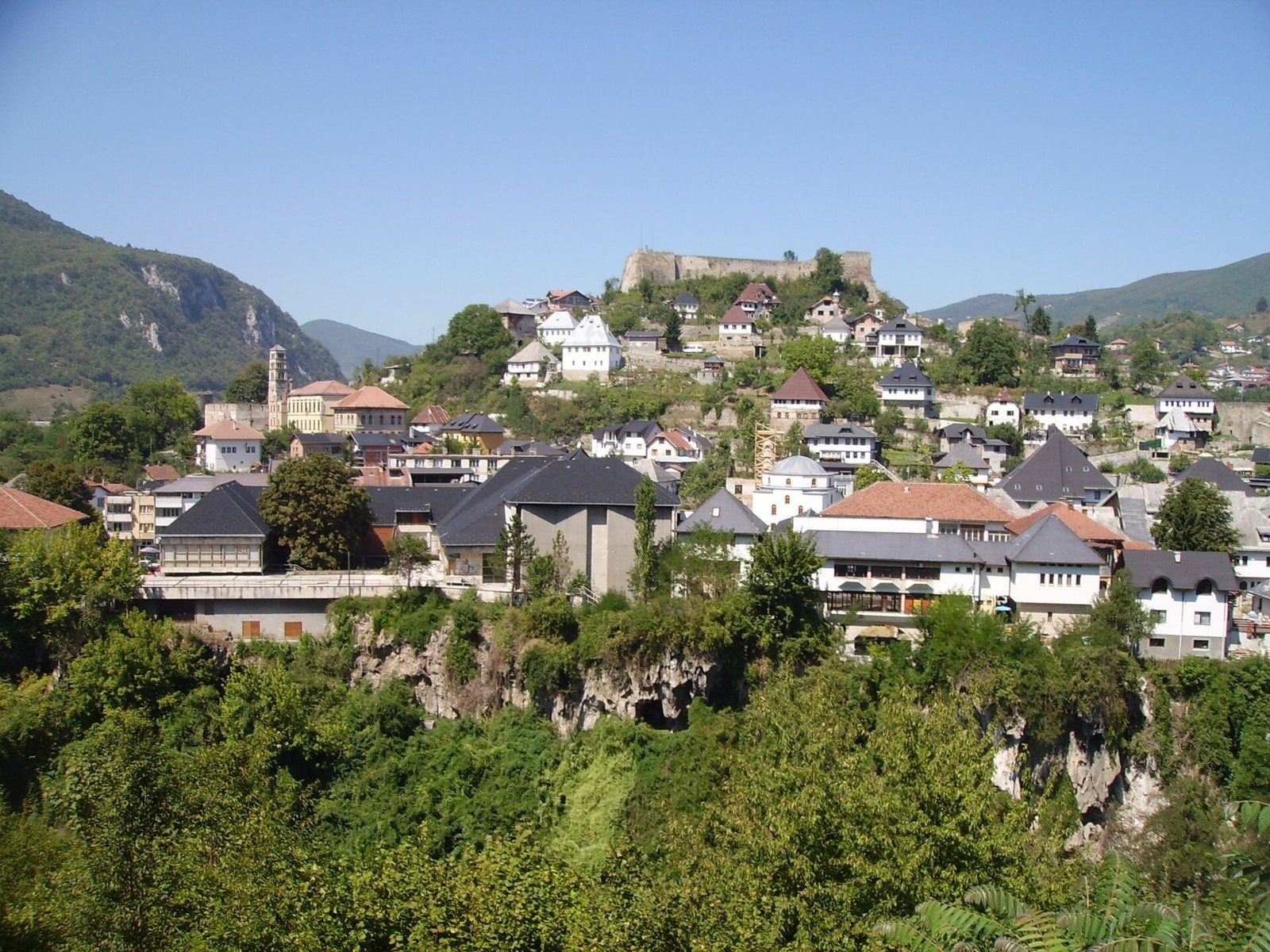
The fortified complex occupies the southern slope of a steep, rocky, pyramid-shaped hill at the confluence of the Pliva and Vrbas rivers. The Pliva borders it to the south-southwest, while the Vrbas gorge lies to the east-southeast. The citadel, ramparts, watchtowers, and principal gatehouses form a perimeter about 1,300 metres long, enclosing roughly 11,200 square metres.
Citadel and perimeter defenses
The citadel
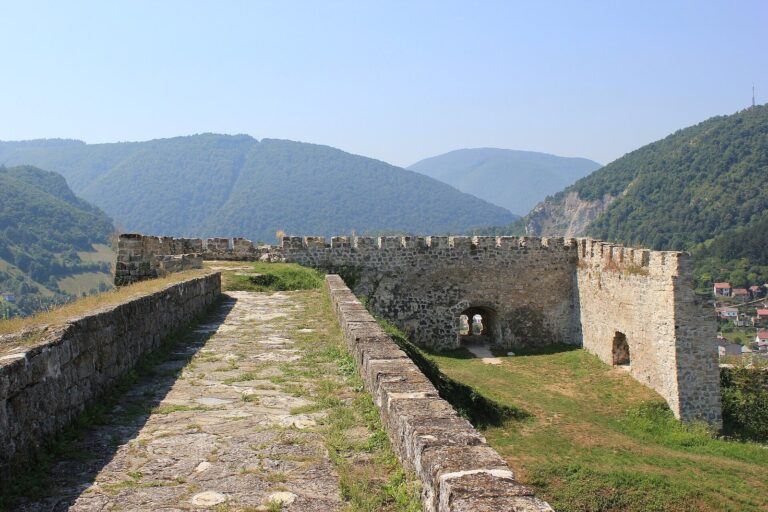
The citadel stands on Hum hill as the central point of the fortification system, at about 470 metres above sea level. Its main entrance bears the coat of arms of the Kotromanić dynasty, the royal house of medieval Bosnia. Two large bastions, projecting sections that strengthened the defensive walls, stand at diagonally opposite corners. A path along the walls links the Great Southern Bastion and the Great Northern Bastion. An internal tower served as a gunpowder store.
Walls and gates
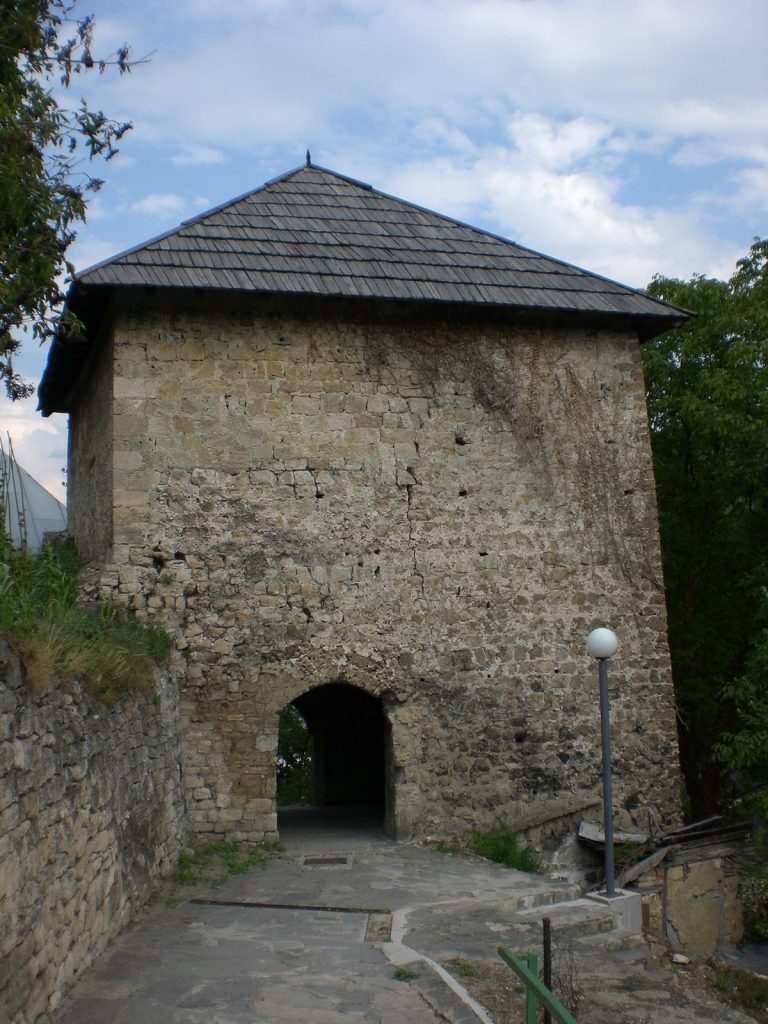
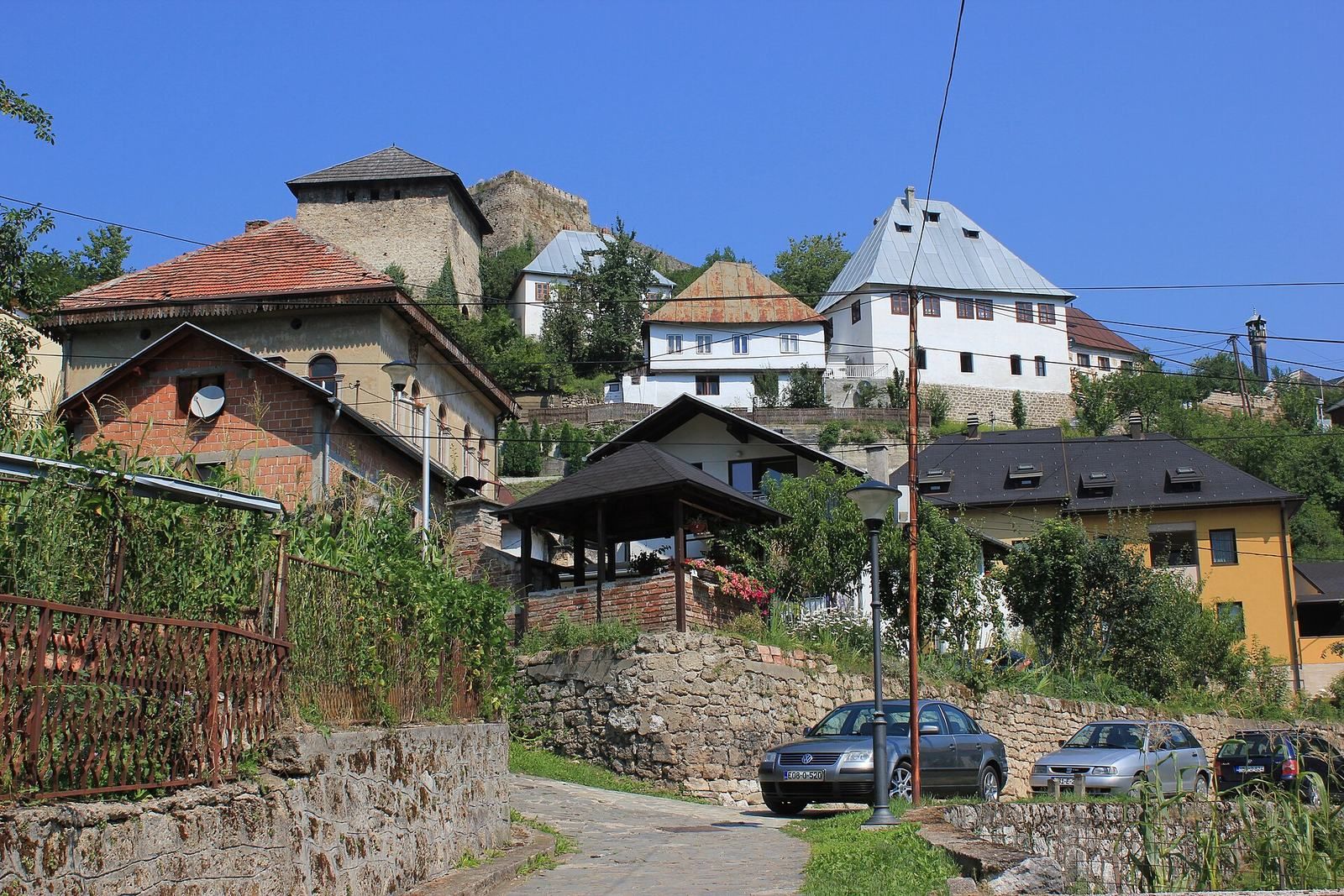
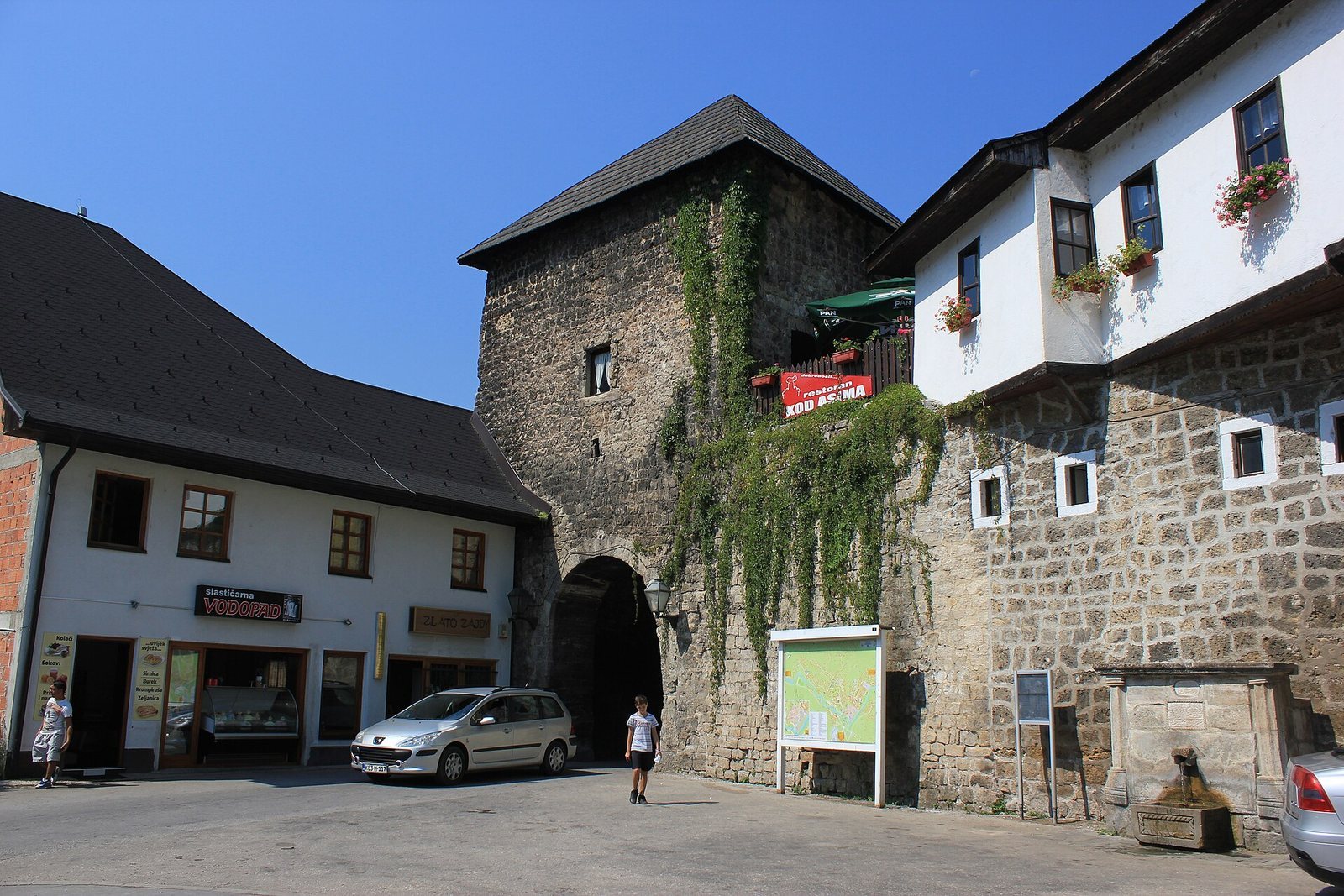
The ramparts and gates enclosed the settlement below the citadel. The northern perimeter runs from the fortress’s northeastern corner, near the Clock Tower, past Mračna kapija, the Velika tabija gatehouse and bastion, the Džikovac tower, and the Papaz tower to the Banja Luka gatehouse. It continues toward the Vrbas and Šamić tabije. The western wall descends from the citadel’s western corner, near the main entrance, to the Medvjed tower, then runs south toward the Pliva and turns east to the Travnik gatehouse. The Banja Luka gatehouse stands to the north and the Travnik gatehouse to the south. The defenses were repaired, rebuilt, and enlarged repeatedly. A Hungarian king built part of the wall, and Ottoman builders added a gunpowder store.
Religious buildings
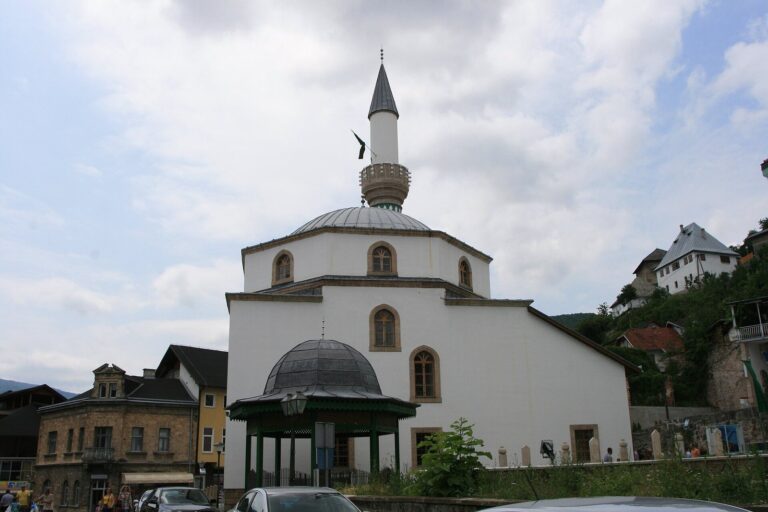
The Church of Saint Mary is identified as the oldest church in Jajce. The town also contains churches and mosques built under different rulers and in different periods. The Franciscan monastery of Saint Luke is part of the wider Jajce ensemble.
Sites beyond the walled city
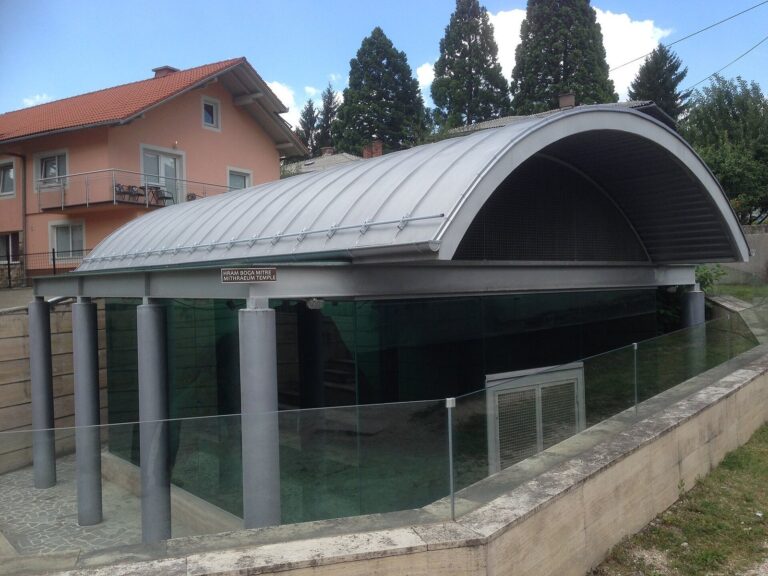
The wider ensemble extends beyond the fortifications and includes the King’s Grave, the Jajce Mithraeum, a sanctuary associated with the worship of Mithras, and the Church of Saint John in Podmilačje. It also includes Vinac Fortress, the Orthodox Church of the Most Holy Mother of God, the Roman Catholic cemetery of Hrast, and the Pliva waterfall. The Pliva Lakes lie at 426.6 metres above sea level, and the waterfall at 362.5 metres.