Jajce Mithraeum: A Roman Sanctuary of Mithraism in Bosnia and Herzegovina
Site at a Glance
- Popularity
- Medium
- Country
- Bosnia and Herzegovina
- Primary era
- Classical
- Eras represented
- Classical, Modern
- Civilizations
- Roman
- Site type
- Religious
- Remains
- Mithraeum
On this page8 sections
History
Roman sanctuary
The Jajce Mithraeum is a Roman sanctuary in Jajce, Bosnia and Herzegovina. It served Mithraism, a Roman mystery cult devoted to Mithra, a deity of Iranian origin. The sanctuary is generally dated to the early fourth century CE, though it may have originated in the second century and received repairs in the early fourth century.
Discovery and preservation
The remains came to light in 1931, when workers excavating for a private house accidentally uncovered the sanctuary. Archaeologist Dimitrije Sergejevski was associated with the excavation. The Society for the Preservation of Antiquities in Jajce then acquired the site and had a protective structure of stone and mortar built under engineer F. Steiner’s supervision. The structure was repaired in 1952, damaged during the Bosnian War, the 1992–1995 conflict in Bosnia and Herzegovina, and replaced in 2012.
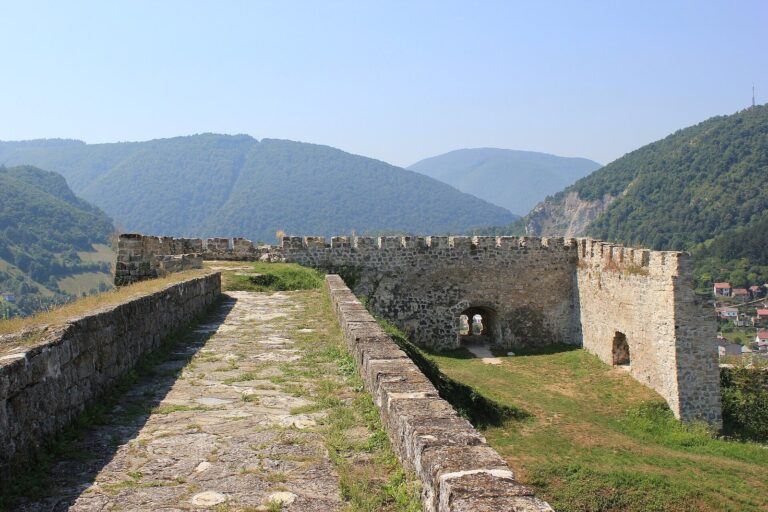
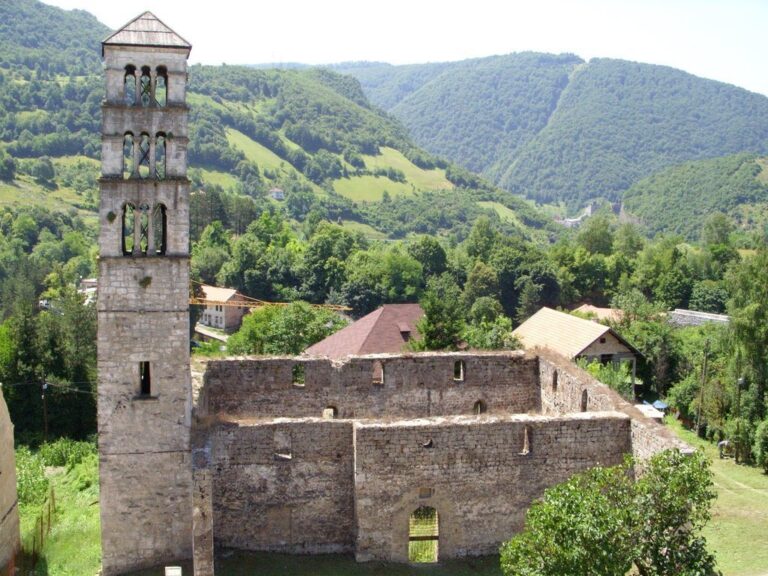
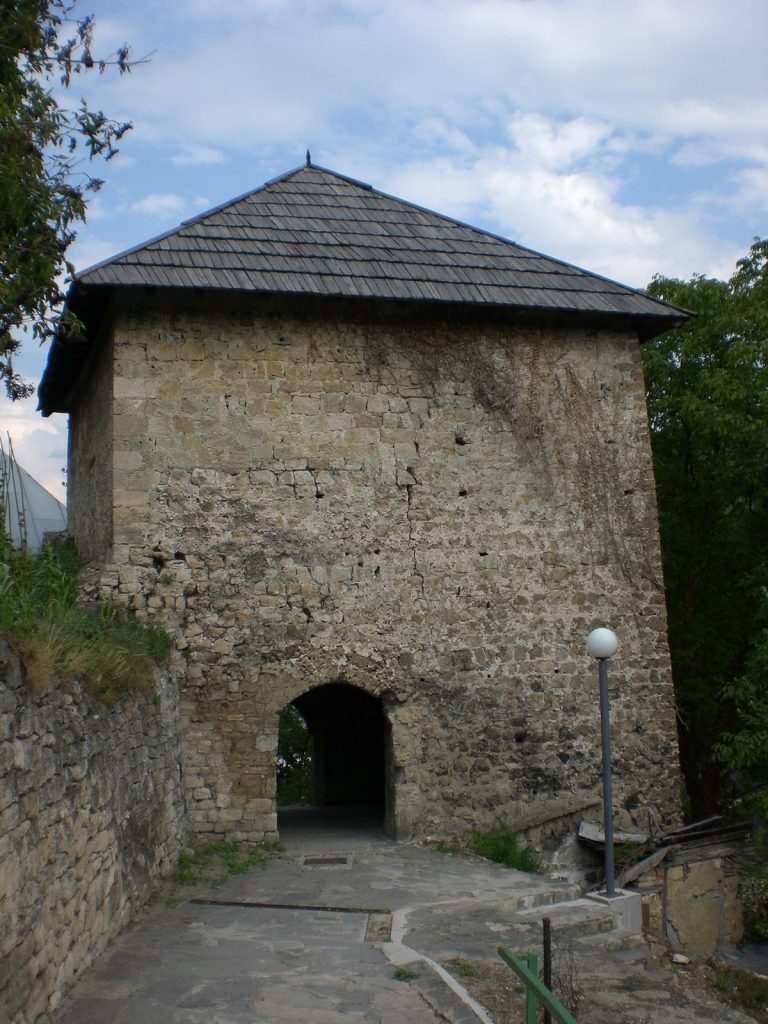
The Mithraeum is a National Monument of Bosnia and Herzegovina. It also belongs to the wider natural and architectural ensemble of Jajce on UNESCO’s World Heritage Tentative List, which identifies places that countries may consider nominating for World Heritage status. The ensemble includes the old walled city core, the waterfall, and other sites beyond the old-city perimeter.
Remains
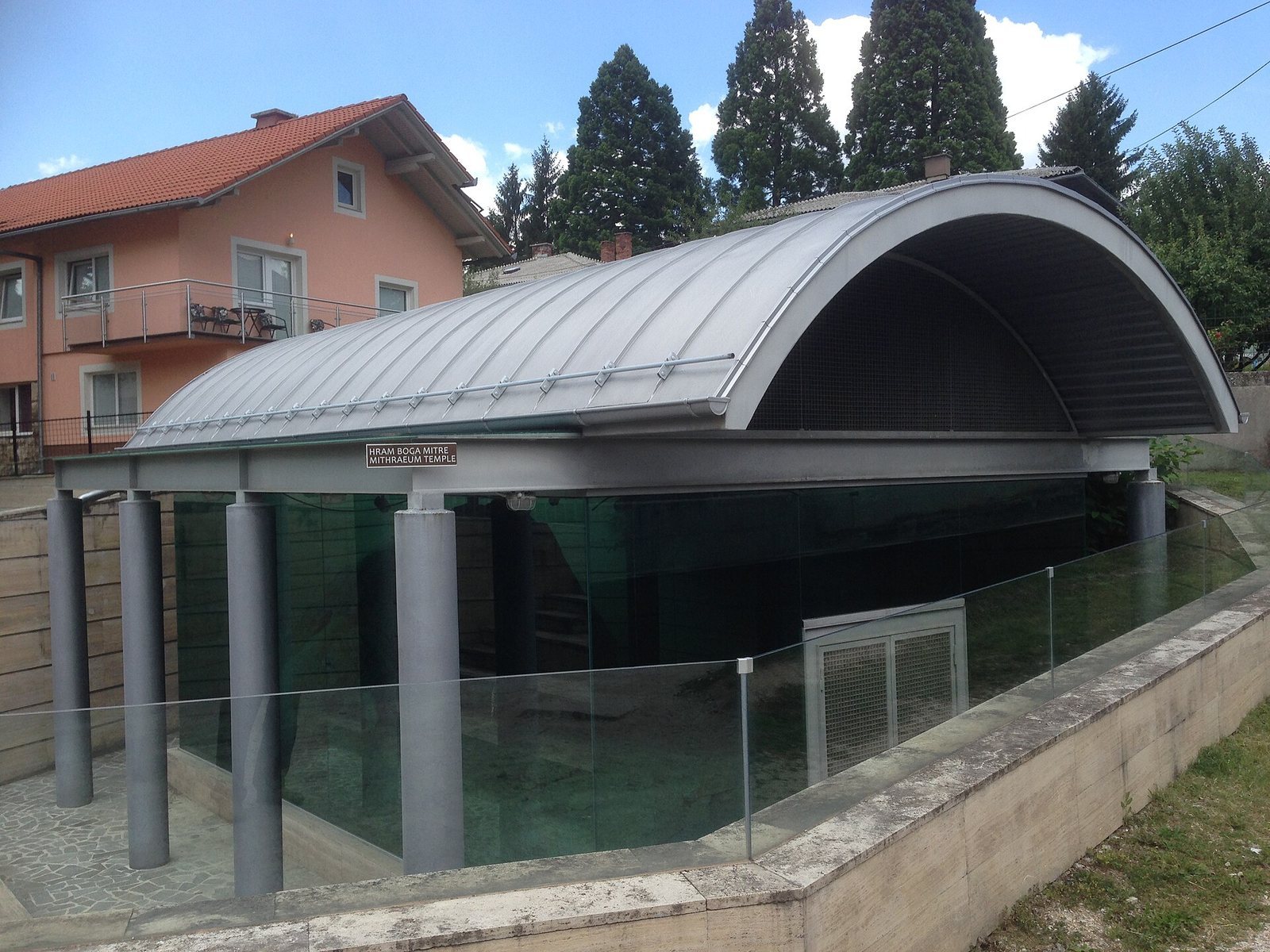
The sanctuary occupies a rock-cut, cave-like chamber near a well. A modern enclosure of steel girders and glass walls protects the remains while allowing the interior to be viewed without entering.
Sanctuary interior
Chamber and entrance
The single-chamber space has an irregularly square plan, about 7 metres long and less than 7 metres wide. Its damp-earth and sand floor lies roughly 2.8 metres below ground level. The walls have no foundations, and a wooden roof is inferred. Stone steps surviving in the southwestern corner indicate the entrance.
Relief and furnishings
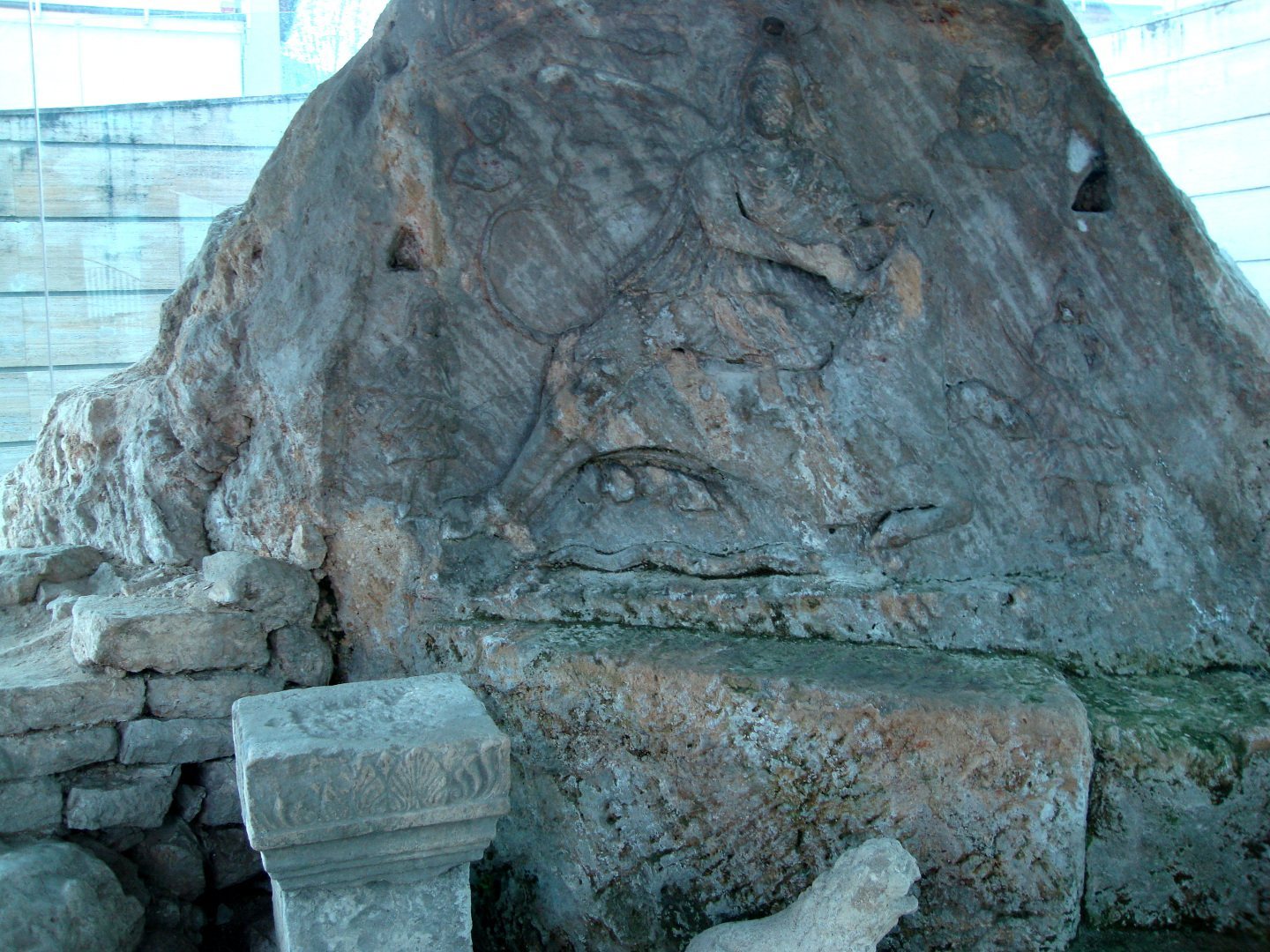
On the western side, a rock wall and niche contain a relief of Mithra slaying a bull, set into the masonry. Several altars stood before the niche; one had a pediment with an acroterion, an ornament at its apex or corner. A single raised seat or platform for worshippers held a statuette of Cautopatès, a torchbearer figure in Mithraic imagery.
Finds
Objects displayed inside the site include bone remains, tile fragments, pieces of iron, several lamps including a hanging lamp, and a fibula, an ancient brooch used to fasten clothing. The 16 coins span the reign of Trajan, a Roman emperor of the early second century, through the Constantinian dynasty, a Roman imperial family that ruled from the early fourth century.