Vassallaggi: A Bronze Age and Greek Settlement in Sicily
Site at a Glance
- Popularity
- Low
- Country
- Italy
- Primary era
- Classical
- Eras represented
- Bronze Age, Iron Age, Classical
- Civilizations
- Ancient Greek
- Site type
- City
On this page11 sections
History
Vassallaggi is an archaeological settlement in the Roccella area near San Cataldo, Italy, first inhabited during the Early Bronze Age, around the eighteenth to fourteenth centuries BC. Its earliest inhabitants were probably the Sicani, an ancient people of Sicily.
Early settlement
A Sican settlement developed at Vassallaggi in the eighth century BC, and habitation continued through the Iron Age.
Greek settlement
After Gela, a Dorian Greek colony, was founded in the seventh century BC, Greek expansion moved inland through central Sicily along the Salso valley, known in antiquity as the Himera. This movement may have been encouraged by population pressure, demand for farmland, and the need for markets for manufactured goods.
From the sixth century BC, Greeks from Akragas, the ancient city at modern Agrigento, conquered and settled Vassallaggi. Nearby Sabucina, Capodarso, and Gibil Gabib were associated with colonization by Gela, while Vassallaggi developed within Akragas’s sphere. Greek cultural influences also included connections with people from Rhodes and Crete who arrived by way of Akragas.
The settlement flourished after the seventh century BC as a phrourion, or fortified outpost, and was fortified and developed under Akragas by the fifth century BC. Vassallaggi has been proposed as the site of Motyon, described as an early fortified center in the Agrigentine area, but the identification remains uncertain.
Abandonment and later activity
The settlement was abandoned around 320 BC for reasons that remain unknown. By the nineteenth century, Vassallaggi was known to antiquarians, and excavations began in 1905, continuing into the 1960s.
Remains
Setting and settlement layout
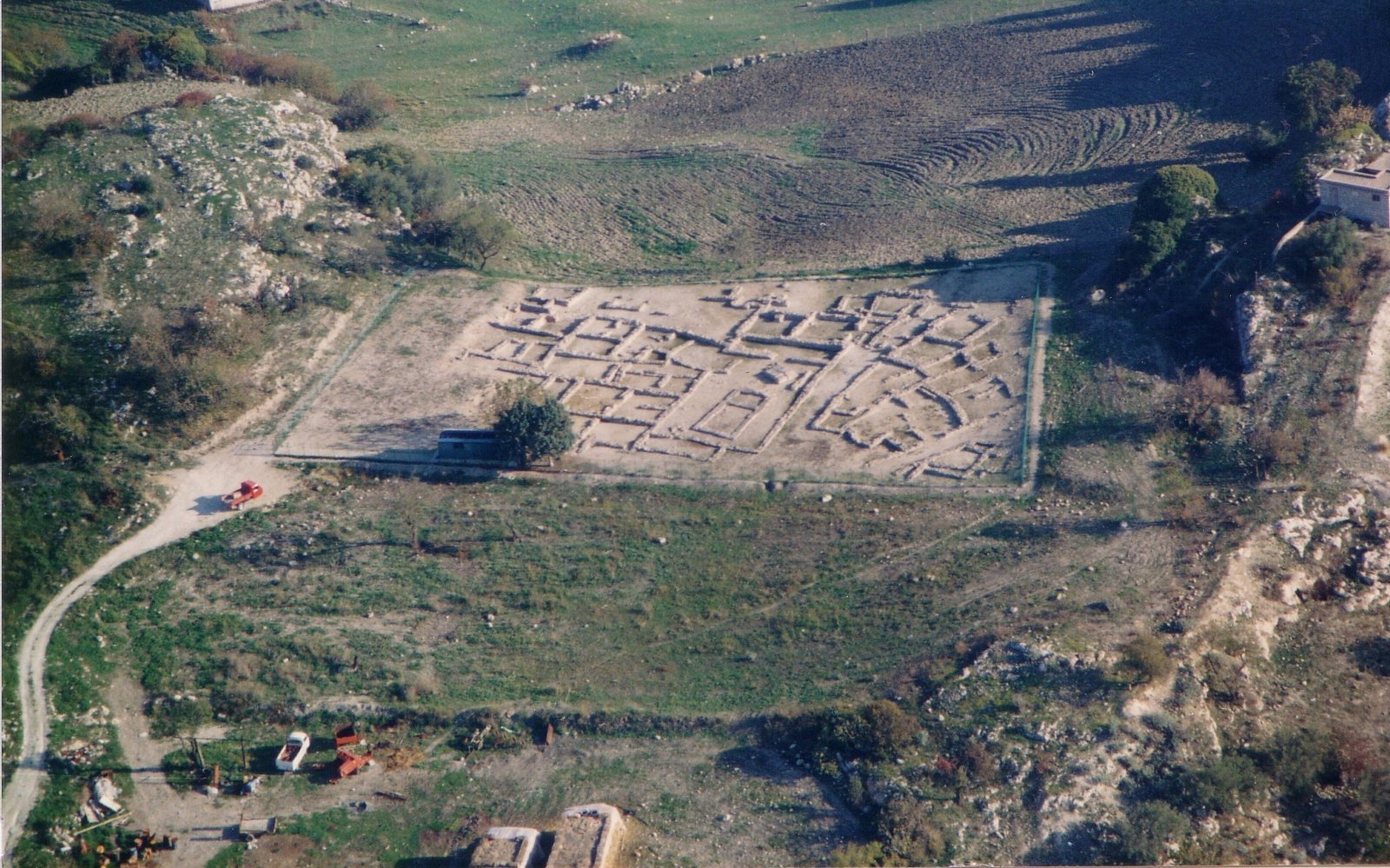
The site extends across five closely grouped hills in the central Salso valley. Covering about 7,000 square metres at an elevation of 704 metres, it runs northeast to southwest, parallel to the SS 122 between San Cataldo and Serradifalco. Its position overlooks the central Salso valley and upper Platani and lies on a communication corridor between Sicily’s southern coast and northern part of the island. The remains include walls, houses, urban routes, tombs, and places of worship.
Bronze Age remains
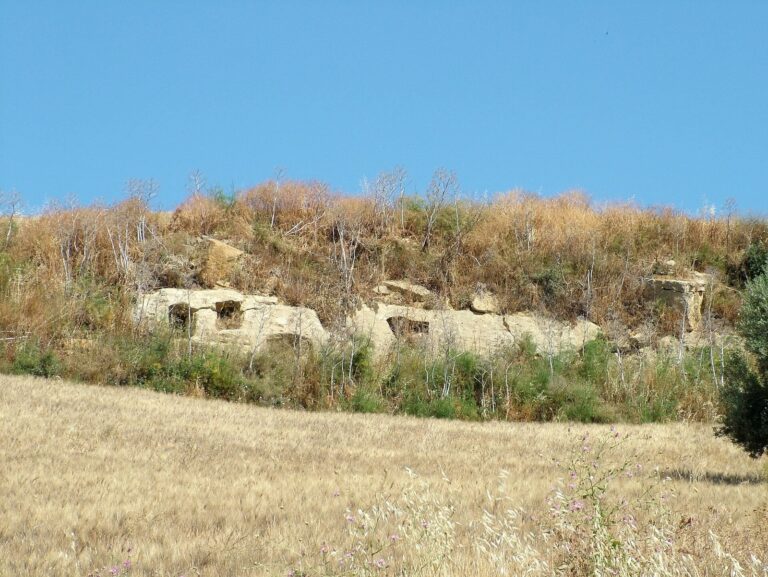
On the second hill, which faces San Cataldo, a circular hut with household furnishings belongs to the Bronze Age remains. Castelluccio-culture cave tombs are also present. Red-painted pottery with geometric designs, associated with the earliest inhabitants, dates to the second millennium BC, while oven-shaped tombs characteristic of the Sicani were found nearby. Later settlements substantially altered the earlier remains.
Greek-period remains
Temple
A temple for the worship of female deities belongs to the Greek phase of the settlement.
Necropolis
The rich necropolis has yielded ceramic sarcophagi, including one exceptionally well-preserved example, as well as locally made vases and pottery from other Greek regions. Finds also include bronze knives and spears, strigils used to scrape oil and dirt from the body, and coins. Some artifacts associated with Vassallaggi are now displayed in museums in Sicily.
Roman and late antique remains
Small Roman-period settlements occupied parts of the surrounding valley and territory, particularly along routes toward Akragas. In the fifth century AD, Christian burials were cut into prehistoric caves in the area around Vassallaggi.