Waddesdon Manor: A Rothschild Country House for Art and Entertaining
Site at a Glance
- Popularity
- Very High
- Country
- United Kingdom
- Primary era
- Modern
- Eras represented
- Modern
- Civilizations
- British
- Site type
- Domestic
- Remains
- Elite Residence
On this page20 sections
History
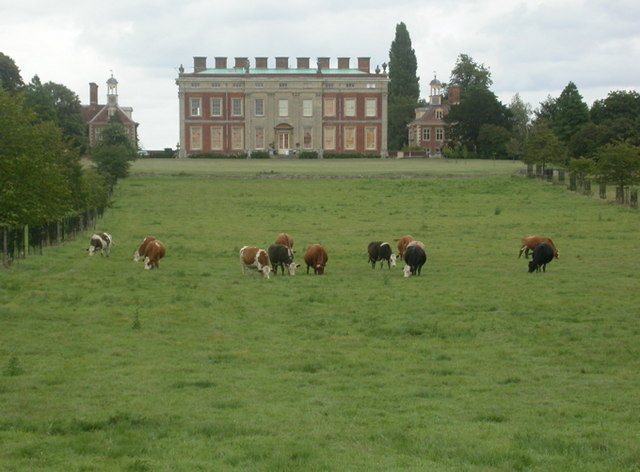
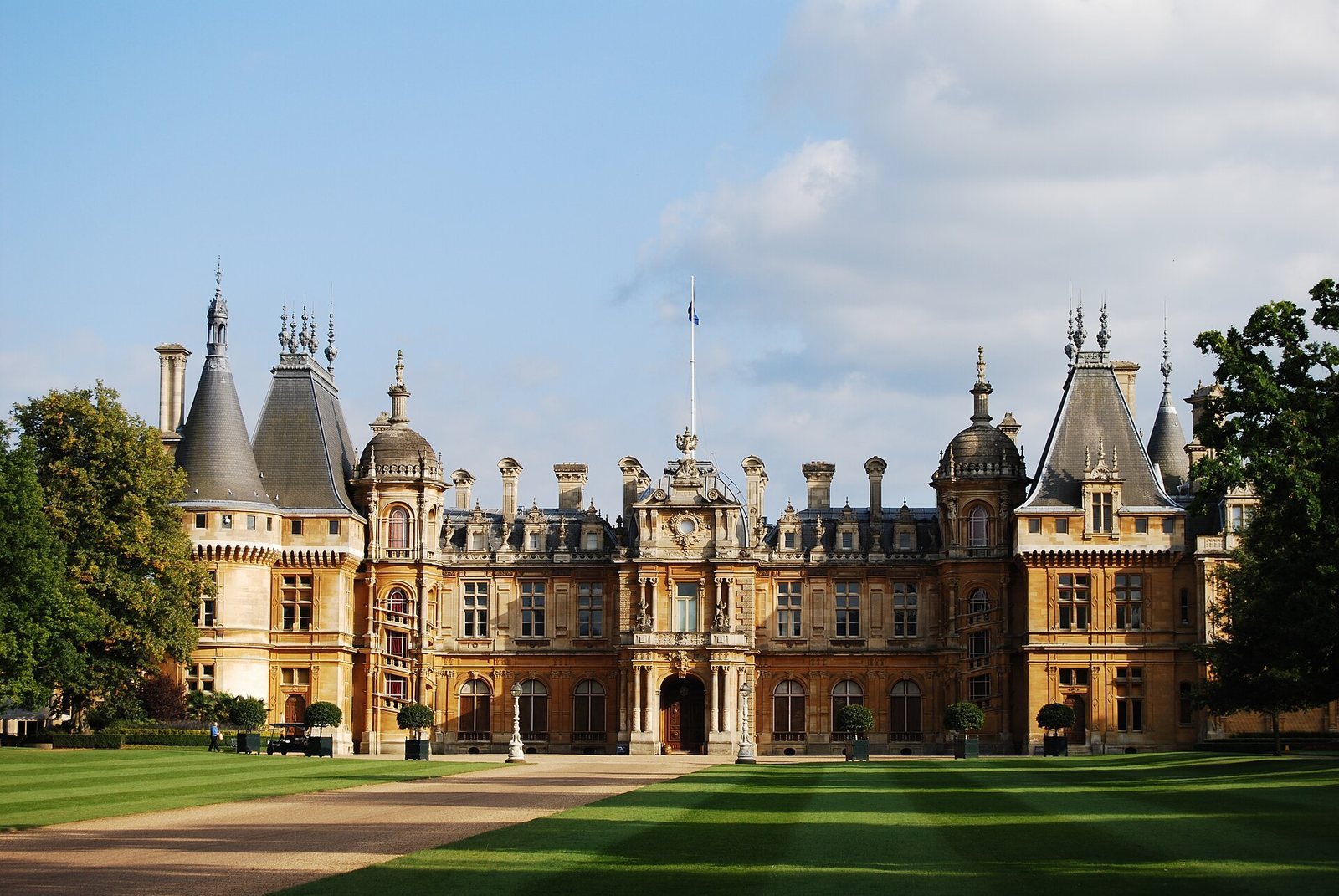
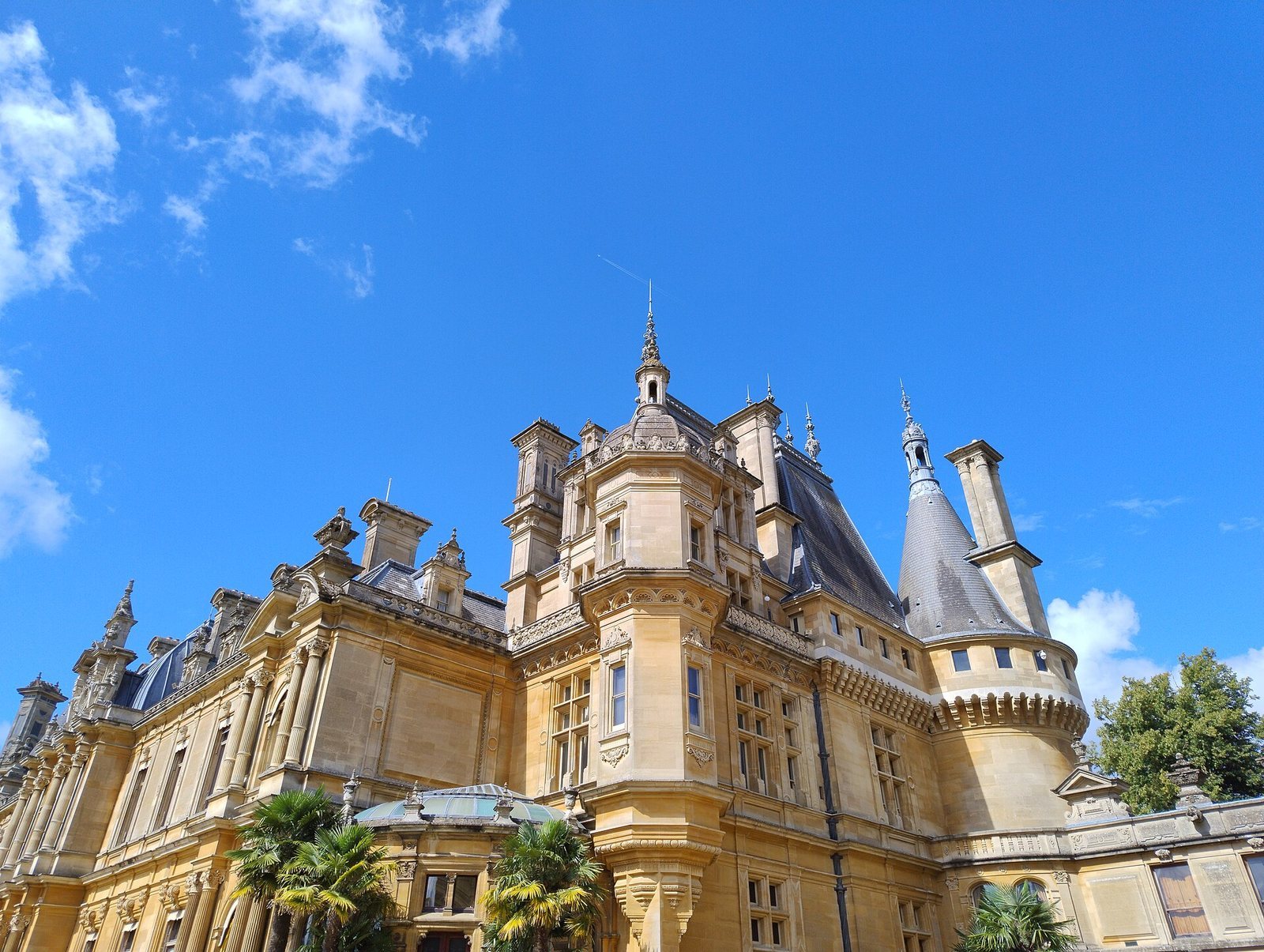
Waddesdon Manor is a country house in the United Kingdom, built for Baron Ferdinand de Rothschild between 1874 and 1889 in the Neo-Renaissance style, a revival of Renaissance architectural forms. Ferdinand, a member of a prominent European banking family, intended it as a weekend residence for entertaining and for housing his art and antiquities.
From Lodge Hill to a Rothschild house
A medieval manor house, probably surrounded by a moat, once stood on the Waddesdon estate, but it has disappeared. When Ferdinand bought the agricultural estate from John Spencer-Churchill, the 7th Duke of Marlborough, in 1874, the future site of the house was a bare hill called Lodge Hill. The estate then had no house, park, or garden. Ferdinand paid for the purchase with money inherited from his father, Anselm.
The hilltop was levelled over the next three years, and the foundation stone was laid on 18 August 1877. The main house was ready to receive guests in 1883, although building continued until 1889.
Ferdinand’s residence
From May to September, Ferdinand held weekend house parties until his death in 1898. The first, in May 1880, brought seven close male friends together for fireworks. When the main house was ready, he hosted 20 guests; parties typically numbered 14 to 20, supported by 24 house staff. Among the visitors was the future Edward VII.
Queen Victoria requested a visit in 1890 and admired both the house and grounds and Ferdinand’s arrangements for her stay. The newly installed electric lighting caught her attention. She reportedly asked for a room to be darkened, then spent about ten minutes turning an electrified chandelier on and off.
Alice and James de Rothschild
After Ferdinand’s death, his sister Alice inherited the manor and treated it as a memorial to him. She worked to preserve the house and enlarged its collections, particularly with furniture and carpets once associated with French royalty, Meissen porcelain, textiles, and armour. Ferdinand’s Renaissance and arms collections went to the British Museum as the Waddesdon Bequest.
When Alice died in 1922, the estate and collections passed to her French great-nephew James, known as Jimmy, de Rothschild. He added objects from his late father Baron Edmond de Rothschild’s collection. In 1928, James and his wife Dorothy hosted a Liberal Party rally at Waddesdon, where David Lloyd George, a former British prime minister and Liberal leader, addressed the crowd.
War and transfer to the National Trust
During the Second World War, children under five evacuated from Croydon lived at the manor, the only time children made it their home. James and Dorothy also sheltered a group of Jewish boys from Frankfurt.
In 1957, James gave the manor, its contents, and 120 acres of grounds to the National Trust, a charitable organization that owns and conserves historic places in the United Kingdom. Valued at £750,000, the gift was the largest the Trust had received at that time. Dorothy moved away, and the manor ceased to be a residence. It opened to the public in 1959.
Stewardship and conservation
Dorothy chaired the manor’s management committee in collaboration with the National Trust. After her death in 1989, her nephew Jacob Rothschild took on her position and responsibilities. At his initiative, the manor underwent a major restoration between 1990 and 1997. An agreement made in 1993 allowed the Rothschild family to manage Waddesdon as a semi-independent organization within the Trust. The Rothschild Foundation continued to manage the property, with Jacob as its chair until his death in February 2024. From 2004 to 2006, the Baron’s Room and Green Boudoir were restored to reflect Ferdinand’s original arrangements.
A 2003 burglary involving the Johnson Gang led to the theft of about 100 French gold snuffboxes and other jewel-encrusted objects, including pieces that had belonged to Marie-Antoinette and Madame de Pompadour. Fragments of some objects were found among melted gold in the wreckage of a burned vehicle near the manor. A small sweet box from the theft was identified at auction and returned to Waddesdon in 2021. The house is Grade I listed, England’s highest category for buildings of special architectural or historic interest, and its gardens hold Grade I status on the Register of Historic Parks and Gardens.
Remains
The surviving estate combines the main house with formal gardens, a landscaped park, service buildings, and garden structures. The house’s varied French-inspired design is set within grounds shaped by extensive landscaping of the hill, with formal flower beds, planted views, sculptures, and an aviary.
The house and its interiors
Architecture and engineering
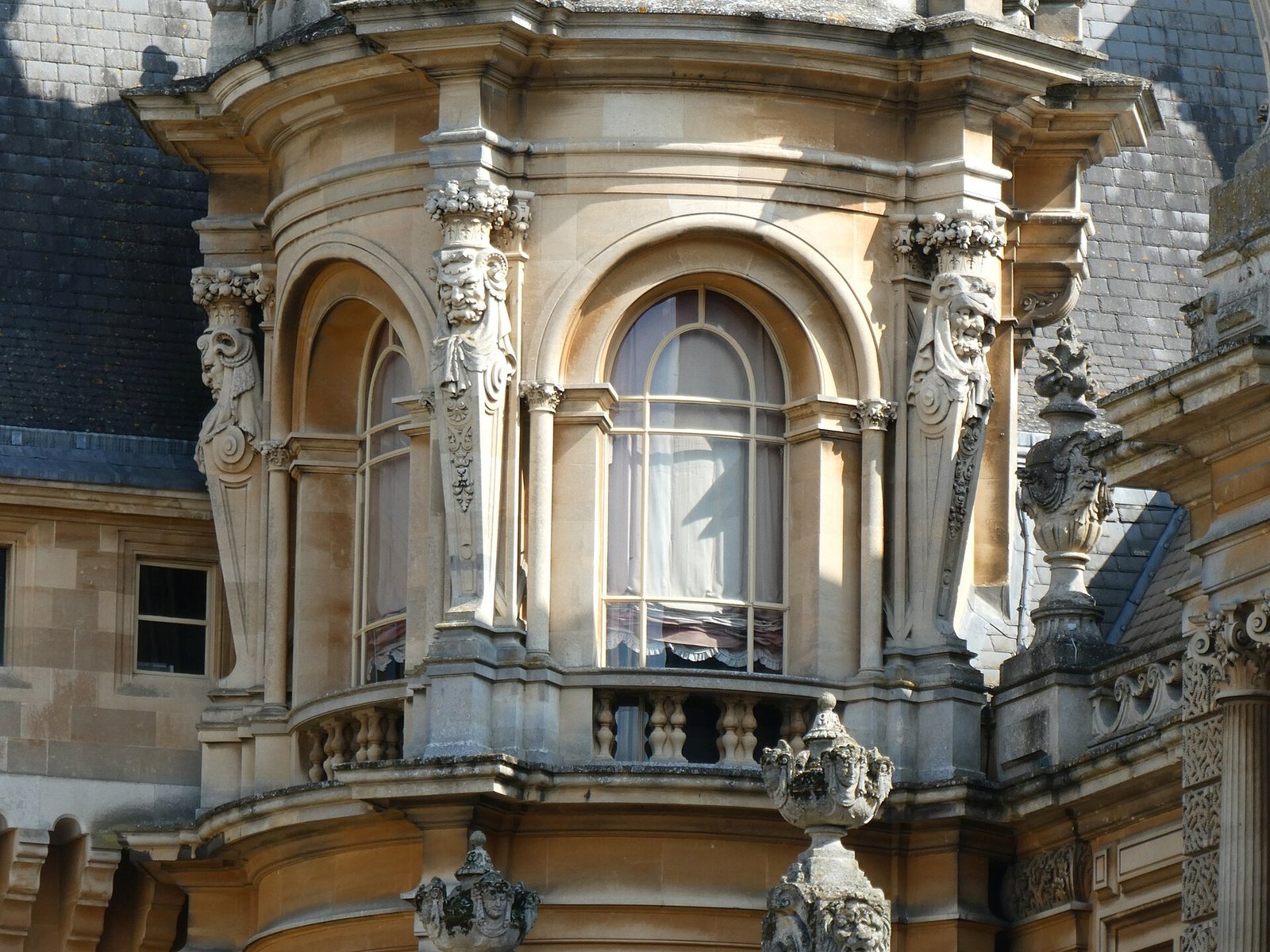
Designed by the French architect Gabriel-Hippolyte Destailleur, the house draws on the great Renaissance châteaux of the Loire Valley and on several other French examples. Its towers take inspiration from the Château de Maintenon. The paired staircase towers on the north side recall the staircase tower at the Château de Chambord, though Waddesdon’s windows are glazed and more ornate. A concealed steel frame carries the strain of the upper-floor walls, allowing the upper-floor plan to differ substantially from the lower floors. The house also had hot and cold running water in its bathrooms, central heating, and an electric bell system for summoning staff. Edward Conder & Son was the building contractor.
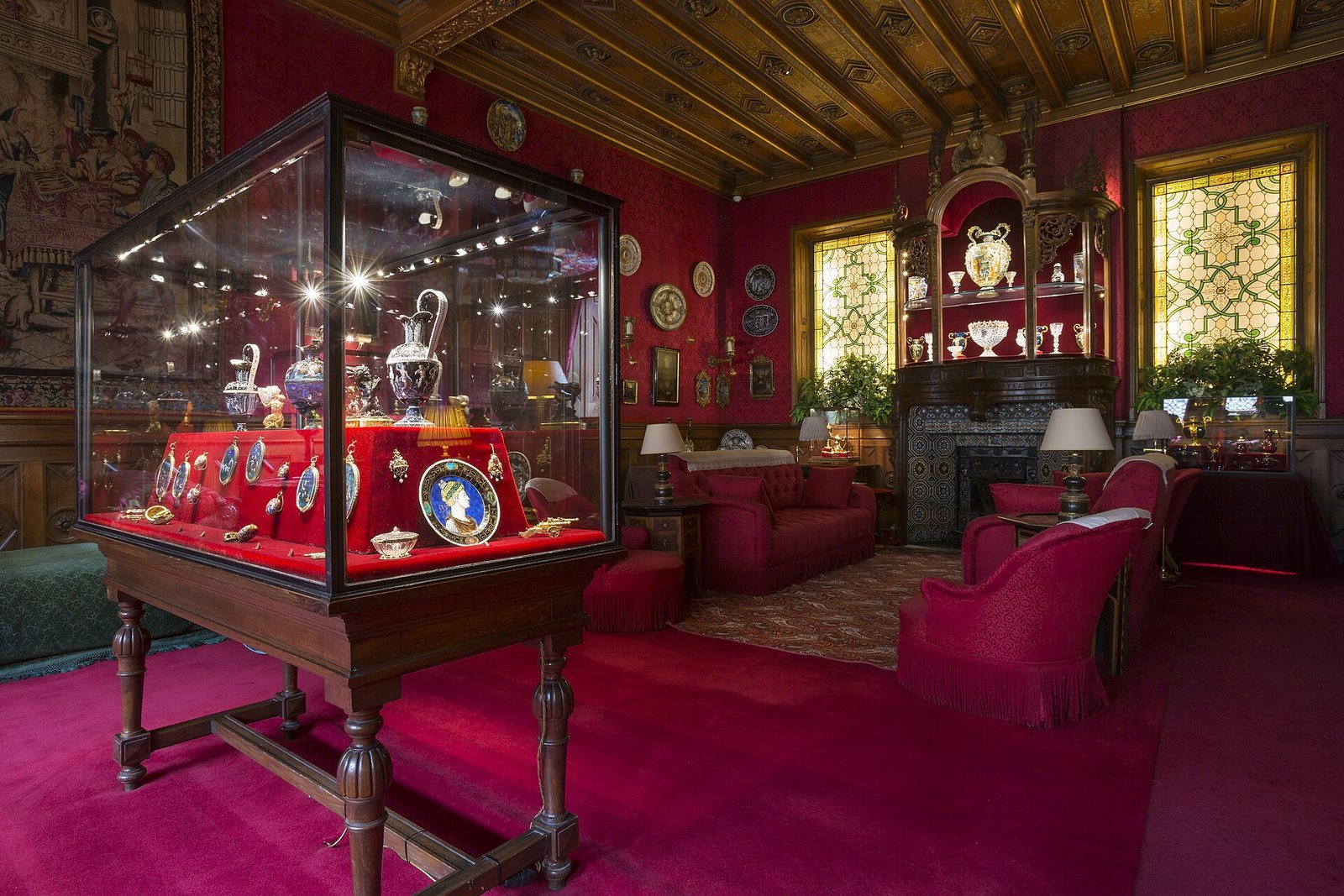
The eastern Bachelors’ Wing was extended after 1885, and a late-Gothic Morning Room was added on the west after 1888. Named interiors include the Dining Room, Tower Salon, Baron’s Room, Green Boudoir, and New Smoking Room. The Grey Room has 18th-century French wood panelling and a ship-shaped Sèvres vase, while a musical mechanical elephant made by French clockmaker H. Martinet in 1774 stands in the East Gallery. Ferdinand’s privately published The Red Book included photographs of the interiors taken in 1897.
Collections and display
The interiors bring together English 18th-century portraits, French wood panelling, carpets from the Savonnerie workshop, and tapestries from the Gobelins and Beauvais workshops. The collections also include furniture, Sèvres porcelain, books, Dutch paintings, Renaissance objects, arms and armour, Limoges enamels, manuscripts, prints, and drawings. The musical elephant is an automaton, a mechanical figure designed to move by itself. Three of the ten surviving Sèvres porcelain vessels shaped like ships and made in the 1760s are at Waddesdon. One bears a rare scene connected with the Seven Years’ War, a mid-18th-century conflict involving major European powers.
The New Smoking Room once housed a small museum of Ferdinand’s Renaissance collection and is also identified as a restored smoking room containing Renaissance treasures. The collection at Waddesdon grew chiefly through the collecting of Ferdinand, Alice, their cousin Edmond, and Jacob Rothschild. It includes Jean-Baptiste-Siméon Chardin’s Le Faiseur de Châteaux de Cartes, painted in 1735 and acquired for the collection in 2007, as well as two portrait pots of Ferdinand and Alice by Kate Malone.
Wine cellars
Created as part of the manor’s centenary restoration and opened in 1994, the wine cellars are modelled on the private cellars at Château Lafite Rothschild. They hold more than 15,000 bottles, most from the Château Lafite Rothschild and Château Mouton Rothschild estates. The collection is described as the world’s largest private collection of Rothschild wines. Some bottles are about 150 years old, and the cellar labels include designs by Salvador Dalí and Andy Warhol.
Gardens and designed landscape
Landscape and planting
French landscape architect Élie Lainé laid out the gardens and park after the hill was extensively reshaped. William Barron oversaw the movement of trees from the surrounding countryside, some during the 1870s, to give the grounds mature-looking planting, views, and focal points. Deciduous trees were selected for their shape, flowers, and autumn colour, while conifers supplied evergreen foliage, cones, and berries. The grounds include chestnuts, limes, maples, yews, cedars, and redwoods. An attempt to reduce the shock of transplanting by chloroforming tree roots failed, but many large trees were successfully moved.
Some trees commemorate visitors who planted them, including Queen Victoria, Edward VII, George V, and Queen Mary. Later planters included Charles III when he was Prince of Wales and prime ministers John Major and Tony Blair.
South Parterre and garden features
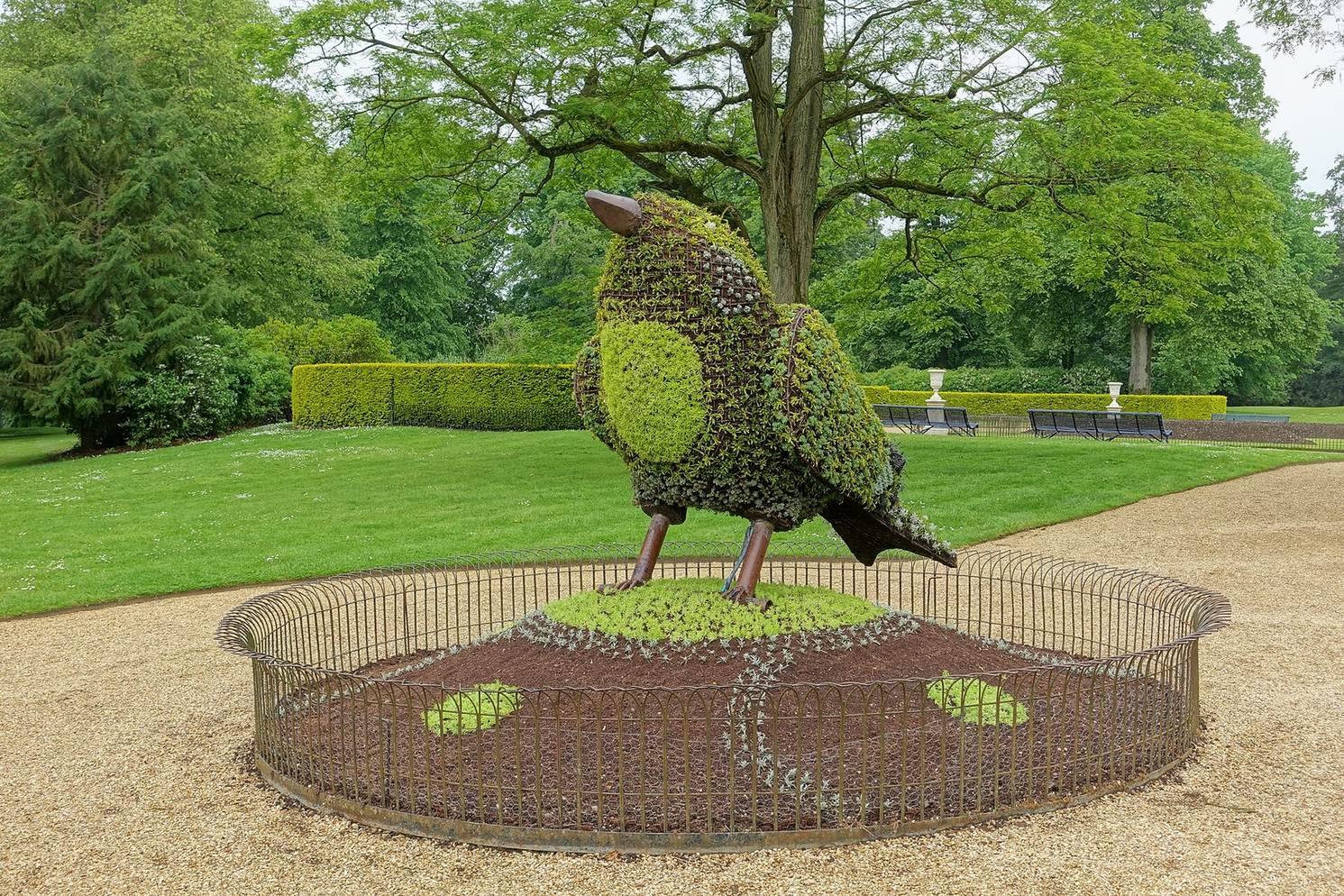
The South Parterre, a formal garden area with ornamental beds, is the focus of elaborate flower designs. Alice introduced three-dimensional bedding shaped as a bird, a feature recreated in the gardens. The designs are now computer-planned, and their patterns change each year.
James Pulham made artificial rock formations for the grounds, including features that housed mountain goats and llamas in Ferdinand’s zoo. Near the Dairy Water garden, further rockwork accompanied a large kitchen garden and glasshouses where fruit and flowers, including Ferdinand’s orchids, were grown. Guests were taken to the ornamental Dairy to taste milk from cows whose names were displayed on Meissen porcelain tags.
Fountains and sculpture
Fountains north and south of the house incorporate sculptures of Pluto and Proserpine, Roman deities, and tritons and nereids, figures associated with the sea. Giuliano Mozani made these works around 1720 for the Ducal Palace at Colorno. A bust of Erato, the muse of lyric poetry, has been attributed to Filippo Parodi. Near the Aviary stands Jean Raon’s Apollo of 1699, associated with a commission at Versailles. The grounds also contain Dutch vases in the style of Albert Jansz Vinckenbrinck and sculptures by Jan van Logteren, originally displayed at Aston Clinton House.
At the end of the Baron’s Walk, Stephen Cox’s tomb-like sculpture Interior Space: Terra degli Etruschi was installed in 2001. A nearby marble slab bears the names of Rothschild family members who built and maintained Waddesdon. Later works on the grounds include Sarah Lucas’s life-size Suffolk Punch horse and cart filled with squashes, a work by Angus Fairhurst, and Joana Vasconcelos’s two sculptures titled Lafite, installed in front of the manor in 2015. Works by Richard Long are placed near the house and elsewhere on the estate.
Other estate buildings
Stables
The stables were built west of the manor in 1884. Ferdinand and his stud groom planned them with Conder, while Destailleur designed the façades in a 17th-century French style.
Aviary
Completed in 1889, Ferdinand’s cast-iron Aviary draws on 18th-century pavilions at Versailles and Chantilly and on his childhood home at Grüneburg. Its paint and gilding were restored in 2003. It now houses endangered species, with an emphasis on breeding programmes, and is registered as a zoo.
Eythrope Pavilion
The nearby Eythrope Pavilion is a separate estate building designed by George Devey for Alice de Rothschild. It later became the home of Dorothy de Rothschild.
Later buildings on the wider estate
The wider estate includes Windmill Hill Archive, designed by Stephen Marshall in 2011, and Flint House, designed by Charlotte Skene-Catling of Skene Catling de la Peña in 2015. Flint House received the Royal Institute of British Architects’ House of the Year award that year.