Évora Medieval City Walls: A Defensive Enclosure in Portugal
Site at a Glance
- Rating
- 4.6
- Popularity
- Medium
- Country
- Portugal
- Primary era
- Medieval
- Eras represented
- Medieval, Modern
- Civilizations
- Portuguese, Visigothic
- Site type
- Military
- Remains
- Wall
On this page14 sections
History
The Évora Medieval City Walls are a medieval defensive enclosure in Évora, Portugal. The principal works on the enclosure were completed under Ferdinand I, and its surviving architecture reflects Gothic and Mannerist traditions and Manueline, a Portuguese architectural style.
Roman and Visigothic Évora
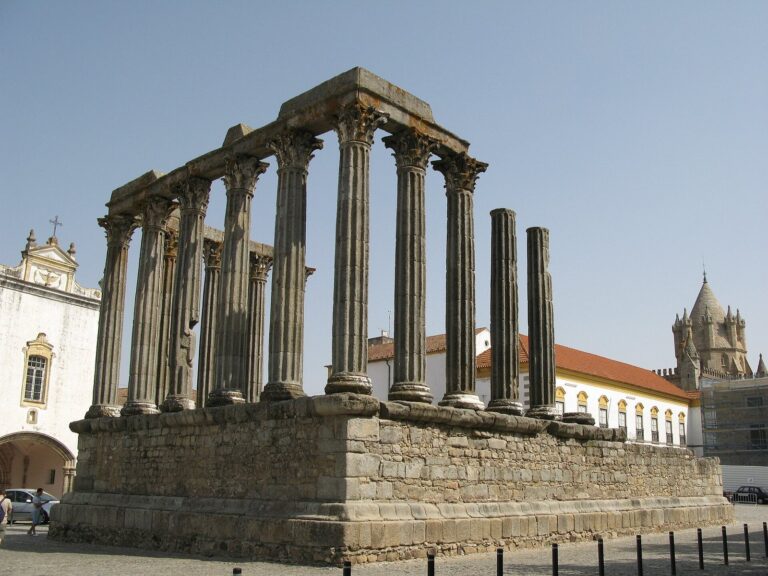
Évora was inhabited in prehistoric times, but its importance grew under Roman rule. An oppidum, or fortified settlement, called Ebora Cerealis was founded there. After the city supported Julius Caesar in his conflict with Pompey, it received the name Liberalitas Julia around 60 BC and benefited from major public works.
Évora became a bishopric in the fourth century. Under Visigothic rule it served as a minting center, and three towers were built, including the still-visible Torre de Sisebuto. The towers were not substantially altered during the Muslim conquest of Iberia.
Christian conquest and medieval defenses
During the Reconquista, the centuries-long Christian reconquest of territories ruled by Muslim states in Iberia, Afonso I took Évora in 1159. Muslim forces soon retook the city. In 1165, the military leader Geraldo Sem Pavor captured it for good with help from knights of the Order of Calatrava, a Castilian military religious order. The knights had settled in Évora as the Friars of Évora. By 1181 they were known as the Order of Évora, which later became the Order of Aviz after establishing its headquarters in the city.
In 1191, during the reign of Sancho I, Évora withstood an assault led by Abu Yusuf Yaqub al-Mansur, ruler and commander of the Almohads, a North African Muslim dynasty and empire. The knights helped defend the city. Portugal’s frontier had by then been pushed back to the Tagus.
Expansion of Évora’s defenses is associated with Denis I, but major construction took place under his successor, Afonso IV. He spent long periods in the city and departed from there for the Battle of Tarifa in 1340. The chancery of Pedro I first refers to the city enclosure, naming walls, ditches, and barbicans, which were outer defensive works. Ferdinand I completed the works, giving the enclosure its name, the Fernandine walls. The Porta do Raimundo is mentioned in 1373.
Political conflict and later enlargement
In 1382, John, then master of the Order of Aviz, was reportedly imprisoned in the castle on the orders of regent Eleanor Teles de Menezes. She suspected him of conspiring with Gonçalo Vasques de Azevedo against the monarch. The Earl of Cambridge, who commanded English troops in Portugal amid Edward III’s claims to the Castilian throne, intervened and secured John’s release.
At the start of the Portuguese crisis of 1383-1385, the castle’s governor, Álvaro Mendes de Oliveira, supported Eleanor, while the faction seeking to preserve Portugal’s independence from a union with Castile also took the castle. Diogo Lopes Lobo, Fernão Gonçalves d’Arca, and his son João Fernandes attacked its strongly defended position, firing crossbow bolts from the cathedral and the butcher’s market. The attackers took the garrison’s women and children hostage to force surrender. After the castle fell, it was plundered and supporters of the regent were massacred, including a Benedictine abbess who had sought refuge in the cathedral.
The old enclosure was enlarged under Afonso V. In 1571, Sebastian ceded the Porta da Alagoa to the convent of Saint Helena of Mount Calvary for the construction of an elevated terrace.
Warfare and modern changes
During the Portuguese Restoration War, a conflict over Portugal’s independence from Spain, Évora’s defenses were modernized and the castle became a fortified stronghold. Spanish forces under Don Juan of Austria captured the city after a siege in May 1663, destroying the Porta da Alagoa. Portuguese forces retook it on 24 June.
During the Peninsular War, part of the wider Napoleonic Wars, French forces under General Louis Henri Loison overcame the defenses, in part because ammunition was insufficient. In 1845, the northern covered passage was demolished and replaced with a road passage between Évora and Arraiolos. The Porta do Raimundo was demolished in 1880.
A decree of 4 June 1922 declared Évora’s defenses National Monuments. The walls also form part of the Historic Centre of Évora, which is on the UNESCO World Heritage List.
Remains
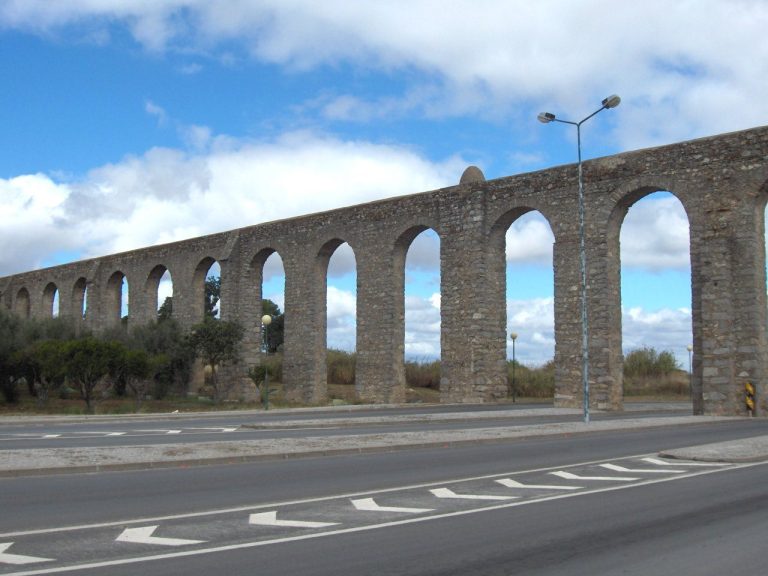
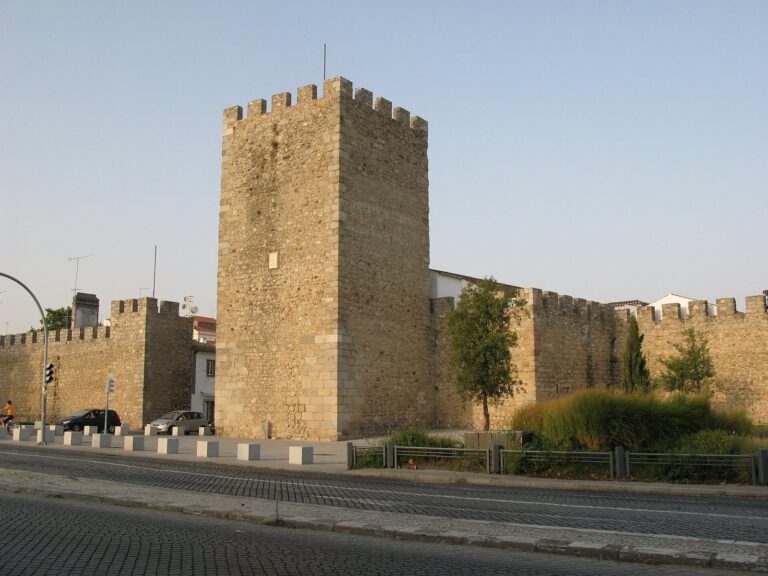
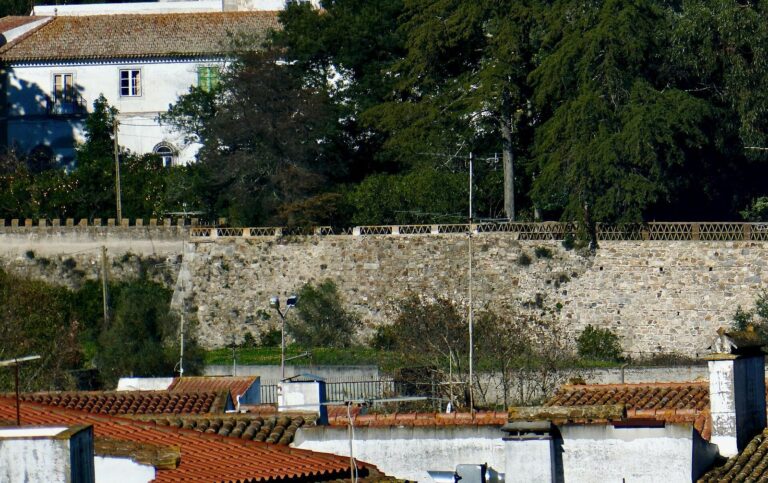
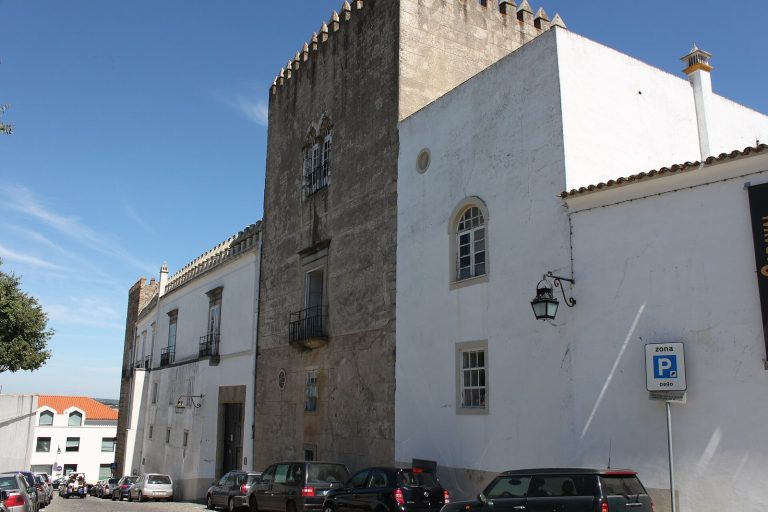
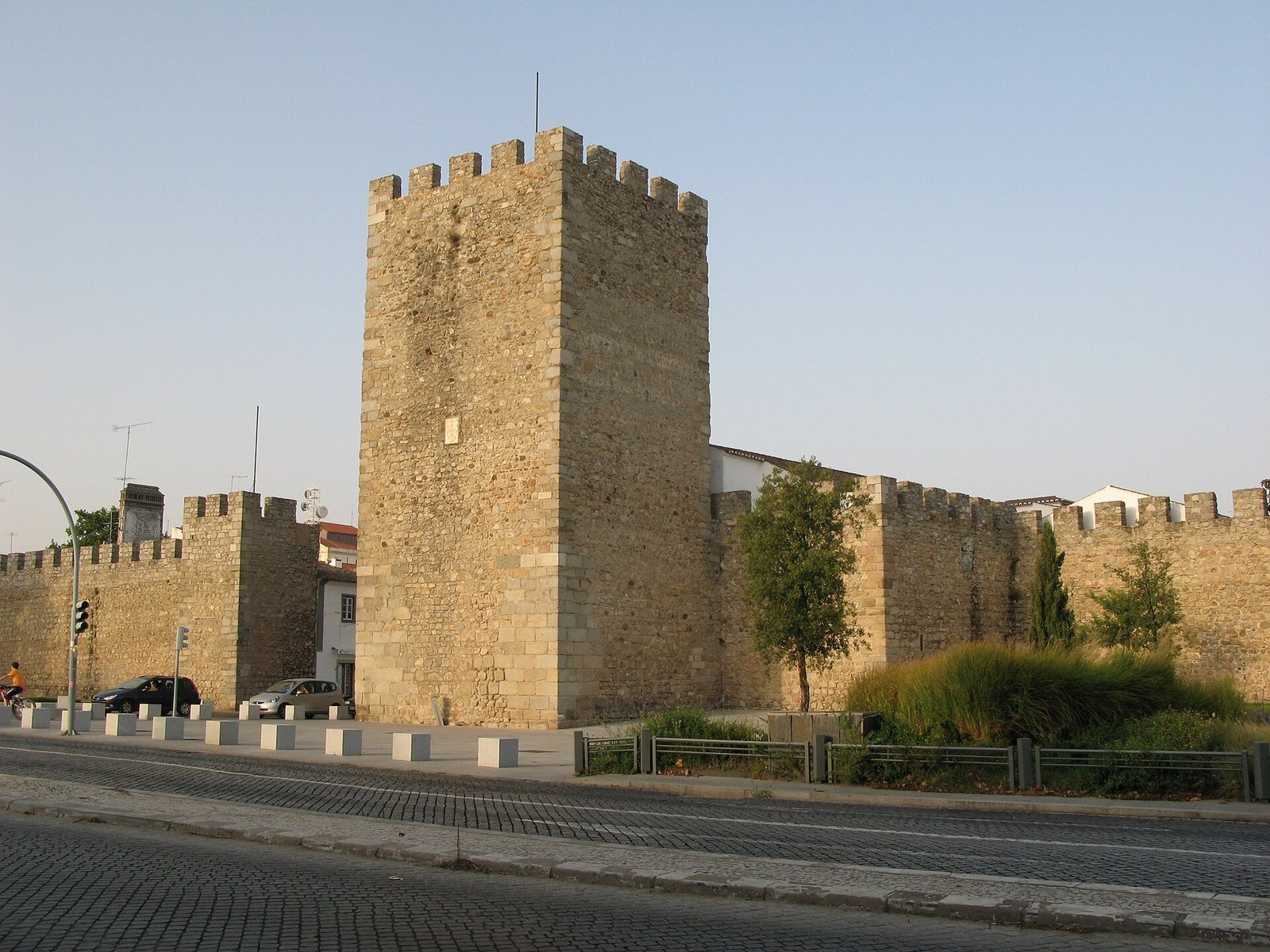
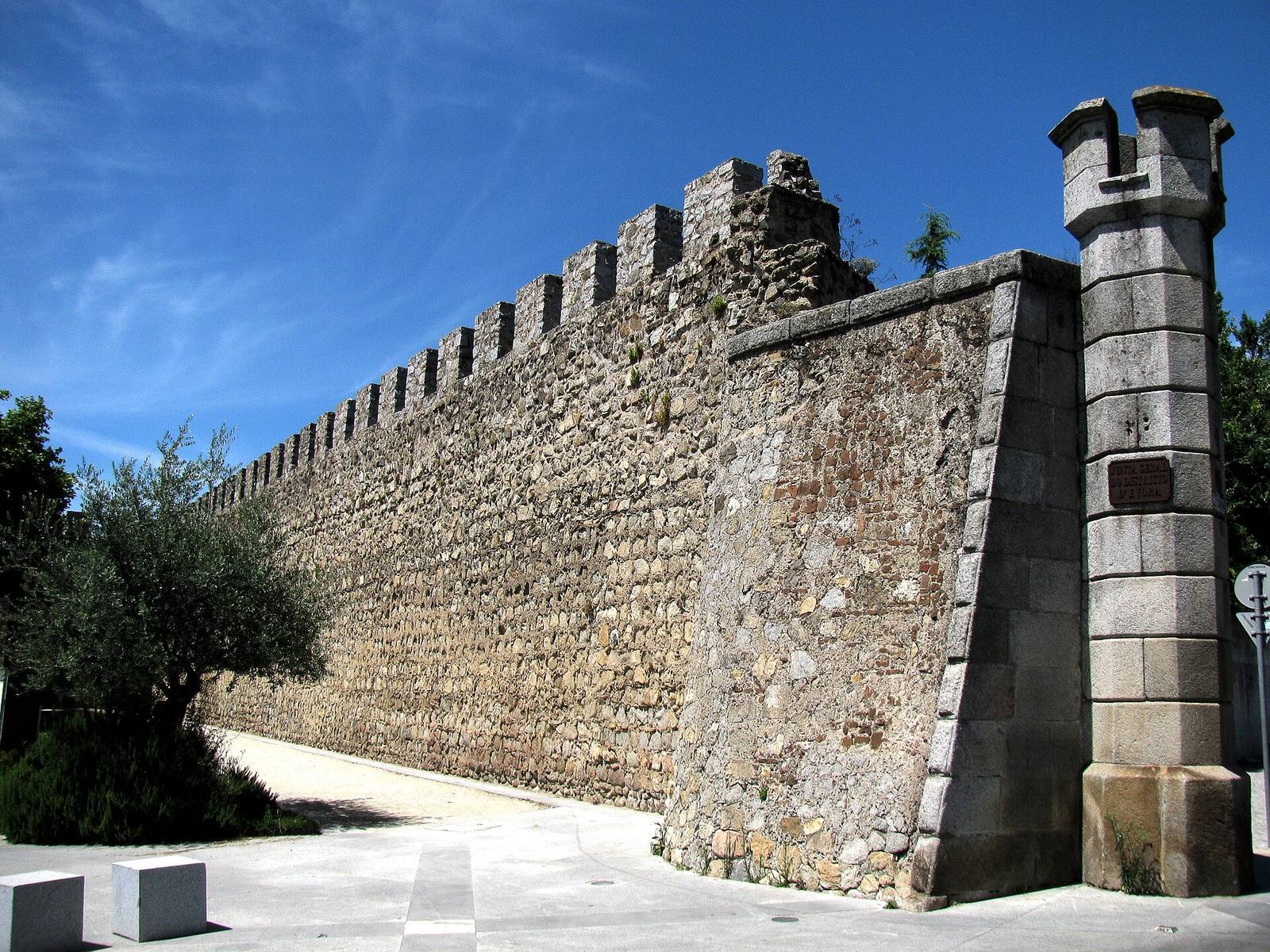
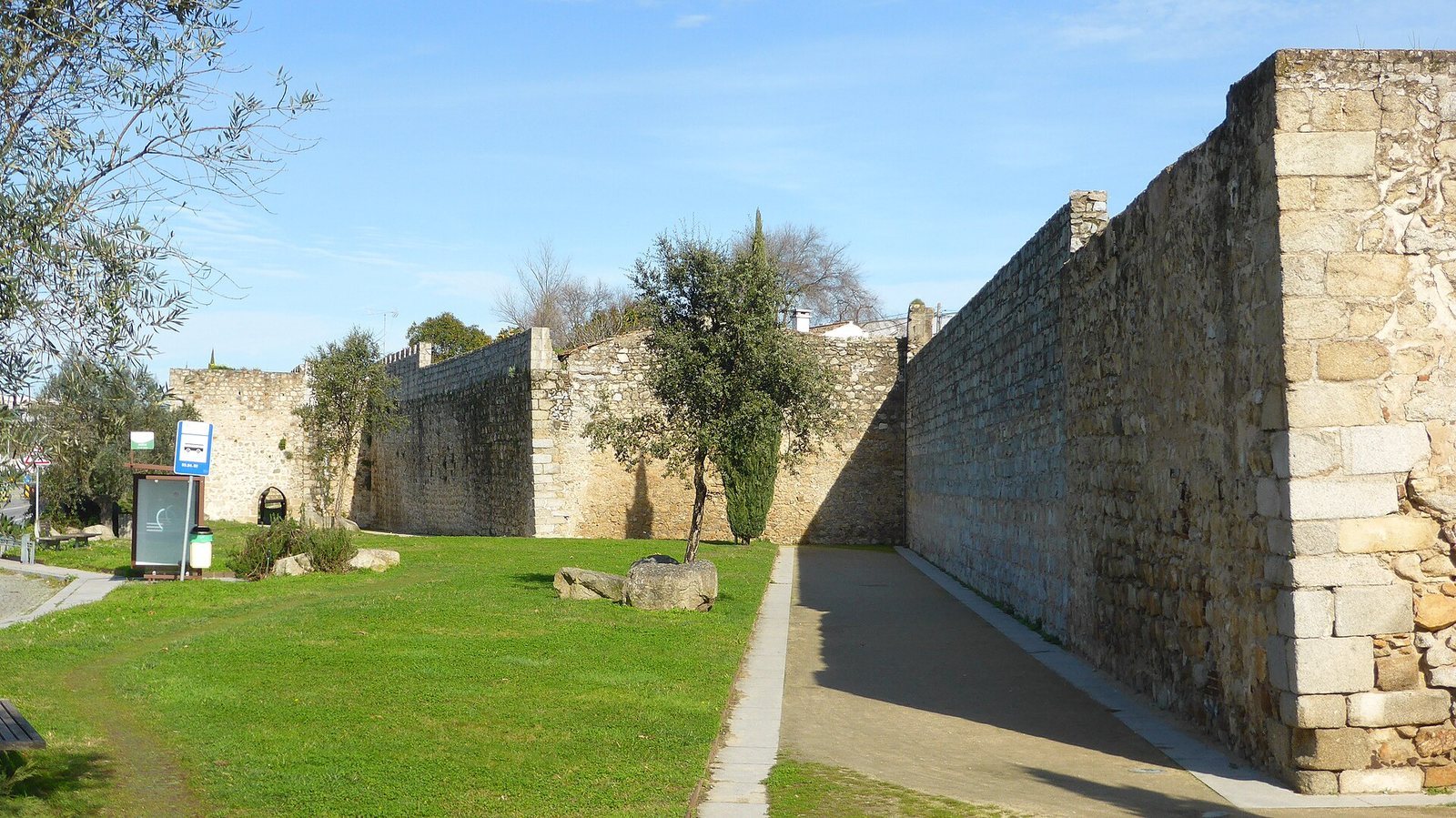
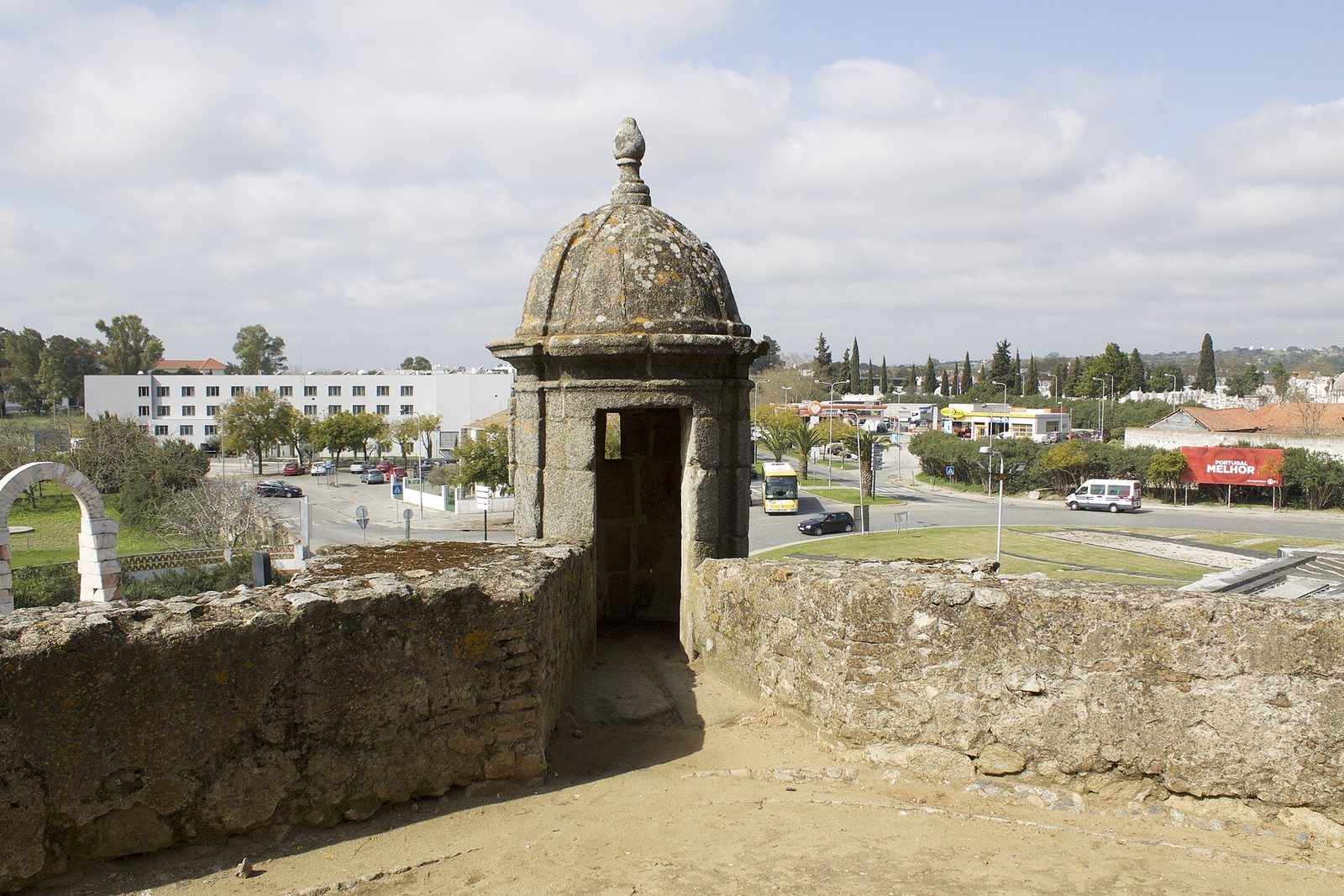
The medieval enclosure retains most of its lines, with several well-preserved stretches and architectural features. Its surviving remains include earlier defenses, wall sections, gates, a castle, and altered passages.
Earlier defensive remains
Remains of an earlier defensive wall can be seen in Misericórdia Square beside Passeio de Diana. The Torre de Sisebuto, one of the three towers built under Visigothic rule, also survives.
Walls and entrances
Enclosure
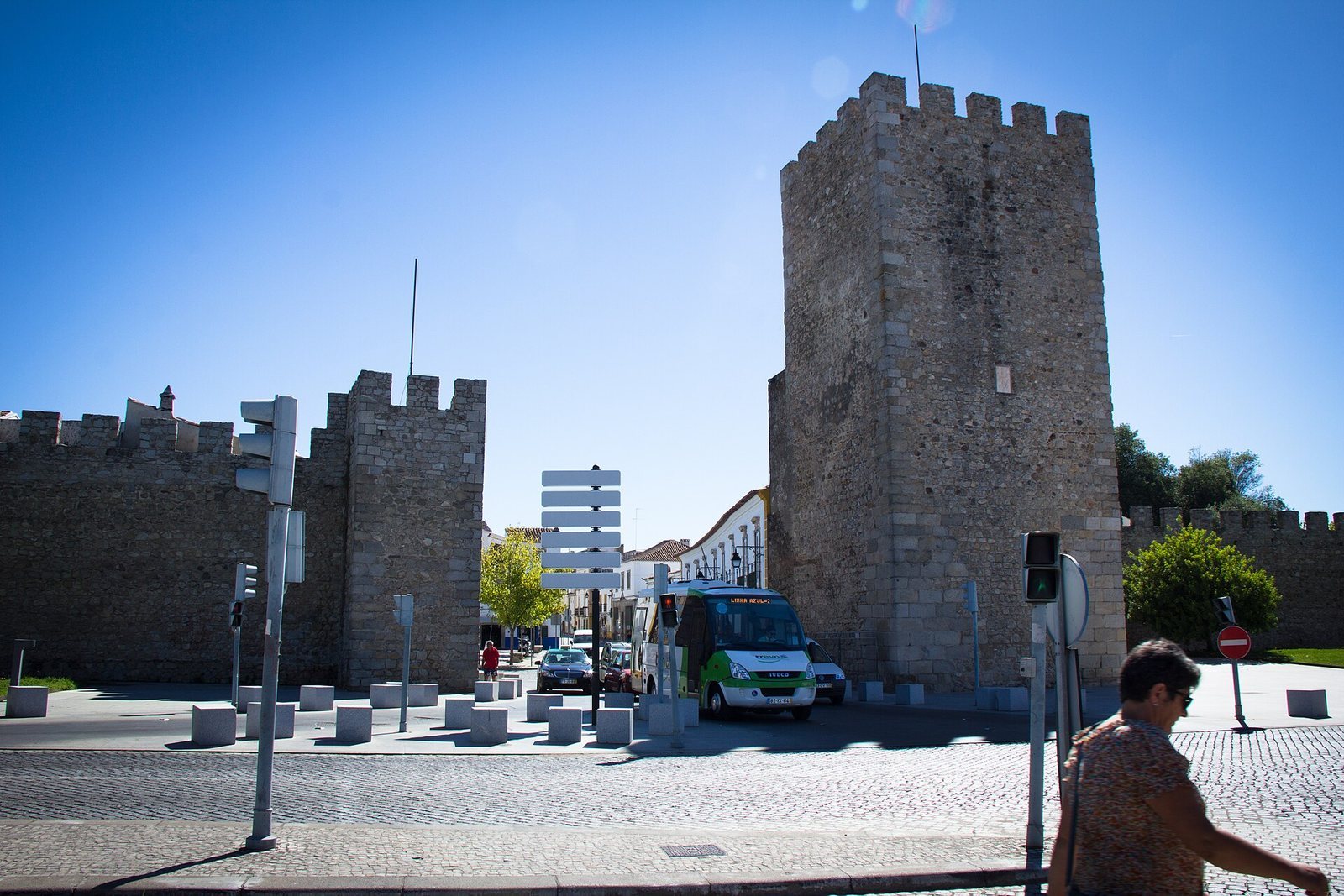
The stretch between the Porta da Alagoa and the Porta do Raimundo retains its original characteristics and was not changed during the seventeenth- and eighteenth-century campaigns. The enclosure’s surviving fabric includes Gothic and Mannerist work as well as Manueline elements.
City gates
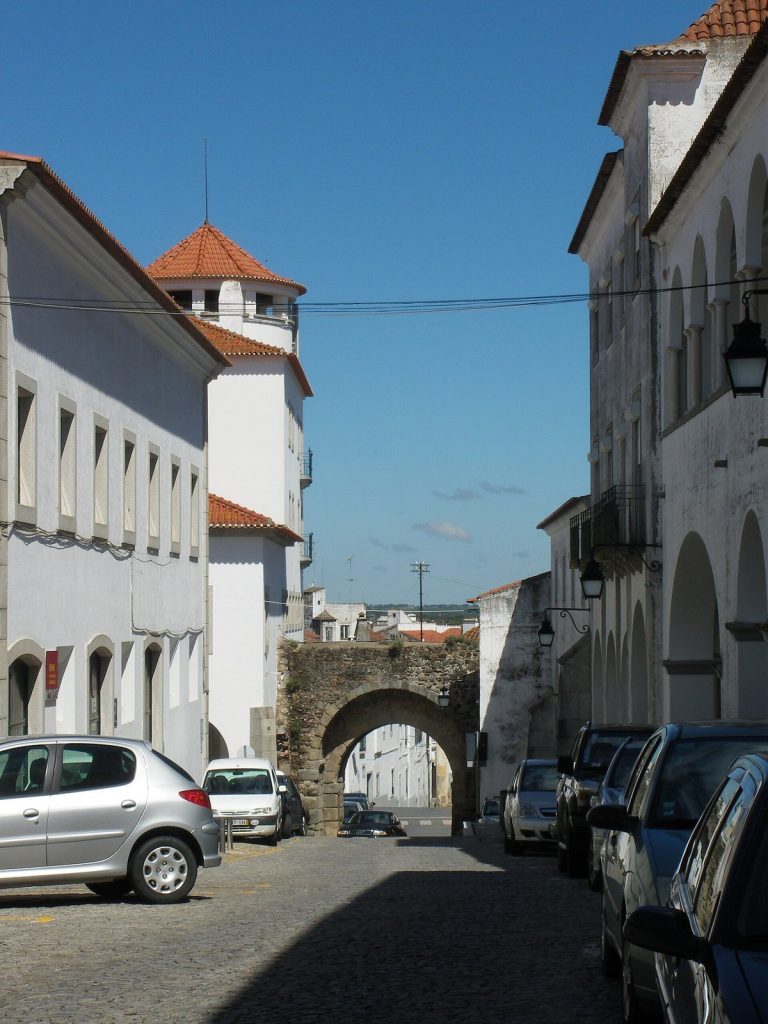
The Porta de Avis is mentioned in 1353. The Porta de Mendo Estevens is also called the Porta do Moinho de Vento. A tower defended the Porta da Alagoa, whose original features were lost through successive construction. The Porta de Alconchel, the city’s principal gate, was protected by two large towers.
Porta do Raimundo
The Porta do Raimundo was rebuilt in a deliberately old-fashioned style after its demolition. It stands within the stretch of enclosure between this gate and the Porta da Alagoa.
Castle and later alterations
Castle and northern passage
The castle had strong walls and towers, with a ditch around it. The former covered passage on the northern side has been replaced by a road passage carrying traffic between Évora and Arraiolos.
Southwestern towers and gate
The small southwestern defensive tower was almost entirely rebuilt in 1945. Work began in late 1993 on a marble gate between the two southwestern towers near the Postigo dos Penedos, intended to provide pedestrian access to the historic center from outside the walls.