Visconti Castle in Vogogna: A Medieval Border Fortification
Site at a Glance
- Popularity
- Medium
- Country
- Italy
- Primary era
- Medieval
- Eras represented
- Medieval, Early Modern
- Civilizations
- Duchy of Milan, Holy Roman Empire
- Site type
- Military
- Remains
- Castle
On this page9 sections
History
Visconti Castle in Vogogna is a stone fortification in Italy, set above the town’s historic center. In 1348, Giovanni Visconti, bishop of Novara and lord of Milan, enlarged the castle as part of an effort to strengthen the Duchy of Milan against Swiss incursions from Valais, in southwestern Switzerland. Before this enlargement, the Vogogna Rocca, a fortified stronghold on the slopes above town, preceded the castle. A rampart probably protected the route leading uphill, while a tower at the castle site controlled access to it.
Borromeo and Sforza rule
In 1446, Filippo Maria Visconti granted the castle and its territory to his treasurer, Vitaliano Borromeo, a banker of Tuscan descent. The Borromeo family strengthened the fortification, and in 1487 the Sforza, the ruling house that succeeded the Visconti in Milan, confirmed the family’s possession. The castle remained with the Borromeo for about three centuries, with only brief interruptions.
In 1514, while the Sforza ruled Milan, the castle became part of a new wall around Vogogna. The following year, Swiss troops supported by men from upper Val d’Ossola occupied and damaged it. During Spanish rule in the sixteenth century, the castle lost strategic importance, and the Vogogna Rocca was destroyed.
Later uses and restoration
At the end of the eighteenth century, the castle passed into French hands during the Napoleonic era, when Napoleon Bonaparte’s rule and French expansion reshaped parts of Europe. It later became municipal property and served as a prison for common and political detainees. The tower was used for confinement, while the rest of the building served as a dwelling and warehouse.
Under the House of Savoy, the ruling dynasty in Piedmont, the castle housed the Royal Carabinieri, a military corps with policing duties. It was later leased as an annex to the lower Villa Biraghi until 1952. Deterioration led to its closure in 1970. Restoration began in 1927, followed by a further campaign that started in 1990 and concluded in June 2005.
Remains
Setting and plan
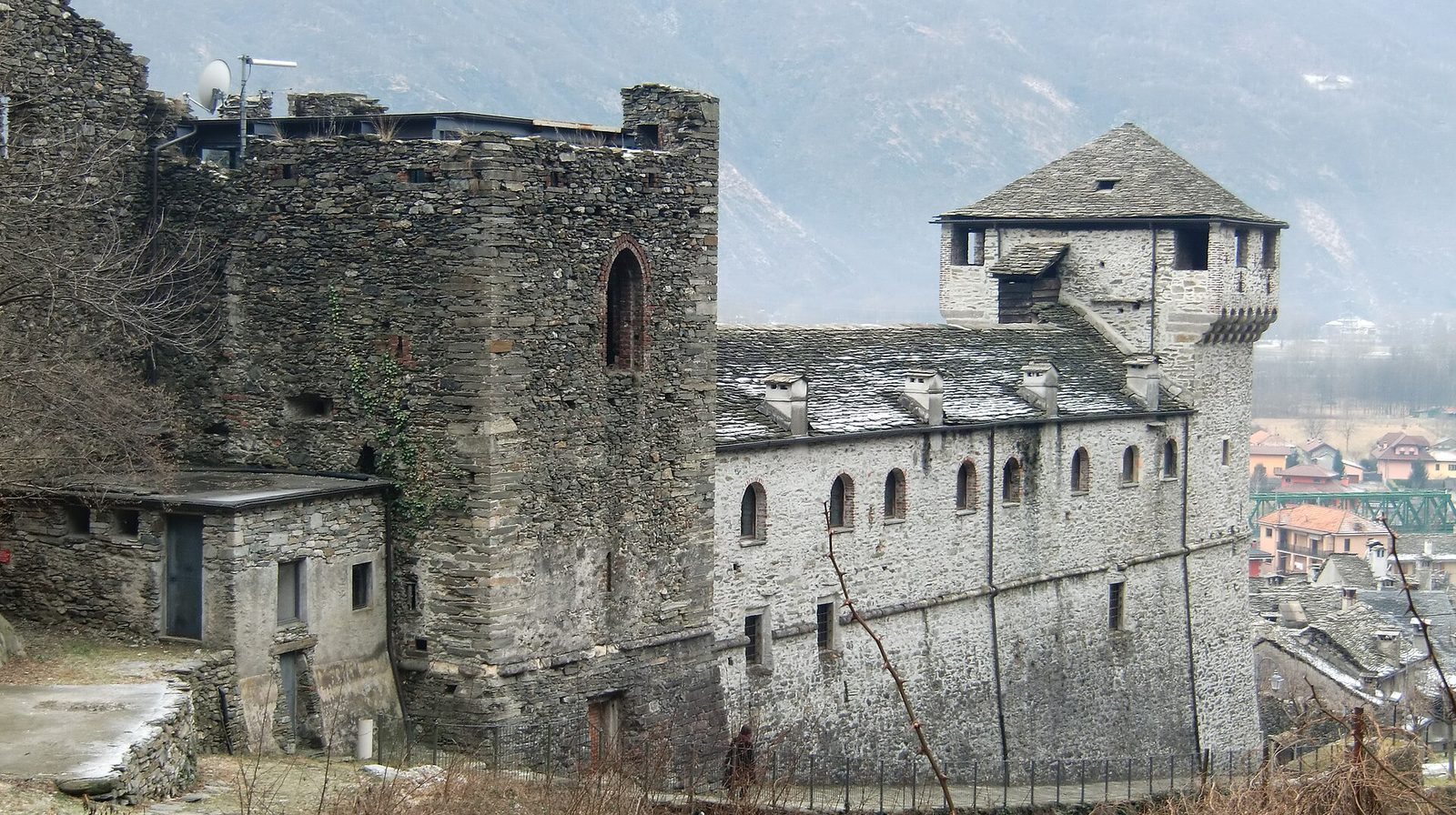
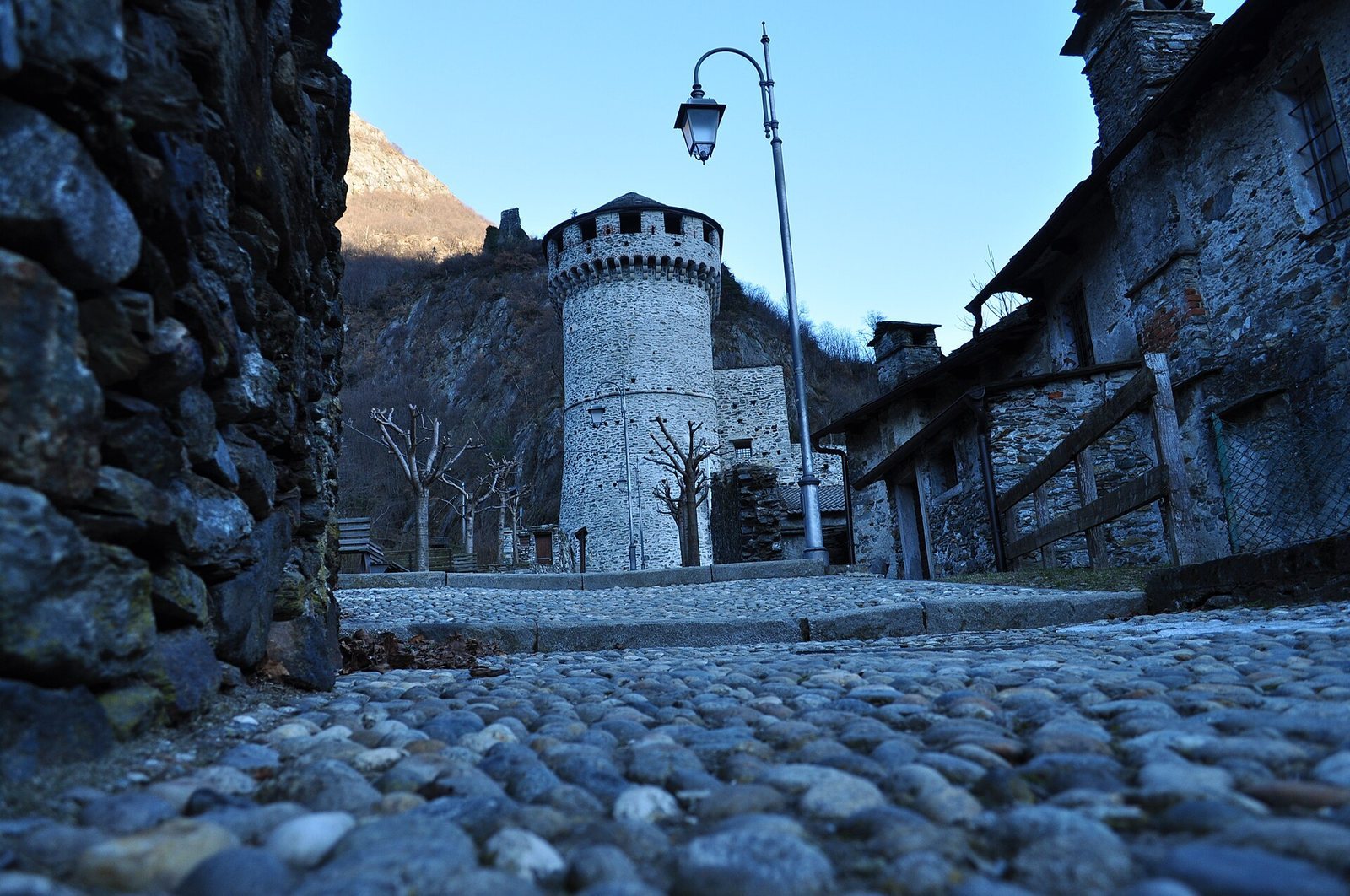
The stone castle occupies higher ground north of Vogogna’s historic center, within Val Grande National Park. Its irregular plan reflects the steep slope and successive building phases, and its large tower rises above the town. The associated Vogogna Rocca stands in ruins on Mount Orsetto, at about 350 metres above sea level. A path toward the stronghold begins along the castle’s northern side.
Castle towers and main building
Polygonal tower
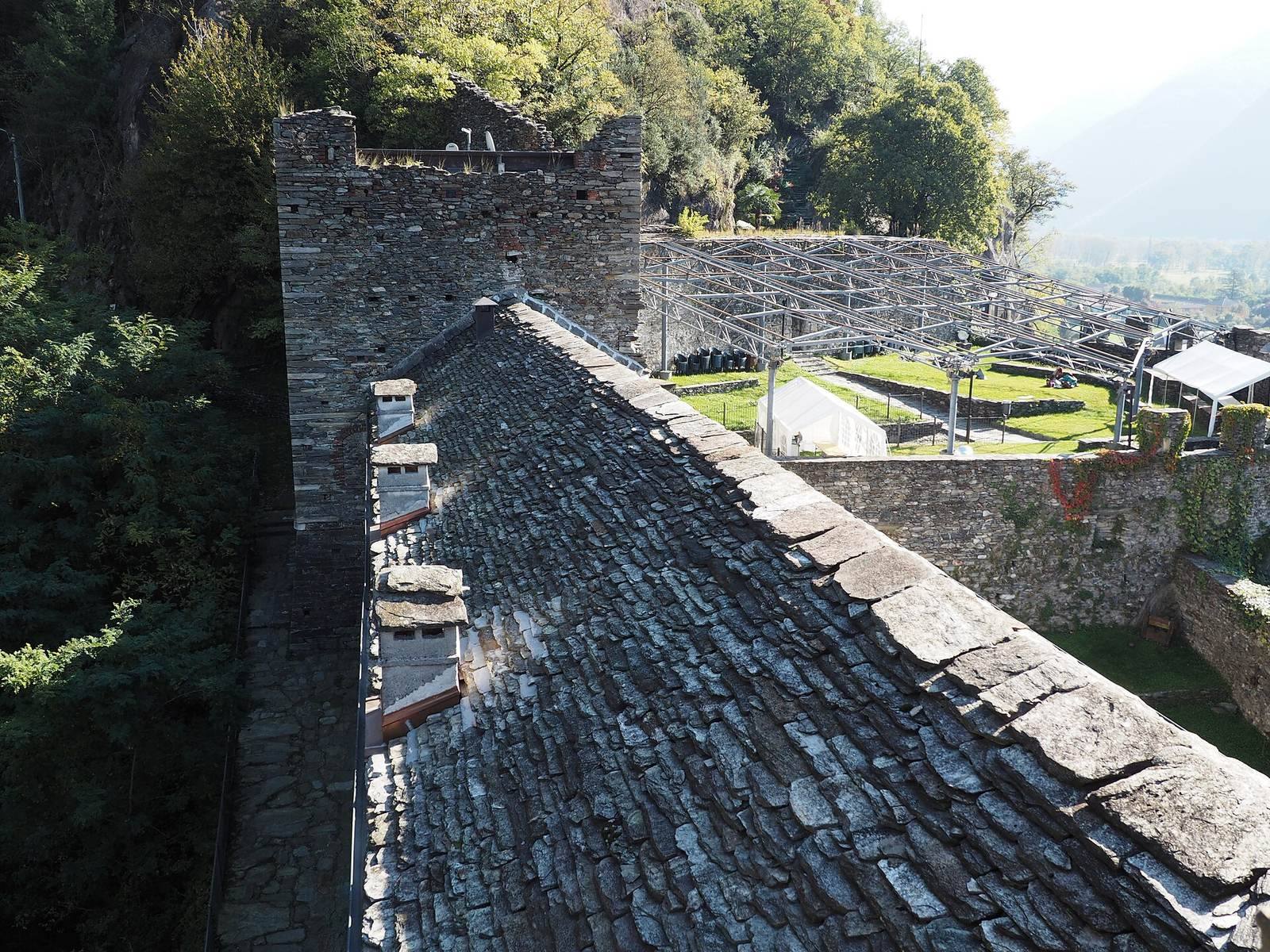
At the rear of the castle stands a partly ruined polygonal tower dating to the eleventh century. A masonry enclosure originally surrounded it.
Rectangular body and semicircular tower
The later castle includes a rectangular building extending west from the earlier tower, parallel to the route toward the Vogogna Rocca. At its east, town-facing end, a semicircular tower has a sloping base and a projecting upper section. Its defenses include loopholes, or narrow openings for firing, machicolations, openings from which defenders could drop objects onto attackers below, and ports for arquebuses, early firearms. A supporting framework carries the roof’s stone-slab covering. The tower is 19.40 metres high and has five storeys.
Southern defenses and town wall
A fortified area on the castle’s south side included a walled enclosure and a parade ground. An arched entrance through the southern wall was equipped with a drawbridge. Only a few traces survive of the later wall around Vogogna that incorporated the castle.