Valdemar’s Castle: A Baroque Manor House on Tåsinge


Site at a Glance
- Rating
- 4
- Popularity
- Medium
- Country
- Denmark
- Primary era
- Early Modern
- External website
- Open
- Eras represented
- Early Modern
- Civilizations
- Danish
- Site type
- Domestic
- Remains
- Manor House
On this page8 sections
History
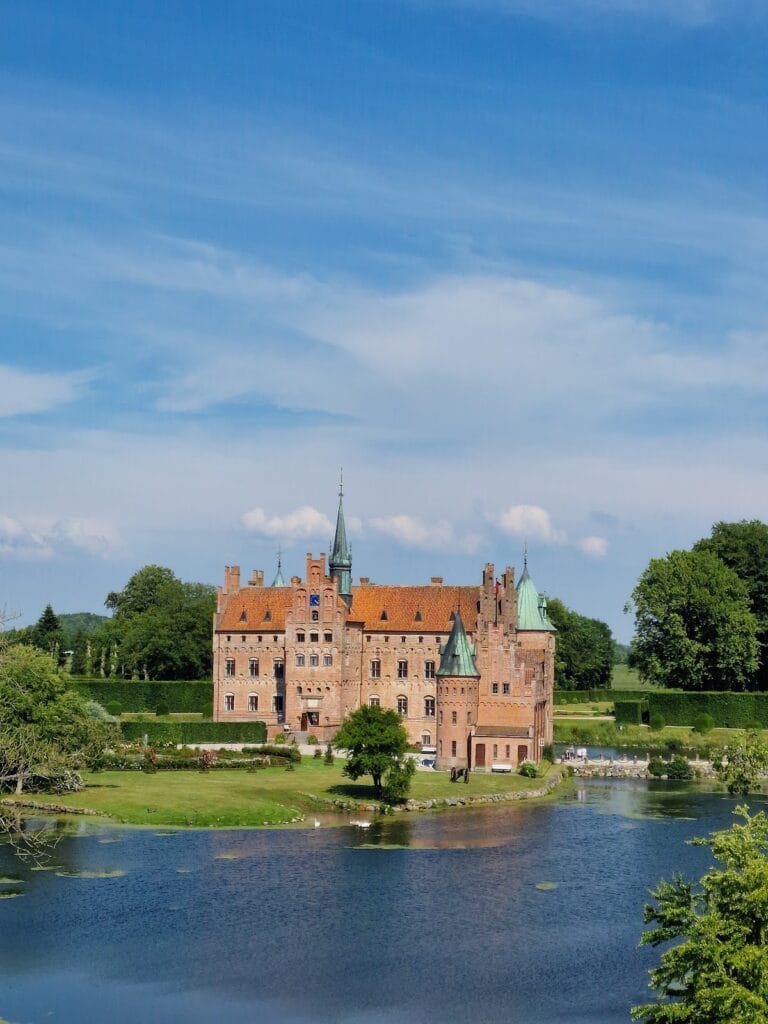
Valdemar’s Castle is a manor house on the Danish island of Tåsinge, built between 1639 and 1644 for Valdemar Christian, Count of Schleswig-Holstein, at the commission of Christian IV, the Danish-Norwegian king and a major patron of royal building projects. The castle was intended as the residence of Christian IV’s son, although Valdemar Christian never occupied it.
From Kærsgård to Valdemar’s Castle
The new residence replaced the nearby medieval fortress of Kærsgård. Christian IV had the older stronghold partly demolished, and surviving materials and remains were incorporated into the new building. Valdemar Christian later came into conflict with his half-brother, the future King Frederick III. He died in 1656 while serving in the Swedish army in Poland.
Swedish forces occupied and heavily damaged the castle during the Dano-Swedish War of 1658–1660, a conflict between Denmark and Sweden that reshaped control of territory in Scandinavia. After Admiral Niels Juel defeated Sweden at the Battle of Køge on 1 July 1677, Christian V granted him the castle and the island of Tåsinge as compensation for the Swedish ships captured in the battle. Niels Juel rebuilt the damaged residence in the Baroque style, an early-modern European style associated with formal monumentality and dramatic ornament.
The Juel estate
Niels Juel’s grandson, chamberlain Niels Juel the Younger, enlarged or restored the castle in 1754–1755. The garden was redesigned at the same time, with its Rococo arrangement attributed to the architect Georg Dietrich Tschierske. Rococo was a lighter and generally more asymmetrical early-modern decorative style.
The castle and its lands formed the hereditary estate of Thorseng, later called Taasinge. After Knud Juel’s death, the estate became a majorat on 1 May 1711. A majorat was an inherited estate legally arranged to remain within a family rather than being freely divided or sold. The arrangement was dissolved in 1923 during Denmark’s reform ending its fief system.
Ownership before the Juel period passed through medieval nobles, the Danish Crown, the Diocese of Odense, and the Rosenkrantz, Munk, Ulfeldt, and Mathiesen families. The property was held by Niels Juel from 1677 to 1697, Knud Juel from 1697 to 1709, and another Niels Juel from 1709 to 1766, followed by Carl Juel, Frederik Juel, and later members of the Juel-Brockdorff family. The estate has remained with the Juel family, whose name is also spelled Iuel.
Later history
Hans Christian Andersen visited the castle in August 1830 and was particularly impressed by its portrait gallery. In 1899, the bodies of the tightrope walker Elvira Madigan and her lover, Lieutenant Sixten Sparre, were found in Nørreskov, woodland belonging to the castle estate.
Niels Krabbe Iuel-Brockdorff inherited the property in 1971 and lived there with his family until his death in 2017. The castle has been open to the public since 1974. Caroline Elizabeth Ada Iuel-Brockdorff held the property from 2003 to 2011, followed by Niels Krabbe Carlsen Iuel-Brockdorff from 2011 to 2017. Louise Eleonora Kathleen Iuel-Brockdorff Albinus is identified as its owner from 2022.
Remains
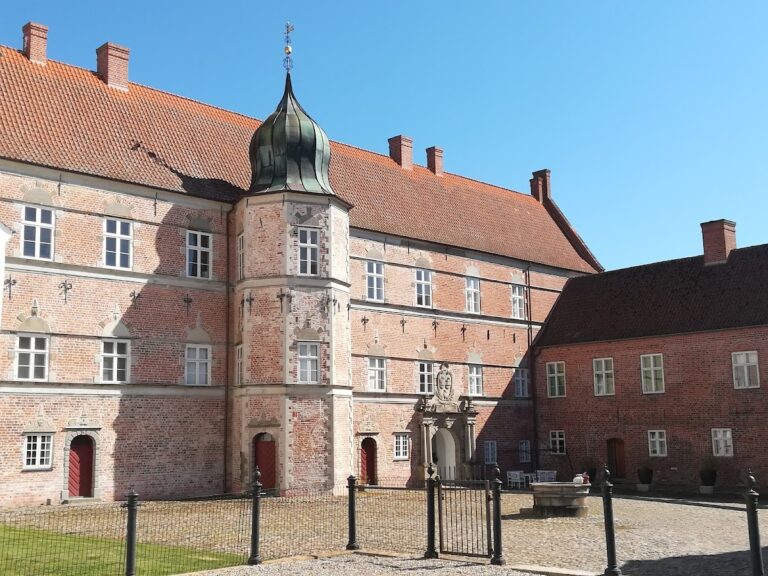
Valdemar’s Castle is arranged around an artificial body of water. The complex includes the main building, two gatehouses topped by belfries, a tea pavilion near the beach, stables, and other service buildings. The principal building has a Baroque character, while the ancillary buildings are Rococo. The original plans are attributed to Hans van Steenwinckel the Younger, and the later Rococo work and garden design are associated with Georg Dietrich Tschierske.
Main building and chapel
The main building contains a large chapel and the Castle and Manor Museum. The museum presents artworks and historic objects in 21 rooms and halls. The attic houses a hunting and trophy museum, adding a separate collection to the historic interiors of the principal residence.
Gatehouses and estate buildings
The two gatehouses control access to the estate and are topped by belfries, structures designed to hold bells. They have also been used for holiday accommodation. The wider complex includes the stables, the tea pavilion near the beach, and various service buildings. The estate extends into Nørreskov woodland and includes an 18-hole golf course on artificial turf.
Collections in the side building
One side building contains the Danish Toy Museum and the Danish Recreational Boating Museum. The toy collection spans 125 years and includes several thousand games, books, scale models, and comic books, together with a large Märklin model railway. The boating museum explores Danish recreational boating and shipbuilding traditions; Prince Henrik of Denmark inaugurated it on 2 June 1996.
The estate is described as covering 732 hectares, with approximately 45 percent agricultural land and 55 percent woodland. A wider total of 783 hectares is also given when Nybygård is included.
Nearby sites