Lykkesholm: A Danish Manor Estate and Archaeological Landscape
Site at a Glance
- Popularity
- Low
- Country
- Denmark
- Primary era
- Early Modern
- Eras represented
- Early Modern
- Civilizations
- Danish
- Site type
- Domestic
- Remains
- Manor House
On this page12 sections
History
Lykkesholm is a historic manor estate in Denmark, with a main building dating to 1600 and an earlier history tied to Magelund Castle. The castle was moved to the shore of a mill lake fed by the Rosenåen in the early fifteenth century.
Stone and Bronze Age communities probably settled beside the lake. Around 1100 BC, a burial mound was reused for cremations. Bones and ashes were placed in an urn or another vessel, while grave offerings varied by sex and included razors for men and needles for women.
Medieval Magelund and royal policy
Magelund Castle was probably established in the late thirteenth century and is first mentioned in 1329. Denmark was then under pressure from political fragmentation, and much of Funen had been pledged to the counts of Holstein, hereditary rulers of a county in what is now northern Germany. The castle was held for a time by the Holstein nobleman Gert Høcken before passing, amid the conflicts of the period, to the Danish nobleman Peder Nielsen Brock.
After King Valdemar IV defeated the counts of Holstein, he turned against Danish nobles, and many castles were destroyed. His daughter Margrethe I continued this policy, ordering the demolition of castles not held by the Crown or its loyal supporters. In 1391 she acquired Magelund and granted it as a fief, land or rights given in return for service, to her retainer Henneke Olufsøn Bjørn.
Later ownership and cultural associations
Lykkesholm passed through the noble families Magelund, Rannow, Quitzow, and Sehestedt, and later had non-noble owners. The Sehestedt Juul family of Ravnholt acquired the estate in 1914 and continues to own it. Danish poet and writer Hans Christian Andersen found inspiration there for several works and regarded it as the most beautiful place on Funen. The property is now used as a hotel, with conference facilities and a breeding farm.
Remains
The Lykkesholm landscape includes the manor buildings, the earthworks of Magelund Castle, prehistoric burial monuments, and mill sites. A moat cut on the north side once enclosed the Lykkesholm site with water on all sides.
Manor buildings
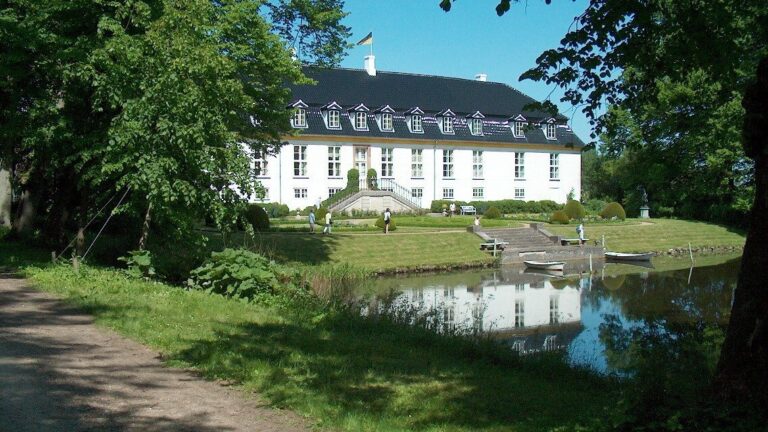
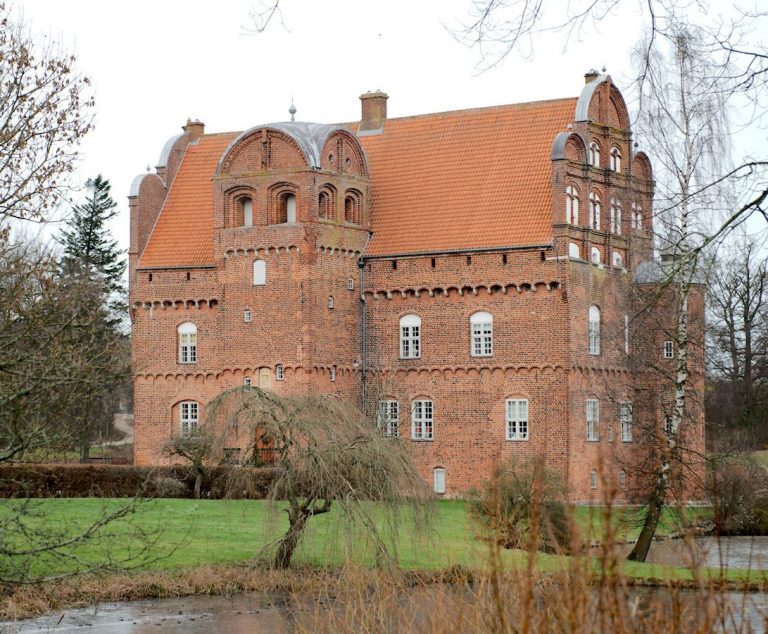
The large manor house is painted bright yellow. Its main building was constructed in 1600 and remodeled in 1668 and 1784–1786. The oldest surviving building is the west wing, which has a projecting tower and dates to the mid-seventeenth century. The Odense Gate is the only other surviving building from that period. Two further gates once stood at the site, and the complex suffered a fire in 1859.
Magelund Castle earthworks
The castle site retains substantial earthworks. Its mound measures about 15 metres high and 70 metres across. The earthworks and their immediate surroundings are protected as monuments.
Prehistoric burial monuments
Hestehave Forest
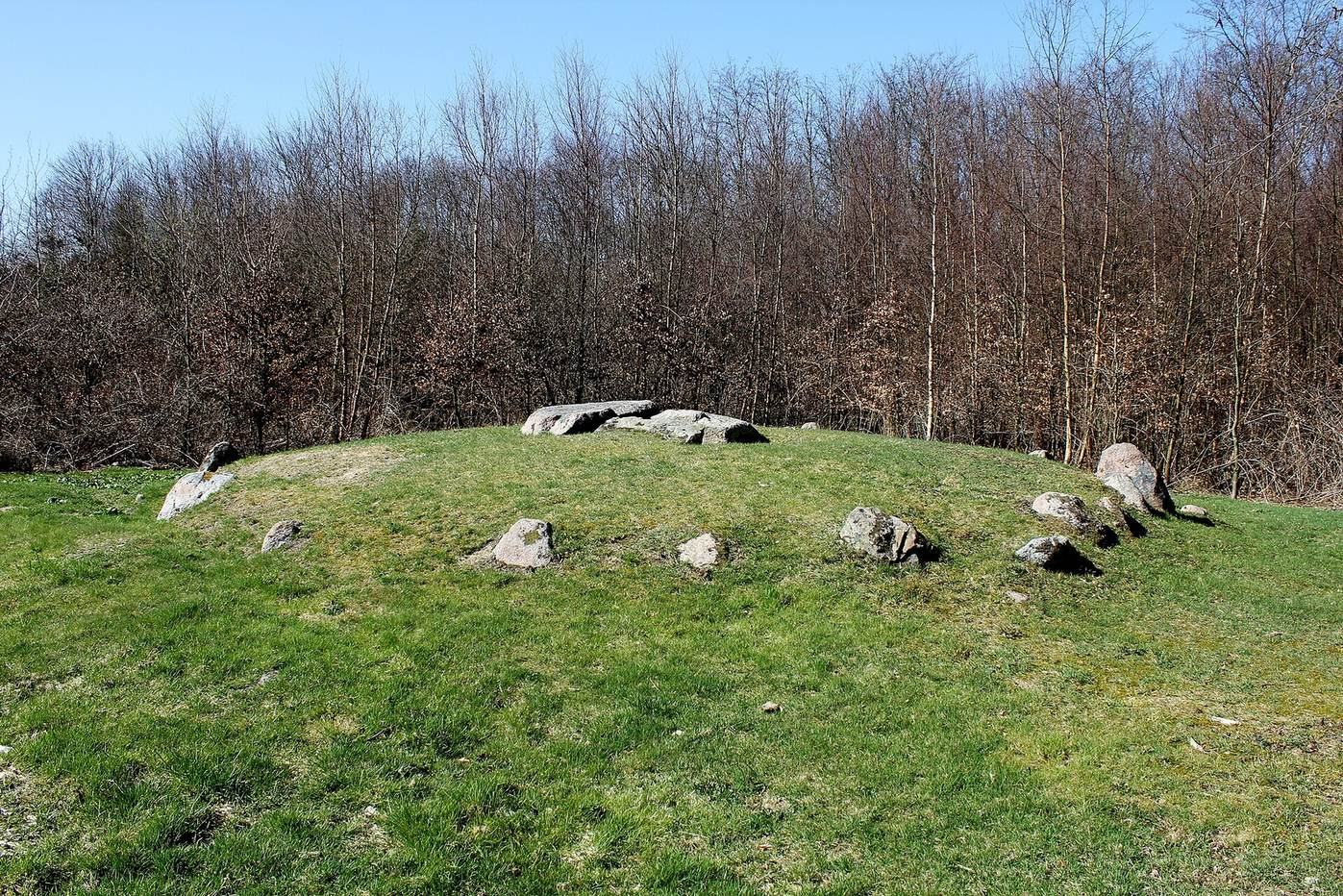
A dolmen is a prehistoric tomb chamber made from large stones. Hestehave Forest contains two long dolmens, one round dolmen, and a chamber tomb, all dating to the Neolithic, the later Stone Age associated with farming and megalithic tomb-building. Their date is around 3500 BC.
Lindeskov long barrow
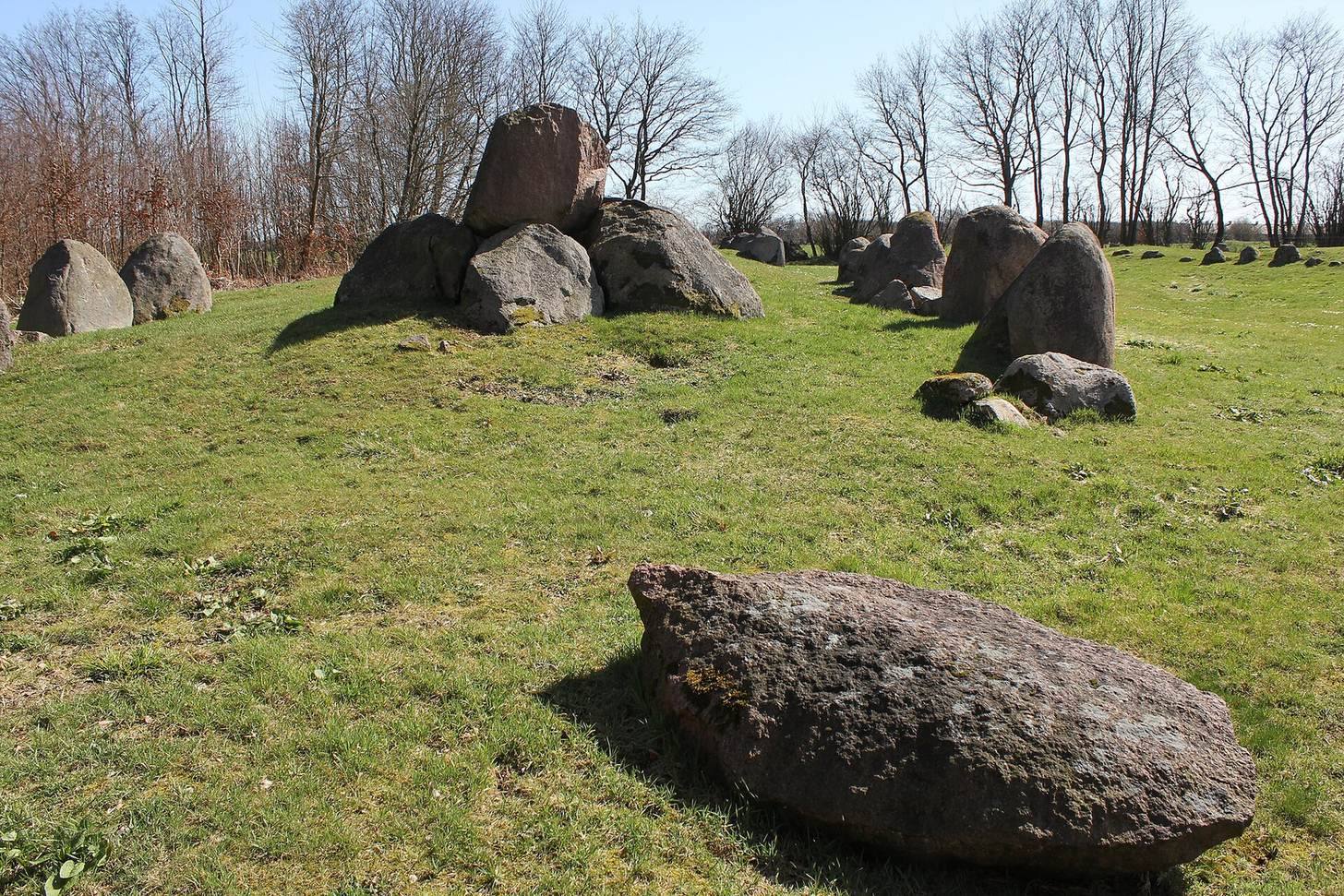
The Lindeskov long barrow measures 168 metres by 10 metres and is the longest of its kind on Funen. Most of its 126 boundary stones are original, and a very small, simple dolmen lies within the mound. The barrow was restored during the 1940s.
Excavated dolmen chamber
A dolmen chamber excavated during the twentieth century yielded a pottery vessel, two flint blades, and several amber beads.
Ellested long barrow
The Ellested long barrow has five chambers and is among Denmark’s best-known multiple-chamber tombs.
Mills
Nymølle mill once stood at Lykkesholm before being moved to an open-air museum north of Copenhagen. Gammelmølle is identified as the oldest mill near Lykkesholm, although its present buildings date to 1890.